
Bilquis Bano Edhi Legacy remains a cornerstone of humanitarian work in Pakistan even as the nation mourns her passing. The renowned philanthropist and professional nurse breathed her last at a private hospital in Karachi after a courageous battle with cardiovascular issues. Her departure marks the end of an era for the Edhi Foundation, which she helped transform into a global symbol of selfless service and unconditional compassion for the marginalized.
This loss is felt deeply across every corner of the country where her name was synonymous with hope and maternal care. Throughout her sixty years of service, she remained a steadfast pillar for the downtrodden, ensuring that the legacy of her late husband, Abdul Sattar Edhi, continued to flourish. Her life story serves as a profound testament to the power of individual action in the face of systemic social challenges and widespread poverty.
The impact of her work extended far beyond the borders of Pakistan, earning her international recognition and prestigious awards for her dedication to human rights. As the mother of the nation, she provided a safety net for thousands of souls who had nowhere else to turn in their darkest hours. Her presence in the humanitarian sector created a blueprint for social welfare that continues to inspire young activists and medical professionals globally today.
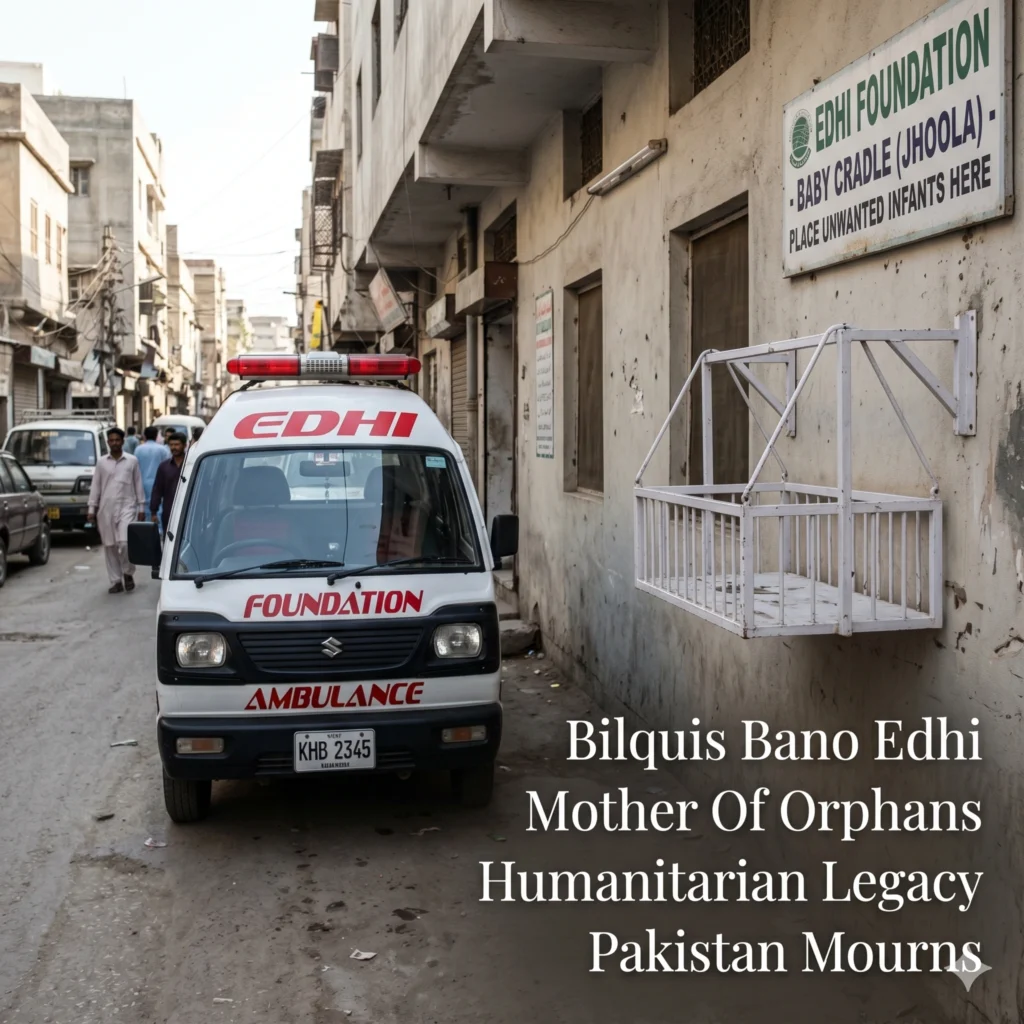
Bilquis Bano Edhi Legacy
The Bilquis Bano Edhi Legacy is defined by her unwavering commitment to the protection of abandoned infants through the innovative cradle initiative. By placing “jhoolas” outside Edhi centers, she provided a safe alternative for mothers who felt they could not keep their newborns. This single intervention is credited with saving over forty-two thousand lives, turning potential tragedies into stories of survival and future potential for many children.
Beyond the cradles, her influence permeated the entire structure of the foundation’s social services, from maternity clinics to homes for the mentally challenged. She brought a soft, maternal touch to the often-harsh reality of social work, ensuring every individual was treated with dignity. Her expertise as a nurse allowed her to professionalize the care provided within these centers, setting high standards for hygiene and medical attention for the poor.
As a co-chair of the foundation, she balanced the visionary goals of her husband with practical, hands-on management of the female-led departments. This partnership created a formidable force for good that managed one of the world’s largest volunteer ambulance fleets and network of shelters. The continuity of these services today stands as the most prominent physical manifestation of the Bilquis Bano Edhi Legacy in the modern world.
Impact on Women and Children in Pakistan
The influence of Bilquis Bano Edhi on the lives of Pakistani women was transformative, as she provided them with avenues for empowerment and safety. She personally oversaw the marriages of hundreds of young women who grew up in the Edhi homes, ensuring they entered stable and loving environments. Her role was not just that of a supervisor but of a mother who vetted suitors and provided dowries for her daughters.
Children who were once abandoned found a sense of identity and belonging under her watchful eye at the various Edhi Village locations. She believed that every child deserved a name and a future, regardless of the circumstances of their birth or their family background. This radical acceptance challenged deep-seated social stigmas and forced a national conversation about the rights of the orphaned and the displaced.
The educational programs she initiated within the shelters helped break the cycle of poverty for many residents, giving them tools to lead independent lives. By focusing on both immediate survival and long-term development, she ensured her humanitarian work had a lasting effect on the social fabric. Her life demonstrated that compassion, when coupled with organized action, can dismantle even the most persistent barriers to human welfare.
Global Recognition of the Humanitarian Icon
International organizations frequently cited Bilquis Bano Edhi as one of the most influential women in the world due to her persistent efforts. The Impact Hallmarks recently named her the most impactful person of the first two decades of the twenty-first century, a title she accepted with characteristic humility. This recognition highlighted how her local efforts in Karachi resonated with global humanitarian goals and the spirit of universal brotherhood.
Foreign diplomats and world leaders often visited the Edhi centers to witness the scale of the operations she managed with such grace. The United States Embassy and various United Nations agencies have lauded her as a model of service who transcended religious and ethnic boundaries. Her ability to garner support from a diverse range of donors ensured the foundation remained independent of government funding and political influence.
Despite the accolades, she remained focused on the daily needs of the people she served, often found working on the front lines herself. She proved that true leadership is found in service and that the greatest reward is the smile of a child who has found a home. The Bilquis Bano Edhi Legacy continues to be a shining example for international NGOs seeking to implement effective community-based social programs.
Managing Health Challenges and Heart Disease
The final years of her life were marked by a quiet struggle against chronic cardiovascular conditions that required multiple medical interventions. She underwent two heart bypass surgeries, demonstrating the same resilience in her personal health battles as she did in her professional life. Even while recovering from these procedures, her primary concern remained the welfare of the children and women living in the Edhi centers.
Her recent hospitalization for congestive heart failure and low blood pressure drew the attention of the entire nation, with citizens praying for her recovery. The medical team at the private hospital in Karachi provided the best possible care, but her condition eventually became critical. Her passing reminds us of the fragility of life and the urgency of continuing the mission she held so dear for six decades.
The transparency with which her family shared updates on her health reflected the deep bond between the Edhi family and the Pakistani public. Faisal Edhi, who has taken a leadership role, confirmed that her spirit remained strong until the very end of her journey. The dignity she maintained during her illness served as a final lesson in grace for the millions who looked up to her as a Matriarch.
The Future of the Edhi Foundation
With the passing of such a monumental figure, questions naturally arise about the future trajectory of the Edhi Foundation’s vast operations. However, the systems put in place by the founding couple are designed to withstand the loss of individual leaders through institutional strength. The Bilquis Bano Edhi Legacy is embedded in the training of the staff and the core values of the organization which prioritize the person in need.
Faisal Edhi has pledged to continue the work with the same transparency and dedication that characterized his mother’s long and illustrious career. The foundation is currently expanding its reach into rural areas where healthcare and social support are often non-existent or prohibitively expensive. This expansion is a direct tribute to her desire to see no child left behind, regardless of their geographic location.
- Maintenance of the nationwide “jhoola” network for infants.
- Expansion of free medical dispensaries in underserved urban slums.
- Enhancement of the adoption vetting process to ensure child safety.
- Increasing vocational training opportunities for women in shelters.
National Mourning and Political Tributes
The news of her death triggered an outpouring of grief from the highest levels of government to the humblest citizens on the streets. Prime Minister Shehbaz Sharif expressed deep sorrow, noting that the country had lost a great asset and a source of immense national pride. Other political leaders joined in, setting aside partisan differences to honor a woman who served everyone regardless of their political affiliation.
State-level honors are expected to be accorded to her, recognizing the immense service she provided to the social sector of Pakistan. Flags were flown at half-mast in various regions as a sign of respect for the woman who spent her life mending the broken hearts of others. The collective mourning reflects the deep-seated respect the public held for her quiet, unassuming, and highly effective way of changing lives.
The media coverage of her passing has focused on her role as a symbol of unity in a often divided society. She was one of the few figures who could command universal respect across all ethnic, religious, and social divides in Pakistan. This unity in grief highlights how the Bilquis Bano Edhi Legacy serves as a unifying force for a nation seeking common ground and shared values.
Humanitarian Lessons for Future Generations
The life of Bilquis Bano Edhi offers countless lessons for young people interested in social work, nursing, and community development. She taught that you do not need vast wealth to start making a difference; you only need a heart that beats for others. Her beginning as a simple nurse shows that professional skills, when applied with passion, can lead to monumental social change.
Future generations will look to her biography to understand how to build institutions that survive the test of time and economic instability. She emphasized the importance of local solutions for local problems, focusing on the specific cultural nuances of the Pakistani family structure. Her work was culturally sensitive yet radically progressive in its defense of the vulnerable and the marginalized members of society.
Educators are now calling for her life story to be included in school curricula to instill the values of empathy and service in students. By studying the Bilquis Bano Edhi Legacy, children can learn that the most successful life is one spent in the service of those who cannot repay you. This shift in educational focus could cultivate a new wave of humanitarians ready to tackle the challenges of the twenty-first century.
A Symbol of Hope for the Poor
For the millions living below the poverty line, she was more than a philanthropist; she was a guarantor of their basic human rights. Whether it was providing a shroud for the deceased or a cradle for the living, she filled the gaps left by the state. Her presence ensured that even the most destitute individuals felt seen and valued by a society that often prefers to look away.
The shelters she managed provided a sanctuary from the harsh realities of street life and domestic abuse for thousands of women. These centers were not just buildings but communities where people found the strength to rebuild their lives under her guidance. The Bilquis Bano Edhi Legacy is found in the restored dignity of every person who walked through the doors of an Edhi home.
- Provision of basic necessities like food and clean water.
- Safe housing for the elderly who have no family support.
- Mental health support for those traumatized by violence or loss.
Global Impact of the Edhi Philosophy
The philosophy of the Edhis—to serve humanity without discrimination—has influenced charitable organizations across the Middle East and South Asia. Their model of “people-funded” charity proved that a mission could be sustained entirely by small donations from the masses rather than large corporate grants. This financial independence allowed Bilquis Bano Edhi to speak truth to power and advocate for the poor without fear of losing funding.
International researchers have studied the logistics of the Edhi ambulance service as a masterclass in efficiency and rapid response. The Bilquis Bano Edhi Legacy includes this technical excellence, showing that compassion does not exclude the need for high-level organizational skills. Her ability to manage complex logistics while maintaining a personal connection with patients was a hallmark of her unique leadership style.
As the world faces increasing displacement and humanitarian crises, the Edhi model offers a sustainable and scalable solution for refugee care. The simplicity of their message—that all humans are equal in their need for care—remains the most powerful tool in the humanitarian toolkit. Her life’s work continues to be a beacon of light for those navigating the complexities of modern social welfare and international aid.
Final Farewell to a Motherly Figure
The funeral of Bilquis Bano Edhi was attended by thousands, reflecting the diverse range of people she touched throughout her long life. From street children to high-ranking officials, the crowd was a microcosm of the society she worked so hard to improve. The atmosphere was one of solemn gratitude for a life lived with purpose and a heart that never stopped giving until its final beat.
As she is laid to rest, her influence will continue to be felt through the thousands of lives she saved and the institutions she built. The Bilquis Bano Edhi Legacy is not just a historical record but a living, breathing movement that continues to grow. Her children, both biological and those she adopted through the foundation, carry the torch of her mission into the future with pride.
The memory of her smile and her gentle words of encouragement will remain a source of comfort for the staff of the Edhi Foundation. While the physical presence of the mother of the nation is gone, her spirit is woven into the very fabric of the organization. The nation stands united in the promise to protect the work she started and to ensure that the “jhoolas” never stop providing hope.
The Enduring Nature of Selfless Service
The Bilquis Bano Edhi Legacy serves as a reminder that true greatness is measured by the depth of one’s service to others. In a world often obsessed with celebrity and wealth, she chose a path of simplicity and hard work among the poor. This choice defined her character and earned her a place in history as one of the most significant figures of the modern era in Pakistan.
Her life was a marathon of kindness, spanning decades of political upheaval, natural disasters, and social change. Through every crisis, she remained a steady hand at the helm of the foundation, providing a sense of stability to those in chaos. The lessons of her life—persistence, empathy, and courage—are more relevant today than ever before as we face new global challenges.
- Persistence in the face of social opposition to change.
- Empathy for those who have been cast out by society.
- Courage to take action when others remain silent or indifferent.
Continuing the Humanitarian Journey
As we look forward, the challenge for the public is to support the foundation and keep the Bilquis Bano Edhi Legacy alive through action. Donating to the Edhi Foundation or volunteering time are practical ways to honor her memory and ensure her work continues. The strength of the foundation has always been its connection to the people, and that connection must be nurtured by the next generation.
The foundation’s commitment to transparency and direct aid remains its greatest asset in maintaining public trust during this transition. By adhering to the principles of Abdul Sattar and Bilquis Edhi, the organization can navigate the future with confidence. Their joint vision for a more compassionate world remains a goal that is within reach if we follow the path they so clearly marked.
In conclusion, Bilquis Bano Edhi was a rare soul whose life was a gift to humanity and a blessing to the nation of Pakistan. Her passing is a significant loss, but her impact is eternal, written in the lives of the forty-two thousand children she saved. We honor her best by continuing to care for the “unwanted” and by building a society where every child is welcomed with open arms.
Reflections on a Life of Dedication
Looking back at her journey from a young nurse to a national icon, one sees a consistent thread of devotion to duty. She never sought the limelight, yet the light of her deeds was too bright to be hidden from the world. The Bilquis Bano Edhi Legacy is a story of how one person’s “yes” to service can change the destiny of a whole nation.
Her ability to remain grounded despite her international fame was perhaps her most admirable quality among many others. She stayed in the heart of Karachi, close to the people she served, never distancing herself from the reality of their struggles. This proximity allowed her to remain responsive to the changing needs of the community and to adapt the foundation’s services accordingly.
As the sun sets on her remarkable life, we are left with a profound sense of responsibility to carry her message forward. The Bilquis Bano Edhi Legacy is now in the hands of the people of Pakistan and humanitarians around the globe. It is a legacy of love, a legacy of life, and a legacy that will never truly fade as long as there is a hand reached out to help another.
Final Tributes to the Mother of Orphans
The story of Bilquis Bano Edhi will be told for generations as a narrative of hope and the triumph of the human spirit. She proved that even in the face of overwhelming odds, a single individual can create a ripple effect of goodness. Her work with the Edhi Foundation has set a standard for humanitarian excellence that few can match but many should strive for.
The Bilquis Bano Edhi Legacy is cemented in the foundations of the hospitals, schools, and homes that bear the Edhi name. These structures are more than just brick and mortar; they are monuments to a life spent in the service of the most vulnerable. Her passing at seventy-four leaves a void, but her life’s work provides the map to fill it with more compassion and more care.
For more details & sources visit: The Express Tribune
Read more about Pakistan news on 360 News Orbit – Pakistan.