
Bahraini Parliament Debate on gas exploration marks a historic moment for the kingdom’s energy sector as legislators convene to review a high-stakes concession agreement. The discussion centers on Decree-Law No 33 of 2025, which formalizes a partnership between the Bahraini government, Bapco Energies, and the American energy giant EOG Resources. This strategic move is designed to tap into the unconventional gas potential of the Juba and pre-Tawil reservoirs located within the onshore Bahrain Field. By leveraging foreign expertise and capital, the government intends to secure the nation’s energy future while insulating the public treasury from the inherent risks of deep-earth exploration.
The Bahraini Parliament Debate is expected to highlight the innovative fiscal structure of the contract, which prioritizes the protection of national assets. Under the terms of the agreement, EOG Resources has committed to bearing the full financial burden of the initial exploration phase, an investment valued at approximately one hundred million dollars. This ensures that the Bahraini state does not risk public funds on speculative drilling, a move that has been widely praised by fiscal conservatives within the legislative body. The debate serves as a public validation of the kingdom’s shift toward more sophisticated, risk-averse foreign investment models.
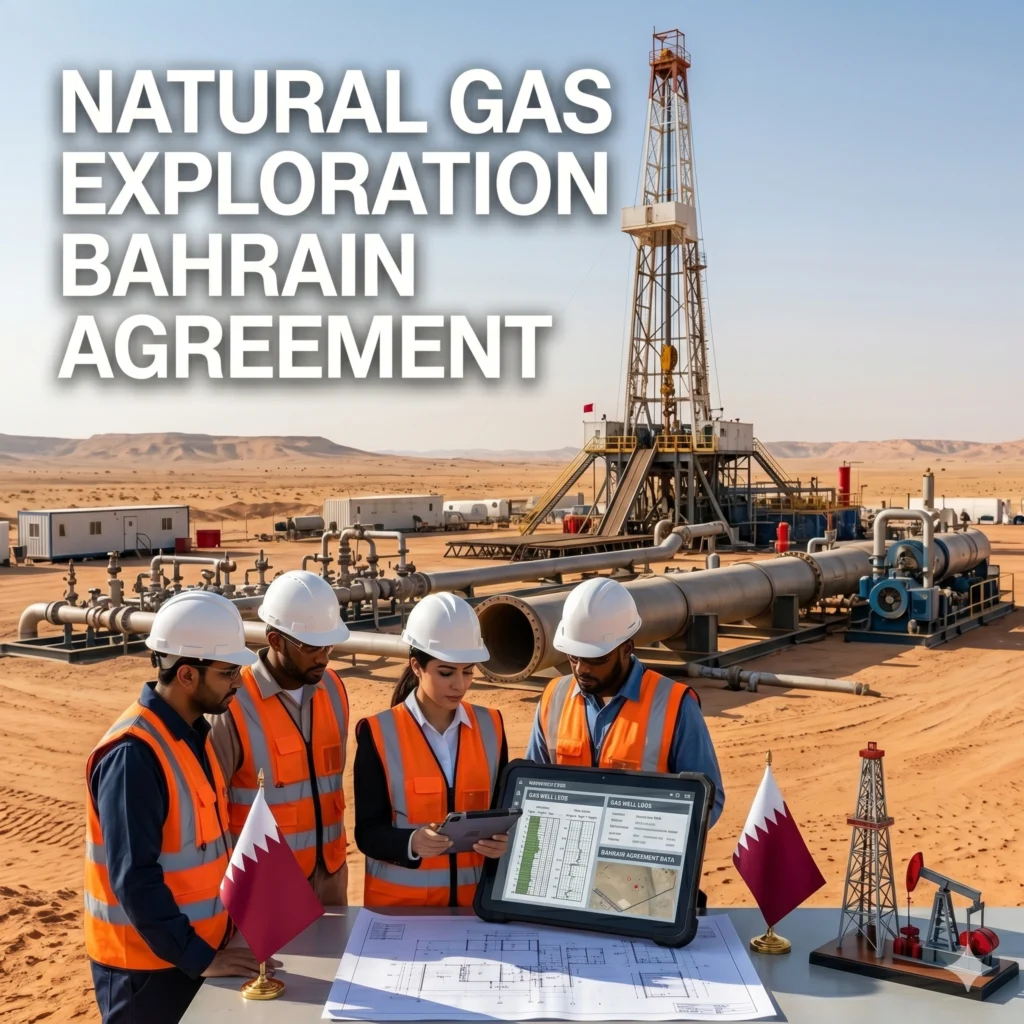
Bahraini Parliament Debate
The Bahraini Parliament Debate regarding the Juba and pre-Tawil reservoirs focuses heavily on the technical requirements for extracting unconventional gas. Unlike traditional reserves, these deep-seated deposits require advanced hydraulic fracturing and horizontal drilling technologies that EOG Resources specializes in globally. Legislators are reviewing the potential for these reservoirs to significantly increase the domestic gas supply, which is critical for powering the nation’s heavy industries and desalination plants. The success of this project could effectively end the kingdom’s reliance on imported energy for its expanding industrial base.
Furthermore, the Bahraini Parliament Debate will address the stringent environmental and safety protocols embedded within the decree. Given the onshore nature of the exploration, protecting local groundwater and minimizing the surface footprint are paramount concerns for the parliamentary committees. The agreement includes clauses that allow for the immediate cancellation of the contract should the operator fail to meet the kingdom’s rigorous environmental standards or financial guarantees. This level of oversight ensures that the pursuit of energy wealth does not come at the cost of the nation’s ecological health or public safety.
Economic Impact and Local Content
A primary focus of the Bahraini Parliament Debate is the potential for massive job creation and local economic stimulation. The concession agreement explicitly mandates a “Bahraini first” policy for employment and requires the prioritization of local suppliers for logistics and construction services. This ensures that the one hundred million dollar exploration spend circulates within the domestic economy, supporting small and medium-sized enterprises in the energy services sector. Members of parliament are keen to see how this project will reduce unemployment among young Bahraini engineers and technicians.
The Bahraini Parliament Debate also touches upon the long-term fiscal benefits, including a ten percent royalty on net profits and standard taxation on oil and gas resources. Once commercial viability is established, the state-owned Bapco Energies will have the option to participate as an equity owner, further increasing the government’s share of the revenue. This hybrid model allows Bahrain to act as both a sovereign regulator and a commercial partner. The financial structure is designed to provide a steady stream of non-oil revenue to the state budget for decades to come.
Technology Transfer and Professional Training
During the Bahraini Parliament Debate, the importance of knowledge transfer has been a recurring theme among the various standing committees. As part of the technology transfer clause, nine Bahraini energy professionals have already been dispatched to the United States for intensive training at EOG Resources’ facilities. This initiative ensures that the local workforce gains hands-on experience with the latest global drilling technologies. The goal is to build a domestic cadre of experts capable of managing unconventional reservoirs independently in the future.
The Bahraini Parliament Debate highlights that this partnership is not just about extracting resources but about importing world-class industrial standards. By working alongside a global leader in unconventional gas, Bapco Energies will upgrade its own internal processes and safety cultures. This “soft” investment in human capital is seen by many legislators as more valuable than the initial hundred million dollar exploration budget. It positions Bahrain as a regional center of excellence for specialized energy services and high-tech engineering.
- Nine Bahraini professionals are currently training in specialized U.S. facilities.
- Technology transfer clauses are a mandatory part of all new energy concessions.
- Local suppliers are given legal preference for all subcontracting opportunities.
- The project aims to develop a sustainable ecosystem for unconventional gas expertise.
Exploration Timelines and Technical Indicators
The Bahraini Parliament Debate includes a review of the aggressive timeline set for the initial exploration phase. EOG Resources is slated to drill four test wells over a concentrated six-month period to verify the commercial potential of the Juba reservoirs. Technical indicators from five previously drilled exploratory wells have already provided a “reassuring” outlook for the current project. Detailed results from the new drilling program are expected to be presented to the government by the third quarter of 2026.
Wait times for commercial production will depend on the flow rates observed during this critical test phase. The Bahraini Parliament Debate will likely conclude with a call for regular quarterly updates to the legislative body to ensure transparency and accountability. If the quantities are found to be commercially viable, the transition to full-scale development will involve the construction of new pipeline infrastructure and processing facilities. This would represent a multi-billion dollar investment in the kingdom’s physical infrastructure.
Geopolitical Stability and Energy Security
The Bahraini Parliament Debate emphasizes that domestic gas production is a matter of national security in an increasingly volatile global energy market. By securing its own source of natural gas, Bahrain reduces its vulnerability to regional price fluctuations and supply chain disruptions. This independence is crucial for maintaining the kingdom’s competitive advantage in energy-intensive sectors like aluminum smelting and petrochemicals. Energy security provides the stability necessary for long-term industrial planning and foreign investment.
International analysts suggest that the Bahraini Parliament Debate sends a strong signal to global markets about the kingdom’s openness to high-tech energy partnerships. At a time when many nations are struggling to attract foreign direct investment, Bahrain’s clear legal framework and pro-business stance stand out. The successful passage of this decree will likely encourage other major energy firms to explore similar opportunities in the region. This move helps diversify the kingdom’s diplomatic and economic partnerships beyond traditional regional allies.
Environmental Stewardship and Public Safety
One of the most sensitive topics in the Bahraini Parliament Debate is the management of the hydraulic fracturing process. Legislators are seeking reassurances that the best available technologies will be used to protect the kingdom’s limited freshwater aquifers. EOG Resources has committed to using closed-loop water management systems and non-toxic additives where possible. These environmental safeguards are non-negotiable and are monitored by both the Ministry of Oil and Environment and independent third-party auditors.
The Bahraini Parliament Debate also covers the impact of drilling operations on local communities near the Bahrain Field. Noise mitigation, dust control, and traffic management plans must be approved before drilling begins. The contract includes provisions for community benefit funds that will support local infrastructure projects in the areas surrounding the exploration zones. This holistic approach to project management aims to balance economic development with the well-being of the Bahraini people.
- Closed-loop water systems are required to prevent any groundwater contamination.
- Independent environmental impact assessments must be filed before each drilling phase.
- Community benefit funds are allocated to improve local infrastructure in drilling zones.
Strengthening Bapco Energies’ Global Position
The Bahraini Parliament Debate serves to bolster the status of Bapco Energies as a modern, forward-looking energy company. By partnering with a tier-one international operator, Bapco gains credibility in the global financial markets. This is particularly important as the company seeks to raise capital for other green energy and carbon capture projects. The synergy between local knowledge and global technology is the cornerstone of Bapco’s long-term transformation strategy.
The Bahraini Parliament Debate also highlights how the company is moving away from purely traditional extraction methods. The focus on “unconventional” reserves shows a willingness to tackle more difficult technical challenges to maximize the value of the kingdom’s natural resources. This shift aligns with the broader “Vision 2030” goals of creating a diverse, knowledge-based economy. Bapco Energies is evolving from a traditional oil company into a diversified energy provider that is ready for the future.
Fiscal Responsibility and Budget Protection
A central pillar of the Bahraini Parliament Debate is the protection of the state budget from the inherent volatility of oil and gas exploration. By ensuring that EOG Resources carries the financial risk, the government can allocate its capital toward other essential services like healthcare and education. This conservative fiscal approach is especially critical during periods of global economic uncertainty. The agreement is a model for how resource-rich nations can partner with the private sector to share both risk and reward.
Members of the Bahraini Parliament Debate are also analyzing the “royalty-plus-tax” structure of the deal. This dual-revenue stream ensures that the government benefits from the very first barrel of production while also sharing in the long-term profitability of the project. It provides a fair return to the people of Bahrain while allowing the foreign investor to earn an attractive return on their risk capital. This balance is seen as essential for maintaining a long-term, stable partnership between the state and the operator.
- The $100 million initial investment is funded entirely by EOG Resources.
- Royalties are calculated on net profits to ensure state revenue from the start.
- Taxation on resource extraction follows the standard laws of the Kingdom of Bahrain.
Regional Competition for Energy Investment
The Bahraini Parliament Debate is occurring against a backdrop of intense regional competition for energy investment. Neighbors like Saudi Arabia and the UAE are also aggressively developing their unconventional gas reserves to support their own industrial transitions. Bahrain’s ability to move quickly with a clear legislative decree gives it a first-mover advantage in certain high-tech niche markets. The debate shows that the kingdom is willing to act decisively to secure its place in the regional energy hierarchy.
As the Bahraini Parliament Debate continues, many observers are looking at how this deal might influence future concessions in other Gulf states. The “zero-risk” exploration model for the host government is particularly attractive to smaller nations with limited capital reserves. If the Juba reservoirs prove successful, it could trigger a new wave of onshore exploration across the entire Arabian Peninsula. Bahrain is effectively serving as a laboratory for the next generation of energy partnership agreements in the Middle East.
Parliamentary Committee Recommendations
The Bahraini Parliament Debate is informed by months of rigorous study by the Committee on Financial and Economic Affairs and the Legislative and Legal Affairs Committee. Both bodies have issued unanimous recommendations for the approval of the decree-law. Their reports emphasize that the agreement is fully compliant with Bahraini law and offers the best possible terms for the kingdom. These recommendations carry significant weight in the final vote and reflect a broad consensus across the political spectrum.
During the Bahraini Parliament Debate, the chairmen of these committees have been vocal about the strategic necessity of the deal. They argue that refusing the agreement would not only stall energy production but also damage Bahrain’s reputation as a reliable partner for international business. The committees have conducted their due diligence to ensure that the “national interest” is the primary driver of every clause in the contract. This collaborative effort between the executive and legislative branches is a sign of a maturing and effective governance system.
Long-Term Revenue Diversification
The ultimate goal discussed in the Bahraini Parliament Debate is the diversification of state revenues away from traditional oil exports. Natural gas is a cleaner-burning fuel that is essential for the transition to a lower-carbon economy. By developing its gas reserves, Bahrain can reduce its carbon footprint while still driving economic growth. The revenue generated from gas can be used to fund the kingdom’s ambitious renewable energy projects, creating a virtuous cycle of sustainable development.
The Bahraini Parliament Debate reflects a deep understanding that the age of “easy oil” is coming to an end. To maintain its high standard of living, the kingdom must innovate and find new ways to extract value from its geography. The Juba and pre-Tawil reservoirs represent the next chapter in the nation’s economic history. By passing this decree, the parliament is not just approving a contract; it is endorsing a vision for a more resilient and self-sufficient Bahrain.
Conclusion and Path to Approval
The Bahraini Parliament Debate is set to conclude with a formal vote that is widely expected to be positive. The alignment between the government’s energy strategy and the legislature’s fiscal concerns has created a clear path forward for the EOG Resources partnership. Once the decree is ratified, the exploration teams will mobilize immediately to begin the initial drilling campaign. The kingdom will then wait with bated breath for the results that could redefine its economic landscape.
In the final analysis, the Bahraini Parliament Debate is a testament to the kingdom’s proactive approach to energy management. By balancing risk, technology, and local economic development, Bahrain is setting a high standard for energy governance in the 21st century. The partnership with EOG Resources is just the beginning of a larger effort to unlock the hidden potential of the Bahrain Field. As the first test wells are drilled, the eyes of the global energy community will be firmly fixed on the small but ambitious Kingdom of Bahrain.
For more details & sources visit: Gulf Daily News
Read more about Behrain news on 360 News Orbit-Behrain.