
Lula Trump Meeting in Washington today marks a pivotal moment for bilateral relations as both leaders attempt to navigate complex economic disputes and security concerns. President Luiz Inacio Lula da Silva arrived at the White House, prepared to engage in high-stakes diplomacy with President Donald Trump. This significant encounter follows a turbulent year characterized by trade friction and a massive federal investigation into Brazilian domestic policies.
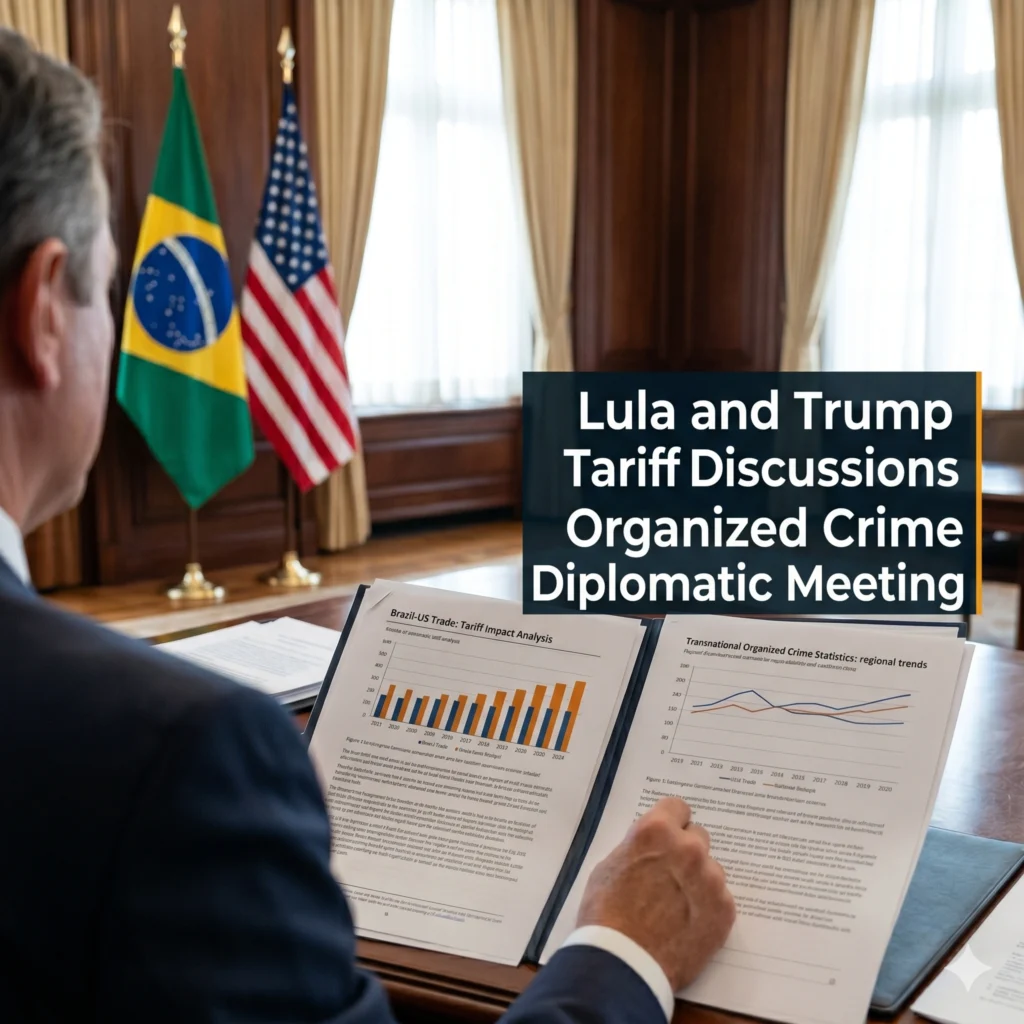
Lula Trump Meeting to Tackle Trade Barriers
The core of the diplomatic agenda revolves around resolving persistent trade tensions that have strained the relationship between the two largest economies in the Americas. Last year, the Trump administration shocked markets by imposing steep tariffs on various Brazilian imports, creating significant economic pressure on Brasilia. While many of those specific duties were eventually rolled back, the underlying protectionist sentiment continues to dominate the conversation between the two administrations.
Brazilian Finance Minister Dario Durigan expressed a high degree of optimism regarding the constructive nature of this high-level engagement. He noted that the Brazilian government has spent months preparing to address American concerns while defending national interests. The delegation aims to secure more stable market access for Brazilian industrial and agricultural goods, which have faced increased scrutiny under the current American trade policy framework.
Global Security and Organized Crime Cooperation
Beyond the balance of payments, the two leaders are expected to announce a renewed framework for security cooperation. The fight against organized crime has become a shared priority as transnational criminal organizations continue to expand their influence across the Western Hemisphere. Brazil is seeking to highlight its recent domestic successes, including the seizure of billions in illicit assets, to prove its effectiveness as a strategic security partner.
The Lula Trump meeting provides a platform for the Federal Police of Brazil to coordinate more closely with American law enforcement agencies. Discussions will likely cover intelligence sharing, border security technology, and joint operations to dismantle drug trafficking routes. By aligning on security, Brazil hopes to build the necessary political capital to negotiate more favorable terms on the economic front, demonstrating that it is an indispensable ally in regional stability.
Examining the Pix Payment System Investigation
A significant point of contention entering the summit is the ongoing Section 301 investigation launched by the United States in 2025. This federal probe is currently examining several Brazilian domestic policies, with a specific focus on the highly popular Pix instant payment system. American officials have raised questions about market regulations and potential barriers to competition for foreign financial service providers operating within the Brazilian fintech ecosystem.
- The Pix system has revolutionized banking in Brazil with over 150 million active users.
- U.S. officials are investigating whether the platform creates an unfair advantage for domestic banks.
- Minister Durigan has vowed to push back against “undue lobbying” aimed at undermining the system.
- The final report of the investigation is expected to be released in July 2026.
Environmental Records and Amazon Deforestation
Environmental policy remains a focal point of the American investigation, particularly regarding illegal deforestation rates in the Amazon. Despite data showing a 36% drop in tropical rainforest loss in 2025, the Trump administration maintains a watchful eye on Brazil’s environmental enforcement. The United States has linked trade concessions to verifiable progress in forest protection, creating a direct link between ecology and economy.
Lula is expected to present the latest satellite data to President Trump, highlighting that Brazil achieved its lowest level of non-fire primary forest loss on record recently. The Brazilian delegation believes that these environmental records should serve as a reason to lift remaining trade barriers rather than a justification for new ones. Strengthening the Amazon Fund and attracting green investment are key goals for the Brazilian side during these afternoon sessions.
Ethanol Market Access and Energy Security
The energy sector is another critical pillar of the current diplomatic dialogue. Brazil, a global leader in biofuel production, is seeking expanded access to the American ethanol market. However, the U.S. investigation is scrutinizing Brazilian ethanol policies, looking for evidence of subsidies or market distortions that could disadvantage American corn-ethanol producers.
Finding a middle ground on biofuels is essential for both nations as they pursue energy independence. Brazil argues that its sugarcane-based ethanol is a highly efficient and sustainable alternative that complements American production. The outcome of the Lula Trump meeting will likely determine whether the two countries enter a new era of energy partnership or continue a path of protectionist disputes that drive up costs for consumers.
Lula Trump Meeting
The strategic importance of this face-to-face encounter cannot be overstated for the future of the BRICS-G7 dynamic. As the meeting concludes, the world is watching to see if the two leaders can move past the “fragile truce” of the previous months. A successful summit would involve a clear roadmap for resolving the Section 301 probe and a formalization of the new security pact against organized crime.
Minister Durigan reiterated that Brazil is ready to implement reciprocal measures if the United States decides to impose new political tariffs. However, the primary goal remains a normalization of bilateral relations that reflects the economic weight of both nations. The world expects a joint statement later today that will outline the specific deliverables and the schedule for future ministerial-level follow-ups.
Critical Minerals and Rare Earth Reserves
A new development in the 2026 agenda is the American interest in Brazil’s vast rare earth reserves. Brazil currently holds the second-largest deposits of these strategic minerals in the world, trailing only China. As the United States seeks to diversify its supply chains for high-tech manufacturing and defense, Brazil’s mining sector has become a high-priority topic for the White House.
- U.S.-backed companies have recently acquired major Brazilian mineral producers.
- Brazil demands guarantees that domestic processing capacity will be preserved and expanded.
- Rare earth minerals are essential for electric vehicle batteries and advanced electronics.
- Strategic mineral cooperation could serve as a “grand bargain” to offset trade tariffs.
Strengthening Economic Ties for 2026 and Beyond
The Finance Ministry remains hopeful that the dialogue will strengthen economic ties and resolve ongoing regulatory disputes. By addressing the Trump administration’s doubts directly, the Brazilian government aims to remove the uncertainty that has clouded investor sentiment over the past year. The focus is on creating a stable environment where businesses in both countries can thrive without the constant threat of sudden policy shifts.
As the afternoon sessions in Washington proceed, the technical teams from both sides are working on the fine details of trade quotas and regulatory alignment. The hope is that the Lula Trump meeting will be remembered as the moment when the two leaders chose pragmatism over populism. Such a shift would benefit not only the two nations involved but the broader global economy which relies on the stability of these key trading partners.
Diplomatic Impacts on Regional Leadership
Lula’s visit to Washington also serves to solidify his role as a leader in Latin America. By engaging directly with the Trump administration, he positions Brazil as the primary interlocutor for the region. This is particularly important as other South American nations face their own economic challenges and look toward Brazil for a model of how to manage relations with a resurgent “America First” policy.
The ability of the Brazilian delegation to hold its ground on issues like the Pix payment system while cooperating on crime shows a sophisticated approach to modern diplomacy. If Lula returns to Brasilia with a commitment for a tariff-free environment and a joint security initiative, it will be seen as a major domestic political victory. The next few hours of discussion will determine if that vision becomes a reality.
Future Outlook for U.S.-Brazil Relations
Looking ahead, the success of today’s meeting will be measured by the actions taken in the coming months. If the Section 301 investigation results in a favorable report for Brazil, it will signal a true thaw in relations. Conversely, if new tariffs are announced, the relationship could enter a period of deep freeze that would take years to thaw.
The Lula Trump meeting has already succeeded in bringing the most contentious issues to the forefront. By moving these discussions from the shadows of bureaucratic probes to the center of the Oval Office, both presidents have signaled that they value the relationship too much to let it fail. The global community remains cautiously optimistic that this May summit will lead to a more prosperous and secure Western Hemisphere.
Conclusion of the Washington Summit
As the Brazilian delegation prepares to depart Washington on Friday, May 8, the focus will turn to implementation. The promises made today must be translated into policy changes that help the farmers, tech innovators, and security forces of both nations. The Lula Trump meeting has set the stage; now, the hard work of diplomacy begins in earnest to ensure that 2026 marks the beginning of a new chapter in a storied history.
Strategic Realignment in the Americas
The diplomatic circle believes that the Lula Trump meeting serves as a necessary reset for both nations. Since the global supply chain shifts of 2025, Brazil has emerged as a key alternative to Asian manufacturing hubs for certain industrial components. The White House recognizes that pushing Brazil too far into the arms of other global blocs could undermine long-term American interests in the hemisphere.
Therefore, the discussions in the Rose Garden today are not just about immediate tariffs but about the next decade of cooperation. Analysts suggest that the Lula Trump meeting will likely result in a series of working groups dedicated to digital trade and sustainable agriculture. This structural approach ensures that even as political winds change in both capitals, the core economic cooperation remains insulated from temporary partisan friction.
Finalizing the Security Framework
Law enforcement experts are paying close attention to the specifics of the organized crime pact being discussed. The Lula Trump meeting is expected to facilitate the deployment of new biometric technologies at major Brazilian ports, funded in part by American security grants. This initiative aims to curb the flow of illicit narcotics while ensuring that legitimate trade remains fast and efficient.
By the time the sun sets on Washington today, the results of the Lula Trump meeting will be summarized in a joint communique. This document will serve as the primary reference for diplomats over the next year. It is clear that both Lula and Trump understand the stakes, as a failure to find common ground today would lead to a period of economic instability that neither can afford.
Resolving Regulatory Disputes in Fintech
As we look at the specific outcomes of the Lula Trump meeting, the Fintech sector remains the most volatile. The American treasury department is pushing for more transparency in how Pix handles cross-border transactions. Brazil has countered that Pix is a sovereign digital achievement that should be modeled by other nations rather than penalized by the current investigation.
Finding a technical solution to these regulatory differences is a primary objective of the Lula Trump meeting. If the two presidents can agree on a shared set of standards for digital payments, it could open the door for a massive expansion of American financial services in Brazil. This “win-win” scenario is the preferred outcome for the business delegations currently waiting in the halls of the White House.
The Role of Agricultural Exports
Agriculture continues to be the backbone of the Brazilian economy, and the Lula Trump meeting is vital for its survival. With the global demand for soy and beef at record highs, Brazil needs the United States to act as a partner rather than a competitor. The discussions today include talks on phytosanitary standards that have previously been used as hidden barriers to trade.
Lula has made it clear that his administration will not sacrifice environmental progress for agricultural gain. During the Lula Trump meeting, he highlighted that sustainable farming is the future of the Brazilian plains. This alignment with global environmental goals makes it harder for the American administration to justify tariffs based on “unfair” production methods, forcing the conversation back to pure market dynamics.
Implications for Global Trade Blocks
The Lula Trump meeting is also being watched by leaders in Europe and Asia. As the two largest democracies in the Americas find common ground, it signals a consolidation of power in the Western Hemisphere. This shift could impact how Brazil interacts with its partners in the Mercosur trade bloc, potentially leading to more pro-market reforms across South America.
The success of the Lula Trump meeting effectively signals that bilateralism is the preferred method of engagement for the current American administration. By choosing to deal directly with Lula, Trump is bypassing traditional multilateral forums in favor of direct, high-level negotiations. This approach has proven effective in the past and seems to be the guiding principle for the 2026 diplomatic season.
Ministerial Level Coordination
Following the primary Lula Trump meeting, Finance Minister Dario Durigan will meet with his American counterparts to hammer out the technical details. These follow-up sessions are where the broad promises made by the presidents are turned into enforceable policy. The focus will remain on the Section 301 probe and the specific timelines for tariff reductions.
The Lula Trump meeting provides the political cover necessary for these technical discussions to proceed without interference. Both administrations are under pressure from their domestic industries to deliver results quickly. If the ministerial meetings can produce a framework for a “trade corridor” between the two nations, the Lula Trump meeting will be hailed as a historic success for decades to come.
Public Perception and Media Coverage
The media coverage of the Lula Trump meeting has been intense, reflecting the high stakes of the summit. Journalists from both nations have focused on the personal chemistry between the two leaders, searching for signs of genuine cooperation. Despite their different political ideologies, the pragmatism displayed during the Lula Trump meeting has surprised many seasoned observers.
In Brazil, the Lula Trump meeting is seen as a test of the president’s ability to defend the nation’s sovereignty on the world stage. In the United States, it is viewed through the lens of national security and economic protection. Regardless of the perspective, the Lula Trump meeting remains the most significant diplomatic event of the year for the Americas, setting a precedent for future interactions.
Achieving a Balanced Partnership
Ultimately, the Lula Trump meeting is about balance. Brazil wants to be treated as an equal partner, and the United States wants its security and economic concerns addressed. The dialogue today suggests that both sides are willing to compromise to reach a sustainable equilibrium. The Lula Trump meeting is not an end point, but a starting point for a new era of relations.
As the leaders conclude their final session, the sense of relief in Washington is palpable. The Lula Trump meeting has avoided the worst-case scenarios of trade war and diplomatic isolation. Instead, it has laid a foundation of mutual respect and shared interests that will serve as the guiding light for U.S.-Brazil relations through 2026 and beyond.
For more details & sources visit: Reuters
Read more about Brazil news on 360 News Orbit – Brazil.