
Poland digital immigration filings have entered a new era with the official launch of the Moduł Obsługi Spraw platform. The Office for Foreigners has mandated that nearly all residence permit applications be processed through this centralized portal. This move effectively ends the era of traditional paper filings for most applicants, aiming to modernize a system long plagued by administrative delays. Consequently, the digital shift represents a significant milestone in the government’s efforts to streamline national immigration procedures for a global workforce.
The transition to a digital-only system is designed to provide a much-needed boost to the speed of application processing across the country. In previous years, provincial immigration offices often struggled with backlogs that extended beyond twelve months, creating uncertainty for foreign workers and employers. By eliminating physical paperwork, officials hope to reduce human error and provide a faster route to legal residency. Therefore, the implementation of this technology is a direct response to the increasing demand for labor within Poland’s rapidly growing economy.
Understanding the New MOS Platform Requirements
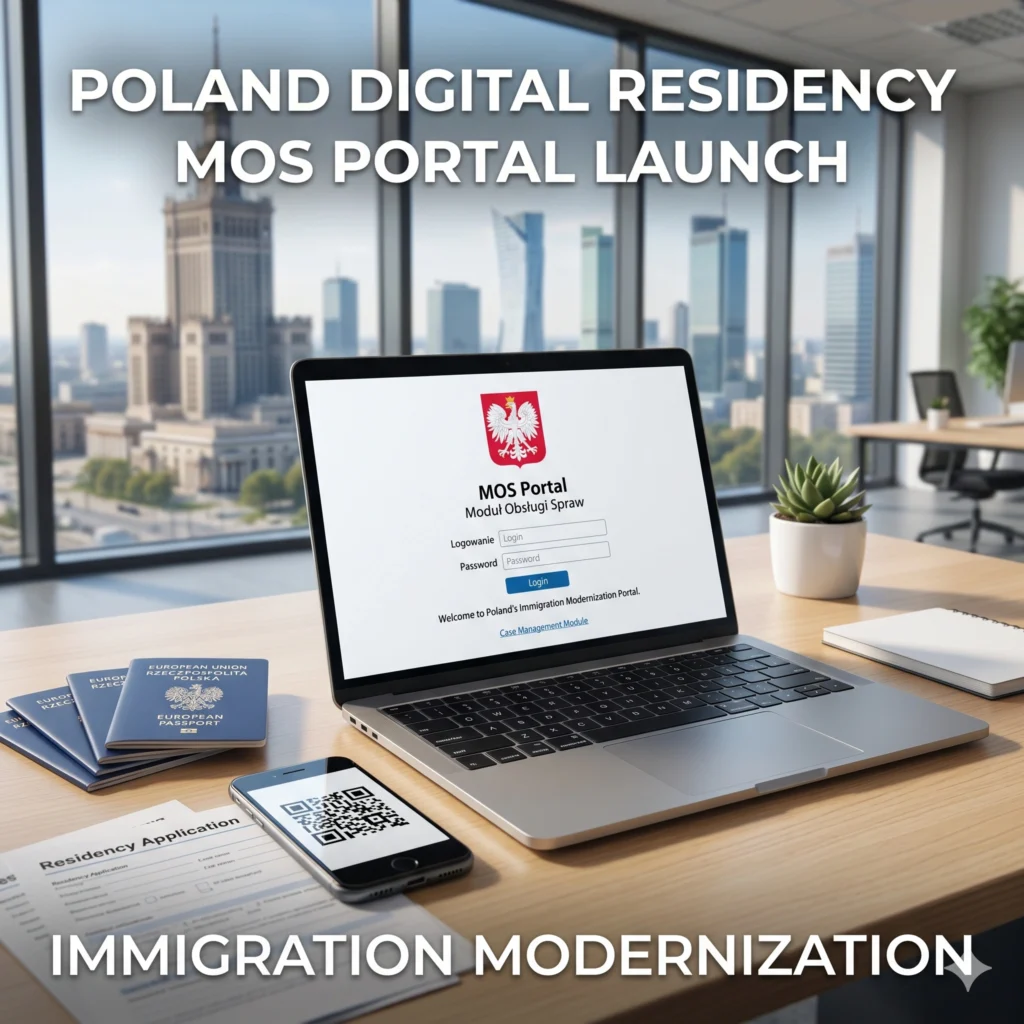
The Moduł Obsługi Spraw, or MOS platform, is now the exclusive environment for submission of residence permit applications in Poland. This means that any paper applications mailed but not received by provincial offices before the deadline are no longer legally valid for consideration. Applicants must be diligent in ensuring their digital scans are high-quality and meet the specific file size requirements mandated by the portal. Moreover, the shift requires a level of digital literacy that was previously unnecessary under the older, manual submission processes.
One of the most significant changes involves the delivery of appointment notices for required in-person interviews and biometric data collection. These notifications are now delivered electronically through individual user inboxes within the portal, rather than through traditional mail. This change reduces the risk of lost documents and ensures that applicants receive time-sensitive information instantaneously. However, users must monitor their accounts frequently to ensure they do not miss critical deadlines that could result in application rejection.
Government officials believe that this modernization will significantly increase Poland’s competitiveness for skilled labor within the Central European region. By providing a more predictable and efficient immigration experience, the country hopes to attract the talent needed to sustain its industrial and technological growth. The digital platform also allows for easier data reuse, which simplifies the process for foreign residents who plan to stay in Poland long-term. This focus on efficiency is a core component of the broader national digital transformation strategy.
Poland Digital Immigration Filings
The Poland digital immigration filings transition has not been without its challenges, particularly regarding the current language limitations of the interface. At present, the portal is available only in Polish, which has prompted many corporate human resources teams to organize internal training webinars for their staff. Immigration lawyers have also voiced concerns that language barriers could lead to a spike in accidental errors or application rejections. Therefore, non-Polish speaking applicants are encouraged to seek professional assistance or use translation tools to navigate the system accurately.
Despite these hurdles, the system offers several advanced features that were unavailable in the past, such as the ability to track application status in real-time. This transparency is expected to reduce the volume of inquiries directed at immigration offices, allowing staff to focus on case adjudication. The government is also beta-testing a mobile application that will eventually allow foreign residents to store their residence cards as digital QR codes. This innovation would provide a convenient and secure way for residents to prove their legal status to authorities or employers.
For specific categories like certain intra-corporate transfers, the traditional paper-based system remains in place temporarily as the government finalizes digital protocols. However, the vast majority of workers, students, and family members must adapt to the new digital reality immediately. The Office for Foreigners has emphasized that the goal is a 100 percent digital environment by the end of the year. This aggressive timeline underscores the importance of the MOS platform as a cornerstone of Poland’s future immigration policy and administrative efficiency.
Impact on Corporate Recruitment and Seasonal Programs
The shift to Poland digital immigration filings is particularly impactful for companies that rely on a large volume of international seasonal workers. Future updates to the MOS platform are expected to include a specialized API designed for the bulk-uploading of applications for seasonal worker programs. This would allow large-scale employers to submit hundreds of applications simultaneously, drastically reducing the administrative burden on HR departments. Currently, these teams are focusing on mastering the manual digital entry process to ensure compliance with the new laws.
By streamlining the verification of foreign worker documentation, the government aims to create a more business-friendly environment that supports rapid scaling. The digital platform allows for faster cross-referencing of employment contracts and social security records, which helps prevent fraudulent applications. This increased level of scrutiny actually benefits legitimate workers and companies by ensuring that those who follow the rules are processed more quickly. The system is essentially a filter that prioritizes accuracy and transparency over bureaucratic paperwork.
Strategic planning for Poland digital immigration filings is now a requirement for all multinational corporations operating within the Baltic region. The ability to quickly secure residence permits for specialized engineers and software developers is a major competitive advantage. Consequently, many firms are now hiring dedicated compliance officers whose sole responsibility is to manage the documentation flow within the MOS portal. This specialization highlights the growing complexity and importance of digital immigration infrastructure in the modern labor market.
Technical Considerations for a Successful Filing
To ensure a successful experience with Poland digital immigration filings, users must pay close attention to the technical specifications of the portal. There are strict limits on file sizes and formats for uploaded documents like proof of accommodation and health insurance. If a file is too large or in an unsupported format, the system will not allow the submission to proceed, which could lead to missed legal deadlines. It is highly recommended to compress PDF documents and ensure that all text is clearly legible to the digital verification software.
The portal also serves as a secure repository for all communications between the foreigner and the provincial immigration office. This means that all requests for additional documentation or clarification will be handled through the platform’s internal messaging system. By centralizing these communications, the MOS platform prevents the fragmentation of records that often occurred with paper and email exchanges. Applicants should ensure they have a stable internet connection and a compatible web browser before attempting to submit their final dossiers.
Managing the complexity of Poland digital immigration filings requires a systematic approach to document preparation and review. Applicants should create a digital checklist that matches the requirements listed on the Office for Foreigners’ website. By double-checking every entry, users can minimize the risk of a “formal deficiency” notice, which can reset the processing clock. The goal is to submit a “clean” application that requires zero follow-up from the busy immigration officers.
Legal Concerns and the Role of Immigration Professionals
The introduction of mandated Poland digital immigration filings has shifted the role of many immigration lawyers and consultants in the region. Rather than just helping with paperwork, these professionals are now acting as digital guides, ensuring that clients navigate the portal without making technical errors. Some lawyers are concerned that the lack of human interaction during the filing stage could lead to more rigid decision-making processes. They argue that the nuance of certain cases might be lost in a purely digital environment, leading to unnecessary rejections.
In response, the government has stated that the digital system is merely a tool for submission and that case officers will still exercise human judgment. The goal is to automate the mundane aspects of data entry while leaving the critical thinking and legal analysis to trained professionals. This balance is crucial for maintaining a fair and just immigration system while still achieving the desired efficiency gains. As the system matures, the feedback from legal professionals will likely be used to refine the user interface and the underlying logic of the platform.
Expert consultation for Poland digital immigration filings is becoming the standard for high-net-worth individuals and corporate executives. These applicants often have complex employment histories or varied income sources that require detailed explanation in the digital “comments” section. A well-prepared legal brief uploaded alongside the mandatory documents can significantly improve the chances of a favorable outcome. As such, the digital platform has not replaced the need for legal expertise but has simply changed the medium through which it is delivered.
Strategic Benefits for the Polish National Economy
The successful implementation of Poland digital immigration filings is expected to have a positive ripple effect throughout the national economy. A more efficient immigration system means that companies can onboard international talent faster, reducing the time that critical positions remain vacant. This is especially important in sectors like IT, engineering, and healthcare, where there is a persistent shortage of domestic specialists. By making the residency process more predictable, Poland becomes a more attractive destination compared to its regional neighbors.
Furthermore, the data collected through the MOS platform provides the government with real-time insights into migration trends and labor market needs. This information can be used to adjust visa quotas and focus recruitment efforts on the skills most needed by the economy. The digital system also makes it easier to track the long-term integration of foreign workers into the Polish society. This data-driven approach allows for more informed policy decisions that benefit both the immigrants and the host nation in equal measure.
Sustainable growth through Poland digital immigration filings is a key pillar of the “Poland 2030” economic strategy. By automating the residency pipeline, the state can handle larger volumes of migrants without a proportional increase in administrative staff. This efficiency allows tax revenues to be diverted to other critical infrastructure projects, such as transport and green energy. The digital immigration system is thus a foundational piece of the country’s long-term plan for prosperity and regional leadership.
Digital Security and Data Privacy Standards
Security is at the heart of Poland digital immigration filings, with advanced encryption protocols protecting every uploaded document. The government has partnered with leading cybersecurity firms to ensure that sensitive personal data, such as biometric information and financial records, remains shielded from unauthorized access. This commitment to privacy is essential for maintaining the trust of the international community and complying with stringent European Union data protection regulations. Users are encouraged to use strong, unique passwords for their portal accounts.
The infrastructure supporting Poland digital immigration filings is designed with high availability in mind to prevent system crashes during peak periods. As the end of the month approaches, thousands of users typically log in to finalize their submissions, creating a massive load on the servers. The government has implemented load-balancing technologies to ensure that the portal remains responsive even under heavy traffic. This technical reliability is a cornerstone of the project’s overall success and public acceptance.
Continuous improvement of Poland digital immigration filings remains a priority for the IT department of the Office for Foreigners. They regularly release patches and updates based on user feedback and identified bugs within the MOS interface. This agile approach to government software development is a refreshing change from the static, slow-moving systems of the past. As a result, the user experience is expected to become increasingly intuitive over the coming months and years.
Conclusion and Final Thoughts on Digital Modernization
Poland digital immigration filings represent a necessary and bold step toward a more efficient future for the country’s administration. By embracing the Moduł Obsługi Spraw platform, the Office for Foreigners is setting a high bar for digital governance in Central Europe. While the transition may be difficult for some in the short term, the long-term benefits of reduced backlogs and increased transparency are undeniable. The move away from paper is not just a change in medium; it is a fundamental change in how Poland interacts with the global community.
As the system evolves to include mobile applications and API integrations, the experience of being a foreign resident in Poland will continue to improve. The challenges of language barriers and technical limits are being addressed through community training and ongoing system updates. For those looking to make Poland their home, the digital portal is now an essential part of that journey. By mastering this new tool, applicants can ensure their paperwork is handled with the precision and speed that a modern economy demands.
The total adoption of Poland digital immigration filings is a signal to the world that the country is open for business and ready for the future. By removing the friction from the residency process, the government is empowering individuals to contribute their skills to the national success story. The digital path may be new, but it leads to the same destination: a vibrant, diverse, and prosperous Poland. As we move forward, the MOS platform will continue to serve as the benchmark for excellence in digital immigration services.
For more details & sources visit: The National
Read more on Poland news: 360 News Orbit – Poland.