
UK Economy Growth Record signifies a major turning point for the British financial landscape as the nation navigates a complex global environment. This recent expansion, reported by the Office for National Statistics, indicates that the United Kingdom economy grew by 0.5 percent during the month of February. Such a figure represents the fastest monthly growth rate the country has seen in over two years, providing a temporary boost to national sentiment. This surge was primarily driven by increased output across multiple sectors, with the services industry playing a particularly vital role in the recovery.
While the February data is positive, the International Monetary Fund has voiced significant concerns regarding the sustainability of this upward trajectory. Geopolitical tensions, specifically the ongoing conflict in the Middle East involving Iran, are expected to hinder future expansion across the British Isles. The IMF recently adjusted its growth estimate for the United Kingdom in 2026, cutting the forecast from 1.3 percent down to a more cautious 0.8 percent. This revision suggests that the UK Economy Growth Record may face significant pressure as international supply chains and energy markets react to the war.
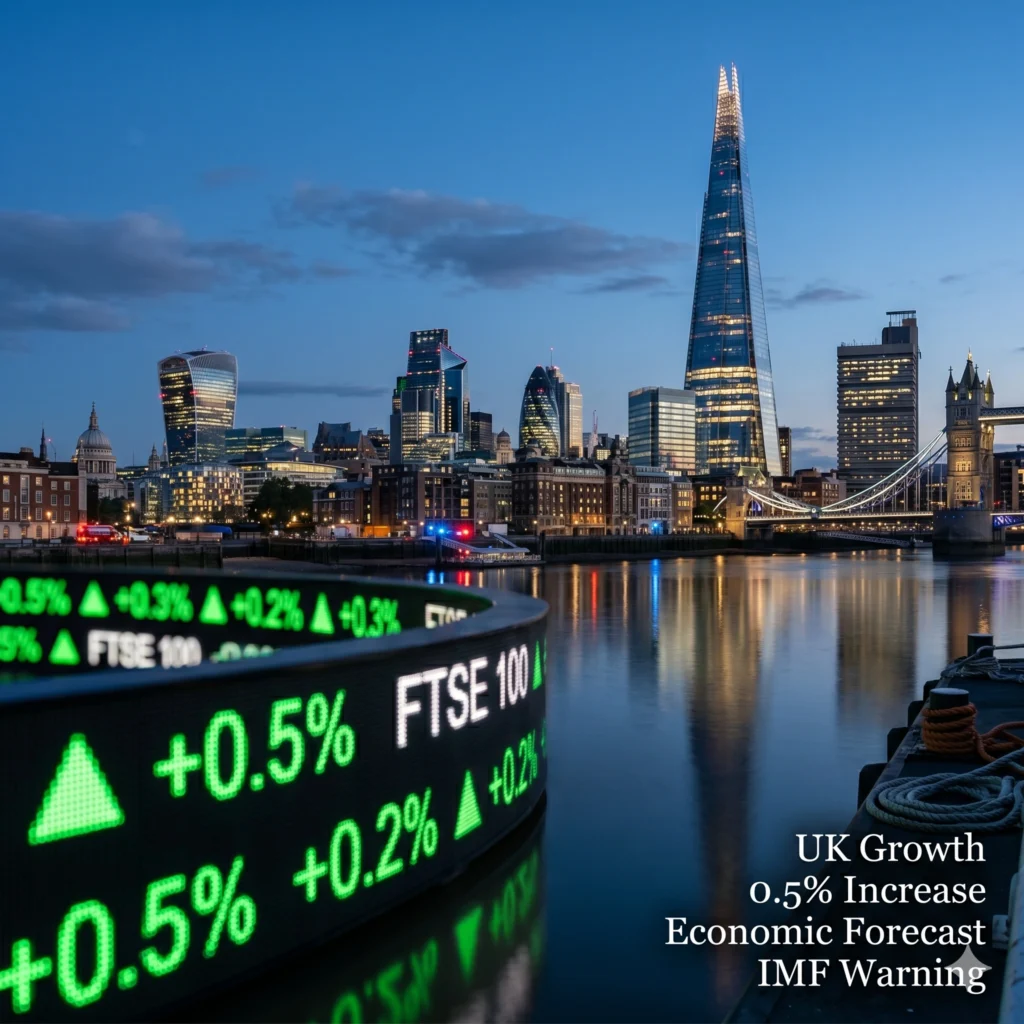
UK Economy Growth Record
The UK Economy Growth Record of 0.5 percent in February stands as the largest monthly increase since the beginning of 2024. This performance was unexpected by some analysts who feared that high interest rates would stifle consumer spending more aggressively. Instead, the data shows a resilient services sector that managed to thrive despite the broader inflationary environment. The Office for National Statistics gathered this information from thousands of companies, reflecting a broad-based recovery across the private sector. This specific UK Economy Growth Record provides a much-needed victory for policymakers seeking to stabilize the pound.
Economists are quick to point out that these figures represent a period before the full impact of the Middle East crisis was realized. The regional instability has the potential to drive up shipping costs and disrupt the flow of essential commodities to British ports. Consequently, the UK Economy Growth Record achieved in February might be difficult to replicate in the coming quarters of 2026. Experts believe the United Kingdom may face a harder economic hit than other advanced nations due to its reliance on global trade routes. This vulnerability is a key focus for the Office for Budget Responsibility in its latest forecasts.
Despite these warnings, the immediate benefits of a rising GDP are being felt through improved tax receipts and wage growth. Higher output generally leads to more job opportunities and better pay increases for workers in both the public and private spheres. The UK Economy Growth Record is therefore more than just a statistic; it is a reflection of the financial well-being of millions of households. Maintaining this momentum will require careful management of trade relations and domestic industrial strategy. The government remains hopeful that targeted investments in technology and green energy will sustain growth throughout the decade.
Sector Performance and Service Growth
The rise in economic activity was largely spearheaded by the services sector, which accounts for the vast majority of British output. From retail to professional services, businesses reported a surge in demand during the early part of the year. The UK Economy Growth Record highlights the adaptability of British firms in the face of changing market conditions. Even with the threat of international conflict, domestic consumption remained surprisingly strong during the February reporting period. This internal strength is a critical component of the overall UK Economy Growth Record that economists are currently studying.
Manufacturing and construction also contributed to the positive headline figure, though at a more modest pace than the services industry. Infrastructure projects across the country have helped maintain a steady flow of investment, supporting thousands of middle-income jobs. The UK Economy Growth Record is a composite of these various moving parts, each reacting differently to the current geopolitical climate. While some industries are bracing for energy shocks, others are finding ways to innovate and reduce their reliance on expensive imports. This diversity of output is what has allowed the economy to expand by 0.5 percent.
The Office for National Statistics will continue to refine these estimates as more comprehensive data becomes available from smaller enterprises. Initial snapshots often capture the performance of larger corporations, while the full picture takes longer to emerge. The UK Economy Growth Record is subject to these revisions, which can sometimes alter the final percentage points. However, the current trend remains clearly positive for the month of February, providing a buffer against future shocks. Analysts are looking for signs that this growth can be sustained into the spring and summer months of 2026.
Geopolitical Risks and Future Forecasts
The International Monetary Fund’s decision to cut the UK’s growth forecast highlights the fragile nature of the current recovery. Global markets are extremely sensitive to the situation in the Middle East, which can lead to sudden spikes in oil and gas prices. The UK Economy Growth Record is essentially at the mercy of these international developments, regardless of domestic policy success. If energy prices remain elevated, the cost of living could once again become a major drag on the national expansion. This risk is why the IMF predicts a significantly lower growth rate of 0.8 percent for the full year.
Rising geopolitical tensions have historically led to a “flight to safety” among investors, which can impact the value of the British pound. A weaker currency makes imports more expensive, potentially fueling a new wave of inflation that would hurt consumers. The UK Economy Growth Record is currently balanced against these external forces, creating a high-stakes environment for the Bank of England. Policymakers must decide whether to adjust interest rates to protect the currency or keep them steady to encourage further growth. This delicate balancing act will define the economic narrative for the remainder of 2026.
- War in the Middle East has led to a reduction in annual growth estimates.
- The IMF warns that the UK may be more vulnerable than its G7 peers.
- Potential food shortages could lead to a contraction in the retail sector.
- Energy shocks remain the primary threat to domestic manufacturing stability.
Public Services and National Budgeting
A healthy GDP is the lifeblood of the British public sector, providing the funds necessary for essential services. When the UK Economy Growth Record shows expansion, the Treasury can allocate more resources to the National Health Service and the education system. This link between private sector success and public sector funding is a cornerstone of the current government’s narrative. Without a growing economy, the state would be forced to either increase borrowing or implement difficult spending cuts. The 0.5 percent rise in February offers a glimmer of hope for those advocating for increased public investment.
The Labour government’s commitment to stimulating growth is viewed as a way to avoid the austerity measures of the past. By focusing on productivity and regional development, they hope to create a more resilient economic foundation. The UK Economy Growth Record is a key performance indicator for these policies, showing whether the strategy is yielding real-world results. Critics, however, argue that the government must do more to protect the economy from the looming energy crisis. The debate over how to best utilize the current growth remains a central theme in Westminster.
Improving the infrastructure of the British Isles requires long-term financial commitments that only a stable economy can provide. Projects such as high-speed rail and 5G expansion are dependent on the tax revenue generated by a thriving business community. The UK Economy Growth Record provides the statistical justification for these large-scale expenditures. As the year progresses, the government will need to navigate the competing demands of social spending and fiscal responsibility. The February growth figures provide a temporary reprieve, but the long-term outlook remains clouded by international uncertainty.
Economic Contraction Concerns and Mitigation
While the current news is positive, the specter of economic contraction looms if the war involving Iran escalates further. Analysts are concerned that a prolonged conflict could lead to a global recession, dragging the United Kingdom down with it. The UK Economy Growth Record could quickly turn into a story of decline if global trade is severely restricted for an extended period. Mitigation strategies include diversifying energy sources and strengthening domestic food production to reduce reliance on vulnerable regions. These long-term shifts are essential for protecting the UK Economy Growth Record from external volatility.
The private sector is already beginning to adjust, with many companies seeking to reshore their supply chains to closer territories. This shift, while costly in the short term, could lead to a more stable and predictable economic environment in the future. The UK Economy Growth Record of 0.5 percent demonstrates that the economy can still grow under pressure, but the limit of this resilience is unknown. Business leaders are calling for clear guidance from the government on how to handle potential disruptions to Middle Eastern trade. Proactive planning will be the difference between a minor slowdown and a major crisis.
- Diversification of supply chains is becoming a priority for British retailers.
- Government incentives for green energy may help offset future oil price spikes.
- Strategic food reserves are being discussed as a defense against global shortages.
- Localized manufacturing could provide a buffer for the UK Economy Growth Record.
Analytical Perspective on Growth Metrics
The Office for Budget Responsibility’s downward revision of the annual growth forecast to 1.1 percent reflects a sobering reality. Even before the full impact of the war, experts saw structural challenges that were likely to limit the pace of expansion. The UK Economy Growth Record in February is a significant overperformance compared to these more conservative annual averages. This suggests that while the “ceiling” for growth may be lower, the “floor” remains relatively high thanks to a strong labor market. Understanding these metrics requires a nuanced look at both monthly volatility and long-term trends.
Analysts use GDP figures to advise on everything from pension fund investments to corporate expansion plans. A strong UK Economy Growth Record signals that the market is healthy enough to support new ventures and capital expenditures. Conversely, the warnings from the IMF act as a “yellow light,” advising caution in the face of rising geopolitical risks. This duality defines the current economic climate: immediate success balanced against future threats. The 0.5 percent growth in February is a clear win, but one that comes with many strings attached.
- Monthly GDP data provides a snapshot of immediate economic health.
- Annual forecasts by the OBR take a broader view of structural stability.
- IMF estimates focus heavily on global interconnectedness and systemic risks.
- The UK Economy Growth Record is the primary metric used for national debt calculations.
Impact on Workers and the Cost of Living
For the average citizen, the UK Economy Growth Record is most relevant when it translates into higher wages and more job security. During periods of expansion, businesses are more likely to hire and offer competitive pay packages to attract talent. The February growth has helped sustain a tight labor market, where workers currently hold a significant amount of bargaining power. However, if inflation begins to outpace these wage gains, the benefit of the UK Economy Growth Record will be lost for many families. Balancing growth with price stability is the ultimate challenge for the Treasury.
The potential for energy shocks remains the biggest threat to the standard of living for those across the British Isles. If heating and fuel costs rise significantly, the extra income from wage increases will be quickly swallowed up by utility bills. This is why the UK Economy Growth Record is so closely watched by social advocacy groups and trade unions. They argue that growth must be inclusive and protective of the most vulnerable members of society. The government’s response to the IMF’s warnings will likely involve new measures to support households through a difficult 2026.
Resilience in the British Financial Sector
The City of London remains a cornerstone of the national economy, contributing a massive share to the overall GDP. The financial services industry has shown remarkable resilience, continuing to facilitate global trade and investment despite the geopolitical chaos. The UK Economy Growth Record is heavily influenced by the performance of these institutions, which act as a global hub for capital. Maintaining the attractiveness of London as a financial center is vital for ensuring that the UK Economy Growth Record remains positive in the long run. Competitive regulations and digital innovation are key to this strategy.
Financial analysts are monitoring the Middle East conflict for its impact on global equity markets and bond yields. Volatility in these areas can have a “wealth effect” that either encourages or discourages consumer spending at home. The UK Economy Growth Record of 0.5 percent reflects a period of relative calm in the markets before the current escalation. As the war continues, the financial sector will need to navigate increased risk and shifting investor sentiment. The strength of the UK’s banking system provides a solid foundation for managing these turbulent times.
- London’s status as a global financial hub supports the national growth rate.
- Digital banking and fintech are emerging as high-growth sectors within the UK.
- Market volatility can impact the UK Economy Growth Record through consumer confidence.
- Regulatory stability is essential for attracting long-term foreign investment.
Conclusion and the Road Ahead for 2026
The UK Economy Growth Record for February 2026 is a testament to the underlying strength of the British economy. Achieving a 0.5 percent expansion in such a challenging global context is a significant feat that should not be overlooked. However, the warnings from the IMF and the downward revisions from the OBR serve as a necessary reality check. The road ahead for the remainder of the year will be defined by how well the nation can weather the storms of international conflict. The UK Economy Growth Record has set a high bar, but the obstacles are equally formidable.
As we move further into 2026, the focus will remain on the interplay between domestic policy and global events. The Labour government’s growth-first approach will be put to the test as energy and food security become more prominent issues. The UK Economy Growth Record will continue to be the primary indicator of the nation’s success or failure in navigating these waters. For now, the February data provides a moment of optimism in an otherwise uncertain world. The British Isles have shown they can grow; the question now is how they will endure.
The final assessments of the year will depend on whether the Middle East conflict is contained or if it expands into a wider regional crisis. The UK Economy Growth Record is currently a success story, but one that is written on a very fragile page. We must remain vigilant and adaptable as the global situation evolves. The 0.5 percent growth is a foundation to build upon, provided the nation can manage the risks that lie on the horizon. The story of the 2026 economy is still being written, one month at a time.
For more details & sources visit: BBC News
Read more about UK news on 360 News Orbit – UK.