
The UAE Cyber Security Council recently issued a grave warning regarding a smart vacuum security risk that has sent shockwaves through the digital community. This alarming incident involved a hacker who successfully hijacked a smart home appliance to record a family within the privacy of their own residence. Dr. Mohammed Al-Kuwaiti, the head of the UAE Government Cyber Security Council, detailed how the perpetrator attempted to use this sensitive footage for financial blackmail.
Consequently, this case highlights the urgent need for residents to reassess the safety protocols of their internet-connected household devices immediately. While smart technology offers unparalleled convenience, it simultaneously introduces significant vulnerabilities that digital criminals are increasingly eager to exploit for profit. Authorities are now urging the public to remain vigilant as these sophisticated breaches become more frequent in the modern connected era.
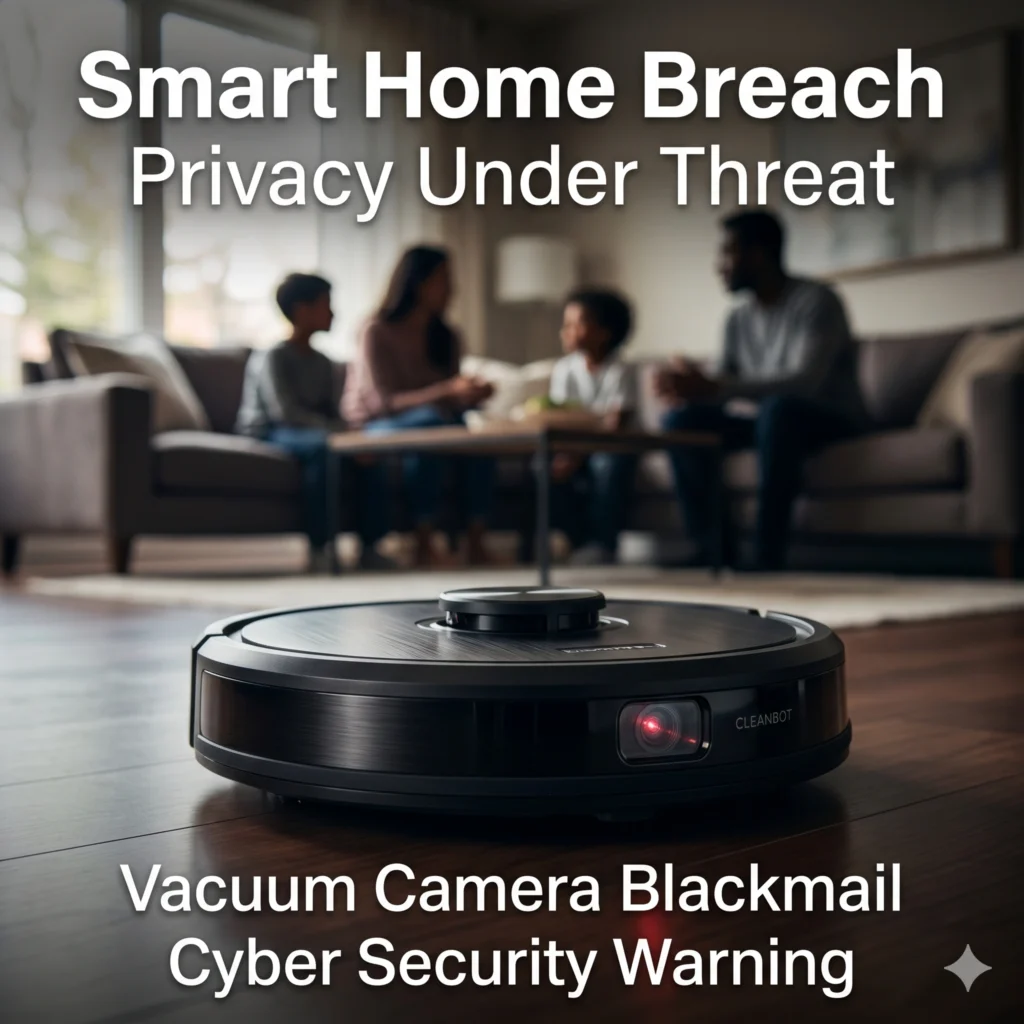
The Rising Smart Vacuum Security Risk in Modern Homes
Dr. Mohammed Al-Kuwaiti disclosed the specific details of the blackmail incident during a recent high-level security briefing held in the UAE. He explained that a hacker gained full remote control of a smart vacuum equipped with a high-definition camera system. This breach allowed the criminal to capture unauthorized footage of a family without their knowledge or consent for several days. Furthermore, the attacker leveraged these private images to demand substantial payments, illustrating a terrifying evolution in digital extortion tactics. This specific case serves as a definitive wake-up call for anyone utilizing smart appliances that feature integrated cameras or microphones.
The reliance on smart devices provides new and lucrative opportunities for digital criminals to violate personal privacy on a massive scale. As we integrate more technology into our daily lives, the surface area for potential cyberattacks expands exponentially every single year. Dr. Al-Kuwaiti emphasized that the smart vacuum security risk is not an isolated technical glitch but a systemic security failure. Many manufacturers prioritize user experience and aesthetic design over robust encryption and secure authentication methods during the production phase. Therefore, consumers must take proactive steps to secure their home networks against these increasingly brazen and invasive digital intruders.
Identifying Technical Vulnerabilities in Household Smart Appliances
Many security breaches reportedly begin with simple phishing attempts through deceptive calls or text messages sent to unsuspecting device owners. These initial points of contact allow hackers to harvest credentials that provide access to the home’s primary Wi-Fi network. Once inside the network, a criminal can easily identify devices with weak security protocols or outdated firmware versions. The smart vacuum security risk becomes a reality when these appliances are left with default factory passwords or open ports. Residents often forget that a vacuum is essentially a mobile computer with eyes and ears moving through their homes.
Technical vulnerabilities allow criminals to monitor private lives without the owners’ knowledge for extended periods of time. This silent surveillance is perhaps the most disturbing aspect of the modern IoT landscape in the Middle East. Because these devices operate autonomously, users rarely check their connection logs or monitor data outgoing from the appliance to external servers. Consequently, a smart vacuum security risk can remain undetected until the hacker decides to make their presence known through a blackmail demand. Enhancing your digital hygiene by changing passwords frequently is the first line of defense against such invasive home network penetrations.
Smart Vacuum Security Risk
The UAE Cyber Security Council noted that cybercrimes have evolved significantly beyond basic technical breaches or simple data theft. Today, digital threats include defamation, identity theft, and the creation of sophisticated deepfakes using stolen personal imagery. The smart vacuum security risk represents a new frontier where the physical and digital worlds collide with devastating personal consequences. Hackers are now specifically targeting everyday items such as household appliances and vehicle dashcams for exploitation and long-term monitoring. This shift in strategy indicates that no device is too small or insignificant to be used as a tool for criminal leverage.
Moreover, the council highlighted that the psychological impact of home surveillance can be far more damaging than the financial loss itself. Families who fall victim to the smart vacuum security risk often feel a permanent loss of safety within their own walls. The realization that a stranger has been watching your most private moments creates a sense of violation that is difficult to overcome. To combat this, the UAE government is working to establish stricter standards for IoT devices sold within the domestic market. However, until these regulations are fully implemented, the primary responsibility for device security rests firmly on the shoulders of the individual consumer.
Sophisticated Scams and the Broader Landscape of Digital Threats
The briefing also addressed broader digital threats including fraudulent investment platforms promising high returns in gold or digital currency. Victims of these sophisticated scams often lose their entire life savings to platforms mimicking legitimate financial institutions with high precision. While the smart vacuum security risk focuses on privacy, these financial scams target the economic stability of residents across the nation. Both types of crime rely on the same fundamental principle of exploiting trust and technical gaps in the user’s digital environment. Cybercriminals are becoming increasingly adept at creating convincing facades to lure victims into their traps.
Authorities warned that these technical vulnerabilities are often paired with social engineering tactics to maximize the success rate of the attack. For instance, a hacker might use information gathered through a smart vacuum security risk to make a financial scam seem more legitimate. By knowing the layout of a home or the habits of its occupants, a criminal can craft a highly personalized and terrifyingly effective extortion plot. This convergence of different cybercrime methods makes the current threat landscape more dangerous than it has ever been in previous years. Staying informed about the latest tactics is essential for maintaining both financial and personal security in 2026.
Practical Steps to Mitigate the Smart Vacuum Security Risk
- Always change the default administrator password on every new smart device immediately after unboxing.
- Disable remote access features if you do not strictly require them for the appliance to function properly.
- Ensure that your home Wi-Fi network uses WPA3 encryption to provide the highest level of signal protection.
- Regularly update the firmware of your smart vacuum to patch known security holes and technical bugs.
Citizens are urged to secure their home networks and remain vigilant against unsolicited digital communications from unknown sources. Implementing a guest network specifically for IoT devices can prevent a smart vacuum security risk from compromising your personal computers. This network segmentation ensures that even if one device is hijacked, the rest of your sensitive data remains isolated and protected. Furthermore, users should physically cover cameras on devices when they are not in active use to prevent visual recording. Taking these small, disciplined steps can significantly reduce the likelihood of becoming a target for international cybercriminal organizations.
Protecting the Future of the UAE Digital Economy
The head of the UAE Government Cyber Security Council believes that education is the most powerful tool against the smart vacuum security risk. By raising public awareness, the council aims to create a culture of “cyber-smart” citizens who prioritize digital safety in every interaction. As the UAE continues to lead the region in technological adoption, it must also lead in the implementation of defensive strategies. The collaboration between government bodies and the private sector is crucial for developing a resilient digital infrastructure. Ultimately, the goal is to enjoy the benefits of smart living without sacrificing the fundamental right to home privacy.
Future policy discussions will likely involve mandatory security certifications for all smart devices imported into the country to ensure consumer safety. This proactive approach would address the smart vacuum security risk at the source by holding manufacturers accountable for their product security. In the meantime, the council continues to monitor global trends to provide timely warnings to the public about emerging threats. Residents should report any suspicious activity or attempted blackmail to the authorities immediately to assist in tracking down these digital predators. Together, the community can build a safer environment where technology serves the people rather than endangering their personal lives.
Advanced Encryption and the Battle Against IoT Intrusions
As technology progresses, the methods used to counter the smart vacuum security risk must become equally sophisticated and adaptive. Industry experts suggest that end-to-end encryption for all data transmitted from home appliances should become the standard requirement for all brands. This would mean that even if a hacker intercepts the video feed, the data would be unreadable without the unique decryption key. However, many current devices on the market still transmit data in relatively vulnerable formats, which facilitates easy exploitation. Consumers should research the security track record of a brand before introducing their products into a private living space.
The battle against digital blackmail requires a multi-layered defense strategy that includes both software and hardware solutions. Some newer models are beginning to include physical kill-switches for cameras and microphones to eliminate the smart vacuum security risk entirely. While these features may increase the cost of the appliance, the peace of mind they provide is often considered invaluable by safety-conscious families. Dr. Al-Kuwaiti reiterated that the cost of a security breach is always much higher than the investment in secure technology. Investing in reputable brands with a history of frequent security updates is a wise decision for every modern household.
Common Signs Your Smart Device Has Been Compromised
- The device performs movements or actions that were not scheduled or initiated by the primary user.
- You notice an unusual spike in data usage coming from your home network’s IoT segment or specific appliance.
- The device settings, such as the registered email or password, have been altered without your direct involvement.
- LED indicators for the camera or microphone activate at times when the device should be in standby mode.
If you suspect a smart vacuum security risk has manifested in your home, the first step is to disconnect the device from the internet. Resetting the device to factory settings can often remove malicious software, but you must also secure the network it was connected to. Changing your router’s password and checking for unauthorized connected devices is essential to ensure the hacker has been completely purged. Reporting the incident to the UAE Cyber Security Council helps them gather data to protect other citizens from similar attacks. Quick action is the best way to minimize the potential damage caused by a successful digital hijacking attempt.
Final Thoughts on Maintaining Household Privacy in 2026
The incident involving the smart vacuum security risk serves as a poignant reminder that our homes are no longer the isolated sanctuaries they once were. Every connected device is a potential gateway that requires constant monitoring and maintenance to remain secure against outside threats. By following the guidance provided by Dr. Mohammed Al-Kuwaiti and the UAE Cyber Security Council, residents can effectively safeguard their families. We must remain proactive rather than reactive in the face of evolving cybercrimes like blackmail and unauthorized surveillance. Awareness is the first step toward a more secure and private future for every household in the Emirates.
As we look toward the future, the integration of artificial intelligence in home security may provide new ways to detect a smart vacuum security risk. AI-driven network monitors could identify abnormal behavior in real-time and automatically block suspicious connections before any data is stolen. Until these advanced systems are mainstream, the human element remains the most critical factor in the security chain of any home. Stay curious, stay skeptical of unsolicited digital requests, and always prioritize the security of your personal data above the convenience of a smart feature. Your privacy is a valuable asset that deserves the highest level of protection available in today’s digital landscape.
For more details & sources visit: Emarat Al Youm
Read more about UAE news: 360 News Orbit – UAE.