
Netherlands Tulip Fever is currently sweeping across the coastal regions of the country as millions of tulips, daffodils, and hyacinths reach their spectacular peak bloom. This annual phenomenon transforms the Dutch landscape into a vivid tapestry of colors, drawing spectators from every corner of the globe to witness the natural beauty. Local horticulturists in the Bollenstreek region have reported that this year’s environmental conditions have been nearly perfect for a synchronized display. The air is filled with the fragrance of spring, signaling a period of immense cultural pride and economic vitality for the nation.
The arrival of the Netherlands Tulip Fever represents more than just a seasonal change; it is a profound celebration of the country’s deep botanical heritage. Visitors flocking to the fields near Amsterdam are greeted by geometric patterns of petals that stretch toward the horizon, creating a photographer’s paradise. As the flower industry remains a cornerstone of the Dutch economy, the 2026 season is expected to break previous records for international attendance. Experts suggest that the meticulous cultivation techniques passed down through generations are the primary reason these displays remain so vibrant and resilient year after year.
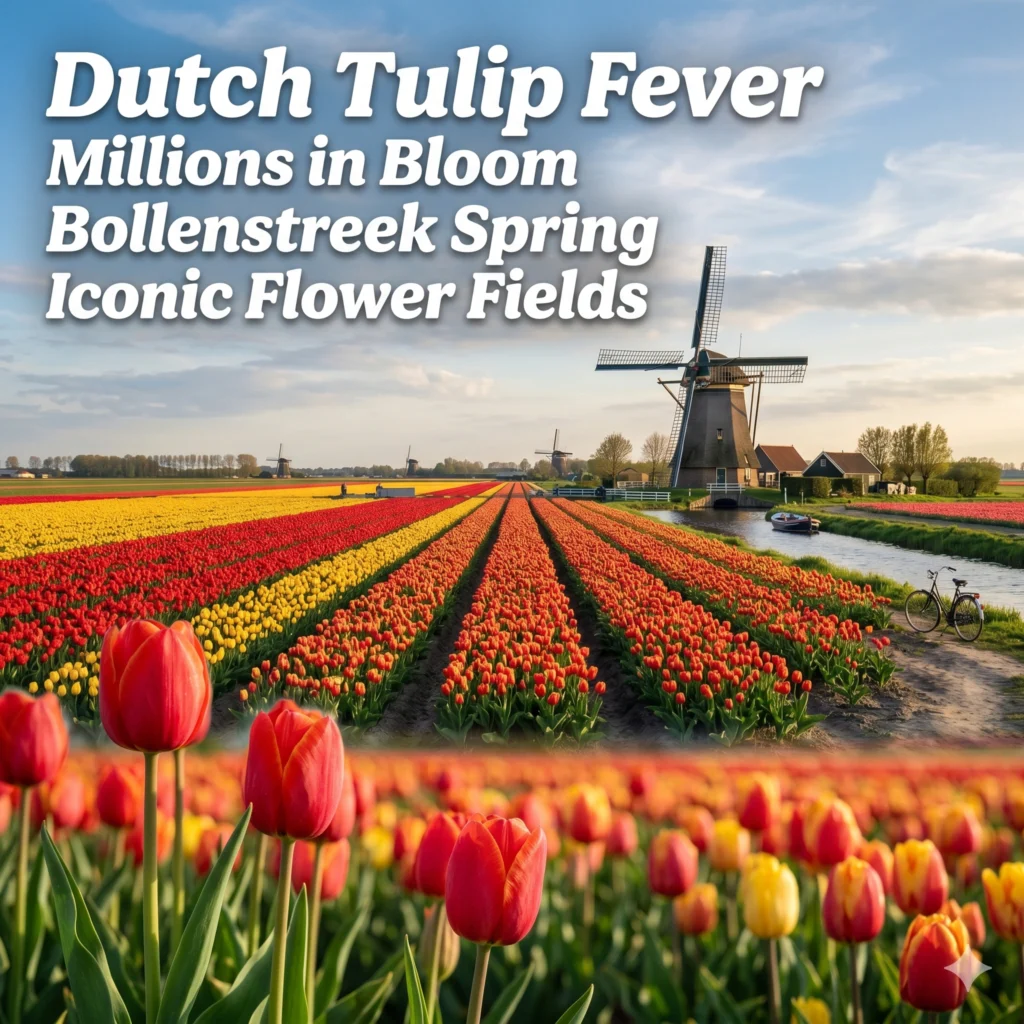
Netherlands Tulip Fever
The impact of Netherlands Tulip Fever is most visible in the famous Bollenstreek region, where the flower industry has its historical roots. This area, situated a short distance from the capital, serves as the primary hub for the global export of bulbs and cut flowers. During the peak blooming weeks, the local economy receives a massive boost from horticultural tourism, as hotels and restaurants fill with flower enthusiasts. The tradition of “Tulip Fever” dates back centuries, but the modern execution involves high-tech irrigation and soil management to ensure every field reaches its maximum aesthetic potential.
Beyond the aesthetic appeal, Netherlands Tulip Fever serves as a vital educational platform for sustainable agriculture and plant science. Many of the growers in the coastal belt offer guided tours that explain the lifecycle of a bulb and the importance of biodiversity in commercial farming. By showcasing elaborate displays of hyacinths and daffodils alongside the iconic tulips, the industry demonstrates its versatility and commitment to variety. This holistic approach ensures that the “fever” remains a sustainable and cherished part of the Dutch identity, evolving with new environmental standards while maintaining its classic charm.
The sheer scale of the Netherlands Tulip Fever in 2026 has required significant coordination between local municipalities and tourism boards. To manage the influx of international visitors, special cycling routes and eco-friendly shuttle services have been established throughout the Bollenstreek. These initiatives aim to protect the delicate fields from overcrowding while providing a seamless experience for nature lovers. As a result, the region has become a blueprint for how a natural phenomenon can be managed as a world-class tourist attraction without compromising the integrity of the agricultural landscape.
Historical Roots of the Dutch Botanical Heritage
To understand the current Netherlands Tulip Fever, one must look back at the historical significance of these flowers in Dutch society. Tulips were first introduced to the country in the 16th century and quickly became a symbol of wealth and status. The original “Tulip Mania” of the 17th century was a period of intense speculation, and while the economic bubble eventually burst, the love for the flower never faded. Today, the annual bloom is a more stable but equally passionate affair that honors this long-standing relationship between the people and their land.
The expertise required to sustain the Netherlands Tulip Fever is passed from masters to apprentices within the Dutch horticultural community. This knowledge includes understanding the precise timing of the frost, the acidity of the coastal soil, and the specific nutrients required for vibrant pigment production. Because the Bollenstreek region sits on unique sandy soil behind the dunes, it offers the ideal drainage system for bulbs to thrive. This geographical advantage is the secret behind why the Netherlands remains the undisputed leader in the global flower market.
Furthermore, the Netherlands Tulip Fever is a source of national unity, with various festivals and floral parades taking place across the provinces. These events often feature giant floats decorated entirely with flower petals, showcasing the artistic talent of local residents. The 2026 parades are expected to feature themes of sustainability and technological innovation, reflecting the modern values of the Dutch people. By blending history with contemporary art, the country ensures that its botanical heritage remains relevant and exciting for the younger generation of residents and visitors alike.
Economic Impact of Horticultural Tourism
The financial implications of the Netherlands Tulip Fever are staggering, contributing billions of Euros to the national GDP through exports and tourism. During the spring months, the demand for Dutch bulbs skyrockets as gardeners around the world seek to replicate a piece of the Netherlands in their own backyards. Locally, the hospitality sector in Lisse and Hillegom sees its highest occupancy rates of the year. This seasonal surge provides essential revenue that supports infrastructure projects and community development throughout the coastal belt, proving that flowers are a serious business.
In 2026, the Netherlands Tulip Fever has seen a rise in “luxury botanical experiences,” where high-end travelers pay for private viewings and personalized horticultural workshops. These premium offerings have diversified the income streams for local growers, allowing them to reinvest in greener farming technologies. The synergy between the floral industry and the tourism sector creates a resilient economic ecosystem that can withstand global fluctuations. As long as the tulips continue to bloom, the economic heartbeat of the Bollenstreek will remain strong and steady.
The logistical chain supporting the Netherlands Tulip Fever is a marvel of modern efficiency, with flowers picked in the morning often reaching international markets by the next day. The proximity of the fields to Schiphol Airport allows for a rapid transit system that is unmatched by any other country. This infrastructure is a key component of the “fever,” as it ensures that the beauty of the Dutch spring can be shared globally in real-time. The 2026 season has highlighted the importance of this supply chain in maintaining the Netherlands’ status as a global floral powerhouse.
- Millions of tulip bulbs are exported annually to over 100 different countries.
- Tourism related to the spring bloom supports over 50,000 seasonal jobs.
- The floral industry accounts for a significant portion of the Dutch agricultural export value.
- Innovation in bulb preservation has extended the export season beyond the spring months.
Environmental Conditions and Ideal Bloom Timing
A successful Netherlands Tulip Fever depends heavily on the whims of the weather, and 2026 has been particularly kind to the growers. A mild winter followed by a gradual increase in temperature during March allowed the bulbs to develop deep root systems before the flowering stage. This led to a synchronized bloom where different varieties opened their petals at the same time, creating a more cohesive and impressive visual display. Meteorologists and horticulturists work closely together to predict the exact “peak” dates, which are then communicated to the public via digital tracking apps.
The management of the Netherlands Tulip Fever also involves a commitment to environmental stewardship. Many growers have transitioned to organic fertilizers and natural pest control methods to protect the local groundwater. This move toward sustainability is crucial for the longevity of the fields, as it ensures the soil remains fertile for future generations. Visitors are also encouraged to follow “leave no trace” principles, staying on designated paths to avoid damaging the delicate bulbs. These efforts ensure that the beauty of the Dutch spring does not come at the expense of the ecosystem.
During the height of the Netherlands Tulip Fever, water management remains a top priority for the coastal provinces. The intricate system of canals and dikes that defines the Dutch landscape is used to regulate the moisture levels in the flower fields. In 2026, new automated sensor technologies were introduced to monitor soil hydration in real-time, allowing for precision irrigation. This level of detail is what allows the Dutch to produce millions of flowers in a relatively small geographic area, maximizing every square meter of the available land.
Cultural Celebrations and Local Expertise
The heart of the Netherlands Tulip Fever lies in the passion of the local residents who treat the bloom as a high-stakes cultural event. Community groups often spend months planning their floral displays, competing for the most creative and colorful arrangements. This grassroots involvement is what gives the “fever” its authentic feel, as it is not just a commercial endeavor but a true labor of love. In the small villages of the Bollenstreek, the flower season is marked by traditional music, local food markets, and open-garden days that welcome the world.
The expertise associated with the Netherlands Tulip Fever is also showcased through international floral design competitions. Top florists from across the globe travel to the Netherlands in April to participate in masterclasses and showcase their skills. These events highlight the versatility of the tulip as a medium for high art, moving beyond the simple bouquet to complex installations. The 2026 exhibitions have focused on the concept of “Living Art,” where flowers are integrated into urban architecture and public spaces, bringing the spirit of the fields into the heart of the city.
Education is a central theme of the Netherlands Tulip Fever, with schools across the country participating in “planting days.” By involving children in the process of growing tulips, the nation ensures that the cultural significance of the flower is carried forward. Museums dedicated to the history of the tulip provide context for the modern industry, explaining how a single bulb once cost more than a house in Amsterdam. This deep-seated appreciation for the flower is the reason why the Netherlands Tulip Fever continues to be a global phenomenon centuries after its inception.
- The Bollenstreek region hosts the world’s largest permanent flower garden.
- Local flower parades involve over 1,500 volunteers and millions of blossoms.
- Traditional “flower mosaics” are created by hand using thousands of individual petals.
- Spring festivals often include workshops on bulb care and floral arrangement.
Technological Innovation in the Flower Industry
While the Netherlands Tulip Fever is rooted in tradition, it is increasingly driven by cutting-edge technology. In 2026, many of the large-scale growers have adopted drone technology to monitor the health of their fields from the air. These drones use multispectral imaging to detect early signs of disease or nutrient deficiency, allowing for targeted intervention. This proactive approach reduces the need for broad-spectrum chemicals and ensures that the flowers remain healthy throughout the entire blooming season. Technology is the silent partner that makes the massive scale of the bloom possible.
The Dutch have also pioneered new methods for extending the lifespan of cut flowers, a key part of the Netherlands Tulip Fever experience for those who can’t visit in person. Advanced cooling and packaging techniques allow tulips to remain fresh for weeks after being harvested. In 2026, a new bio-degradable packaging material was introduced, further aligning the industry with global sustainability goals. These innovations ensure that the beauty of the Dutch spring can be enjoyed in homes across the world, from New York to Tokyo, without a significant carbon footprint.
Automation has also transformed the sorting and shipping process during the Netherlands Tulip Fever. Robotic arms now handle the delicate task of sorting bulbs by size and quality, increasing the speed of the supply chain significantly. This allows the Dutch industry to maintain its competitive edge in a global market where timing is everything. Despite this shift toward high-tech solutions, the human element remains irreplaceable, as experienced growers still make the final decisions on when to harvest and how to design the most breathtaking floral landscapes.
Future Prospects for the Dutch Flower Season
As the Netherlands Tulip Fever of 2026 draws to a close, the focus is already shifting to the future of the industry. Climate change presents a significant challenge, as shifting weather patterns can disrupt the delicate timing of the bloom. To combat this, Dutch researchers are developing new tulip varieties that are more resilient to temperature fluctuations and heavy rainfall. The goal is to ensure that the “fever” remains a reliable annual event, regardless of the environmental challenges that may arise in the coming decades.
The expansion of the Netherlands Tulip Fever into digital spaces is another exciting development on the horizon. Virtual reality experiences are being developed that allow people to walk through the flower fields from their own homes, providing a new way to share the Dutch botanical heritage. While nothing can replace the smell and scale of the physical fields, these digital tools can help promote the region to new audiences. The 2026 season has proven that the appetite for floral beauty is universal, and the Netherlands is ready to lead the way into this new frontier.
In conclusion, the Netherlands Tulip Fever is a multifaceted phenomenon that blends history, economy, and natural beauty into a single, vibrant event. The 2026 season has showcased the best of what the country has to offer, from world-class horticultural expertise to innovative tourism management. As the millions of flowers eventually fade, the bulbs will remain in the ground, waiting for the cycle to begin again next year. The enduring popularity of the tulip is a testament to the power of nature to inspire and unite people across borders, cultures, and generations.
The success of the Netherlands Tulip Fever in 2026 serves as a reminder of the importance of preserving our natural and cultural heritage. By investing in sustainability and technology, the Dutch have ensured that their most famous symbol will continue to thrive in a changing world. For those who had the chance to witness the bloom this year, the memories of the colorful fields will last a lifetime. For everyone else, the promise of next spring offers a reason to visit and experience the “fever” for themselves, continuing a tradition that has defined the Netherlands for centuries.
For more details & sources visit: MSN
Read more on Netherland news: 360 News Orbit – Netherland.