
German Döner Kebab Popularity has officially reached a historic peak as a new report confirms its status as the nation’s most beloved street food. Released in April 2026, the analysis highlights how this culinary staple continues to dominate the German fast-food industry, outperforming traditional rivals. The study explores the historical rise of the dish alongside other European lifestyle trends, including French tourism and British traditions, painting a picture of a diverse continent.
Cultural historians attribute the success of the dish to the deep integration of Turkish culinary traditions into German society over several decades. Today, the dish is an integral part of the daily diet for millions of residents living in German urban centers like Berlin and Munich. Consequently, the German Döner Kebab Popularity serves as a powerful symbol of modern national identity and multicultural success within the Federal Republic.
Economic data suggests that the industry remains a significant contributor to the nation’s informal food economy, supporting thousands of small businesses. Lifestyle experts note that the unique combination of affordability and speed makes it a preferred choice for busy workers and students alike. Despite rising global inflation, the demand for high-quality meat and fresh vegetables in these kebabs continues to grow steadily.
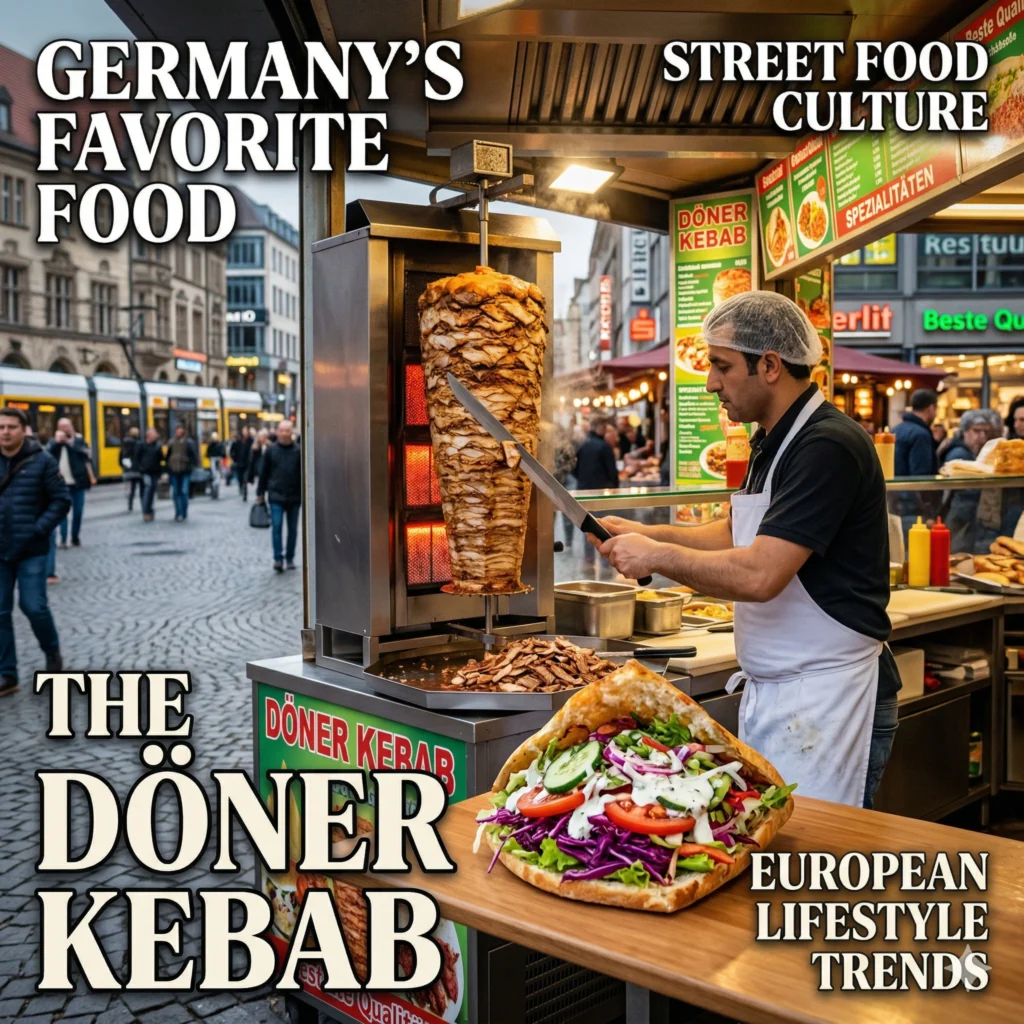
German Döner Kebab Popularity
The rise of German Döner Kebab Popularity is rooted in the post-war era when guest workers from Turkey introduced their rich food culture to the West. What began as a traditional sit-down meal was adapted into a portable sandwich to suit the fast-paced lifestyle of German city dwellers. This adaptation proved to be a masterstroke, allowing the dish to spread rapidly across every state and municipality in the country.
Furthermore, the report highlights how the recipe has evolved to include a variety of sauces and salad toppings that cater to local tastes. While the core of the dish remains true to its origins, the “German style” döner is now recognized globally as a distinct culinary category. This evolution has ensured that the food remains relevant to new generations of consumers who value both tradition and innovation.
The findings underscore how a single street food item can come to represent the complex layers of modern German life and social integration. Journalists who conducted interviews with vendors found that many shops are now multi-generational family businesses that have become neighborhood landmarks. Thus, the German Döner Kebab Popularity is built on a foundation of community trust and long-standing culinary expertise.
Economic Impact on the Food Industry
The scale of German Döner Kebab Popularity has profound implications for the national economy and the supply chains that support it. With billions of Euros in annual turnover, the döner sector is a powerhouse that creates employment for tens of thousands of people. From meat processing plants to specialized bakery chains, the economic footprint of this single dish is remarkably expansive and resilient.
During the spring of 2026, researchers found that even as other dining sectors struggled with labor shortages, the döner industry remained stable. The localized nature of these businesses often allows them to adapt more quickly to changing market conditions than large international franchises. This flexibility has been a key factor in maintaining German Döner Kebab Popularity during periods of economic uncertainty.
- The industry consumes hundreds of thousands of tons of beef and poultry annually.
- Local bakeries produce specialized flatbreads specifically for the döner market.
- Vegetable producers in southern Germany see peak demand during the summer kebab season.
- Small business owners benefit from a low-entry barrier compared to fine dining establishments.
This economic resilience ensures that the dish remains available at a price point that is accessible to the general public. While the cost of a standard kebab has seen slight increases due to supply chain pressures, it remains the benchmark for affordable nutrition. The German Döner Kebab Popularity is therefore anchored in its practical value to the average German household budget.
Cross-Cultural European Lifestyle Trends
The 2026 lifestyle report does not limit itself to food; it places German Döner Kebab Popularity within a broader European cultural context. For instance, the coverage includes travel insights regarding a perfect day in Nice, France, highlighting the contrast between German street food and Mediterranean dining. This comparison illustrates the diverse ways in which Europeans engage with their local environments through food and leisure.
Additionally, the report explores the specific etiquette and formal rules associated with traditional British afternoon tea. By examining these distinct traditions, the analysis shows how Europe manages to maintain local identities while sharing a common appreciation for culinary excellence. The German Döner Kebab Popularity is seen as the German equivalent of the British tea ritual—a daily habit that brings people together.
These cross-border insights reflect a growing interest in “slow travel” and authentic local experiences among European tourists. Whether it is grabbing a quick kebab in Berlin or enjoying a lengthy tea service in London, the modern consumer values quality and story-telling. The German Döner Kebab Popularity benefits from this trend as tourists increasingly seek out the “authentic” German street food experience.
Sociological Significance in Urban Centers
In major cities, German Döner Kebab Popularity acts as a social equalizer, bringing together people from all walks of life in a shared space. It is common to see corporate executives, construction workers, and university students standing in the same queue for their favorite lunch. This lack of social pretension is one of the dish’s most enduring and attractive qualities.
Sociologists interviewed for the report noted that the döner shop often serves as a “third place”—a social environment separate from home and work. These shops are vital for the vitality of urban neighborhoods, providing light and activity late into the night. The German Döner Kebab Popularity is thus a metric for the social health and vibrancy of the nation’s urban centers.
- Döner shops are often the last establishments to close in vibrant nightlife districts.
- They serve as informal meeting points for local community members and youth.
- The availability of vegetarian and vegan options has expanded the dish’s social reach.
- High visibility in popular culture and music has solidified its “cool” factor.
The transition of the döner from a “foreign” food to a national icon is a testament to the power of culinary exchange. It shows that when a dish is embraced by the public, it can bridge cultural gaps more effectively than many political initiatives. The German Döner Kebab Popularity is a lived reality of successful integration that millions of people experience every single day.
The Role of Quality and Innovation
To maintain German Döner Kebab Popularity, vendors are increasingly focusing on the quality of their ingredients and the transparency of their sourcing. Consumers in 2026 are more health-conscious and environmentally aware than previous generations, leading to a rise in organic and “premium” kebab shops. These establishments use high-grade cuts of meat and locally sourced organic vegetables to justify a higher price point.
Innovation is also visible in the variety of bread and sauce options now available at most leading outlets. From whole-grain flatbreads to spicy mango chutneys, the flavor profiles are expanding to meet a more globalized palate. This constant reinvention is what keeps the German Döner Kebab Popularity at the top of the charts year after year.
Furthermore, the industry has embraced digital technology to streamline the ordering process. Many shops now offer mobile apps and loyalty programs, making it easier for customers to get their fix without waiting in long lines. This modernization of a traditional craft is essential for keeping the German Döner Kebab Popularity alive in an increasingly digital world.
Environmental and Sustainability Challenges
As with any major food industry, German Döner Kebab Popularity faces challenges regarding environmental sustainability and waste management. The large volume of single-use packaging associated with street food is an area of concern for German environmental agencies. In response, many vendors are switching to biodegradable wrappers and encouraging customers to bring their own reusable containers.
The carbon footprint of meat production is another critical issue that the industry is beginning to address in 2026. Some pioneering shops have introduced “hybrid” kebabs that mix meat with plant-based proteins to reduce their environmental impact. This shift is necessary to ensure that German Döner Kebab Popularity can coexist with the nation’s ambitious climate goals.
- New regulations require the use of recyclable or compostable packaging by 2027.
- Urban centers are implementing improved waste sorting systems near popular food stalls.
- Some vendors are sourcing meat from carbon-neutral farms to appeal to eco-conscious diners.
- The rise of plant-based “Vöner” (vegan döner) is a major trend in Berlin and Hamburg.
These efforts show that the industry is not resting on its laurels. By proactively addressing sustainability, the sector is securing the long-term future of German Döner Kebab Popularity. The goal is to create a street food culture that is as kind to the planet as it is delicious to the palate.
Comparing Global Street Food Trends
When looking at German Döner Kebab Popularity, it is helpful to compare it with other global street food phenomena like the taco in Mexico or pizza in New York. All these foods share a common DNA: they are portable, customizable, and deeply rooted in the working-class history of their respective cities. The döner’s success in Germany follows this global pattern of immigrant food becoming a national staple.
However, the German case is unique because of the speed and scale at which the transformation occurred. In just a few decades, the döner went from being an exotic novelty to a non-negotiable part of the German identity. This rapid adoption is a central theme in the 2026 report, illustrating the openness of German society to new culinary influences.
The report also notes that German Döner Kebab Popularity is now being exported back to other countries, including Turkey itself. The “Berlin style” döner is popping up in Istanbul and London, proving that the German version has a global appeal of its own. This circular cultural exchange is a fascinating aspect of modern globalization and food history.
Future Outlook for 2030
Looking ahead, the outlook for German Döner Kebab Popularity remains incredibly strong as we move toward the end of the decade. The dish has proven its ability to survive economic crises, health scares, and changing food trends. Its fundamental appeal—delicious, filling, and affordable—is unlikely to go out of style any time soon.
Analysts predict that the next major shift will be toward even greater personalization through AI-driven ordering systems. Imagine a kiosk that knows exactly how much garlic sauce and chili you prefer based on your past orders. This level of service, combined with high-quality ingredients, will ensure that German Döner Kebab Popularity continues to break records.
- Market growth is expected to continue in smaller towns and rural areas.
- International franchises may attempt to standardize the “German Döner” experience globally.
- Continued emphasis on animal welfare and ethical sourcing will be a competitive advantage.
- The dish will likely remain a key topic in discussions about German culture and integration.
As long as there are hungry people in Germany looking for a quick and satisfying meal, the döner will be there. The 2026 report is just the latest chapter in a long and successful story of a dish that conquered a nation’s heart. German Döner Kebab Popularity is not just a trend; it is a permanent fixture of the European landscape.
Conclusion: A Culinary Success Story
In conclusion, the German Döner Kebab Popularity is a testament to the power of food to bring people together and define a modern nation. From its humble beginnings to its current status as a multibillion-euro industry, the döner has become inseparable from the German way of life. The 2026 analysis serves as a reminder of why this dish continues to capture the imagination of millions.
Whether you are enjoying a kebab on a street corner in Berlin or reading about the latest lifestyle trends in France and Britain, the influence of the döner is undeniable. It represents a successful blend of tradition and modernity, migration and integration. As we celebrate German Döner Kebab Popularity, we also celebrate the diverse and vibrant society that made its success possible.
The future of street food in Germany is bright, and the döner is leading the way with innovation, quality, and a commitment to sustainability. As the nation moves forward, the scent of roasting meat and fresh bread will continue to be a comforting and familiar part of the urban soundtrack. German Döner Kebab Popularity is here to stay, and the world is taking notice.
For more details & sources visit: Deutsche Welle
Read more about Germany news on 360 News Orbit – Germany.