
The Orthodox Easter Truce Failure has cast a long shadow over the holiday weekend as both Ukraine and Russia exchange fierce accusations of aggression. Despite a high-profile diplomatic proposal aimed at providing a 32-hour window of spiritual reflection, the reality on the ground was far more violent. Reports indicate that the temporary cessation of hostilities collapsed almost immediately under the weight of hundreds of cross-border strikes.
Military observers noted that the Orthodox Easter Truce Failure was characterized by a relentless barrage of drone activity and heavy artillery fire. Instead of a silent front line, the air was filled with the sounds of explosions that targeted both military installations and civilian infrastructure. This breakdown in communication highlights the deep-seated mistrust that continues to define the relationship between the two warring nations.
As the smoke clears, the international community is left to evaluate the remains of the Orthodox Easter Truce Failure and its implications for future negotiations. While a prisoner exchange provided a singular moment of humanitarian progress, the overwhelming volume of fire suggests that neither side is ready for a prolonged pause. Residents in border cities like Kharkiv remain caught in the crossfire, their skepticism regarding diplomatic promises now fully justified.
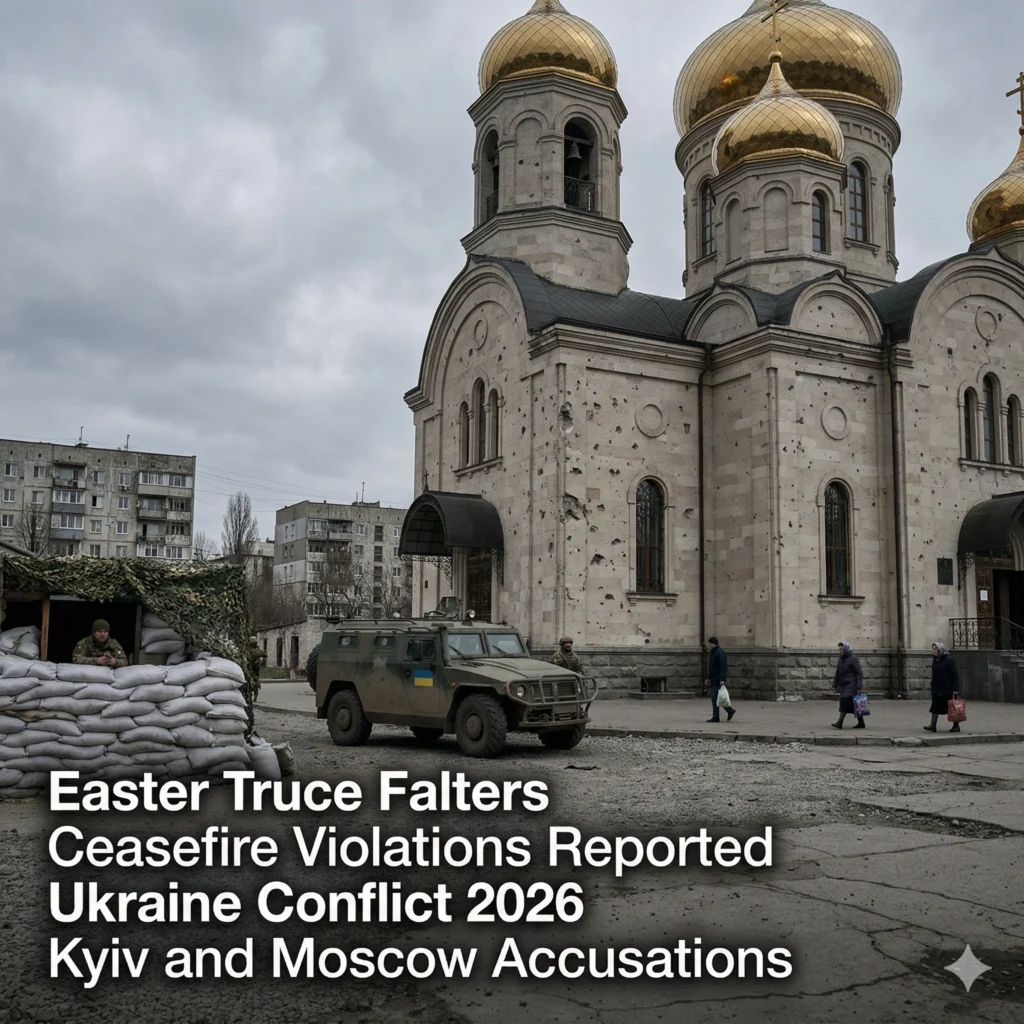
Orthodox Easter Truce Failure
The Orthodox Easter Truce Failure began to manifest even before the official start time of the 32-hour window. Ukrainian officials reported that Russia launched approximately 160 drones at eastern targets just hours before the ceasefire was meant to take effect. This preemptive strike set a hostile tone for the holiday, effectively neutralizing the spirit of the truce before it could truly begin.
Under the weight of the Orthodox Easter Truce Failure, Ukrainian military command documented a staggering 469 separate incidents of aggression. These included twenty-two assault actions and over one hundred fifty instances of shelling across various sectors of the front line. The sheer volume of these violations indicates a total lack of operational control or, more likely, a deliberate disregard for the agreement.
The Orthodox Easter Truce Failure was further exacerbated by Russian reports of Ukrainian activity in the Kursk region. Governor Alexander Khinshtein claimed that a drone strike on a gas station in Lgov injured three people, including an infant. These competing narratives of victimhood and aggression ensure that the blame for the failed ceasefire will remain a point of contention for weeks to come.
Strategic Impact of Broken Promises
The Orthodox Easter Truce Failure serves as a stark reminder of the technical and political hurdles facing any future peace talks. When a 32-hour window cannot be maintained, the prospect of a long-term settlement seems increasingly remote. This failure erodes the credibility of international mediators who have been pushing for localized pauses to allow for humanitarian aid delivery.
Throughout the Orthodox Easter Truce Failure, the use of unmanned aerial vehicles remained the primary method of engagement. Russia allegedly deployed thousands of drones, making it nearly impossible for defensive systems to distinguish between routine movements and active violations. This technological saturation of the battlefield makes the enforcement of any traditional ceasefire a logistical nightmare for observers.
The psychological toll of the Orthodox Easter Truce Failure on the civilian population is immense. Families who had hoped to attend Easter services in peace were instead forced back into bomb shelters as sirens blared across the country. This pattern of broken promises deepens the resolve of the local population while hardening their stance against any concessions to the opposing side.
Tactical Violations and Front Line Data
According to Ukrainian defense forces, the Orthodox Easter Truce Failure involved a variety of weapons platforms. Beyond drone strikes, the recording of 150 instances of shelling suggests that heavy artillery remains a core component of the daily friction. These exchanges were not limited to a single sector but were spread across the entire length of the active combat zone.
The Orthodox Easter Truce Failure also highlighted the vulnerability of energy infrastructure. Reports of fires at an oil depot in Russia’s Krasnodar region suggest that Ukrainian forces continued their campaign against logistics hubs despite the holiday. This indicates that both militaries viewed the truce period as an opportunity to strike targets that might have been less defended.
- Drone attacks accounted for over 60 percent of the documented violations during the truce period.
- Artillery shelling remained concentrated in the Donbas region, with no visible reduction in volume.
- Air strikes targeting populated areas were reported in twelve different administrative districts.
- Assault actions were localized but intense, indicating attempts to seize strategic positions under the cover of the ceasefire.
Political Fallout in Kyiv and Moscow
President Volodymyr Zelensky used his evening address to address the Orthodox Easter Truce Failure with a mix of frustration and resolve. He questioned Russia’s actual commitment to any peaceful resolution, citing the 469 violations as evidence of bad faith. For the Ukrainian leadership, the failure reinforces the argument that only military strength can secure a lasting peace.
In Moscow, the Orthodox Easter Truce Failure was framed differently, with officials blaming Ukrainian “provocations” for the resumption of fire. President Putin had initially ordered the truce following Zelensky’s proposal, but the Kremlin quickly shifted its rhetoric to focus on the attacks in Kursk. This blame game is a standard feature of the ongoing conflict’s diplomatic landscape.
The Orthodox Easter Truce Failure has also impacted the domestic political mood in both countries. In Russia, the injuries to civilians in Lgov are being used to galvanize public support for continued operations. In Ukraine, the relentless drone strikes on Easter serve as a unifying cry for increased Western military aid and more robust air defense systems.
The Role of Prisoner Exchanges
Despite the overwhelming Orthodox Easter Truce Failure, one significant humanitarian event did take place. A prisoner exchange involving 175 personnel from each side was completed successfully, providing a rare glimmer of cooperation. This exchange suggests that while the guns will not fall silent, certain back-channel communications remain functional.
The success of the exchange amidst the Orthodox Easter Truce Failure is a paradox that many analysts are trying to decode. It proves that both sides can coordinate complex logistics when there is a clear and immediate benefit to their own ranks. However, this level of coordination does not seem to translate to the broader cessation of active combat operations.
For the families of the 350 total soldiers returned, the Orthodox Easter Truce Failure is secondary to the joy of reunion. Yet, for the thousands of others still in the trenches, the return to violence was immediate and brutal. The prisoner swap stands as an isolated incident of success in a weekend defined by systematic failure and broken agreements.
Skepticism and Local Perspectives
In cities like Kharkiv, the Orthodox Easter Truce Failure was expected by the local populace. Skepticism is high among residents who have lived through multiple cycles of failed ceasefires since the conflict began years ago. For these citizens, a “truce” often signals a period of even greater danger as both sides prepare for the next escalation.
The Orthodox Easter Truce Failure has made it difficult for local authorities to plan any public gatherings. Churches that would normally be packed for Easter Sunday remained half-empty or moved their services online to avoid large crowds. The fear of being targeted during a supposed window of peace is a psychological scar that will take years to heal.
Local media outlets have been flooded with stories of the Orthodox Easter Truce Failure, documenting the impact on regular lives. From farmers unable to tend to their fields to children spending the holiday in basements, the narrative is one of constant disruption. The failure of the diplomatic process at the highest levels filters down into every aspect of daily existence.
Future Prospects for Diplomatic Pauses
The Orthodox Easter Truce Failure will likely make both sides more hesitant to propose similar agreements in the future. If a religious holiday as significant as Easter cannot provide 32 hours of peace, there is little hope for other commemorative dates. This trend suggests a move toward “unconditional” combat where pauses are only taken for tactical regrouping.
International observers are analyzing the Orthodox Easter Truce Failure to identify where the communication breakdown occurred. Some believe that the decentralized nature of modern drone warfare makes it impossible for central commands to enforce a total ceasefire. Others argue that the political will to maintain the truce was never truly present in the first place.
As we look past the Orthodox Easter Truce Failure, the focus shifts back to the spring offensive and defensive strategies. The window for diplomacy has closed for the time being, replaced by the grim mathematics of attrition and territorial gain. The lessons of this failed truce will undoubtedly inform how the next phase of the conflict is managed by global powers.
Summary of the Truce Breakdown
- A total of 469 violations were officially recorded by the Ukrainian military during the 32-hour window.
- Casualties included civilians in both Ukraine and the Russian border region of Kursk.
- Over 160 drones were launched by Russia immediately prior to the truce’s scheduled commencement.
- A successful prisoner exchange of 350 personnel provided the only functional diplomatic outcome.
Conclusion and Final Observations
The Orthodox Easter Truce Failure is a sobering reminder of the distance between diplomatic intent and battlefield reality. While the proposal for peace was noble, the execution was nonexistent, leading to a weekend of violence rather than prayer. The conflict continues to defy simple solutions or temporary pauses, demanding a more robust approach to conflict resolution.
Moving forward from the Orthodox Easter Truce Failure, the international community must rethink how it supports ceasefire initiatives. Relying on the goodwill of the belligerents has proven insufficient in the face of such intense operational pressure. New mechanisms for monitoring and accountability will be required if a future truce is to have any hope of succeeding.
Ultimately, the Orthodox Easter Truce Failure will be remembered as a missed opportunity to reduce the human cost of the war. As both nations return to full-scale operations, the memory of the failed 32-hour peace will serve as a cautionary tale. For now, the sounds of war remain the dominant soundtrack for the people of Ukraine and the surrounding border regions.
For more details & sources visit: Dawn
Read more about Russia news on 360 News Orbit – Russia