
IMF warns of inflation crisis as the global economic landscape shifts under the weight of the US-Israel-Iran conflict. This week, the International Monetary Fund signaled a mandatory downgrade of its global economic forecast due to escalating hostilities that began on February 28. Managing Director Kristalina Georgieva noted that the war has shattered previous hopes for growth, threatening a surge in prices and disruption to energy markets. As the IMF warns of inflation, the world prepares for a period of extreme volatility and fiscal pressure.
The global economy had shown resilience against aggressive trade tariffs earlier in the year, but it is now facing a significant downturn. The IMF had intended to upgrade its growth projections to above 3.3 percent, but the conflict has instead caused a surge in oil prices. When the IMF warns of inflation, it highlights the damage to critical energy infrastructure and fertilizer shipments. These developments have forced central banks into a defensive posture to prevent a total economic spiral.
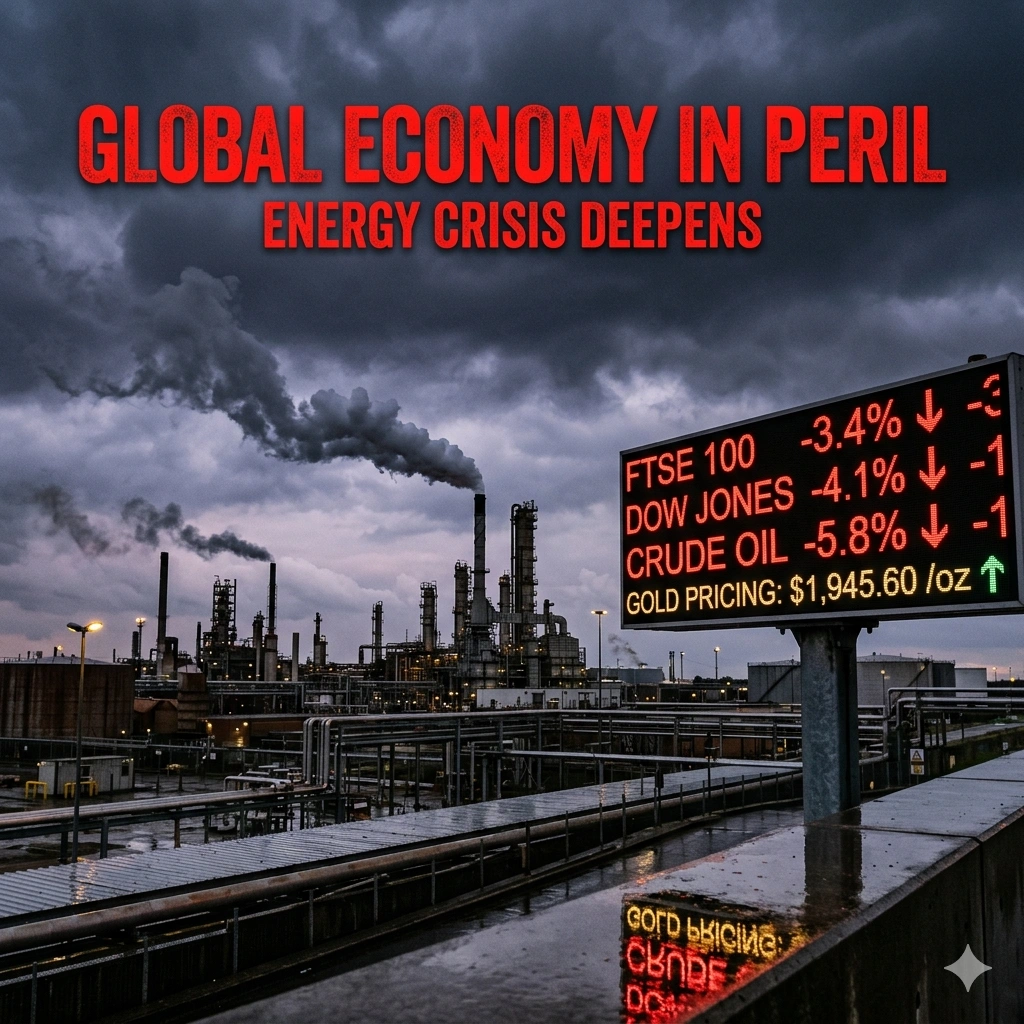
IMF warns of inflation
The impact of the current war on energy markets is one of the primary reasons why the IMF warns of inflation today. Oil and gas prices have skyrocketed following the outbreak of hostilities, leading to higher production costs across all sectors. This surge directly affects transportation and manufacturing, creating a domino effect that reaches the average consumer. Georgieva emphasized that even the most optimistic scenarios now require a growth downgrade to reflect these harsh realities.
Furthermore, the disruption of fertilizer shipments is threatening global food security, which is another reason the IMF warns of inflation. Agricultural output relies heavily on stable supply chains, which have been severely compromised by the conflict in the Middle East. If these shipments remain blocked, food prices will likely remain elevated for the foreseeable future. The IMF warns of inflation to ensure that governments take immediate steps to protect vulnerable populations from rising costs.
Energy Infrastructure Under Attack and Market Volatility
Market analysts have been tracking the damage to energy infrastructure with growing concern since the war began. As the IMF warns of inflation, they point to the physical destruction of pipelines and refineries in active combat zones. This loss of capacity cannot be easily replaced, leading to long-term supply constraints. Consequently, the IMF warns of inflation because the structural integrity of the global energy market is currently under threat.
- Rapidly increasing crude oil prices surpassing previous annual forecasts.
- Significant delays in liquefied natural gas (LNG) deliveries across major shipping routes.
- Heightened insurance premiums for cargo vessels operating in high-risk corridors.
- Direct physical damage to refineries and storage facilities in the conflict region.
The volatility in these markets is making it difficult for businesses to plan for the future. When the IMF warns of inflation, it serves as a signal for corporate leaders to brace for higher overhead costs. Supply chain managers are already seeking alternative routes, but these often come at a premium price. This added expense is inevitably passed on to the public, further fueling the inflationary fire that the IMF warns of inflation against.
The Global Growth Downgrade Explained
Prior to February 28, the IMF was optimistic about a global recovery, aiming for a growth rate above 3.3 percent. However, the IMF warns of inflation because that trajectory is no longer viable under current military conditions. Managing Director Kristalina Georgieva stated that the downgrade is a necessary response to the shattering of growth hopes. The IMF warns of inflation specifically to manage expectations for the fiscal year 2026 and beyond.
The downturn is not limited to the nations directly involved in the combat. As the IMF warns of inflation, they highlight how interconnected the modern global economy has become over the last decade. A disruption in one region quickly translates into a slowdown in another, regardless of geographic distance. This reality is why the IMF warns of inflation even for countries that are not physically near the conflict zones.
Central Bank Pressures and Interest Rate Hikes
Central banks are now under immense pressure to prevent inflation from spiraling out of control. As the IMF warns of inflation, it encourages monetary authorities to remain vigilant and ready to adjust interest rates. The rise in defense spending across the globe is adding another layer of complexity to fiscal management. When the IMF warns of inflation, it acknowledges that the balance between growth and price stability has become dangerously thin.
- Immediate evaluation of interest rate adjustments to curb rapid price increases.
- Monitoring of consumer confidence levels which have begun to falter internationally.
- Coordination between central banks to stabilize currency fluctuations during the crisis.
- Addressing the impact of increased government borrowing for military expenditures.
The faltering consumer confidence is a secondary effect that the IMF warns of inflation to address. As people become more uncertain about the future, their spending habits change, which can lead to a recessionary environment. Central banks must navigate these waters carefully to ensure that they do not trigger a deeper downturn while trying to solve the problem the IMF warns of inflation about. The complexity of this task is unprecedented in recent economic history.
Output Losses in Active Combat Zones
Output in active combat zones is expected to drop by 7 percent over the next five years. This staggering figure is a major reason why the IMF warns of inflation on a global scale. The loss of productivity in these regions removes significant value from the global supply chain. When the IMF warns of inflation, they are accounting for the total loss of goods and services that would otherwise have supported global trade.
The long-term recovery of these zones will require massive investment once the conflict finally subsides. Until then, the IMF warns of inflation as a temporary but severe reality that must be managed. The destruction of capital and labor markets in the Middle East has far-reaching consequences for international investors. This is why the IMF warns of inflation to warn against over-exposure to volatile regional markets during the war.
Fertilizer Shortages and Global Food Security
Fertilizer shipments are critical for maintaining the yields required to feed the world’s growing population. As the IMF warns of inflation, the disruption of these shipments emerges as a top-tier concern for the organization. Without adequate fertilizer, crop yields will drop, leading to a shortage of basic food staples. Consequently, the IMF warns of inflation because food price hikes are often the most damaging to social stability.
The logistics of rerouting these shipments are complicated by the closure of major ports and transit points. When the IMF warns of inflation, they are highlighting the logistical nightmare that now faces the global agricultural sector. Farmers in both developing and developed nations are feeling the pinch of higher input costs. This cycle of rising costs is exactly what the IMF warns of inflation to prevent through coordinated international action.
U.S. Economic Resilience vs. Global Impact
While the U.S. economy may avoid direct physical destruction, it is not immune to the global impact. The IMF warns of inflation because the U.S. remains heavily dependent on global energy prices and trade stability. Even if domestic production remains high, the global price of oil dictates the cost at the pump for American consumers. Therefore, the IMF warns of inflation as a domestic concern for the United States as much as a global one.
The interconnectedness of the financial markets means that a shock in Tehran or Tel Aviv is felt in New York within seconds. As the IMF warns of inflation, it points to the potential for market volatility to erase trillions in household wealth. The resilience of the U.S. consumer is being tested by these external pressures like never before. The IMF warns of inflation to ensure that American policymakers do not become complacent despite their geographic distance from the war.
The Shattering of Hopes for 2026 Growth
The start of 2026 was supposed to be a year of recovery and expansion after years of stagnation. However, the IMF warns of inflation because those hopes have been largely extinguished by the events of February 28. The transition from growth-oriented policies to crisis management has been swift and painful for many nations. When the IMF warns of inflation, it marks the end of the post-pandemic optimism that had briefly taken hold.
Strategists are now looking at the second half of the year with a focus on containment rather than expansion. As the IMF warns of inflation, the focus is on “damage control” to prevent a repeat of the stagflation seen in previous decades. This shift in focus is a direct result of the geopolitical instability involving major energy producers. The IMF warns of inflation to signal that the economic priorities of the world must shift immediately.
Strategic Responses Recommended by the IMF
In response to the crisis, the organization has recommended several steps to mitigate the fallout. As the IMF warns of inflation, they suggest that nations increase their strategic reserves of essential commodities. They also advocate for more diverse supply chains to reduce reliance on conflict-prone regions. When the IMF warns of inflation, it is also providing a roadmap for how to survive the current economic storm.
- Strengthening social safety nets to protect the poorest from rising food and energy costs.
- Investing in alternative energy sources to reduce long-term dependence on Middle Eastern oil.
- Enhancing international cooperation to keep trade routes open despite military tensions.
- Implementing targeted fiscal policies to support industries most affected by the war.
These recommendations are part of the broader strategy that emerges when the IMF warns of inflation. By following these steps, nations can hopefully avoid the worst-case scenarios of the current downgrade. The IMF warns of inflation not to cause panic, but to spur proactive governance and international solidarity. The path forward requires a level of cooperation that has been lacking in recent years.
Long-term Forecasts for the Global Economy
Looking beyond the immediate crisis, the long-term outlook remains clouded by the duration of the war. As the IMF warns of inflation, they are also revising their projections for the end of the decade. The 7 percent drop in combat zone output will have lingering effects on global GDP for years. Therefore, the IMF warns of inflation as a persistent threat that will likely shape economic policy for the next five years.
The potential for a “lost decade” in certain regions is a real possibility that the IMF warns of inflation about. If infrastructure is not rebuilt and trade is not restored, the global economy will remain fundamentally weakened. The IMF warns of inflation to remind us that the costs of war are not just measured in lives lost, but in the prosperity of future generations. The organization will continue to monitor the situation and provide updates as the conflict evolves.
Conclusion: Navigating the Inflationary Storm
In conclusion, the message is clear: the global economy is at a turning point due to the US-Israel-Iran war. As the IMF warns of inflation, the need for decisive action from world leaders has never been greater. The downgrade in growth and the surge in prices are significant challenges that require a unified global response. The IMF warns of inflation to ensure that the world does not sleepwalk into a deeper economic catastrophe.
The resilience of the international system will be tested in the coming months as the full impact of the war is felt. While the IMF warns of inflation, there is still a narrow window to prevent the worst outcomes through diplomacy and smart fiscal management. We must heed the warning that the IMF warns of inflation with and work toward a more stable and peaceful global order. Only then can the hopes for growth and prosperity be truly restored for everyone.
For more details & sources visit: Al Jazeera
Read more on Iran news: 360 News Orbit – Iran.