
Nigeria Hunger Crisis 2026 is the focal point of a sobering new analysis detailing how millions have fallen into severe food insecurity following a breakdown in humanitarian infrastructure. The current emergency, which has left over 31 million people struggling for basic nutrition, is being described by experts not as a sudden accident, but as the inevitable result of long-standing systemic failures.
While the immediate catalyst was the withdrawal of major international support systems, the underlying fragility of the nation’s food security has been building for decades. The government is now facing intense pressure to address the “codependency” that left the population vulnerable to shifts in global donor priorities.
Transitioning away from this dependency requires a radical overhaul of domestic agricultural policy and a commitment to local production. As tens of thousands of children suffer without vital nutrition programs, the call for a sustainable, home-grown solution to the Nigeria Hunger Crisis 2026 has never been more urgent or necessary for survival.
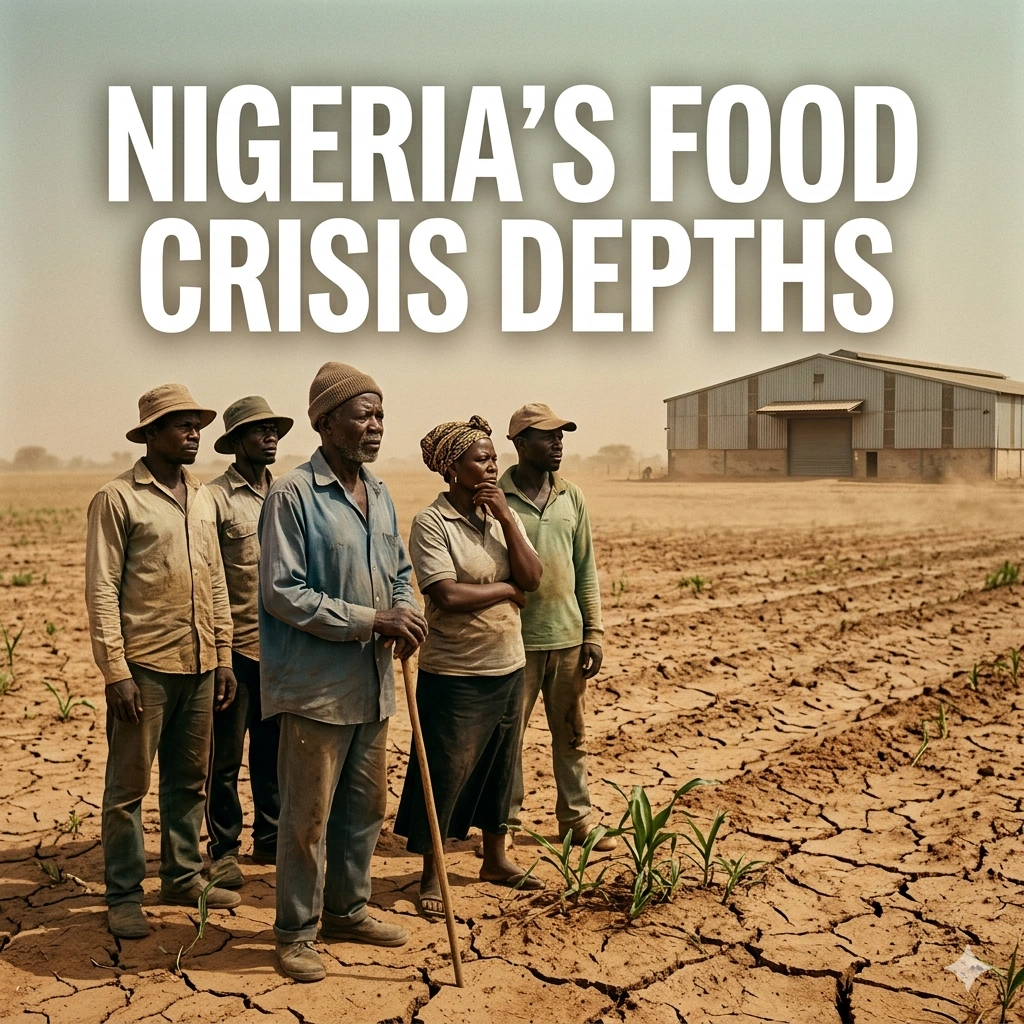
The Structural Roots of Nigeria Hunger Crisis 2026
The onset of Nigeria Hunger Crisis 2026 has revealed a dangerous reliance on external aid agencies that prioritized short-term relief over long-term resilience. For years, international organizations provided a “band-aid” solution to systemic poverty without empowering local farmers to increase their output.
This dynamic created a false sense of security while domestic agricultural infrastructure continued to languish under-investment. When funding dried up and global priorities shifted elsewhere, the lack of a robust domestic backup system became tragically apparent to the world.
Economists argue that the failure to modernize rural farming techniques and secure supply chains left the nation’s food supply at the mercy of international geopolitical shifts. The current catastrophe serves as a grim reminder that humanitarian aid can never be a permanent substitute for a functioning national food policy.
The USAID Departure and Nigeria Hunger Crisis 2026
The mid-2025 closure of USAID operations acted as the tipping point that accelerated the Nigeria Hunger Crisis 2026 into a full-scale national disaster. For decades, USAID had been a primary pillar of the humanitarian response, managing everything from basic grain distribution to complex maternal health initiatives.
When these programs ceased, the local government was unable to fill the massive vacuum left behind in the distribution network. This sudden absence of logistical and financial support led to a rapid spike in food prices and a collapse in nutrition access for the most vulnerable.
Critics point out that the reliance on a single major donor was a strategic error that should have been addressed years ago. The government’s failure to create a transition plan during the lead-up to the withdrawal has left millions of citizens in a state of desperate uncertainty and physical peril.
Nigeria Hunger Crisis 2026
The reality of Nigeria Hunger Crisis 2026 is most visible in the overcrowded nutrition centers where thousands of children are currently being treated for acute malnutrition. Medical professionals on the ground report that the scale of the emergency is stretching their limited resources to the absolute breaking point.
Without the consistent supply of therapeutic foods formerly provided by international donors, doctors are forced to make impossible choices about who receives care. This humanitarian vacuum is creating a generation of children whose physical and cognitive development is being permanently stunted by the lack of calories.
Furthermore, the crisis is fueling internal migration as rural families move toward urban centers in a desperate search for food and employment. This influx is putting additional strain on the already fragile infrastructure of major cities, creating a secondary crisis of housing and public sanitation that threatens to spiral out of control.
Evaluating Institutional Codependency in Nigeria Hunger Crisis 2026
A critical aspect of Nigeria Hunger Crisis 2026 is the “codependency” between the Nigerian state and global NGOs like Mercy Corps. This relationship often sidelined local expertise in favor of foreign-led initiatives that were not always tailored to the specific needs of Nigerian soil or culture.
The government became accustomed to international partners handling the heavy lifting of social welfare, which allowed domestic funds to be diverted elsewhere. This lack of ownership over the food system meant that when the international partners left, there was no institutional memory or local capacity to keep the systems running.
- Constant reliance on foreign-sourced seeds and fertilizers rather than developing local variants.
- Lack of investment in rural road networks to connect local farmers to regional markets.
- Over-dependence on global grain markets which are subject to extreme price volatility.
- Failure to establish a national strategic food reserve to buffer against lean years.
Breaking this cycle of codependency is essential for ensuring that a disaster of this magnitude never happens again. It requires a fundamental shift in mindset where international aid is viewed as a supplement to, rather than a replacement for, national responsibility and agricultural sovereignty.
Impact of Donor Shortfalls on Nigeria Hunger Crisis 2026
The financial retreat of major donors has directly impacted the Nigeria Hunger Crisis 2026 by shuttering essential field programs that served as the last line of defense. Mercy Corps and other major players were forced to reduce their footprint significantly due to a global decline in humanitarian funding.
This reduction in presence has not only stopped the flow of food but has also halted critical data collection efforts. Without accurate field data, it becomes nearly impossible for the remaining agencies to target their aid effectively to the areas of greatest need.
The loss of these programs also means the loss of thousands of local jobs that were tied to the humanitarian sector. This secondary economic hit has further reduced the purchasing power of families who were already on the brink of starvation, creating a vicious cycle of poverty and hunger.
Policy Failures Contributing to Nigeria Hunger Crisis 2026
The policy framework surrounding Nigeria Hunger Crisis 2026 shows a historical preference for urban industrialization over rural agricultural development. This imbalance has left the farming sector under-capitalized and unable to scale production to meet the needs of a growing population.
Restrictive land use laws and a lack of clear property rights have also discouraged long-term investment in the soil. Farmers are often reluctant to invest in expensive irrigation or machinery if they do not have clear legal title to the land they work.
- Reforming land ownership laws to provide security for smallholder farmers.
- Implementing low-interest credit facilities specifically for agricultural equipment.
- Investing in climate-resilient farming techniques to combat desertification in the north.
- Creating local processing hubs to add value to raw agricultural products before they reach the market.
Addressing these policy gaps is the only way to build a sustainable path out of the current emergency. The government must demonstrate a clear commitment to the agricultural sector that goes beyond simple rhetoric and provides real, tangible support to the people who feed the nation.
The Role of Local NGOs in Nigeria Hunger Crisis 2026
While international giants have retreated, local organizations are trying to mitigate the Nigeria Hunger Crisis 2026 with very limited resources. These grassroots groups have a deep understanding of the local terrain and the cultural nuances required to implement effective relief.
However, these local groups often lack the technical infrastructure and global fundraising reach of their international counterparts. There is a desperate need for a more equitable distribution of funding that empowers these local actors to take the lead in the national recovery.
By shifting the focus to local NGOs, the country can build a more resilient and sustainable humanitarian landscape. These organizations are much more likely to stay in the country long-term and are deeply invested in the success of their own communities, making them the ideal partners for future development.
Agricultural Independence and Nigeria Hunger Crisis 2026
The long-term solution to Nigeria Hunger Crisis 2026 lies in achieving total agricultural independence and food sovereignty. This means moving away from a model of importing essential grains and instead focusing on the vast untapped potential of Nigeria’s own arable land.
Experts suggest that Nigeria has the capacity not only to feed itself but to become a major food exporter for the entire West African region. Achieving this vision requires a massive mobilization of resources, from technological upgrades to educational programs for a new generation of farmers.
The current pain of the hunger crisis must be used as a catalyst for this radical transformation. If the nation can learn from the failures of the past and commit to a self-reliant future, it can turn this tragedy into a turning point for national development and security.
Global Lessons from the Nigeria Hunger Crisis 2026
The international community is watching the Nigeria Hunger Crisis 2026 closely as a case study in the dangers of aid dependency. The situation provides a stark warning to other developing nations that rely heavily on a small number of international donors for their basic survival.
There is a growing global consensus that the humanitarian model needs to evolve from “giving” to “building.” This involves investing in local systems, supporting local businesses, and ensuring that aid does not inadvertently undermine domestic production by flooding markets with free foreign goods.
- Strengthening local governance to manage food distribution networks effectively.
- Promoting regional trade agreements to stabilize food prices across borders.
- Encouraging private sector investment in the agricultural value chain.
- Ensuring that humanitarian exit strategies are planned years in advance to avoid shocks.
The global response to Nigeria’s current plight will determine how future crises are managed. There is a moral and strategic imperative to ensure that the recovery efforts focus on creating lasting stability rather than just temporary relief from the immediate suffering.
Socioeconomic Consequences of Nigeria Hunger Crisis 2026
Beyond the immediate health impacts, the Nigeria Hunger Crisis 2026 is causing deep fractures in the nation’s social and economic fabric. The high cost of food is driving up inflation across all sectors, making it difficult for businesses to operate and for workers to survive on their current wages.
This economic pressure is leading to increased social unrest and a lack of trust in government institutions. When a state cannot provide the most basic human need—food—the social contract begins to erode, leading to a higher risk of conflict and political instability.
The brain drain is also accelerating, as educated professionals seek opportunities in countries where their families can be guaranteed food security. Losing this intellectual capital makes it even harder for the country to implement the complex reforms needed to fix the agricultural system, creating a “development trap” that is difficult to escape.
Technological Solutions for Nigeria Hunger Crisis 2026
Innovative technology could play a major role in ending the Nigeria Hunger Crisis 2026 by increasing yields and reducing waste. From satellite imaging for crop monitoring to mobile apps that connect farmers directly to buyers, the potential for digital transformation is immense.
However, these technologies require a stable electricity grid and widespread internet access, both of which are still lacking in many rural areas. The government must treat digital infrastructure as a core component of its agricultural strategy if it wants to leapfrog traditional development hurdles.
- Using drones for precision pesticide application to save costs and protect the environment.
- Implementing blockchain technology to create transparent and efficient food supply chains.
- Developing solar-powered cold storage units to prevent post-harvest spoilage.
- Utilizing AI-driven weather forecasting to help farmers plan their planting seasons better.
By embracing these tools, Nigeria can modernize its agricultural sector and make it more attractive to the youth. This is essential for replacing an aging farming population and ensuring that the sector remains dynamic and productive for decades to come.
The Path Forward After Nigeria Hunger Crisis 2026
As the world looks toward the end of 2026, the path forward from the Nigeria Hunger Crisis 2026 remains challenging but clear. The nation must prioritize food security as its number one national security concern, above all other political or economic considerations.
This requires a unified effort from all levels of government, the private sector, and civil society. The era of pointing fingers at international donors must end, and the era of national responsibility must begin. Only through a sustained and disciplined commitment to agricultural reform can the country hope to heal.
The millions of people currently suffering deserve a future where the threat of famine is a distant memory. By learning the hard lessons of the current crisis, Nigeria has the opportunity to build a food system that is truly resilient, equitable, and capable of sustaining its people for generations to reach.
Conclusion: Resolving the Nigeria Hunger Crisis 2026
The Nigeria Hunger Crisis 2026 is a tragedy that was both predictable and preventable. It stands as a powerful indictment of a system that prioritized dependency over development and short-term fixes over long-term stability. The 31 million people currently in the grip of hunger are the human face of these systemic failures.
Moving forward, the focus must be on radical agricultural interrogation and the building of local systems that can withstand the departure of international aid. The transition will be difficult, but the cost of inaction is far higher. Nigeria must choose the path of independence and resilience to ensure that its children never face such a crisis again.
For more details & sources visit: Devex
Read more on Nigeria news: 360 News Orbit – Nigeria.