
Spanish Foreign Minister Jose Manuel Albares has issued a sharp rebuke against Israel following intensified airstrikes on Lebanon that reportedly killed 182 people and wounded nearly 900. This official stance underscores Spain’s growing frustration with what it perceives as a blatant disregard for a fragile two-week ceasefire intended to stabilize the Middle East. As global powers monitor the situation, the friction between Madrid and Jerusalem highlights a deepening divide over how to handle regional conflict.
The condemnation from the Spanish government comes at a critical time when the international community is attempting to navigate a complex U.S.-Iran truce. While Israel and U.S. Vice President JD Vance argue that the battle against Hezbollah is separate from the existing peace framework, Spain disagrees. Albares has explicitly stated that the scale of the attacks constitutes a breach of international law, which threatens the longevity of any regional peace agreements.
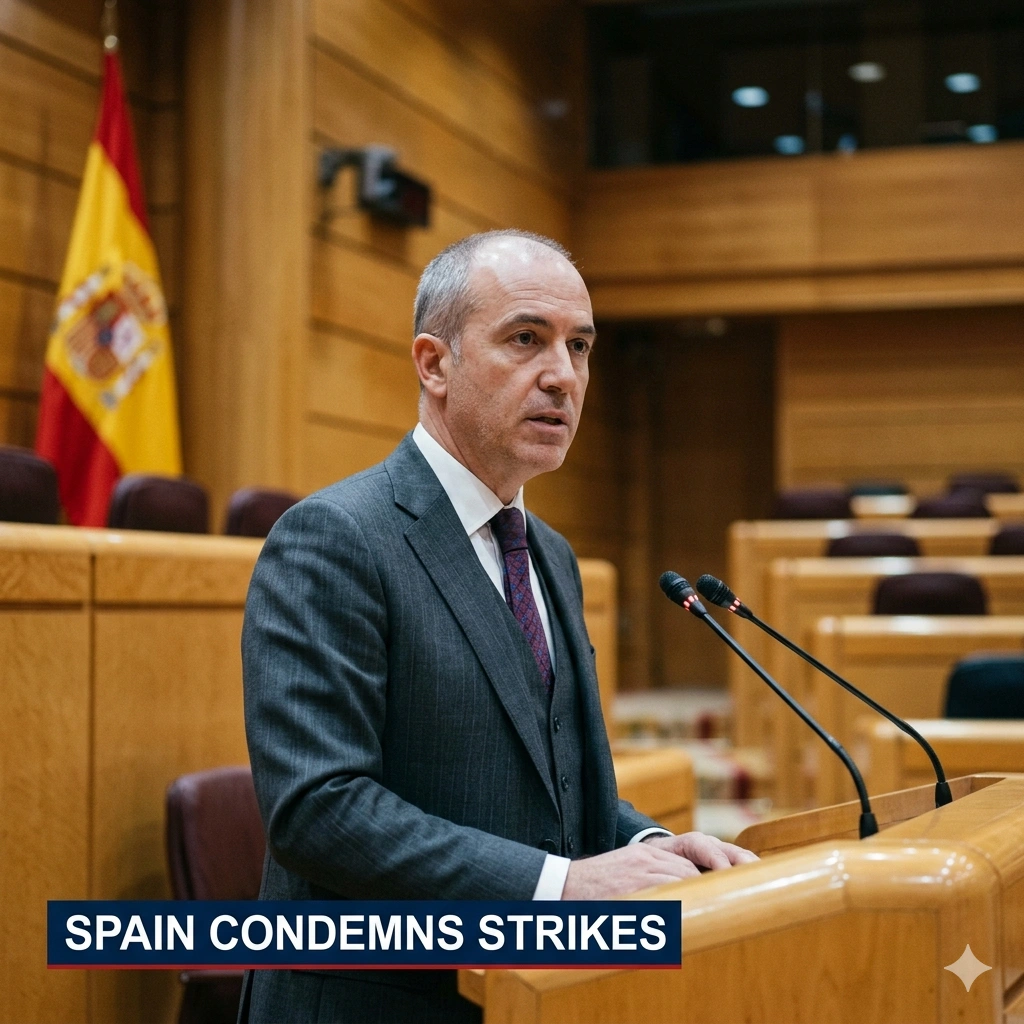
Spain Accuses Israel
The diplomatic rift widened significantly this week as Spain Accuses Israel of flouting the terms of the newly brokered regional truce. Albares pointed to the high number of civilian casualties as evidence that the military operations are not adhering to the principles of necessity and proportionality. This rhetoric has caused a stir within the European Union, as different member states hold varying views on Israel’s right to defend its northern border.
A major point of contention lies in the definition of the ceasefire, with Spain Accuses Israel of interpreting the agreement too narrowly. While Israel views Hezbollah as an independent threat separate from the broader Iran-backed peace talks, Madrid argues that all military actions are interconnected. This disagreement has led to a stalemate in the UN Security Council, where Spain and its allies are pushing for a more comprehensive cessation of hostilities.
By reopening the Tehran embassy, Spain is positioning itself as a key mediator in a region traditionally dominated by U.S. and UK interests. The return of the Spanish ambassador to Iran is a clear signal that Madrid believes in “engagement over isolation.” However, this approach has drawn criticism from those who believe it rewards Iranian-backed actors during a period of high regional instability.
Impacts on the U.S.-Iran Truce
The current situation poses a severe risk to the U.S.-Iran truce, which was already on shaky ground before the latest round of airstrikes. If the violence in Lebanon continues to spiral out of control, Iran may decide to officially withdraw from the Pakistani peace talks. Spain Accuses Israel of providing Tehran with the perfect justification to walk away from the table, potentially leading to a broader regional war.
European leaders, including those from France and the UK, have joined Spain in expressing deep concern over the regional destabilization caused by the strikes. The collective fear is that the “spillover effect” from Lebanon could ignite other fronts in Syria or Iraq. This shared anxiety is forcing a re-evaluation of Western security strategies in the Middle East as the 2026 political landscape becomes increasingly volatile.
The role of U.S. Vice President JD Vance has been pivotal, as he maintains that the strikes are necessary to degrade Hezbollah’s capabilities. This stance puts Washington at odds with Madrid’s current diplomatic trajectory. The disagreement between these two traditional allies illustrates the growing complexity of international law application in modern hybrid warfare scenarios where non-state actors are involved.
Reopening the Tehran Embassy
The decision to return the Spanish ambassador to Iran is one of the most significant moves in Spain’s 2026 diplomatic calendar. By establishing a direct presence in Tehran, Spain hopes to gain better intelligence and influence over Iran’s regional proxies. This strategy is based on the belief that diplomacy is the only sustainable way to prevent a total collapse of the regional order.
Critics of the move argue that Spain Accuses Israel while simultaneously normalizing relations with a regime that sponsors the very groups Israel is fighting. However, the Spanish Foreign Ministry maintains that its priority is the immediate cessation of violence and the protection of international law. The embassy’s reopening is intended to provide a neutral ground for dialogue that has been missing for years.
- Spain sends ambassador back to Tehran to facilitate direct peace talks.
- Embassy functions as a hub for European-Iranian communication in the region.
- Move signifies a shift toward multi-polar diplomacy in the Middle East.
Iranian officials have welcomed the move, though they remain skeptical about the overall success of the peace process given the current military climate. They have used the reopening of the embassy to reiterate their stance that Israel is the primary aggressor. This war of words further complicates the job of the Spanish diplomats who are tasked with de-escalating the situation on the ground.
International Law and Middle East Stability
The core of the legal debate centers on whether the strikes in Lebanon violate the established norms of sovereign integrity and human rights. Spain Accuses Israel of using excessive force that goes beyond the scope of a targeted counter-terrorism operation. This legal challenge is being watched closely by international courts and human rights organizations who are documenting the conflict.
The stability of the Middle East hinges on the willingness of all parties to adhere to the rules-based order that Spain is championing. If the perception grows that international law can be ignored without consequence, the entire framework of global security could unravel. This is why Spain has been so vocal in its condemnation, seeking to uphold a standard that applies to all nations regardless of their alliances.
In Madrid, the government is facing domestic pressure to take even stronger actions, such as suspending trade agreements with countries found to be in violation of international norms. While Albares has not yet committed to such measures, the threat remains a possibility if the ceasefire is not respected. The Spanish public is highly sensitive to the humanitarian crisis unfolding in Lebanon, which adds a political dimension to the diplomatic crisis.
Humanitarian Concerns in Lebanon
The staggering numbers of dead and wounded in the recent strikes have triggered an immediate response from Spanish aid agencies and the government. Spain Accuses Israel of creating a humanitarian catastrophe that will take decades to repair. Medical supplies and emergency aid are being prepared in Madrid to be sent to Beirut as soon as safe passage can be guaranteed.
The focus on the humanitarian aspect allows Spain to maintain a moral high ground in the international arena. By highlighting the suffering of non-combatants, they are able to rally support from other middle-power nations that are also concerned about the human cost of modern warfare. This “soft power” approach is a hallmark of Spain’s current foreign policy and a tool they are using to influence the situation.
- Over 180 fatalities and 900 injuries reported in a single day of strikes.
- Destruction of civilian infrastructure leading to a surge in internal displacement.
- Urgent need for international medical aid and food security in Southern Lebanon.
The impact on Lebanon’s fragile economy is another area of concern, as the strikes hit vital transportation and communication links. Spain and its European partners are worried that a total economic collapse in Lebanon would lead to a new refugee crisis heading toward Europe’s borders. This makes the enforcement of a ceasefire not just a legal issue, but a matter of European national security.
The Pakistani Peace Talks Horizon
As the scheduled peace talks in Pakistan approach, the shadow of the Lebanese strikes looms large over the negotiating table. If Spain Accuses Israel of being a “spoiler” of the peace process, it may embolden other nations to take more radical positions. The success of the Pakistani summit is seen as the last best hope for a long-term resolution to the U.S.-Iran conflict.
Pakistan, acting as the host, is in a difficult position as it tries to balance its relationships with the West, Iran, and the broader Muslim world. The Spanish diplomatic mission has been in close contact with Islamabad to ensure that the agenda for the talks remains focused on de-escalation. However, the “unreasonable” nature of further talks—as described by Tehran—suggests that the window for a deal is closing fast.
The upcoming weeks will be a test of Spain’s diplomatic endurance and its ability to influence global events. By taking a stand against Israel, Madrid has placed itself at the center of a geopolitical firestorm. Whether this leads to a breakthrough in peace or a complete breakdown in relations remains to be seen, but the world is certainly paying attention to Spain’s every move.
Spain’s Airspace Policy and Neutrality
A key component of Spain’s response has been the closure of its airspace to any military-affiliated aircraft involved in the Middle East fighting. This is a practical application of the legal principles that Spain Accuses Israel of violating. By denying flyover rights, Spain is physically limiting the logistics of the conflict and asserting its sovereignty in a meaningful way.
This policy has caused some friction with NATO allies who may need to use Mediterranean flight paths for regional operations. However, Spain has stood firm, arguing that its neutrality is essential for its role as a potential mediator. The closure of airspace is a rare and bold move for a major European power, signaling that Madrid is willing to take real risks to support its diplomatic goals.
- Ban on military transit related to the Lebanon and Israel conflict.
- Strict monitoring of civilian flights to ensure no dual-use cargo is transported.
- Reassertion of Spanish sovereign control over strategic flight corridors.
The message sent by this policy is clear: Spain will not be a passive observer to the violation of international law. This proactive stance has earned the respect of several Arab nations, who see Spain as a principled voice in a Western world that is often seen as biased. This increased influence in the Global South could pay dividends for Spain’s future trade and energy security.
Future of European Diplomacy in 2026
As we look toward the mid-point of 2026, the situation in the Middle East is redefining European diplomacy. Countries like Spain, France, and Italy are increasingly acting as a bloc to balance the influence of the United States. When Spain Accuses Israel, it is often speaking for a significant portion of the European continent that wants to see a more balanced and law-based approach to international relations.
The unity of this “Med-group” of nations is vital for the future of the European Union’s foreign policy. By aligning their voices on the Middle East, they can project a strength that individual nations lack. This collective action is a direct response to the perceived failures of the old security architectures and a sign of a new, more assertive Europe on the global stage.
- Monitor the outcome of the Spanish ambassador’s first meetings in Tehran.
- Watch for joint statements from Spain, France, and the UK at the next UN session.
- Evaluate the impact of the airspace closure on regional military logistics.
The path ahead is fraught with danger, but Spain’s commitment to international law provides a consistent moral compass. While the rhetoric is sharp and the diplomatic maneuvers are bold, the goal remains simple: a peaceful and stable Middle East where the rights of all nations and individuals are respected. Only time will tell if Spain’s gambit will lead to the lasting truce the world so desperately needs.
Strategic Move to Bolster Peace
Spain’s decision to reopen the embassy in Tehran is described as a strategic move to bolster peace efforts across the entire region. By having “boots on the ground” in a diplomatic sense, Spain can verify claims and counter-claims in real-time. This level of engagement is crucial when the risk of misinformation and propaganda is at an all-time high during a conflict.
The presence of the Spanish ambassador in Iran also provides a channel for the United States to indirectly communicate with Tehran. While official U.S.-Iran relations remain frozen, European intermediaries like Spain play a vital role in preventing accidental escalations. This “back-channel” diplomacy has been the key to surviving several crises in the past and remains a priority in 2026.
- Direct verification of regional developments through local diplomatic channels.
- Acting as a reliable intermediary between the U.S., Israel, and Iran.
- Providing a European perspective on the ground in one of the world’s most sensitive cities.
Ultimately, Spain Accuses Israel not to create a permanent enemy, but to demand a return to the negotiating table. The Spanish government believes that security cannot be achieved through airstrikes alone; it requires a political solution that addresses the root causes of the conflict. This vision of peace is what drives Spain’s current foreign policy and its leadership role in the Mediterranean region.
Conclusion
The Middle East stands at a crossroads, with the actions of Spain and Israel representing two fundamentally different approaches to security. As Spain Accuses Israel of international law violations, it is challenging the global community to decide what kind of world it wants to live in. Is it a world where military might dictates the rules, or one where the law provides a framework for peace?
The reopening of the Tehran embassy and the closure of Spanish airspace are just the beginning of what promises to be a transformative year for international relations. With the Pakistani peace talks on the horizon and the U.S.-Iran truce hanging in the balance, the world is watching closely. Spain has made its position clear, and its influence will be felt for years to come as the regional dynamics continue to shift.
In the end, the success of these diplomatic efforts will depend on whether the parties involved can move past their grievances and embrace a shared future. Spain’s role as a principled mediator is a valuable asset in this process, providing a path toward stability in a region that has known too much war. Let us hope that the spirit of cooperation prevails over the cycle of violence, ensuring a more peaceful 2026 for all.
For more details & sources visit: The Express Tribune
Read more on Spain news: 360 News Orbit – Spain.