
Saudi Economy Strategic Resilience remains a benchmark for fiscal stability as the global market experiences significant volatility in 2026. While neighboring regions face the economic fallout of ongoing conflict, the Kingdom has successfully implemented a series of protective measures to ensure domestic tranquility. By leveraging its vast financial buffers and geographical advantages, Saudi Arabia is currently navigating a complex global supply shock with remarkable precision and foresight.
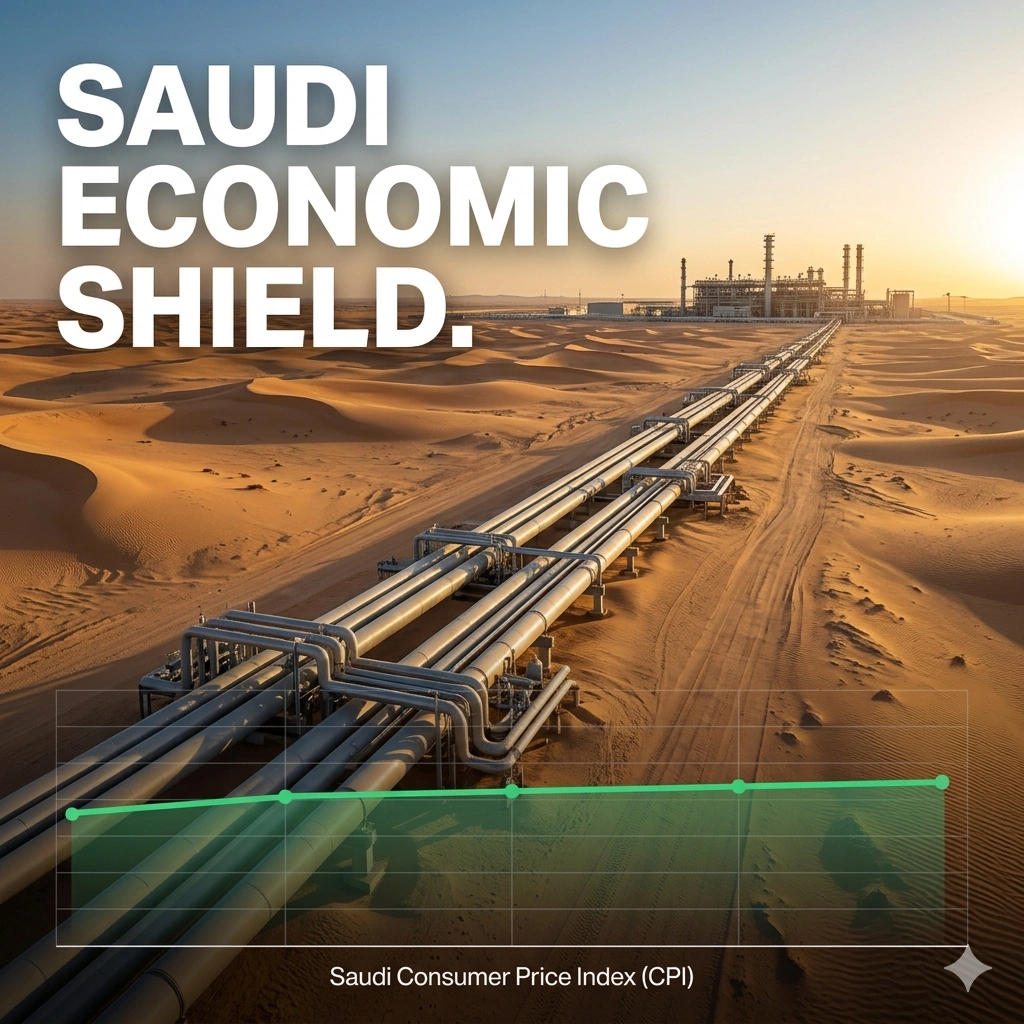
The core of Saudi Economy Strategic Resilience lies in the government’s ability to decouple local consumer prices from the surging costs of international energy and fertilizers. Throughout early April, the Kingdom has maintained an impressively low inflation rate, hovering between 1.8% and 2.2%. This achievement is particularly notable given that many other emerging markets are currently struggling with double-digit price increases for essential goods and services.
This period of Saudi Economy Strategic Resilience is further supported by the strategic utilization of the East-West Pipeline. By bypassing the volatile Strait of Hormuz, the Kingdom has ensured the steady flow of seven million barrels of oil per day to international markets. This logistical masterstroke has not only secured national revenue but has also provided the necessary capital to fund extensive internal subsidies for the Saudi population.
Saudi Economy Strategic Resilience
The formal implementation of Saudi Economy Strategic Resilience was put to the ultimate test following the regional escalations in late February. As global Brent crude prices experienced a sharp spike, the Saudi Ministry of Finance moved quickly to redirect surplus oil revenues into the domestic economy. This proactive approach has effectively shielded Saudi citizens from the hyperinflation that is currently devastating several other economies across the Middle East.
Under the Saudi Economy Strategic Resilience framework, the government has prioritized the stability of basic food commodities such as flour and eggs. Even as shipping costs increased globally, the local supply chain remained robust due to previous investments in strategic grain silos and local production facilities. This self-reliance is a key component of the Vision 2030 strategy, which emphasizes food security as a national priority.
Economists observing Saudi Economy Strategic Resilience note that the dollar-pegged riyal has acted as a critical anchor for the financial sector. By maintaining this peg, the Saudi Central Bank has prevented the type of currency devaluation that often accompanies regional instability. This monetary certainty allows businesses to continue long-term planning despite the temporary dip in the Purchasing Managers Index seen in March.
Managing the Strait of Hormuz Crisis
The most visible sign of Saudi Economy Strategic Resilience during this crisis is the operational success of the East-West Pipeline. With the Strait of Hormuz facing blockades and high-risk premiums, the ability to transport crude oil directly to the Red Sea port of Yanbu has been a lifesaver. This 1,200-kilometer pipeline has effectively neutralized the threat of a complete maritime shutdown for the Kingdom’s primary export.
The Saudi Economy Strategic Resilience demonstrated by this infrastructure allows the Kingdom to fulfill its international contracts without interruption. While global energy prices remain high, Saudi Arabia’s reliability as a supplier has never been more apparent to its Asian and European partners. This reliability translates into a strengthened diplomatic position and a guaranteed stream of foreign currency to support the national budget.
- The East-West Pipeline capacity was fully utilized to reach 7 million barrels per day.
- Strategic storage facilities at Yanbu provided a secondary buffer for international shipping.
- Increased revenue from high global prices was immediately diverted to the national social safety net.
- Coordination with OPEC+ ensured that the Kingdom remained a stabilizing force in the global energy market.
Internal Price Stability and Subsidies
A defining characteristic of Saudi Economy Strategic Resilience is the heavy use of targeted subsidies to keep the cost of living manageable. The government has absorbed the majority of the price increases for fuel and electricity, ensuring that the average household budget remains unaffected. This policy prevents the erosion of purchasing power and maintains high levels of domestic consumer confidence.
Through Saudi Economy Strategic Resilience, the government has also addressed the rising costs of imported fertilizers. By subsidizing local agricultural inputs, the Kingdom has protected its burgeoning domestic greenhouse industry from the global supply shocks. This ensures that fresh produce remains available in local markets at pre-crisis prices, even as international food prices soar to record highs.
Despite these efforts, Saudi Economy Strategic Resilience faces minor challenges with specific imports like meat and rice. Because these items are highly dependent on international shipping routes, slight price fluctuations were observed during the recent Eid celebrations. However, the Ministry of Commerce has been active in monitoring markets to prevent price gouging and ensure that supply remains consistent across all provinces.
The Role of the Non-Oil Sector
The diversification of the Kingdom is a major pillar supporting Saudi Economy Strategic Resilience in the face of external shocks. While oil revenues provide the primary funding, the growth of the non-oil sector creates a more balanced and resilient domestic economy. Sectors such as tourism, entertainment, and digital technology have continued to expand, albeit at a slower pace during the height of the regional tension.
Maintaining Saudi Economy Strategic Resilience requires a delicate balance between public spending and private sector incentives. The government continues to provide low-interest loans and grants to small and medium enterprises (SMEs) to help them weather the current economic storm. This support is vital for maintaining employment levels and ensuring that the diversification goals of Vision 2030 remain on track.
- The tourism sector saw a surge in domestic visitors during the recent holiday season.
- Digital infrastructure projects have been accelerated to support remote work and e-commerce.
- Saudi banks have maintained high liquidity ratios thanks to cautious regulatory oversight.
- Special economic zones continue to attract foreign interest despite the regional geopolitical climate.
Monetary Policy and the Riyal Peg
The stability of the Saudi Riyal is perhaps the most underrated element of Saudi Economy Strategic Resilience. By keeping the currency pegged to the US Dollar, the Kingdom avoids the inflationary pressures that come with currency volatility. This peg provides a predictable environment for both international investors and local businesses, which is essential during times of global uncertainty.
Under the umbrella of Saudi Economy Strategic Resilience, the Saudi Central Bank (SAMA) has utilized its massive foreign exchange reserves to defend the currency. These reserves act as a formidable shield, signaling to the global markets that the Kingdom has the firepower to withstand a prolonged period of regional instability. This confidence is reflected in the steady performance of the Saudi stock market, the Tadawul.
- Foreign exchange reserves are estimated to be among the highest in the G20.
- SAMA has implemented advanced stress-testing for all domestic financial institutions.
- Credit growth remains healthy, particularly in the mortgage and industrial sectors.
- Inflationary expectations are well-anchored due to the transparent communication of SAMA’s policies.
Vision 2030 and Long-Term Stability
Saudi Economy Strategic Resilience is not just a short-term response but a long-term strategy built into the Vision 2030 framework. The structural reforms implemented over the last decade have created a more flexible and responsive government bureaucracy. This agility allows for the rapid deployment of resources to whichever sector of the economy is feeling the most pressure from global supply shocks.
The ongoing focus on infrastructure under Saudi Economy Strategic Resilience ensures that the Kingdom is prepared for future crises. From desalination plants to renewable energy projects, Saudi Arabia is investing in the basic necessities that allow a nation to remain stable when global supply chains fail. The transition to a green economy is also being accelerated to reduce long-term dependence on global fossil fuel price cycles.
- New desalination technology is reducing the energy cost of providing water to major cities.
- Large-scale solar parks are coming online to diversify the national energy mix.
- The “Green Riyadh” initiative is improving the local climate and quality of life.
- Industrial cities in the eastern and western provinces are being linked by new rail networks.
Public Confidence and Consumer Protection
A key psychological component of Saudi Economy Strategic Resilience is the maintenance of public trust in the national economy. The Ministry of Commerce conducts regular inspections of retail outlets to ensure that the subsidies are being passed on to the consumers. This visible enforcement of price controls helps to keep public anxiety low during times of international conflict.
The transparency associated with Saudi Economy Strategic Resilience has also played a major role in its success. Frequent updates from government ministers regarding the state of the national reserves and supply levels provide a sense of security to the population. When people know that the government has a plan and the resources to execute it, they are less likely to engage in panic buying or other disruptive economic behaviors.
- Official mobile apps allow citizens to report price violations in real-time.
- Government-backed awareness campaigns educate the public on the causes of global inflation.
- Local food banks and charities receive additional support to help the most vulnerable.
- Community leaders are engaged to disseminate accurate information and counter misinformation.
Global Supply Shocks and Fertilizer Prices
Addressing the fertilizer crisis is a priority within the Saudi Economy Strategic Resilience strategy. As a major producer of petrochemicals and urea, Saudi Arabia is in a unique position to protect its own agricultural sector. While global prices for these inputs have doubled, the Kingdom has ensured that local farmers have access to the materials they need at subsidized rates.
This aspect of Saudi Economy Strategic Resilience is crucial for maintaining the progress made in local food production. Large-scale farming projects in the Tabuk and Al-Jouf regions rely on affordable fertilizers to produce wheat and vegetables for the national market. By insulating these farmers from global price spikes, the government is securing the food supply for 2026 and beyond.
- Local production of specialized fertilizers has been ramped up to meet domestic demand.
- Export restrictions on certain agricultural chemicals were temporarily implemented to prioritize local needs.
- Research into organic fertilizers is being funded to reduce long-term chemical dependence.
- Subsidized cooling systems for greenhouses are helping farmers manage rising electricity costs.
Future Outlook and Economic Recovery
Looking forward, the prospects for Saudi Economy Strategic Resilience remain strong as the Kingdom continues to adapt to the changing global landscape. While the March PMI dip was a concern, the expected rebound in the second quarter of 2026 suggests that the dip was only temporary. The fundamentals of the economy—high liquidity, strong reserves, and robust infrastructure—remain intact.
The path of Saudi Economy Strategic Resilience will likely involve further integration of AI and digital tools to manage the economy more efficiently. By using data analytics to predict supply chain bottlenecks, the government can intervene even more quickly in the future. The ultimate goal is to create an economy that is not just resilient to shocks, but one that can thrive regardless of the global geopolitical environment.
- Investments in local manufacturing are expected to reduce the import bill by 15% by 2028.
- New trade agreements with African and South Asian nations are diversifying the export market.
- The expansion of the King Abdullah Financial District is attracting more global headquarters to Riyadh.
- Ongoing labor market reforms are increasing the participation of Saudi nationals in the private sector.
Conclusion: A Model of Stability
In conclusion, Saudi Economy Strategic Resilience has proven to be an effective shield against the dual threats of regional conflict and global supply shocks. Through a combination of strategic infrastructure, such as the East-West Pipeline, and disciplined fiscal policy, the Kingdom has maintained a level of stability that is the envy of the region. This success is a testament to the long-term planning and vision of the Saudi leadership.
The lessons learned from Saudi Economy Strategic Resilience will undoubtedly influence future policy decisions within the Kingdom and beyond. By prioritizing the needs of its citizens and maintaining a firm grip on inflation, Saudi Arabia has demonstrated that economic prosperity can be preserved even in the most challenging of times. As 2026 progresses, the Kingdom remains a beacon of stability in an uncertain world.
For more details & sources visit: Arab News
Read more about Saudi Arabia news on 360 News Orbit – Saudi Arabia.