
Chinese Tech Boosts Shrimp Farming has become the catalyst for a massive socio-economic shift on Indonesia’s Bangka Island. The traditional landscape of tin mining is being rapidly replaced by high-tech aquaculture ponds that offer a safer and more lucrative future. This transition is not merely a change in industry but a complete overhaul of how local communities interact with their natural environment.
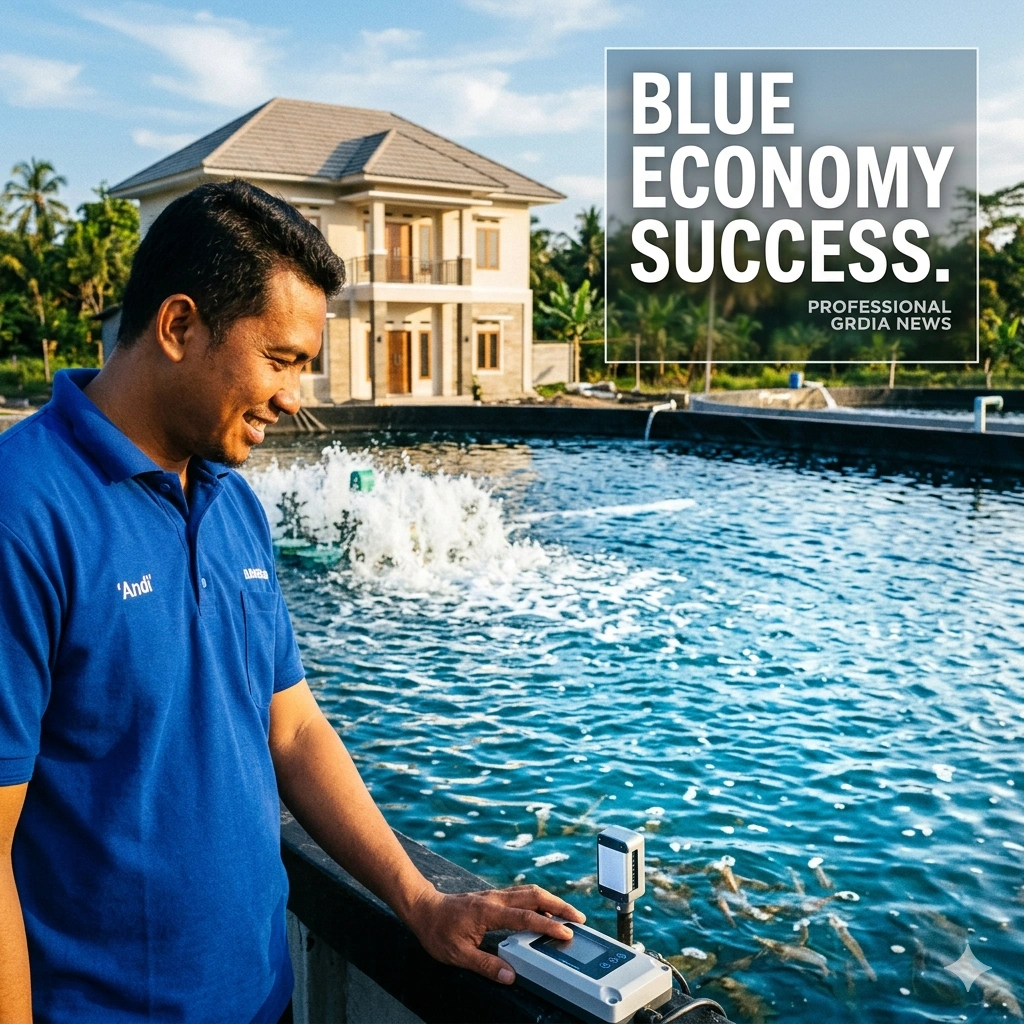
The introduction of Chinese Tech Boosts Shrimp Farming allows former miners to escape the hazardous conditions of the pits for the controlled environment of modern shrimp ponds. By leveraging advanced filtration and feeding systems, these workers are now producing high-grade seafood destined for global markets. This shift represents a core pillar of the “Blue Economy,” where marine resources are managed sustainably for long-term growth.
With Chinese Tech Boosts Shrimp Farming, the local economy in Lamba Village is experiencing an unprecedented surge in disposable income. Families who previously lived in precarious financial states are now investing in permanent housing and education. The success of this initiative serves as a model for South-South cooperation, proving that technological sharing can lead to rapid poverty alleviation without compromising the delicate island ecosystem.
Chinese Tech Boosts Shrimp Farming
The adoption of Chinese Tech Boosts Shrimp Farming has fundamentally changed the daily lives of thousands of workers on Bangka Island. Previously, the region was heavily dependent on tin mining, an industry known for its extreme environmental degradation and physical risks. Today, the same land is being repurposed for aquaculture, utilizing systems that recycle water and minimize the discharge of pollutants into the surrounding ocean.
Through Chinese Tech Boosts Shrimp Farming, local technicians receive intensive training in the full lifecycle of shrimp production. This includes water quality management, disease prevention, and optimized feeding schedules using AI-driven tools. These skills have transformed “unskilled” miners into specialized aquaculture experts, a change that significantly increases their market value and career longevity in the modern global economy.
The financial results of Chinese Tech Boosts Shrimp Farming are visible in the physical transformation of the village infrastructure. Modern brick homes are replacing temporary shacks, and local markets are bustling with new commercial activity. By providing the tools for self-sufficiency, Chinese enterprises are fostering a sense of ownership and pride among the Indonesian farmers who are now leading this blue revolution.
The Transition from Mining to Aquaculture
The shift triggered by Chinese Tech Boosts Shrimp Farming is a strategic response to the declining profitability of traditional tin mining. As mineral deposits near the surface became exhausted, miners were forced to dig deeper, increasing costs and safety hazards. Aquaculture provides a reliable alternative that utilizes the island’s coastal geography without the destructive footprint of heavy machinery and soil excavation.
Implementing Chinese Tech Boosts Shrimp Farming requires a collaborative mindset between international experts and local stakeholders. The project emphasizes a “train-the-trainer” model, ensuring that the knowledge of sustainable farming stays within the community. This educational approach is a hallmark of the Global Development Initiative (GDI), which celebrates its fifth anniversary this year with projects like Bangka Island.
Furthermore, Chinese Tech Boosts Shrimp Farming addresses the global demand for sustainable seafood. As consumers in Europe and North America demand higher environmental standards, the certified eco-friendly ponds in Indonesia are perfectly positioned to capture premium market share. This alignment with international trends ensures that the economic benefits for the farmers will remain consistent for decades to come.
Sustainable Practices and Marine Protection
Environmental stewardship is at the heart of how Chinese Tech Boosts Shrimp Farming functions in a sensitive island environment. Traditional shrimp farming often led to mangrove destruction, but the new systems introduced here use closed-loop water treatment. This prevents the buildup of harmful nitrogen levels and protects the coral reefs that surround Bangka Island from sedimentation and chemical runoff.
The integration of Chinese Tech Boosts Shrimp Farming has also led to the restoration of previously mined lands. Abandoned tin pits, once eyesores and breeding grounds for mosquitoes, are being treated and converted into productive aquaculture hubs. This land reclamation process is essential for the island’s long-term ecological health and provides a blueprint for other mining-dependent regions globally.
- Advanced bio-floc technology is used to maintain water purity and reduce the need for antibiotics.
- Automated feeding systems minimize waste, ensuring that only the necessary amount of nutrients is introduced.
- Solar-powered aeration systems reduce the carbon footprint of the ponds while lowering operational costs for farmers.
- Mangrove reforestation programs are integrated into the farm perimeters to act as natural storm buffers.
Financial Success Stories in Lamba Village
The most compelling evidence for Chinese Tech Boosts Shrimp Farming is found in the personal stories of the local residents. Ejak, a former tin miner, is now a celebrated figure in Lamba Village after building a modern house with his aquaculture earnings. His journey from the dangerous mines to the prosperous ponds illustrates the high ROI of the technology provided by Chinese firms.
Under the Chinese Tech Boosts Shrimp Farming framework, Ejak was able to recoup his initial investment within just two harvest cycles. This level of profitability was unheard of in the mining sector, where earnings were often volatile and dependent on daily mineral finds. The stability of aquaculture allows for long-term financial planning, such as saving for children’s higher education or diversifying into other local businesses.
- Average monthly income for participating farmers has tripled compared to their previous mining wages.
- Local micro-lending programs have seen a 90% decrease in default rates since the aquaculture project began.
- Secondary businesses, such as equipment repair and logistics, have created an additional 500 jobs in the district.
- Housing starts in the village have increased by 40% over the last twenty-four months.
Technological Innovation and Data Management
The core of Chinese Tech Boosts Shrimp Farming is the use of real-time data to drive decision-making. Sensors placed throughout the ponds monitor pH levels, dissolved oxygen, and temperature every second. This data is transmitted to a mobile app, allowing farmers to adjust their systems remotely, which drastically reduces the risk of crop loss due to environmental fluctuations.
Chinese Tech Boosts Shrimp Farming also introduces high-yield genetic strains of shrimp that are resistant to common local pathogens. By combining these hardy species with precise environmental controls, the farms achieve a survival rate of over 85%, far exceeding the industry average. This high success rate is what makes the transition so attractive to former miners who cannot afford to take significant financial risks.
- Real-time monitoring reduces the labor intensity of managing multiple ponds simultaneously.
- Predictive analytics alert farmers to potential disease outbreaks before they become unmanageable.
- Smart energy grids ensure that critical life-support systems for the shrimp remain operational 24/7.
- Cloud-based records help farmers obtain international certifications for their produce, opening new export doors.
Educational Partnerships and Knowledge Sharing
The success of Chinese Tech Boosts Shrimp Farming is bolstered by strong academic ties, specifically with institutions like Jinan University. These partnerships ensure that the technology is not just “dropped in” but is adapted to the specific climatic and social conditions of Indonesia. This academic oversight helps in refining the farming techniques to be even more efficient and culturally compatible.
Through Chinese Tech Boosts Shrimp Farming, a new generation of Indonesian scientists is being trained alongside the farmers. Internships and exchange programs allow local students to study in China, bringing back advanced knowledge in marine biology and water chemistry. This intellectual exchange ensures that the project remains self-sustaining and continues to evolve as new technologies emerge.
- Joint research centers have been established on the island to study local marine biodiversity.
- Scholarships are provided to children of the farmers to study aquaculture engineering abroad.
- Monthly workshops are held in the village to share the latest breakthroughs in sustainable farming.
- Multilingual training manuals have been developed to ensure clear communication between Chinese technicians and local workers.
The Global Development Initiative (GDI) in 2026
As we mark the fifth year of the GDI, Chinese Tech Boosts Shrimp Farming stands out as a flagship project for South-South cooperation. The initiative focuses on practical, result-oriented projects that directly improve the quality of life for people in developing nations. Unlike traditional aid, this model focuses on building capacity and providing the tools for permanent economic independence.
The success of Chinese Tech Boosts Shrimp Farming on Bangka Island is now being replicated in other parts of Southeast Asia. Governments in Vietnam and the Philippines are looking at the Indonesian model as a way to balance their own industrial needs with environmental conservation. This regional ripple effect is a testament to the effectiveness of the “Blue Economy” strategy championed by Chinese enterprises.
- The GDI has facilitated over $2 billion in sustainable aquaculture investments across the region.
- Bangka Island has hosted delegations from ten different countries interested in the aquaculture transition.
- Carbon credit programs are being explored to further reward farmers for their eco-friendly practices.
- A regional trade corridor has been established to streamline the export of “GDI-certified” shrimp.
Socio-Economic Stability and Community Growth
The social fabric of Bangka Island has been strengthened by the stability provided by Chinese Tech Boosts Shrimp Farming. In the mining era, the community was often transient, with workers moving frequently to chase the next mineral vein. Now, the fixed nature of aquaculture ponds encourages families to settle down and invest in their local neighborhoods, leading to better social cohesion.
Chinese Tech Boosts Shrimp Farming has also empowered women in the community, many of whom now work in the processing and packaging sectors of the aquaculture industry. This diversification of the workforce has led to a more resilient local economy that is not dependent on a single demographic. The overall crime rate in Lamba Village has dropped as economic desperation has been replaced by steady opportunity.
- Community centers have been built using profits from the shrimp cooperatives.
- New health clinics have opened to serve the growing and more prosperous population.
- Public transportation links between the ponds and the main port have been modernized.
- Local schools have introduced aquaculture into their vocational training curriculum.
Challenges and Future Projections
While Chinese Tech Boosts Shrimp Farming has been a massive success, challenges remain in maintaining the infrastructure as the project scales. The demand for clean water and reliable electricity continues to grow, requiring further investment in renewable energy sources. However, the government of Indonesia is committed to supporting this transition as a key part of its national development strategy for 2026 and beyond.
The future of Chinese Tech Boosts Shrimp Farming looks bright as new innovations in plant-based shrimp feed are being tested. These feeds would further reduce the environmental impact by eliminating the need for wild-caught fish meal. As the industry moves toward a “net-zero” footprint, Bangka Island will likely remain at the forefront of the global aquaculture movement.
- Plans are underway to double the number of participating farms by the end of 2027.
- New cold-storage facilities are being built to handle the increased volume of harvests.
- The project is exploring the integration of seaweed farming to create a multi-trophic aquaculture system.
- Direct-to-consumer digital platforms are being developed to sell Bangka shrimp to the global market.
Final Summary of the Blue Economy Transformation
In summary, Chinese Tech Boosts Shrimp Farming has turned a vision of sustainable development into a tangible reality for the people of Indonesia. The transition from the dark, dangerous mines to the bright, productive ponds of Lamba Village is a story of hope and technological triumph. This partnership demonstrates that with the right tools and a spirit of cooperation, economic prosperity and environmental protection can go hand in hand.
As the world continues to seek solutions for a sustainable future, the lessons learned from Chinese Tech Boosts Shrimp Farming will be invaluable. The project proves that technology is most effective when it is shared openly and applied with a deep respect for the local community and its environment. Bangka Island is no longer just a source of minerals; it is a thriving hub of the global Blue Economy.
For more details & sources visit: Macau Business / Shenzhen Media Group
Read more about Indonesia news on 360 News Orbit – Indonesia.