
Iraq Oil Ramp-Up preparations have reached a critical state of readiness as the Basra Oil Company positions itself to flood the market with 3.4 million barrels per day. Following the severe disruption caused by the closure of the Strait of Hormuz in early 2026, the nation’s southern production had plummeted to a record low of 900,000 barrels. This strategic bottleneck has highlighted Iraq’s extreme vulnerability compared to neighbors who possess overland pipeline alternatives.
However, officials in Baghdad remain confident that the infrastructure remains intact and capable of a nearly instantaneous recovery. As global energy prices remain volatile, the world is watching for any diplomatic signal that could unlock the massive reserves currently trapped in Iraqi storage tanks. The return of Iraqi crude is seen as the primary factor that could stabilize international energy markets after months of unprecedented regional conflict.
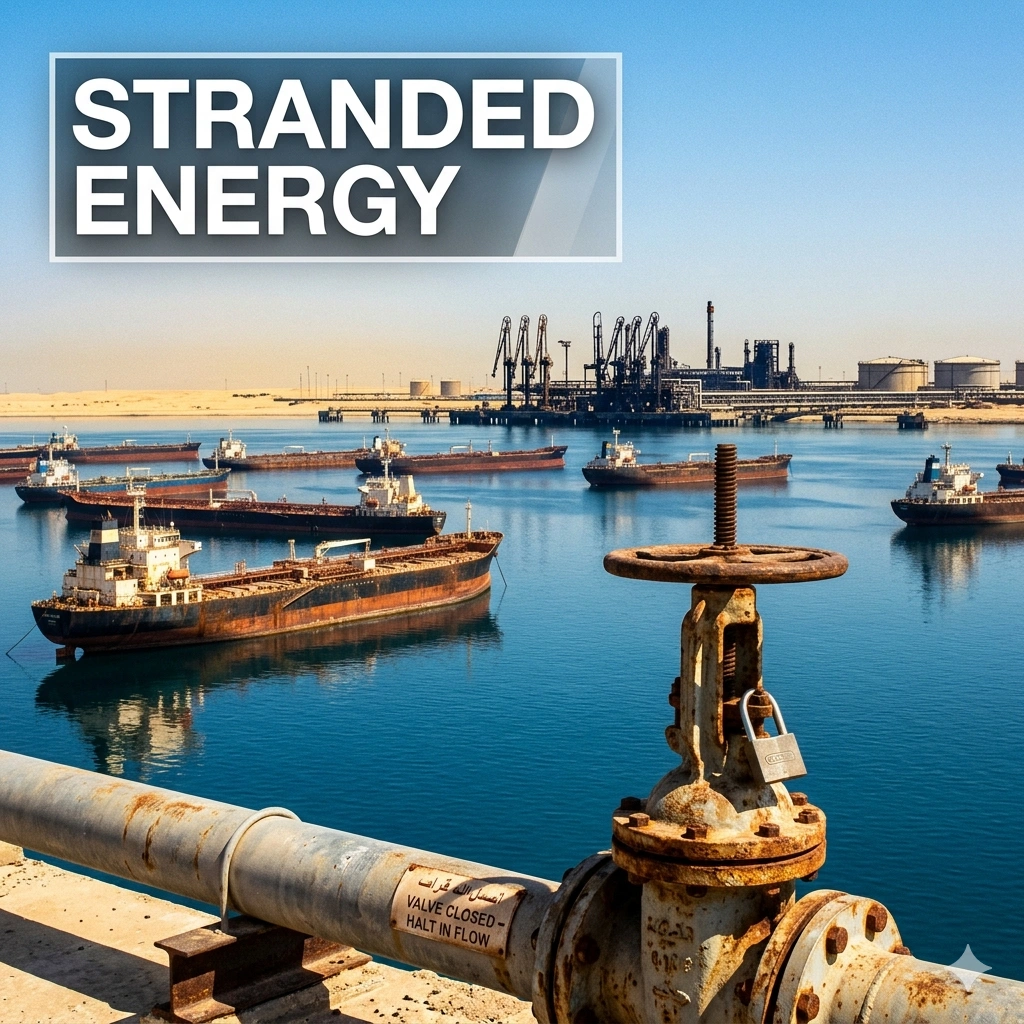
Immediate Restoration of Pre-War Export Levels
The Basra Oil Company has confirmed that the Iraq Oil Ramp-Up could be fully operational within just seven days of a formal reopening of the strategic waterway. Bassem Abdul Kassim, a senior official at the company, stated that technical teams are on 24-hour standby to resume full-scale loading operations at the Al-Basra Oil Terminal.
Before the conflict began on February 28, Iraq was consistently exporting roughly 3.4 million barrels daily, a figure that serves as the immediate target for the recovery phase. This rapid turnaround is possible because the drilling and extraction infrastructure in the southern fields was not physically damaged during the recent hostilities. The primary hurdle remains the logistical blockage at the chokepoint rather than any internal production failure.
The Strait of Hormuz Bottleneck and Its Impact
Iraq has been disproportionately affected by the closure of the Strait of Hormuz due to its lack of diversified export routes. While Saudi Arabia and the UAE can bypass the chokepoint via pipelines to the Red Sea or the Gulf of Oman, Iraq’s southern exports are entirely dependent on the narrow maritime passage. This geographical reality turned a regional conflict into an economic crisis for Baghdad almost overnight.
When domestic storage capacity was exhausted in mid-March, the government was forced to shut in hundreds of wells, causing production to drop from 3.4 million to a mere 800,000 barrels. The current Iraq Oil Ramp-Up plan is a direct response to this vulnerability, aiming to recoup billions in lost revenue as quickly as possible.
Iraq Oil Ramp-Up
The Iraq Oil Ramp-Up strategy relies on the high pressure and productivity of the giant Rumaila and West Qurna fields in the south. These fields are managed through sophisticated integrated systems that allow for rapid adjustments in output based on export capacity. During the weeks of downtime, maintenance crews have performed essential upgrades that may actually allow the Iraq Oil Ramp-Up to exceed previous records once the tankers begin to move.
The Basra Oil Company has also improved its offshore loading buoy systems to handle a higher frequency of Very Large Crude Carriers (VLCCs). This technical readiness ensures that Iraq will be the first nation to restore its market share the moment the geopolitical landscape allows for safe passage through the Strait.
Navigating Failed Verbal Guarantees from Iran
Despite receiving “verbal guarantees” from Iranian authorities for the safe passage of energy shipments, the reality on the water remains stagnant. Iraqi tankers have remained stationary at port as the risk of interception or accidental fire remains too high for international insurers to cover. The Iraq Oil Ramp-Up cannot proceed on promises alone; it requires a formal, internationally recognized diplomatic breakthrough or a verifiable cessation of hostilities.
Recent incidents involving Qatari LNG carriers being forced to turn back have only increased the skepticism regarding these unofficial assurances. Baghdad finds itself in a difficult position, caught between its neighbor’s regional ambitions and its own desperate need for oil-driven economic survival.
Regional Mediation and Diplomatic Deadlocks
Diplomatic efforts led by Pakistan to mediate a ceasefire between Iran and U.S.-Israeli forces have so far been rejected by Tehran, complicating the Iraq Oil Ramp-Up timeline. The international community is desperate for a solution that avoids further escalation, but the conditions for reopening the Strait remain a point of intense contention. Iraq has expressed support for these mediation efforts, as its national budget is almost entirely dependent on the resumption of southern oil sales. Without a breakthrough, the country faces a widening deficit that could lead to domestic social unrest. The Iraq Oil Ramp-Up is therefore not just a technical goal but a vital necessity for the country’s internal political stability in 2026.
The Role of Domestic Storage Capacity
A major factor in the production cuts was the rapid exhaustion of Iraq’s domestic storage tanks in the Basra region. When the Strait was first blocked, Iraq continued to produce at high levels to fill every available vessel and tank, but this buffer only lasted a matter of weeks. The Iraq Oil Ramp-Up plan includes a future expansion of storage infrastructure to prevent such a drastic shutdown in the event of a future crisis.
Currently, the slight uptick in production from 800,000 to 900,000 barrels indicates that some small-scale domestic refining and limited storage have been optimized. However, a return to the multi-million barrel scale requires the massive exit route provided by a free and open Strait of Hormuz.
- Optimization of the Al-Faw storage terminal to hold an additional 5 million barrels.
- Expansion of floating storage units (FSUs) in the Persian Gulf.
- Construction of a secondary emergency pipeline toward the Turkish border.
- Implementation of advanced radar and drone surveillance around loading buoys.
U.S. Rhetoric and Military Implications
The Iraq Oil Ramp-Up is taking place against a backdrop of intensifying rhetoric from the United States. President Trump has issued severe warnings to Tehran regarding the continued blockage of the strategic waterway, describing it as an act of economic warfare. The presence of U.S. and allied naval task forces near the chokepoint adds a layer of complexity to the Iraq Oil Ramp-Up, as any military miscalculation could lead to further delays.
Iraq has attempted to remain neutral in the conflict, focusing solely on the technical aspects of its energy industry. However, as long as the Strait remains a combat zone, the physical safety of the tankers and crews remains the ultimate obstacle to Baghdad’s recovery plans.
Economic Consequences of Stationary Tankers
The financial toll of stationary tankers and idled wells is estimated to be costing Iraq hundreds of millions of dollars every single day. This lost revenue has halted several major infrastructure projects and has led to delays in public sector salary payments. The Iraq Oil Ramp-Up is the only solution to this growing fiscal crisis, making the reopening of Hormuz the most anticipated event in the country’s 2026 calendar.
Economists warn that even with a rapid recovery, the debt accumulated during these months of blockage will take years to pay off. The “opportunity cost” of this conflict has been devastating for a nation that was just beginning to find its feet after decades of previous instability.
Technical Readiness of the Basra Oil Company
The engineers at the Basra Oil Company have used the downtime to perform “hot swaps” of aging equipment and to pressure-test the main export pipelines. This ensures that when the order for the Iraq Oil Ramp-Up is given, there will be no mechanical failures that could stall the recovery. The company has also secured an emergency supply of spare parts through its partners in China and Russia, bypassing some of the logistical issues caused by the Western-led sanctions on the region.
This level of technical preparedness is a record achievement for the Iraqi energy sector, which has become much more resilient since the early 2020s. The Iraq Oil Ramp-Up will be a testament to the skill and dedication of these local crews.
Analyzing the Qatari LNG Forced U-Turn
The recent failure of Qatari LNG carriers to transit the Strait, despite having their own “guarantees,” has been a major blow to Iraqi expectations. If the world’s largest LNG exporter cannot safely navigate the chokepoint, the Iraq Oil Ramp-Up faces an even steeper challenge. This incident proved that “verbal guarantees” from regional actors are currently worthless without a verifiable enforcement mechanism.
It has forced the Iraqi Ministry of Oil to reconsider its reliance on the southern route and has sparked a renewed debate about the long-delayed pipeline to Jordan’s Port of Aqaba. However, such a pipeline would take years to build, leaving the Iraq Oil Ramp-Up dependent on the immediate resolution of the Hormuz crisis.
- Analysis of satellite data to identify safe corridors within the Strait.
- Coordination with international maritime insurance giants to lower risk premiums.
- Implementation of a convoy system for Iraqi tankers escorted by neutral vessels.
- Seeking a specific “Energy Corridor” agreement through the United Nations.
Impact on Global Energy Markets
The global energy market is currently priced with a “Hormuz Premium,” which has driven the cost of crude to record highs in early 2026. The eventual Iraq Oil Ramp-Up is expected to provide an immediate cooling effect on these prices, offering relief to inflation-weary economies in Europe and Asia.
Major consumers like China and India are particularly eager for the return of Iraqi Basra Light and Basra Heavy grades. The Iraq Oil Ramp-Up will be one of the largest single additions of supply to the global market in recent history, potentially causing a sharp correction in oil prices. This makes the reopening of the Strait a key focal point for global financial analysts and central bankers worldwide.
Domestic Challenges Amid Production Cuts
The forced production cuts have not only impacted the budget but have also caused technical challenges within the oil fields themselves. Shutting in a well for a long period can sometimes lead to reservoir pressure issues or the buildup of waxes and residues. The Iraq Oil Ramp-Up plan includes a series of “well-stimulation” procedures to ensure that production returns to its maximum potential as quickly as possible.
Specialized chemical injections and high-pressure water flooding will be used to jumpstart the fields that have been dormant for the past five weeks. The ability of Iraqi technicians to manage these reservoir complexities will be the true test of the Iraq Oil Ramp-Up success.
Pakistan’s Role in Ceasefire Mediation
Pakistan’s emergence as a key mediator in the conflict is a significant development for the Iraq Oil Ramp-Up prospects. As a nation with strong ties to both Iran and the Arab world, Pakistan is uniquely positioned to broker a deal that allows for the safe passage of energy. While the first round of talks was rejected, a second, more intensive diplomatic push is expected in mid-April. Iraq is providing the Pakistani mediators with detailed data on the humanitarian and economic impact of the blockage to use as leverage during the negotiations. The success of the Iraq Oil Ramp-Up may ultimately depend on the skill of these diplomats in finding a face-saving solution for all parties involved.
Storage Exhaustion: A Record Lesson Learned
The exhaustion of domestic storage capacity in March 2026 was a record event that fundamentally changed Iraqi energy policy. Never before had the nation’s entire southern production been halted due to a lack of space. The Iraq Oil Ramp-Up is now seen as the first step in a larger national strategy to build a massive “Strategic Petroleum Reserve” that can sustain production for months during a maritime blockade. Plans are already being drawn up for underground storage caverns and massive tank farms in the desert areas away from the coast. This future-proofing is a direct result of the hard lessons learned during the 2026 Strait of Hormuz crisis.
The Precarious Production Ticking
The recent slight increase in production to 900,000 barrels per day is a precarious but positive sign for the Iraq Oil Ramp-Up. It indicates that the domestic industry is finding small ways to operate despite the massive external constraints. This oil is primarily being used for domestic power generation to keep the lights on in Baghdad and Basra during the heat of the approaching summer. However, this level of production is not enough to sustain the national economy. The Iraq Oil Ramp-Up must reach its full 3.4 million barrel target to restore the nation’s financial health. Every extra barrel produced now is a victory for the resilience of the Iraqi oil worker.
Future Pipeline Diversification Plans
The 2026 crisis has revitalized plans for the Iraq-Jordan pipeline, which would provide an alternative route for the Iraq Oil Ramp-Up in future scenarios. By reaching the Red Sea, Iraqi crude could bypass the Strait of Hormuz entirely, significantly reducing the nation’s geopolitical vulnerability. While this does not help the current crisis, it has become a top priority for the 2027-2030 national development plan.
The Iraq Oil Ramp-Up of the future will be multi-directional, ensuring that Baghdad can never again be held hostage by the closure of a single maritime chokepoint. This strategic shift is perhaps the most significant long-term consequence of the current regional war.
- Accelerating the feasibility studies for the Basra-Aqaba pipeline.
- Exploring the possibility of a northern route through Syria to the Mediterranean.
- Negotiating for increased capacity through the existing Turkish pipeline.
- Developing a regional “Energy Security Pact” with neighbors to share pipeline assets.
U.S.-Israel Conflict with Iran: The Core Obstacle
The Iraq Oil Ramp-Up is currently held hostage by the broader geopolitical struggle between Iran and the U.S.-Israeli alliance. This conflict, which flared up in late February 2026, has turned the Gulf into a restricted zone for commercial shipping. As long as these major powers are engaged in a cycle of escalation, the insurance costs for tankers will remain prohibitive. The Iraq Oil Ramp-Up is technically ready, but it cannot proceed in a vacuum. It requires a stable security environment where commercial vessels are not viewed as legitimate targets. The fate of the Iraqi economy is now inextricably linked to the resolution of this high-stakes international standoff.
Basra Oil Company’s Strategic Communications
The Basra Oil Company has been proactive in communicating its readiness to the global market, hoping to manage expectations and keep international partners engaged. By providing clear data on the Iraq Oil Ramp-Up capabilities, they are signaling that Iraq remains a reliable supplier despite the current force majeure. This transparency is crucial for maintaining the confidence of international oil majors like BP, Eni, and ExxonMobil, who remain committed to their long-term contracts in the country. The “verbal guarantees” and technical briefings are all part of a sophisticated PR effort to ensure that Iraq is the first choice for buyers once the Strait is reopened.
Conclusion on the 2026 Oil Outlook
As of April 7, 2026, the Iraq Oil Ramp-Up stands as a monumental project of national recovery, waiting for the diplomatic green light. The technical ability to restore 3.4 million barrels per day within a week is a record achievement of planning and maintenance. While the Strait of Hormuz remains blocked, the resilience and readiness of the Basra Oil Company provide a glimmer of hope for a nation under immense pressure. The world waits for the return of Iraqi crude, a development that will mark the beginning of the end for the current energy crisis. The Iraq Oil Ramp-Up is ready; all it needs now is a path to the sea.
Final Thoughts on Energy Security
The events of early 2026 have redefined the concept of energy security for Iraq and the wider region. The Iraq Oil Ramp-Up is the centerpiece of a recovery that will focus on agility, technical excellence, and eventually, geographical diversification. As the nation prepares for its immediate surge, it is also laying the groundwork for a more secure and stable energy future. The 3.4 million barrel target is just the beginning of a new chapter in the history of Iraqi oil. For the people of Basra and the rest of the nation, the successful execution of the Iraq Oil Ramp-Up will be the ultimate victory over the chaos of the 2026 regional war.
For more details & sources visit: OilPrice.com
Read more about Iraq news on 360 News Orbit – Iraq.