
China’s strategic military support for Iran has recently been linked to significant regional casualties as the Middle East conflict enters a more volatile phase in April 2026. Military analysts and international observers are raising alarms over the precision of recent strikes, which appear to be powered by advanced foreign technology. Investigations suggest that the lethal nature of these encounters is not merely a result of local manufacturing but is directly enhanced by external components. Consequently, China’s strategic military support for Iran is now under intense global scrutiny as civilian death tolls continue to rise across the affected zones.
The ongoing investigation into missile fragments found in various strike zones provides a chilling look at the source of this escalating violence. Experts have identified specialized chemicals and high-tech guidance systems that originate far beyond the borders of the Islamic Republic. This influx of sensitive materials has allowed for a level of tactical sophistication that was previously absent from regional skirmishes. By providing the building blocks for modern warfare, China’s strategic military support for Iran has fundamentally altered the risk profile for civilian populations living near high-value infrastructure targets.
The Lethal Impact of Dual-Use Technology Transfers
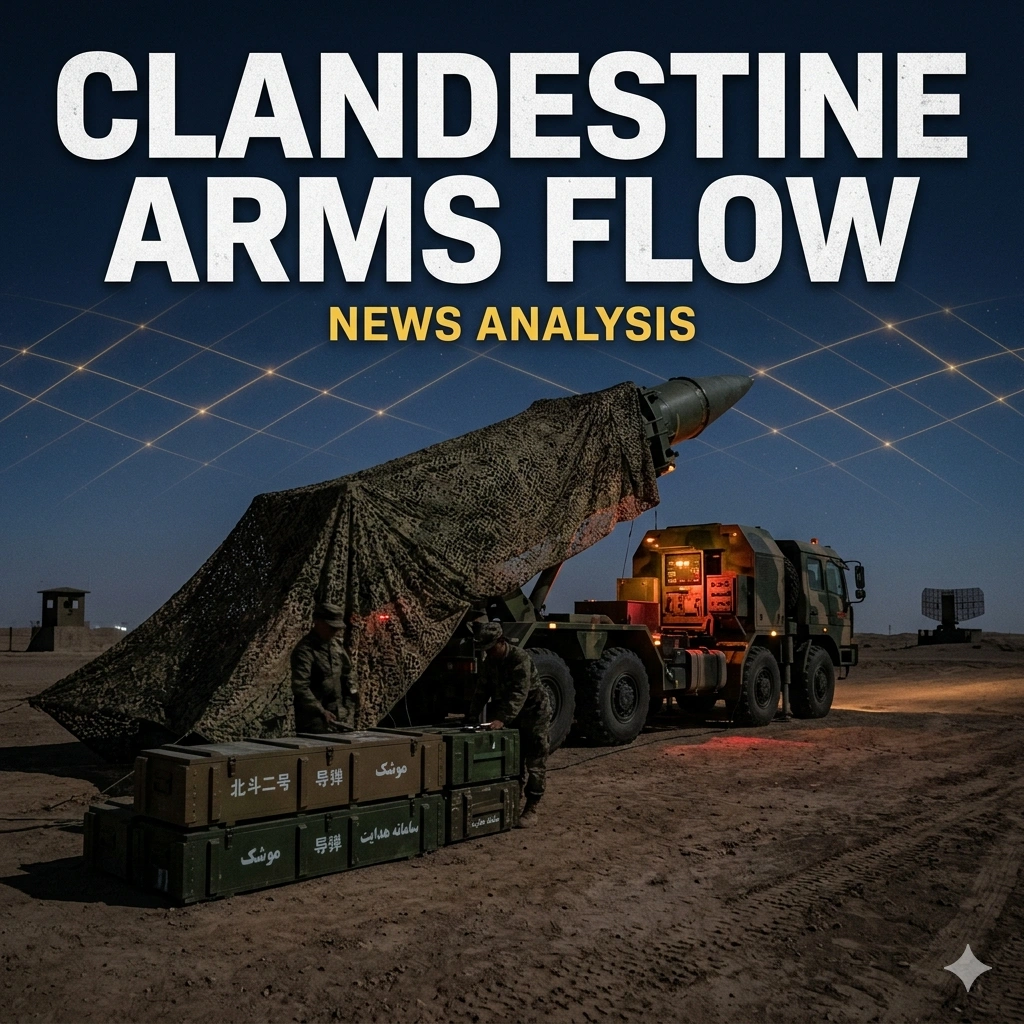
The core of the current controversy lies in the transfer of “dual-use” materials, which are ostensibly for civilian use but possess undeniable military applications. Reports indicate that substances like ammonium perchlorate, essential for solid-fuel rocket motors, have been flowing through clandestine channels into Iranian factories. These chemicals allow for missiles that are more mobile, easier to hide, and significantly faster to launch than older liquid-fueled models. Because of this, China’s strategic military support for Iran has made the region’s missile batteries far more resilient against preemptive defensive strikes.
Beyond the raw chemicals, the integration of advanced satellite navigation has proven to be a decisive factor in recent casualty reports. Access to the BeiDou Navigation Satellite System has reportedly granted Iranian missiles a degree of accuracy that was unseen during the brief 12-day conflict in June 2025. This increased precision means that strikes are hitting their intended marks with devastating efficiency, often in densely populated urban areas. Therefore, China’s strategic military support for Iran is directly credited with the increased lethality of the current regional offensive.
Chinas Strategic Military Support for Iran
The geopolitical implications of this cooperation extend far beyond the immediate battlefield, affecting the long-term balance of power in West Asia. Beijing has consistently maintained that its trade with Tehran remains within the bounds of international law, yet the evidence on the ground suggests a much deeper involvement. Security experts argue that the provision of gyroscopes and high-end guidance sensors constitutes a direct violation of the spirit of global non-proliferation efforts. This makes China’s strategic military support for Iran a central theme in upcoming diplomatic summits between the East and West.
As the conflict progressed into early 2026, reports surfaced regarding a final deal for CM-302 supersonic anti-ship missiles. These weapons are designed to penetrate advanced naval defenses, posing a significant threat to international shipping lanes and maritime security. The arrival of such technology suggests that the partnership is moving from basic components to fully realized weapon systems. Consequently, China’s strategic military support for Iran is forcing regional actors to rethink their entire naval strategy in the Persian Gulf and beyond.
Logistics Networks and Clandestine Trade Routes
Maintaining the flow of sensitive materials requires a complex web of shell companies and transshipment hubs located across several continents. Investigators have tracked shipments moving through neutral ports before they are surreptitiously redirected to Iranian military facilities. These “dark” logistics networks are designed to bypass international sanctions and hide the true origin of the cargo from global regulators. The persistence of these routes ensures that China’s strategic military support for Iran remains uninterrupted despite the mounting pressure from the United Nations.
- Transshipment hubs in Southeast Asia serve as a primary transit point for dual-use chemicals.
- Front companies based in the Middle East handle the financial transactions to mask the involvement of state-backed entities.
- Digital “firewalls” are used to hide the transfer of technical data and satellite access permissions.
Technological Advancements in Iranian Weaponry
The sudden leap in Iranian military capabilities can be traced back to specific technological infusions that have occurred over the last twenty-four months. While local engineers are talented, the rapid miniaturization of guidance systems points toward external assistance in research and development. This synergy between foreign hardware and local manufacturing has created a potent arsenal that is difficult to counter using traditional missile defense systems. As a result, China’s strategic military support for Iran is viewed as the primary catalyst for this local “tech boom.”
- Integration of BeiDou satellite data for real-time course correction during terminal flight phases.
- Adoption of solid-fuel technology that reduces the “warm-up” time required for missile batteries.
- Enhanced electronic counter-measure (ECM) suites that help missiles evade radar detection.
Humanitarian Consequences of Precision Strikes
While military commanders often speak of “precision,” the reality on the ground in April 2026 is one of widespread devastation. The ability to hit specific buildings does not eliminate the risk to nearby civilians; in many cases, it simply makes the destruction more concentrated and lethal. Humanitarian organizations have noted that the types of injuries seen in recent weeks are consistent with high-velocity, high-explosive payloads. This human cost is the most visible and tragic byproduct of China’s strategic military support for Iran.
- Increased numbers of civilian casualties in proximity to military headquarters and communication hubs.
- Destruction of vital civilian infrastructure, including power grids and water treatment plants, due to “collateral” precision strikes.
- Displacement of millions as families flee urban centers targeted by advanced missile technology.
Regional Reactions to Foreign Military Aid
Gulf nations and Israel have voiced their strong disapproval of the increasing foreign presence in the regional arms race. These states argue that the introduction of supersonic missiles and satellite-guided drones only serves to prolong the suffering of the civilian population. Diplomatic channels are currently overflowing with protests against the perceived interference by extra-regional powers in Middle Eastern affairs. The consensus among these states is that China’s strategic military support for Iran is a destabilizing force that undermines years of delicate peace talks.
- Israel has increased its investment in multi-layered defense systems like the Arrow-4 to counter the new missile threats.
- Gulf states are seeking closer security ties with Western allies to offset the technological imbalance.
- Local protest movements have begun to target foreign corporate interests suspected of facilitating the arms trade.
The Role of International Sanctions
Despite a robust regime of international sanctions, the trade in missile precursors and dual-use technology seems to thrive in the shadows. Critics argue that the current sanctions are too focused on traditional banking and fail to address the complexities of modern, digital-first logistics. For sanctions to be effective, there must be a global consensus that does not currently exist due to competing economic interests. This loophole is exactly what allows China’s strategic military support for Iran to flourish in the current climate.
- The need for real-time monitoring of chemical exports to prevent diversion to military programs.
- Greater transparency requirements for satellite service providers operating in conflict zones.
- International cooperation to identify and freeze the assets of shell companies used in the arms trade.
Comparing Past and Present Conflict Dynamics
When comparing the current hostilities to the June 2025 conflict, the difference in weapon performance is staggering. Last year, many missiles were intercepted or fell wide of their targets due to outdated guidance and slow launch sequences. In 2026, the success rate for penetration of air defenses has risen significantly, leading to higher casualties and more substantial damage. This evolution is a direct result of the continuous and evolving China’s strategic military support for Iran over the past twelve months.
- 2025: Higher reliance on liquid-fuel missiles and basic GPS guidance.
- 2026: Shift toward solid-fuel motors and multi-constellation satellite navigation (BeiDou/GLONASS).
- The Result: A more lethal, unpredictable, and devastating conflict for all involved.
Global Economic and Strategic Repercussions
The entanglement of major global economies in a regional war creates a dangerous precedent for the future of international trade. If dual-use technology can be weaponized so easily against civilian populations, the entire concept of global supply chains may need to be reevaluated. Markets have already reacted to the instability, with insurance premiums for shipping in the region reaching record highs. The long-term fallout of China’s strategic military support for Iran could be a fracturing of the global trade system as nations seek to decouple from “high-risk” suppliers.
- Increased costs for energy and goods as shipping routes are diverted around the conflict zone.
- Potential for a “technology cold war” where nations restrict the export of sensitive components to certain regions.
- The erosion of trust in international trade agreements as economic tools are used for military leverage.
Future Outlook for the Middle East Conflict
As we look toward the remainder of 2026, the presence of advanced weaponry suggests that a quick resolution is unlikely. The technological “arms race” currently taking place ensures that both sides have the capacity to inflict massive damage for the foreseeable future. Without a major diplomatic intervention that addresses the root cause of these technology transfers, the cycle of violence is expected to continue. China’s strategic military support for Iran will remain a central point of contention for any peace negotiator attempting to bring stability to the region.
The international community must decide how to handle the reality of modern warfare where the lines between civilian and military technology are increasingly blurred. If the world fails to act, the casualties seen in April 2026 will likely be just the beginning of a much larger humanitarian crisis. Transparency, accountability, and a genuine commitment to non-proliferation are the only tools that can truly counter the impact of China’s strategic military support for Iran. Until then, the people of the Middle East remain caught in the crossfire of a high-tech war they did not choose.
Final Assessment of the Defense Partnership
In conclusion, the link between foreign technological aid and regional casualties is undeniable in the current conflict. The evidence points toward a sustained and sophisticated effort to bolster defensive and offensive capabilities through the provision of dual-use materials. While Beijing may deny direct involvement in the loss of life, the performance of the weapons used tells a different story. China’s strategic military support for Iran has turned a local dispute into a high-stakes arena for global power competition, with devastating consequences for the innocent.
The path to peace requires an honest evaluation of how these weapons reach the battlefield and a collective effort to sever those supply lines. Only by removing the technological fuel can we hope to extinguish the fires of war that currently consume the region. The tragedy of 2026 serves as a stark reminder that in the age of precision missiles, there is no such thing as a distant conflict. We are all affected by the choices made in the pursuit of strategic dominance and the military partnerships that sustain it.
For more details & sources visit: Indo-Pacific Defense Forum
Read more on Iran news: 360 News Orbit – Iran.