
Poland’s Foreign Minister Radosław Sikorski has sparked a significant diplomatic firestorm by questioning the timing of alleged pipeline sabotage just days before Hungary’s pivotal national election. This sudden security crisis involving the TurkStream pipeline has created a massive rift between Warsaw and Budapest as voters prepare for the polls. While Hungarian officials suggest a direct threat to national energy infrastructure, the international community remains deeply skeptical about the authenticity of these reports. The tension highlights how energy security is being used as a potent political tool within the European Union.
The geopolitical landscape of Central Europe shifted dramatically when reports emerged regarding explosives found near a critical gas artery in Serbia. Polish Foreign Minister Radosław Sikorski was quick to note that such a discovery serves the immediate political interests of the ruling Fidesz party. Because the Hungarian administration has long campaigned on a platform of stability and Russian energy reliance, this incident fits a specific narrative. Consequently, the timing of the pipeline sabotage has become a central theme in the final week of the Hungarian electoral campaign.
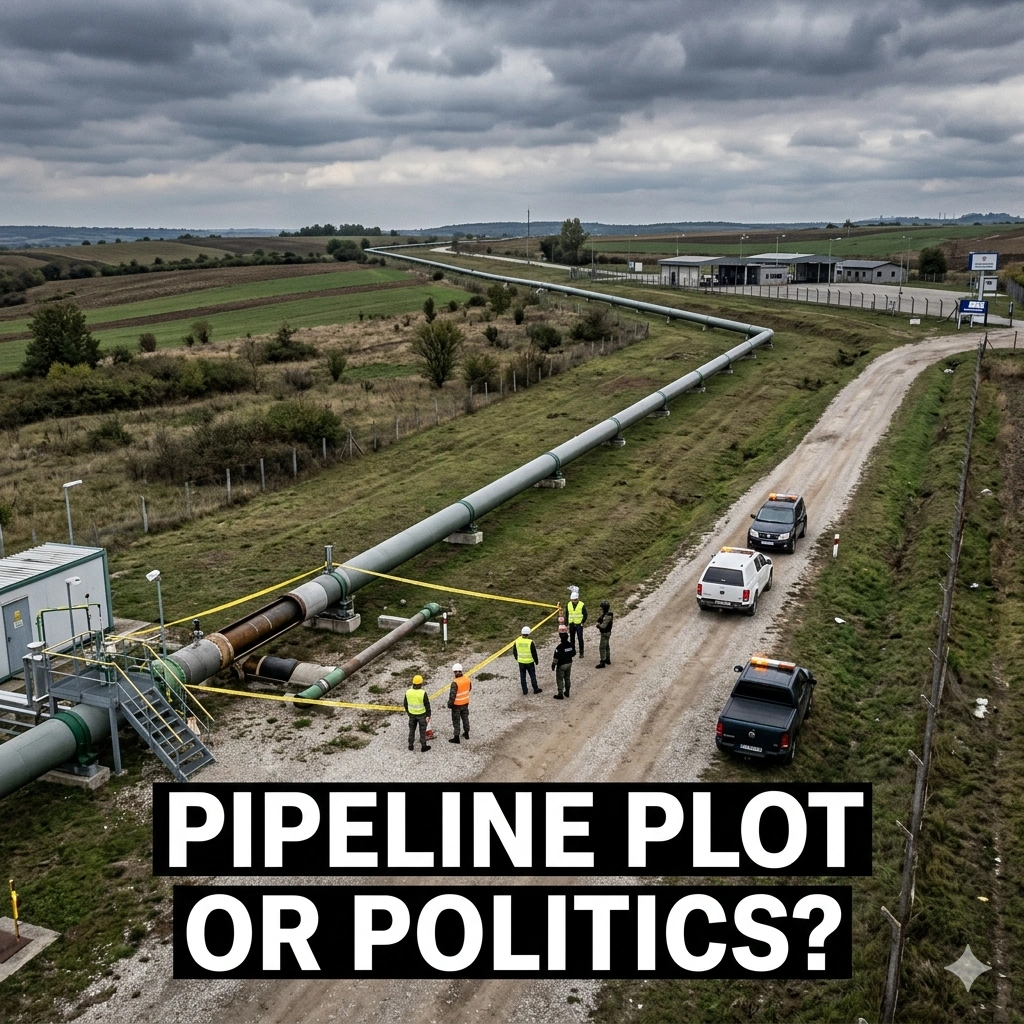
Assessing the Strategic Timing of Pipeline Sabotage
European intelligence agencies are currently analyzing the technical details of the reported threat to determine if the explosives were truly functional or merely symbolic. Radosław Sikorski pointed out that the proximity of the discovery to the election date suggests a calculated effort to influence public perception. Furthermore, the Polish government has historically been wary of how Viktor Orbán utilizes regional security concerns to consolidate domestic power. This skepticism is shared by several Baltic states that view the announcement as a distraction from internal economic pressures.
The rhetoric coming out of Budapest has been remarkably consistent, framing the incident as a direct attack on Hungarian sovereignty and economic well-being. By highlighting the vulnerability of the TurkStream extension, the Hungarian government reinforces its argument for maintaining a soft stance toward Moscow. However, the lack of independent verification regarding the Serbian discovery has led to accusations of a “false flag” operation. Transitioning from evidence to speculation, the opposition in Hungary has called for an international investigation into the matter.
Regional Reactions to the Pipeline Sabotage Reports
The reaction from Warsaw has been particularly sharp, reflecting the ongoing ideological divide between Prime Minister Donald Tusk and his Hungarian counterpart. Polish officials argue that using national security threats for electoral gain undermines the collective stability of the North Atlantic Treaty Organization. Moreover, the Polish Ministry of Foreign Affairs has suggested that these maneuvers only serve to weaken European unity during a period of intense conflict. This diplomatic friction shows no signs of dissipating as the election draws closer.
Ukrainian officials have also weighed in, denying any involvement in activities that would jeopardize regional energy infrastructure or civilian safety. They suggest that the narrative of pipeline sabotage is being fueled by Russian disinformation designed to drive a wedge between Kyiv and its European neighbors. By creating a climate of fear, these operations aim to reduce public support for continued military and financial aid to Ukraine. Therefore, the incident is being viewed through the lens of hybrid warfare rather than a simple criminal act.
Timing of Pipeline Sabotage
The specific timing of the announcement remains the most contentious element of this developing story for diplomats and energy analysts alike. History shows that security scares often result in a “rally ’round the flag” effect, which typically benefits the incumbent administration during a vote. Polish Foreign Minister Radosław Sikorski emphasized that the suddenness of the defense council meeting was designed to create a sense of immediate national emergency. As a result, the focus of the Hungarian electorate has shifted away from inflation and toward external threats.
Public trust in the reporting of such incidents is often influenced by the transparency of the investigative process following the initial discovery. In this case, the reliance on reports from Serbian authorities, who maintain close ties with both Budapest and Moscow, has raised red flags. Independent security experts note that the technical specifications of the explosives have not been fully disclosed to international monitors. This lack of transparency further supports the theory that the event was timed for maximum political impact rather than public safety.
Energy Infrastructure Vulnerability in Central Europe
Modern energy networks are undeniably complex and remain high-priority targets for various actors seeking to exert geopolitical influence across the continent. The TurkStream pipeline is a vital lifeline for Hungary, making any threat to its integrity a matter of extreme national importance. However, the Polish government argues that protecting this infrastructure should not involve the manipulation of public fear for partisan goals. Instead, Warsaw advocates for a unified European approach to securing pipelines that does not rely on Russian-aligned narratives.
Critics of the Orbán administration point out that Hungary’s energy policy has left the country uniquely vulnerable to this type of geopolitical leverage. By refusing to diversify energy sources as aggressively as Poland, Hungary remains tethered to the stability of pipelines originating from the east. This dependency creates a cycle where any perceived threat becomes a national crisis capable of swinging an election. Consequently, the discussion around pipeline sabotage is inextricably linked to the broader debate over European energy independence.
Political Consequences of the Security Narrative
The political fallout from this incident extends far beyond the borders of Hungary, affecting the internal dynamics of the Visegrád Group. Once a cohesive block, the group is now fractured over how to handle relations with Russia and the protection of shared interests. Polish leadership has made it clear that they will no longer look the other way when security threats appear suspiciously convenient. This new assertiveness from Warsaw signifies a major shift in the power balance of Central and Eastern Europe.
- Voter sentiment in Hungary appears to be shifting toward a security-first mindset according to recent internal polling.
- Opposition leader Péter Magyar has utilized the incident to highlight the government’s lack of transparency regarding foreign policy.
- International markets have reacted with slight volatility to the news of potential infrastructure instability in the Balkans.
Comparing Polish and Hungarian Security Perspectives
Poland has consistently invested in liquid natural gas terminals and North Sea connections to eliminate the threat of energy blackmail. In contrast, Hungary has deepened its ties to Russian gas, a move that Radosław Sikorski suggests creates the very instability Budapest now claims to fear. The Polish perspective is that true security comes from diversification, not from emergency defense council meetings held on the eve of elections. This fundamental disagreement on strategy continues to define the relationship between the two nations.
- Poland’s Energy Strategy: Focused on the Baltic Pipe and diversification to ensure long-term sovereignty.
- Hungary’s Energy Strategy: Focused on TurkStream and long-term contracts with Gazprom to maintain lower consumer prices.
- The Conflict: Differing views on whether Russian energy is a reliable resource or a tool for regional destabilization.
Investigative Challenges and Hybrid Threats
Uncovering the truth behind the explosives found in Serbia requires a level of cooperation that is currently absent among the involved parties. Without a neutral third-party forensic analysis, the claims of pipeline sabotage will remain a matter of political debate rather than a proven fact. This ambiguity is a hallmark of modern hybrid threats, where the goal is often to confuse the public rather than destroy infrastructure. Radosław Sikorski believes that the European Union must develop better protocols for verifying such claims.
- Establishment of a joint EU task force for energy infrastructure verification to prevent political manipulation.
- Increased satellite monitoring of pipeline routes to provide real-time data on unauthorized activities or security breaches.
- Implementation of stricter reporting requirements for member states when announcing threats that impact regional security.
Long-term Impact on European Diplomacy
Regardless of whether the explosives were real, the damage to the diplomatic relationship between Poland and Hungary is already quite extensive. The bluntness of Sikorski’s remarks indicates that Poland is no longer interested in maintaining a facade of unity with an administration it distrusts. This could lead to further isolation for Hungary within the European Council, especially concerning security and defense budgets. The repercussions of the timing of the pipeline sabotage will likely be felt for years to come.
The incident also serves as a warning to other European nations about the potential for infrastructure to be used as a prop in domestic politics. As the continent moves toward a greener and more integrated energy grid, the security of these assets must be depoliticized to ensure public trust. Warsaw’s vocal opposition to Budapest’s narrative is a step toward demanding higher standards of evidence in international relations. Ultimately, the truth about the TurkStream threat may only surface long after the ballots have been cast.
Future of the TurkStream Pipeline Security
Securing thousands of miles of pipeline requires constant vigilance and international cooperation that transcends partisan politics. The TurkStream project remains a controversial element of the European energy mix due to its origin and the geopolitical baggage it carries. If the pipeline sabotage was indeed a genuine threat, it suggests that the Balkan route is increasingly targeted by actors seeking to disrupt European stability. However, if the threat was fabricated, it represents an equally dangerous erosion of democratic norms and international trust.
Experts suggest that the only way to move forward is through increased transparency and the adoption of advanced monitoring technologies. By utilizing automated sensors and drone patrols, nations can provide verifiable proof of security incidents to their neighbors and the public. This would mitigate the ability of any government to use the timing of the pipeline sabotage as a convenient excuse for emergency measures. In the end, the integrity of the infrastructure is just as important as the integrity of the information surrounding it.
The diplomatic spat between Radosław Sikorski and the Hungarian government is a microcosm of the larger struggle for the soul of Central Europe. On one side is a vision of transparency and diversification, while the other side relies on strategic ambiguity and traditional energy alliances. As Hungary heads to the polls, the shadow of the TurkStream incident looms large over the democratic process. The world will be watching to see how the electorate responds to these claims of sabotage and the international skepticism they have provoked.
For more details & sources visit: Anadolu Agency
Read more on Poland news: 360 News Orbit – Poland.