
Tokyo Kitchenware Mecca remains the ultimate destination for culinary enthusiasts seeking unparalleled Japanese precision in 2026. This historic district, known locally as Kappabashi Dōgugai, has successfully transitioned from a quiet wholesale street into a vibrant international landmark. Visitors from across the globe are flocking to this specialized area to acquire tools that define the gold standard of professional cooking. The surge in interest highlights a global shift toward valuing high-quality, durable equipment over mass-produced alternatives.
As social media continues to amplify the allure of Japanese craftsmanship, the streets of this district are busier than ever before. Shop owners are adapting to this new wave of global interest by offering more bilingual support and specialized demonstrations. This transformation ensures that the legacy of Japanese metalwork and design continues to thrive in a modern, interconnected marketplace.
The Global Appeal of the Tokyo Kitchenware Mecca
The rise of the Tokyo Kitchenware Mecca as a primary tourist attraction stems from a deep-seated respect for traditional Japanese manufacturing techniques. International travelers are no longer satisfied with standard souvenirs and instead seek functional art that improves their daily lives. The district offers an immersive experience where history meets modern utility in every storefront.
Furthermore, the concentration of nearly 170 specialized shops creates an ecosystem of expertise that is impossible to find elsewhere in the world. Each merchant possesses deep knowledge about their specific niche, whether it be hand-forged knives or specialized bamboo steamers. This level of specialization provides a unique educational opportunity for visitors who want to understand the soul of Japanese cuisine.
Consequently, the area has become a symbol of Japan’s “monozukuri” or the art of making things. Tourists appreciate the tactile nature of the shopping experience, allowing them to feel the weight and balance of tools before purchasing. This physical connection to the craft is a significant driver of the current inbound tourism boom.
Iidaya and the Evolution of Specialized Tools
Since its founding in 1912, Iidaya has stood as a pillar of excellence within the Tokyo Kitchenware Mecca. The shop has survived over a century of change by remaining committed to the principle that every cook deserves the perfect tool. Today, it serves as a primary example of how heritage brands can successfully navigate the complexities of global fame.
The inventory at Iidaya is staggering, featuring over 8,500 distinct types of kitchenware designed to solve specific culinary challenges. From ladles that measure exactly one cubic centimeter to specialized graters for different textures of radish, the variety is unmatched. This level of detail ensures that even the most discerning professional chefs find exactly what they need.
Sixth-generation owner Iida Yūta has observed that the customer base is shifting toward international hobbyists who value ergonomics. These shoppers are particularly drawn to tools that are designed to fit the hand comfortably, reducing fatigue during long hours of food preparation. This focus on user-centric design is a hallmark of the items found throughout the district.
Tokyo Kitchenware Mecca
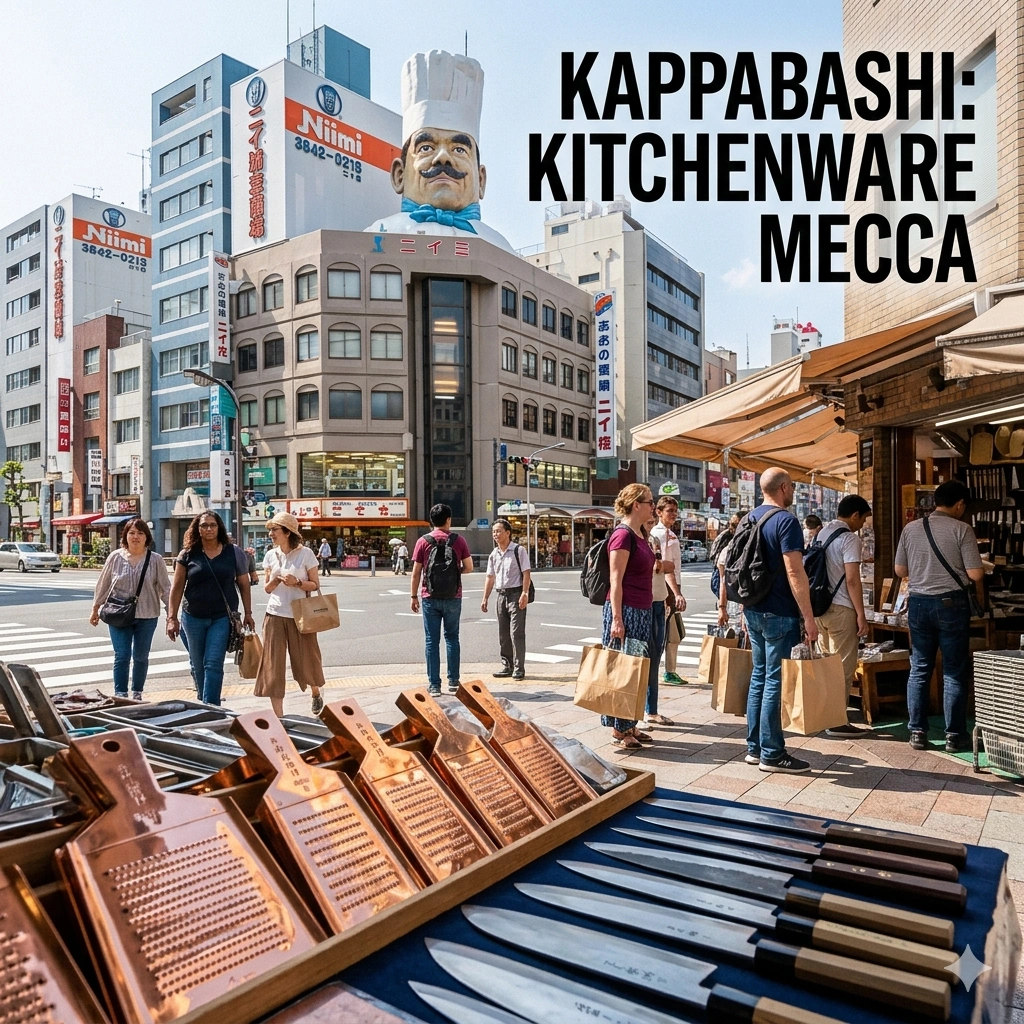
The physical layout of the Tokyo Kitchenware Mecca spans nearly a kilometer between the cultural hubs of Asakusa and Ueno. Walking down this street, one is greeted by the iconic giant chef head atop the Niimi Building, signaling the entrance to a culinary wonderland. The atmosphere is a blend of industrious wholesale energy and welcoming retail hospitality.
While the district was once the exclusive domain of restaurant owners and professional chefs, it now caters to a diverse audience. You can see families, influencers, and professional culinary students all browsing the same narrow aisles. The inclusion of plastic food sample shops adds a whimsical element to the otherwise serious business of kitchen supplies.
Despite the influx of tourists, the district maintains its authentic charm and professional integrity. Most shops still prioritize quality over flashy marketing, relying on the reputation of their goods to drive sales. This commitment to excellence is what keeps the Tokyo Kitchenware Mecca relevant in an era of rapid digital change.
Precision Engineering in Japanese Graters and Peelers
One of the most sought-after categories in the Tokyo Kitchenware Mecca is the high-precision peeling and grating equipment. These tools are often made from superior stainless steel or traditional copper, ensuring they remain sharp for years. The engineering behind a simple vegetable peeler in this district often rivals that of high-end medical instruments.
- Traditional copper oroshigane graters provide a texture that preserves the juice of vegetables.
- High-speed peelers from brands like Iidaya are designed to remove the thinnest possible layer of skin.
- Ceramic graters offer a non-reactive surface that prevents the oxidation of delicate ingredients like ginger.
- Micro-perforated strainers allow for effortless cleaning while maintaining extreme structural integrity.
The popularity of these items is fueled by the growing global interest in healthy, home-cooked Japanese meals. Shoppers realize that having the right tool can significantly reduce prep time and improve the final presentation of a dish. This realization has turned humble kitchen utensils into must-have items for the modern traveler.
Cultural Significance of the Kappabashi District
The Tokyo Kitchenware Mecca is more than just a shopping destination; it is a living museum of Japanese culinary history. Many of the techniques used to create the knives and pots sold here have been passed down through generations. This continuity of craft provides a sense of stability and trust for consumers who are wary of disposable culture.
Interestingly, the district is also home to the “Kappa” mythology, with various statues of the water imp scattered throughout the streets. This local folklore adds a layer of cultural depth to the shopping experience, reminding visitors of the area’s long history. The intersection of myth, history, and commerce makes every visit feel like an exploration.
As Japan continues to promote its food culture globally, this district serves as the logistical backbone of that movement. Without the specialized tools produced and sold here, the precise aesthetics of Japanese cuisine would be difficult to replicate. The district essentially equips the world to cook like the masters of Tokyo.
Impact of Social Media on Professional Wholesale Hubs
The digital age has fundamentally altered how people discover the Tokyo Kitchenware Mecca. Viral videos showcasing the incredible sharpness of Japanese knives or the satisfying use of a precision grater have reached millions. This online exposure has turned once-hidden wholesale gems into viral sensations overnight.
Influencers and food bloggers often document their journeys through the narrow aisles, highlighting specific shops and “must-buy” items. This has led to a surge in demand for niche products that were previously unknown to the general public. Shop owners have had to quickly adapt to this sudden fame by managing larger crowds and inventory levels.
However, this transition has not been without its challenges, as shops must balance the needs of their traditional professional clients with those of tourists. Many establishments have implemented new systems to ensure that professional chefs can still get their equipment quickly. The successful management of this balance is key to the sustained growth of the Tokyo Kitchenware Mecca.
Sustainability and Durability in Japanese Design
A major factor driving the success of the Tokyo Kitchenware Mecca is the global movement toward sustainability. Japanese kitchen tools are famous for their longevity, often lasting a lifetime if properly maintained. This “buy once, cry once” philosophy resonates with environmentally conscious consumers who want to reduce waste.
Many shops in the district offer repair and sharpening services, further extending the life of the products they sell. This after-purchase support is a rare commodity in the modern world and builds immense brand loyalty. Visitors are often impressed by the idea that a knife purchased today can be handed down to the next generation.
- Forged carbon steel knives can be resharpened thousands of times without losing their edge.
- Cast iron cookware from the district improves with age, developing a natural non-stick surface.
- Wooden kitchenware is often sourced from sustainable forests and crafted to resist warping.
- Stainless steel items are built with a thickness that prevents denting and structural failure.
By choosing these high-quality items, tourists are making a conscious decision to invest in better consumption habits. The district serves as a powerful reminder that quality and environmental responsibility often go hand in hand. This message is a core part of the appeal for the modern international traveler.
Customization and the User-Centric Approach
At the heart of the Tokyo Kitchenware Mecca is a dedication to the individual needs of the cook. Unlike mass-market brands that produce one-size-fits-all solutions, Japanese makers focus on variety. This is evident in the availability of left-handed tools, which are often difficult to find in Western markets.
The ergonomic considerations extend to the weight, balance, and handle material of every tool. At shops like Iidaya, staff are trained to help customers find the specific tool that matches their hand size and strength. This level of personalized service is a hallmark of the shopping experience in this unique district.
Furthermore, many shops offer customization services, such as engraving names onto knife blades or adjusting the tension of shears. These small touches turn a functional object into a cherished personal possession. It is this attention to the individual that makes the Tokyo Kitchenware Mecca a truly world-class destination.
The Future of the Tokyo Kitchenware Mecca in 2026
Looking ahead, the Tokyo Kitchenware Mecca is poised to remain a vital part of Japan’s tourism infrastructure. The integration of technology, such as AR translations for product descriptions, is helping to bridge the language gap even further. These innovations make the district’s deep expertise accessible to an even wider audience.
While the world becomes increasingly digital, the demand for high-quality physical tools only seems to grow. People are rediscovering the joy of manual tasks, and the tools from Kappabashi provide the perfect medium for that expression. The district stands as a testament to the enduring power of craftsmanship in the 21st century.
The continued success of this area will likely inspire other traditional industries in Japan to open their doors to the global market. By embracing the influx of international visitors while maintaining their core values, the merchants of the Tokyo Kitchenware Mecca have created a blueprint for success. The “Kitchenware Mecca” will undoubtedly continue to shine as a beacon of Japanese excellence.
Navigating the 170 Specialist Shops
For a first-time visitor, the sheer scale of the Tokyo Kitchenware Mecca can be overwhelming. It is helpful to categorize the shops based on their primary offerings to make the most of a day trip. Most visitors start at one end of the 800-meter street and work their way to the other, stopping at various points of interest.
- Knife specialists offer everything from basic paring knives to master-crafted samurai-grade blades.
- Tableware shops provide an endless array of ceramics, glass, and lacquerware for home or restaurant use.
- Plastic food model shops allow visitors to buy incredibly realistic replicas of sushi, ramen, and desserts.
- Equipment wholesalers stock large-scale ovens, refrigerators, and industrial mixers for professional kitchens.
Each of these categories represents a different facet of the culinary industry, and exploring them provides a comprehensive view of how food is prepared and served in Japan. The diversity of products ensures that there is something for everyone, regardless of their cooking skill level.
Essential Tips for Visiting the District
To have the best experience at the Tokyo Kitchenware Mecca, it is important to plan ahead. Most shops operate on standard business hours, but many are closed on Sundays or national holidays. Arriving early in the morning allows you to beat the largest crowds and have more time to speak with the knowledgeable staff.
While many shops now accept credit cards and mobile payments, carrying some cash is still recommended for smaller, more traditional establishments. It is also wise to bring a sturdy bag or even a small rolling suitcase if you plan on purchasing heavier items like cast iron pots. Many shops offer international shipping, which can be a lifestayer for those traveling light.
Finally, do not be afraid to ask questions. Even if there is a slight language barrier, the merchants are generally very proud of their products and will do their best to explain the features and benefits. This interaction is part of the charm of the Tokyo Kitchenware Mecca and adds significant value to every purchase.
Why Quality Kitchenware Matters for Home Cooks
The tools sold at the Tokyo Kitchenware Mecca are designed to enhance the cooking process, making it more efficient and enjoyable. A sharp knife, for instance, requires less force to cut through ingredients, which is safer and results in cleaner cuts. This precision directly impacts the flavor and texture of the food being prepared.
Investing in professional-grade equipment also encourages people to cook at home more often. There is a certain satisfaction that comes from using a well-crafted tool that performs exactly as expected. For many, a trip to this district is the beginning of a lifelong passion for the culinary arts.
In a world of fast-paced living, the act of preparing a meal with high-quality tools offers a moment of mindfulness. The Tokyo Kitchenware Mecca provides the instruments necessary to turn a daily chore into a meaningful craft. This transition is why so many people are willing to travel across the world to visit these hallowed streets.
Conclusion: A Legacy of Excellence
The Tokyo Kitchenware Mecca continues to thrive as a unique intersection of tradition and global commerce. By offering products that embody the best of Japanese precision and durability, the district has secured its place as a must-visit destination. The ongoing surge in global tourists is a testament to the universal appeal of quality craftsmanship.
Whether you are a professional chef seeking the perfect blade or a home cook looking for a reliable peeler, this district offers an experience like no other. The dedication of shops like Iidaya ensures that the standards of Japanese kitchenware remain the highest in the world. As we move further into 2026, the future of this historic area looks brighter than ever.
The story of Kappabashi is one of resilience and adaptation. It has evolved from a local wholesale market into a global icon without losing its soul. For anyone who appreciates the art of cooking, the Tokyo Kitchenware Mecca remains the ultimate pilgrimage site.
For more details & sources visit: Nippon.com
Read more about Japan news on 360 News Orbit – Japan.