
Global Diplomatic Efforts are intensifying as European leaders look toward Beijing to stabilize the volatile situation in the Middle East. German Foreign Minister Johann Wadephul issued a direct appeal to China, requesting that the superpower utilize its significant economic and political leverage over Iran. This high-level intervention aims to facilitate direct peace talks between Tehran and Washington D.C. after a month of escalating conflict. The primary objective is to secure a permanent end to the current hostilities and ensure the safety of international waters that have become increasingly dangerous for commercial vessels.
The meeting between Wadephul and Chinese Foreign Minister Wang Yi highlights a rare moment of alignment between the West and the East regarding Global Diplomatic Efforts. Both nations expressed profound concern over the strategic blockade of the Strait of Hormuz, which has paralyzed energy markets and disrupted supply chains worldwide. As Germany pushes for a negotiated solution, the world watches to see if China will step up as a mediator in this complex geopolitical crisis. These Global Diplomatic Efforts represent a critical turning point in the attempt to prevent a total regional collapse.
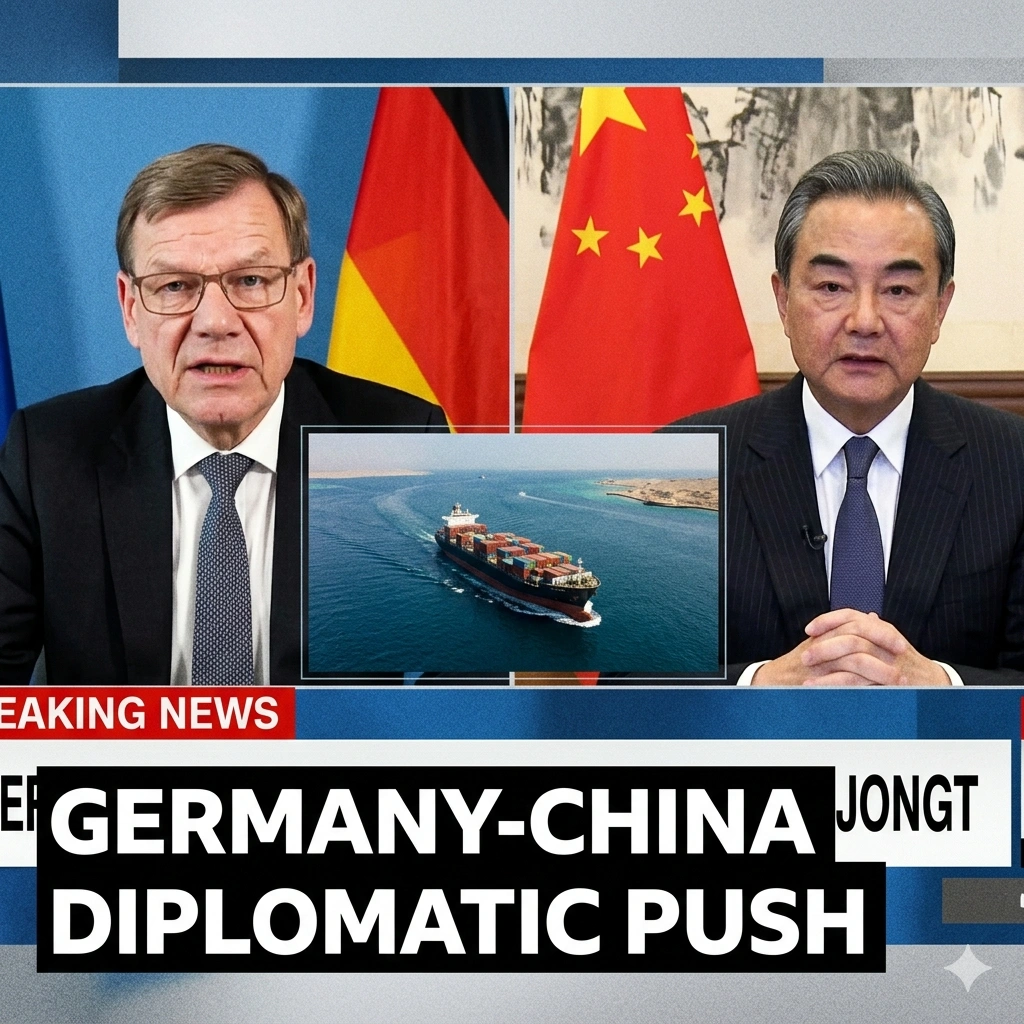
Global Diplomatic Efforts
The call for China to play a constructive role marks a significant shift in how European nations approach Middle Eastern security challenges today. By acknowledging Beijing’s influence, Germany is signaling that traditional Western diplomacy alone may no longer be sufficient to resolve the current impasse. This collaborative spirit is essential for creating a framework that Iran might actually find acceptable for future negotiations. Global Diplomatic Efforts are now centering on the idea that economic stability is a shared interest that transcends ideological differences between major world powers.
Minister Wadephul emphasized that the restoration of peace is not just a political necessity but a moral imperative to protect civilian lives. The dialogue suggests that if China can successfully bring Iran to the table, it would solidify its status as a responsible global stakeholder. These Global Diplomatic Efforts are designed to move away from military posturing and toward a sustainable diplomatic architecture. Without such a concerted push from multiple fronts, the risk of the conflict spilling over into neighboring territories remains dangerously high for everyone involved.
The Strategic Importance of the Strait of Hormuz
A central theme of the discussions in Beijing was the urgent need to restore freedom of navigation through the Strait of Hormuz immediately. This narrow waterway serves as a critical chokepoint for the global energy trade, and its current blockade has sent shockwaves through the international economy. Germany and China have both rejected any attempts by individual nations to impose unauthorized tolls or control these vital shipping lanes. Protecting these routes is a cornerstone of the ongoing Global Diplomatic Efforts to maintain world trade stability.
The blockade has led to a dramatic increase in insurance premiums for cargo ships, effectively halting much of the regional maritime traffic. Both ministers agreed that the militarization of trade routes sets a dangerous precedent for international law and global commerce. Consequently, Global Diplomatic Efforts are being channeled into creating a maritime security task force that includes non-Western participants to ensure neutrality. Reopening the Strait is seen as the first necessary step toward de-escalating the broader conflict and building trust between the warring parties.
China’s Stance on Sovereignty and International Law
During the high-level exchange, Foreign Minister Wang Yi was vocal in his criticism of recent airstrikes conducted by the United States and Israel. He argued that these military actions lacked proper authorization from the UN Security Council and represented a violation of Iranian sovereignty. This perspective is a key hurdle that Global Diplomatic Efforts must overcome to find common ground between the East and the West. Beijing maintains that any long-term solution must respect the territorial integrity of all nations in the Middle East.
China’s emphasis on international law serves as a reminder that diplomatic solutions must be rooted in established global norms rather than unilateral actions. By positioning itself as a defender of sovereignty, China aims to gain more credibility with regional actors like Iran during these Global Diplomatic Efforts. This approach contrasts with the more interventionist strategies often employed by Western powers in the past. Finding a middle path between these two philosophies will be essential for the success of any peace talks initiated in the coming weeks.
The Economic Impact of the Middle East Crisis
The month-long conflict has already had a devastating impact on the global economy, with energy prices reaching record highs in early 2026. Germany, as an industrial powerhouse, is particularly vulnerable to disruptions in the supply of oil and gas from the Persian Gulf. This economic vulnerability is a primary motivator behind Berlin’s energetic Global Diplomatic Efforts to find a swift resolution. Every day the Strait remains closed adds billions of dollars in costs to the global manufacturing and transportation sectors.
Investors are currently looking for signs of stability, and the news of the Germany-China dialogue has provided a small measure of hope for the markets. However, the path to a full economic recovery depends entirely on the success of these Global Diplomatic Efforts in the short term. If the blockade persists, many analysts predict a global recession that could last for years. Therefore, the pressure on Beijing and Berlin to produce tangible results from their discussions has never been more intense or more widely felt.
Military Escalation and the Humanitarian Toll
While the strategic and economic aspects of the war dominate the headlines, the humanitarian situation in the region continues to deteriorate rapidly. Airstrikes and ground skirmishes have caused significant damage to civilian infrastructure, leaving thousands without access to basic necessities. Global Diplomatic Efforts are increasingly focusing on establishing humanitarian corridors to provide aid to those caught in the crossfire. Both Germany and China have called for the protection of non-combatants as a non-negotiable condition for any future peace talks.
The destruction of power plants and water treatment facilities has created a health crisis that threatens to spiral out of control if left unaddressed. By highlighting the human cost, diplomats hope to create a sense of urgency that might persuade the combatants to lay down their arms. These Global Diplomatic Efforts are a race against time to prevent a full-scale humanitarian catastrophe. The international community is being urged to contribute more resources to relief efforts while the political negotiations continue behind closed doors.
Strategies for a Successful Peace Negotiation
- Establishing a neutral third-party mediator that both Iran and the United States can trust to facilitate fair and transparent discussions.
- Implementing an immediate ceasefire monitored by international observers to provide the necessary breathing room for high-level diplomatic engagement.
- Creating a long-term economic development plan for the region to address the underlying grievances that often lead to recurring cycles of violence.
- Developing a shared maritime security framework that prevents any single nation from unilaterally closing international shipping lanes in the future.
Analyzing the Role of the United Nations
The United Nations remains a central figure in the framework of Global Diplomatic Efforts, despite recent criticisms regarding its effectiveness in this crisis. Many nations are calling for a more active role for the UN Security Council to provide a legal basis for any peace agreement. However, the current divisions among the permanent members have made it difficult to pass meaningful resolutions. The dialogue between Germany and China is partly an attempt to bypass this deadlock and build a coalition of the willing outside the traditional UN structure.
There is a growing consensus that the UN must be reformed to better handle the rapid escalations of the 21st century. Until such reforms occur, regional and bilateral Global Diplomatic Efforts like the one seen in Beijing will likely take the lead. The success of these efforts could provide a blueprint for how international conflicts are managed in a multipolar world. Ultimately, the UN will still be needed to ratify and oversee any final treaty that emerges from these complex negotiations.
German Foreign Policy Under Johann Wadephul
Foreign Minister Johann Wadephul has taken a proactive and pragmatic approach to German diplomacy since taking office. His decision to engage directly with China over the Iran crisis demonstrates a willingness to look beyond traditional alliances for the sake of global stability. This “Realpolitik” is a hallmark of the current administration’s strategy to protect German interests in an increasingly volatile world. These Global Diplomatic Efforts are a testament to his belief that communication is the only viable path to lasting security.
Wadephul’s background in international law and his experience in European affairs have prepared him for the nuances of this high-stakes negotiation. He understands that Germany’s influence is greatest when it acts as a bridge between competing world powers. By leading these Global Diplomatic Efforts, he is positioning Germany as a key player in the quest for a new Middle Eastern peace. His leadership will be tested as the negotiations move from initial discussions to the difficult details of a potential ceasefire.
Potential Roadblocks to Regional Peace
- The deeply entrenched ideological differences between the Iranian leadership and the current administration in Washington D.C.
- Interference from non-state actors and proxy groups who may benefit from continued instability and conflict in the region.
- The historical lack of trust between the primary parties, which makes every diplomatic gesture subject to intense scrutiny and suspicion.
- Domestic political pressures in both the U.S. and Iran that may limit the flexibility of negotiators during the peace talks.
The Future of Maritime Security in the Strait
The crisis has highlighted the fragility of the current maritime security architecture and the need for a more robust international response. Future Global Diplomatic Efforts will likely focus on creating a permanent international presence in the Strait of Hormuz to deter future blockades. This could involve a rotating fleet of ships from various nations, ensuring that no single country has total control over the waterway. Such a move would require a significant level of international cooperation and a shared commitment to the freedom of the seas.
Technological advancements, such as drone surveillance and automated monitoring systems, could also play a role in maintaining security. These tools would provide real-time data on ship movements and potential threats, allowing for more rapid responses to any provocations. Global Diplomatic Efforts are already exploring how these technologies can be integrated into a broader security framework. The goal is to create a transparent and secure environment that allows global trade to flow without the constant fear of interference or extortion.
China’s Evolving Role as a Global Mediator
China’s willingness to engage in these Global Diplomatic Efforts signals a major evolution in its foreign policy objectives. For years, Beijing preferred to focus on economic ties while avoiding involvement in complex political disputes. However, the current crisis has shown that its economic interests are inseparable from global political stability. By taking a lead role in the Iran negotiations, China is asserting its influence in a way that matches its status as the world’s second-largest economy.
This shift has been met with both cautious optimism and skepticism from the international community. While many welcome China’s assistance, others worry about the long-term implications of increased Chinese influence in the Middle East. Regardless of these concerns, the success of the current Global Diplomatic Efforts depends heavily on Beijing’s ability to deliver results. If China can successfully broker a peace deal, it will mark a new era in international relations where power is more evenly distributed among several global hubs.
The Importance of Transatlantic Cooperation
While Germany is reaching out to China, it remains deeply committed to its transatlantic partnership with the United States. Maintaining a unified front among Western allies is a core component of the broader Global Diplomatic Efforts to pressure Iran. Berlin is acting as a vital link, ensuring that the concerns of the U.S. are communicated clearly to Beijing and Tehran. This balancing act requires a high level of diplomatic skill and a clear understanding of the strategic priorities of all involved.
Transatlantic cooperation ensures that the West remains a potent force in shaping the outcome of the peace talks. By working together, the U.S. and Europe can offer a more compelling set of incentives and sanctions to encourage a peaceful resolution. These Global Diplomatic Efforts are most effective when they are backed by a broad and diverse coalition of nations. The goal is to present Iran with a clear choice between continued isolation or a path toward reintegration into the global community.
Building a Sustainable Diplomatic Framework
The current crisis is a wake-up call for the need to build a more sustainable and resilient diplomatic framework for the 21st century. We cannot rely on ad-hoc Global Diplomatic Efforts every time a regional conflict threatens to spiral out of control. Instead, we need permanent institutions and protocols that can facilitate rapid communication and mediation. This would involve a more proactive approach to conflict prevention, rather than just reacting to crises after they have already begun.
Investing in diplomacy is far more cost-effective than dealing with the aftermath of a major war or economic collapse. The lessons learned from the Germany-China dialogue will be invaluable in shaping these future institutions. Global Diplomatic Efforts must become more inclusive, representative, and transparent to be truly effective. The current situation in the Middle East is a test of our collective ability to innovate and adapt in the face of unprecedented challenges.
The Role of Global Energy Markets in Peace
Energy security is often at the heart of regional conflicts, and the current situation in the Middle East is no exception. Global Diplomatic Efforts are increasingly looking at how a transition to renewable energy could reduce the strategic importance of the Strait of Hormuz. By diversifying our energy sources, we can reduce the leverage that any single nation has over the global economy. This long-term strategy is essential for creating a more peaceful and stable world.
In the short term, however, we must find a way to manage our dependence on fossil fuels without triggering global conflict. This requires a high level of cooperation between producing and consuming nations to ensure a fair and stable market. Global Diplomatic Efforts are working to create a dialogue between these groups to prevent energy from being used as a weapon. The success of these talks will have a direct impact on the cost of living for billions of people around the world.
Impact of Public Opinion on Diplomacy
- Public pressure in democratic nations like Germany can drive governments to take a more active role in international peace efforts.
- Social media and 24-hour news cycles provide real-time updates on the conflict, creating a sense of urgency among the global population.
- Awareness campaigns highlighting the humanitarian cost of the war can help build support for the necessary compromises of a peace treaty.
- Governments must balance the need for secret negotiations with the public’s demand for transparency and accountability in Global Diplomatic Efforts.
Conclusion on the Path to Peace
The Global Diplomatic Efforts led by Germany and China offer a glimmer of hope in an otherwise dark and dangerous situation. By working together to press Iran for peace talks and secure the Strait of Hormuz, these nations are demonstrating the power of international cooperation. While the road ahead is filled with obstacles, the alternative—a prolonged and widening war—is simply unacceptable. The coming weeks will be critical in determining whether these initial steps can lead to a lasting and meaningful resolution.
The eyes of the world are on Beijing and Berlin as they continue their high-stakes dialogue. The success of their Global Diplomatic Efforts will not only determine the future of the Middle East but also the shape of the global order for years to come. We must all support these initiatives and hope that reason and diplomacy will ultimately prevail over violence and aggression. The peace of the world depends on our ability to find common ground, even in the most difficult of circumstances.
For more details & sources visit: The Nation / Xinhua
Read more about Germany news on 360 News Orbit – Germany.