
The Nigeria safety alert 2026 was officially issued by the Nigerian High Commission following a surge in xenophobic tensions in the Eastern Cape. This urgent diplomatic communication comes after a peaceful march in KuGompo, formerly known as East London, spiraled into targeted violence against foreign-owned businesses. Nigerian officials are deeply concerned that local resentment over a traditional coronation could trigger a wider cycle of ethnic conflict across the country. Consequently, every Nigerian resident in the region is being urged to prioritize personal security and avoid high-risk protest zones immediately. The Nigeria safety alert 2026 serves as a critical warning to prevent the loss of life and property during this volatile period of civil unrest.
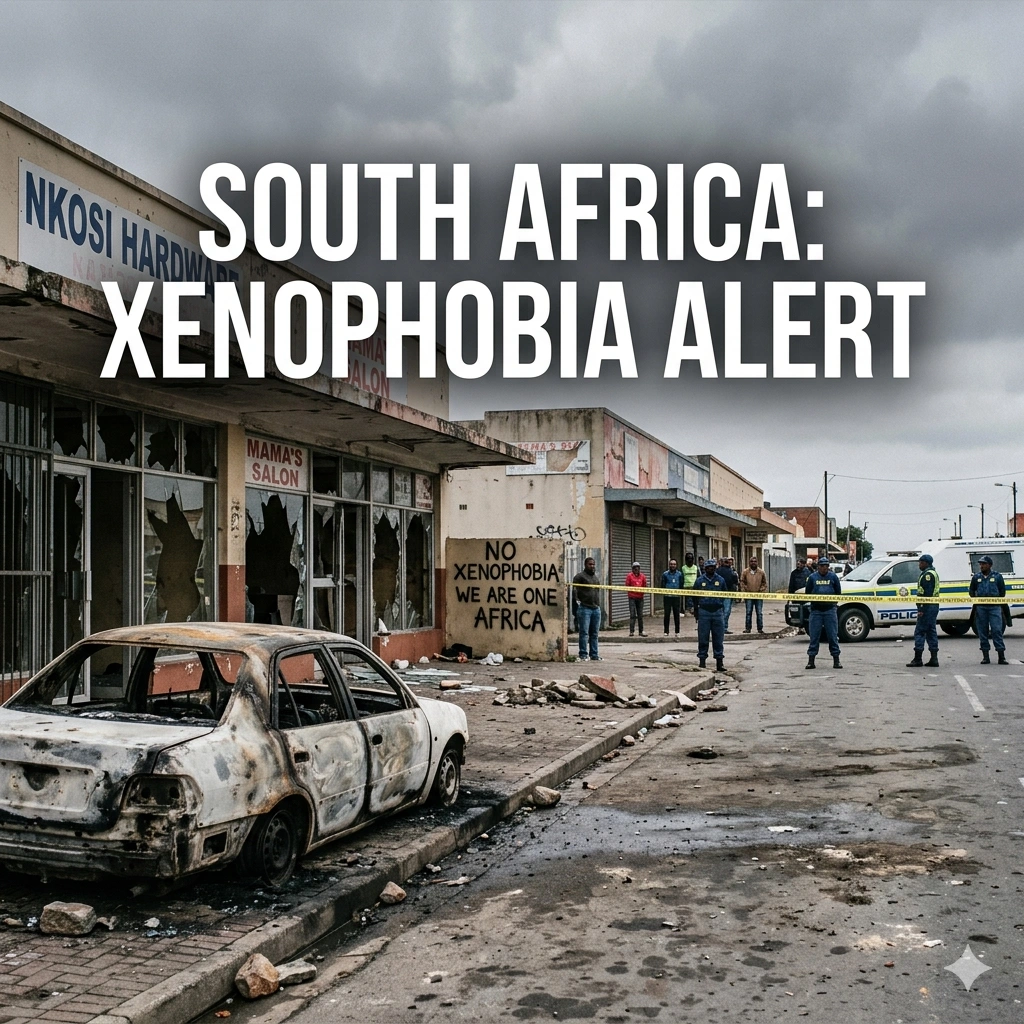
The Spark of Violence in KuGompo
The primary catalyst for this recent unrest was the installation of a Nigerian community leader with a traditional Igbo title, which local Xhosa leaders viewed as a direct affront. This cultural misunderstanding rapidly escalated into a political flashpoint, leading to the destruction of several shops and vehicles in the port city. Protesters gathered to voice their frustrations regarding illegal immigration, but the demonstration quickly shifted toward targeted attacks on the Nigerian diaspora. The Nigeria safety alert 2026 highlights how sensitive traditional hierarchies are in South African society and how easily they can be manipulated. Local chiefs expressed that they felt “undermined” by the ceremony, fueling the perception of a “state within a state.”
Security forces in the Eastern Cape have struggled to contain the small groups of agitators who are using the coronation as a pretext for looting. The Nigeria safety alert 2026 was released specifically to counteract the misinformation spreading through social media channels regarding the intent of the Nigerian community. Government officials in Abuja are currently in high-level talks with their South African counterparts to ensure that the rule of law is upheld. However, the situation remains fluid, with sporadic reports of intimidation continuing in the outskirts of the city. Residents are advised to keep a low profile and limit unnecessary travel until the local police can guarantee the restoration of order.
South Africa’s History of Xenophobic Tensions
South Africa has a long-standing and complex history of xenophobic outbursts that often coincide with periods of economic hardship or political campaigning. With nearly 2.4 million migrants currently residing in the country, the competition for resources and jobs frequently leads to friction between locals and foreigners. The Nigeria safety alert 2026 is a response to this recurring pattern of violence that has claimed hundreds of lives over the past two decades. Political rhetoric often focuses on migration as a scapegoat for systemic issues like unemployment and service delivery failures. This environment makes the Nigerian community particularly vulnerable during election cycles or local leadership disputes.
Past incidents in Gauteng and KwaZulu-Natal have shown that once xenophobic violence begins, it can spread rapidly to other provinces if not checked by decisive police action. The Nigeria safety alert 2026 aims to prevent a repeat of the 2019 and 2008 tragedies where thousands were displaced from their homes. Civil society organizations are calling for calm and urging the government to address the root causes of the anger rather than just the symptoms. For many Nigerians living in South Africa, the fear of losing their livelihoods in a single night of rioting is a constant and exhausting reality. The High Commission is working to document all threats and provide a safety net for those most at risk.
Nigeria Safety Alert 2026
The Nigeria safety alert 2026 remains the most significant travel and residency warning issued by the Nigerian government this year. It emphasizes that while the march in KuGompo began peacefully, the shift to violence was instantaneous and unpredictable. Citizens are encouraged to register with the embassy and ensure their contact information is up to date for emergency broadcasts. The Nigeria safety alert 2026 also advises against engaging in any public arguments regarding traditional titles or local politics during this period of heightened sensitivity. Maintaining a stance of neutrality is considered the safest approach for foreign nationals living in South African townships and business districts.
- Avoid all large gatherings and protest marches in the Eastern Cape.
- Monitor local news and South African Police Service (SAPS) updates hourly.
- Secure all business premises with additional shutters or private security if possible.
- Keep valid identification and emergency contact numbers on your person at all times.
The Nigeria safety alert 2026 is not intended to cause panic but to foster a culture of vigilance among the diaspora. Many Nigerians have built successful lives and businesses in South Africa and wish to remain part of the social fabric. However, the current climate requires a strategic retreat from the public eye to avoid becoming a target for opportunistic criminals. The High Commission has set up a 24-hour hotline specifically for those affected by the KuGompo unrest. By following the guidelines in the Nigeria safety alert 2026, citizens can better protect themselves from the unpredictable nature of mob justice and targeted xenophobia.
Traditional Leadership and Territory Disputes
The core of the current grievance lies in the perceived infringement on Xhosa territory by the Nigerian “King of the Igbo” ceremony. In South Africa, traditional leaders hold significant constitutional and cultural power, and their authority is fiercely guarded by the local population. Xhanti Sigcawu, a prominent traditional leader, stated that the coronation sent a message of political overreach that the community could not ignore. The Nigeria safety alert 2026 acknowledges these cultural sensitivities and urges Nigerians to respect local customs to avoid further friction. These disputes are often deeply emotional and can bypass rational political discourse entirely.
When local chiefs feel their status is being challenged by a migrant group, it creates a vacuum that radical anti-immigrant groups are quick to fill. In the context of the Nigeria safety alert 2026, the diplomatic goal is to facilitate a meeting between Igbo and Xhosa elders to resolve the misunderstanding. Until such a reconciliation occurs, the risk of “revenge” attacks remains high in the Eastern Cape region. The High Commission is investigating whether the title used in the ceremony was purely symbolic or intended to carry administrative weight. Regardless of the intent, the reaction has proven that symbolic gestures can have very real and dangerous consequences in South African politics.
Economic Grievances and Migrant Scapegoating
Economic inequality in South Africa provides the perfect breeding ground for the sentiments that necessitated the Nigeria safety alert 2026. High unemployment rates among the youth often lead to a search for external culprits, with migrant shopkeepers frequently bearing the brunt of this frustration. The Nigeria safety alert 2026 notes that the destruction of property is rarely about a single person but rather a venting of collective economic rage. When a specific event like a coronation occurs, it acts as a lightning rod for these pre-existing grievances. This makes the security situation in KuGompo a microcosm of the broader national struggle with integration and economic inclusion.
Foreign-owned “spaza” shops are often the first to be looted during these periods of unrest, as they are seen as direct competitors to local businesses. The Nigeria safety alert 2026 suggests that business owners should consider temporary closures if they are located in high-tension areas. While this leads to financial loss, it is a necessary precaution to ensure the physical safety of the staff and owners. The South African government has repeatedly stated that it welcomes foreign investment, but the reality on the ground often tells a different story. The Nigeria safety alert 2026 is a sober reminder that economic success can sometimes bring unwanted attention in a fragile social environment.
The Role of Social Media in Fueling Unrest
Digital platforms have played a significant role in the events leading up to the Nigeria safety alert 2026, often spreading unverified reports of assaults. One demonstrator’s allegation that they were attacked by a foreign national went viral, acting as the immediate trigger for the violence in East London. The Nigeria safety alert 2026 warns citizens to be careful about what they post online, as inflammatory content can be used to justify further attacks. Misinformation can move much faster than the police, making it difficult to contain a riot once it has gained digital momentum. Nigerians are urged to report fake news to the High Commission rather than engaging with trolls.
Anti-immigrant hashtags often trend during these periods, creating a digital echo chamber that reinforces negative stereotypes. The Nigeria safety alert 2026 emphasizes the importance of digital literacy and caution during times of crisis. Many of the videos circulating of the KuGompo violence are edited to make the situation appear even more chaotic than it is, further inciting fear. By staying informed through official channels, Nigerians can avoid falling into the trap of reactionary behavior. The Nigeria safety alert 2026 is the definitive source of truth for the community during this confusing time of digital and physical conflict.
Diplomatic Response and International Monitoring
The Nigerian government’s response to the South African situation is being watched closely by the African Union and other international bodies. The Nigeria safety alert 2026 is just the first step in a broader diplomatic strategy to protect the rights of Nigerians abroad. There is a growing demand for the South African government to provide better protection for all residents, regardless of their nationality. International human rights organizations are also monitoring the Nigeria safety alert 2026 to see if the violence escalates into a humanitarian crisis. The relationship between the two African giants is often strained by these incidents, affecting trade and cooperation on a continental level.
If the South African authorities fail to curb the violence, Nigeria may consider more drastic measures, such as recalling its ambassador or imposing travel restrictions. The Nigeria safety alert 2026 serves as a formal documentation of the risks currently faced by its people. High-level delegations are expected to visit the Eastern Cape to assess the damage and meet with the victims of the recent looting. These diplomatic efforts aim to ensure that the 2026 World Cup and other upcoming events are not overshadowed by internal strife. The Nigeria safety alert 2026 is a call for accountability and a demand for a safer environment for all Africans living in the “Rainbow Nation.”
Community Resilience and Mutual Support
Despite the challenges presented in the Nigeria safety alert 2026, the Nigerian community in South Africa has a history of incredible resilience. Many local associations are organizing support groups to provide food and shelter to those whose shops were destroyed in KuGompo. The Nigeria safety alert 2026 encourages this type of unity, provided it does not lead to vigilante actions that could worsen the situation. Support networks are also being used to share real-time safety updates and verified information about police movements. This grassroots response is often more effective than formal aid in the immediate aftermath of a riot.
Mutual support between Nigerians and their South African neighbors is also a key factor in de-escalating the Nigeria safety alert 2026 tensions. Many South Africans have stood in solidarity with their migrant friends, condemning the violence and helping to protect their property. The Nigeria safety alert 2026 acknowledges these “peace-builders” who are working behind the scenes to bridge the cultural divide. Promoting these stories of cooperation is vital for changing the narrative away from constant conflict. While the Nigeria safety alert 2026 focuses on danger, it also leaves room for the hope that through dialogue, the two communities can find a way to coexist peacefully.
Looking Forward: Preventing Future Outbreaks
The ultimate goal of the Nigeria safety alert 2026 is to prevent the next outbreak of violence before it begins. This requires a long-term commitment to cultural education and economic reform in both nations. The Nigeria safety alert 2026 suggests that better communication regarding traditional ceremonies could prevent future misunderstandings with local chiefs. If the Nigerian community leaders engage with Xhosa authorities before holding public events, much of the recent resentment could have been avoided. Proactive diplomacy is far more effective than the reactive warnings contained in the Nigeria safety alert 2026.
As the situation in the Eastern Cape stabilizes, the lessons of the Nigeria safety alert 2026 must be integrated into future migration policies. Both governments need to work together to ensure that the benefits of migration are felt by the local population. The Nigeria safety alert 2026 will eventually be lifted, but the underlying issues will remain until they are addressed with honesty and courage. For now, the focus remains on the immediate protection of human life and the restoration of communal trust. The Nigeria safety alert 2026 stands as a testament to the fragile nature of peace in a rapidly changing world.
Conclusion: Staying Safe in Uncertain Times
In conclusion, the Nigeria safety alert 2026 is a necessary and timely intervention by the Nigerian High Commission. It provides a roadmap for citizens to navigate the complexities of South African social and political life during a period of crisis. By following the advice within the Nigeria safety alert 2026, residents can minimize their exposure to the violence currently affecting KuGompo. We must all work together to ensure that cultural celebrations do not turn into catalysts for destruction. The Nigeria safety alert 2026 is a reminder that our shared humanity is more important than any title or territory.
Staying vigilant and informed is the best defense against the unpredictable nature of xenophobia. The Nigeria safety alert 2026 will continue to be updated as the situation evolves and new information becomes available. We hope for a swift end to the unrest and a return to the peaceful coexistence that defines the best parts of the African spirit. Until then, please prioritize your safety and look out for your fellow citizens as guided by the Nigeria safety alert 2026. Our thoughts are with those who have lost their livelihoods, and we stand in solidarity with the quest for peace.
For more details & sources visit: BBC News
Read more on Nigeria news: 360 News Orbit – Nigeria.