
The 2026 World Cup berths have finally been decided in a night of pure footballing drama that saw European giants fall and underdogs rise. Sweden and the Czech Republic secured their spots in the upcoming tournament through grit, tactical ingenuity, and a touch of late-game magic. For Graham Potter’s Sweden, the victory represents a tactical masterclass that navigated the difficult Nations League repechage route. Meanwhile, the Czech Republic had to endure the ultimate test of nerves in a penalty shootout against a resilient Danish side. These 2026 World Cup berths signify a changing of the guard in European football as traditional powerhouses struggle to adapt to the new competitive landscape.
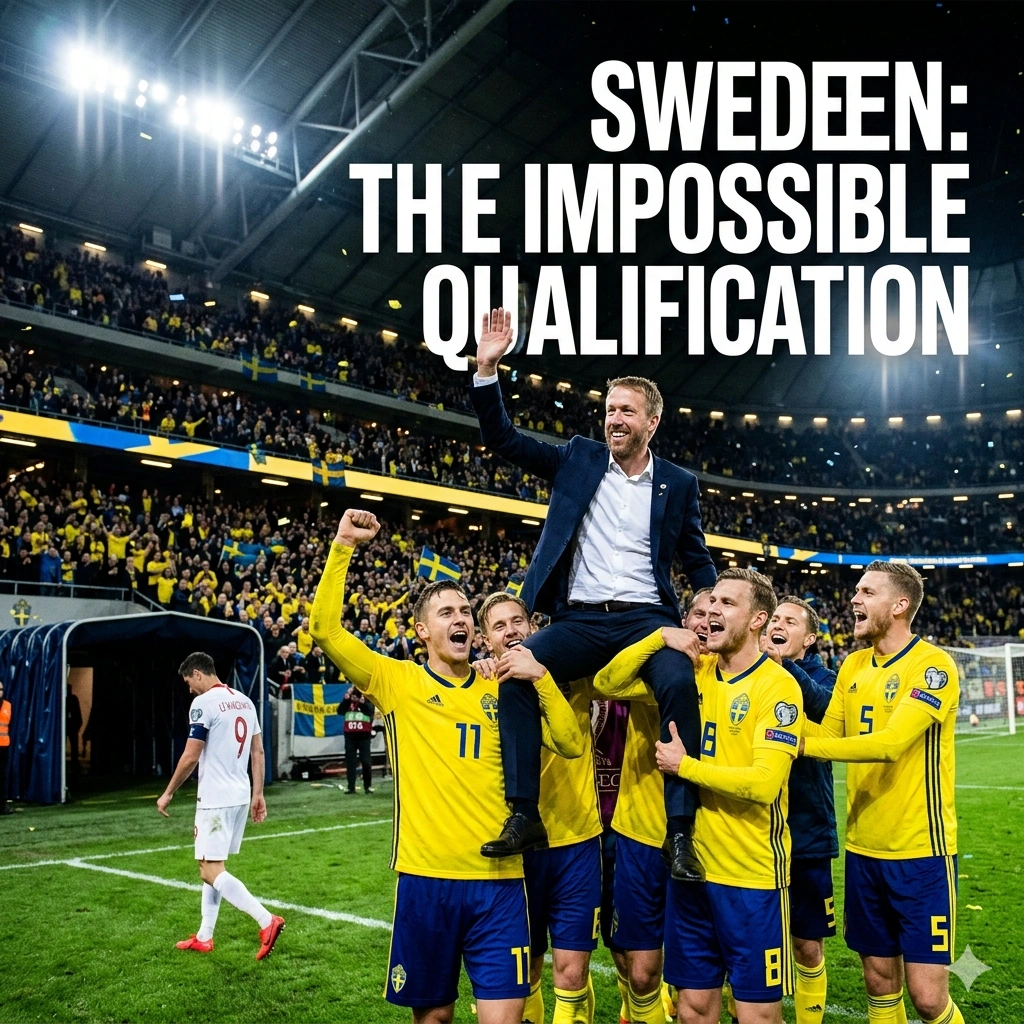
Sweden’s Unorthodox Path to Victory
Graham Potter has completely revitalized the Swedish national team since taking the helm, leading them to one of the most coveted 2026 World Cup berths. The match against Poland in Valencia was a back-and-forth thriller that kept fans on the edge of their seats until the final whistle. Anthony Elanga opened the scoring early, showcasing the speed and clinical finishing that has become a hallmark of Potter’s new-look side. Despite Poland’s relentless pressure and technical quality, the Swedish defensive unit remained organized and disciplined throughout the encounter. This victory is a testament to the belief installed in the squad during their 2026 World Cup berths campaign.
Poland managed to equalize twice, with Jakub Kaminski and Karol Swiderski finding holes in the Swedish backline during moments of intense transition. However, the Swedish spirit never wavered even as the clock ticked toward extra time. Gustaf Lagerbielke’s goal provided a temporary cushion, but it was Viktor Gyökeres who ultimately sealed the deal with a sensational 89th-minute strike. By clinching one of the final 2026 World Cup berths, Sweden has proven that their unorthodox journey through the Nations League was no fluke. They now look forward to a challenging group stage featuring footballing heavyweights like the Netherlands and Japan.
The Heartbreak of Robert Lewandowski
For Polish legend Robert Lewandowski, the loss marks a somber conclusion to a storied international career that missed out on the 2026 World Cup berths. The veteran striker worked tirelessly to lead his line, but the Swedish defense effectively neutralized his primary scoring threats. As the final whistle blew, the realization that this was likely his last chance at World Cup glory was visible on his face. Poland’s failure to secure one of the 2026 World Cup berths will undoubtedly spark a period of deep reflection and rebuilding for the national federation. They had the possession and the shots, but they lacked the clinical edge required on the big stage.
The atmosphere in the stadium was one of profound respect for the departing captain, even from the victorious Swedish supporters. Lewandowski has been the face of Polish football for over a decade, and his absence from the 2026 tournament will be felt by fans worldwide. Without the veteran’s leadership, Poland struggled to maintain their composure during the high-pressure final minutes in Valencia. The quest for 2026 World Cup berths is unforgiving, and even the greatest players are not immune to the harsh realities of a play-off final. Poland must now look to the next generation to fill the massive void left by their greatest-ever goalscorer.
Prague’s Penalty Shootout Heroics
In Prague, the atmosphere was electric as the Czech Republic battled Denmark for one of the last remaining 2026 World Cup berths. The match was a grueling 120-minute tactical chess match that ended in a 2-2 draw after extra time. Pavel Sulc and Ladislav Krejci were the heroes in regulation, providing the goals that kept Czech dreams alive against a formidable Danish attack. Denmark, led by the physical presence of Rasmus Højlund, equalized twice through Joachim Andersen and Kasper Høgh. The tension was palpable as the match moved to the dreaded penalty spot to decide the 2026 World Cup berths.
The Czech goalkeeper became an instant national hero, saving crucial attempts from Danish stars Rasmus Højlund and Mathias Jensen. Michal Sadilek then stepped up to bury the winning spot-kick, sending the home crowd into a state of absolute euphoria. Securing 2026 World Cup berths in front of a home audience is a rare and special achievement that this squad will never forget. Denmark’s exit is a significant shock, given their recent pedigree in major European competitions and their talented roster. This result confirms that the Czech Republic is a rising force capable of handling the most intense pressure imaginable.
2026 World Cup Berths
The race for 2026 World Cup berths has reshaped the expectations for the upcoming tournament in North America. With traditional giants like Italy failing to qualify, the path is open for mid-tier nations to make a deep and impactful run. Sweden’s tactical flexibility under Graham Potter makes them a “dark horse” candidate that many top-seeded teams will want to avoid. The Czech Republic’s defensive solidity and penalty-taking precision also make them a nightmare opponent in a knockout format. These 2026 World Cup berths are not just entries into a tournament; they are symbols of national progress and sporting excellence.
Italy’s third consecutive absence from the World Cup is perhaps the most shocking storyline of the entire qualification cycle. Losing to Bosnia and Herzegovina in a shootout highlights a systemic crisis within Italian football that seemingly has no immediate end in sight. While the Italians mourn, nations like Sweden and the Czech Republic are celebrating their hard-earned 2026 World Cup berths. The diversity of the qualified teams suggests that the 2026 edition will be one of the most unpredictable and exciting in history. Fans are already calculating the odds for the newly formed groups as the excitement builds globally.
Tactical Evolution Under Graham Potter
The influence of Graham Potter on the Swedish national team cannot be overstated in their pursuit of 2026 World Cup berths. He has moved away from the traditional 4-4-2 rigid structure, opting instead for a fluid system that maximizes the creativity of his young attackers. This shift allowed players like Anthony Elanga to thrive in space, creating constant headaches for the Polish defensive line. Potter’s ability to stay calm under pressure was reflected in his team’s performance during the frantic closing stages of the play-off. Sweden’s inclusion in the 2026 World Cup berths list is a massive win for modern coaching and tactical innovation.
By utilizing the Nations League repechage, Sweden demonstrated a deep understanding of the complex qualification rules to their ultimate advantage. Many critics had written them off after a lackluster group stage, but Potter’s long-term vision remained steady and focused. The victory in Valencia was the culmination of months of hard work and structural reorganization behind the scenes. As they prepare for the 2026 World Cup berths group stage, Sweden looks like a team that has finally found its modern identity. Their journey serves as a blueprint for other European nations looking to bridge the gap between potential and performance.
Denmark’s Disappointment and Future Outlook
For Denmark, missing out on the 2026 World Cup berths is a bitter pill to swallow after such a competitive qualifying campaign. They showed incredible resilience to equalize twice in Prague, but their failure at the penalty spot ultimately proved to be their undoing. The Danish media has been quick to question the substitution choices made late in extra time, which may have impacted the shootout results. Despite the loss, the Danish squad remains young and talented, with a core that will likely challenge for Euro 2028. However, the immediate pain of missing the 2026 World Cup berths will take significant time to heal for the players and fans.
- Sweden qualifies for their first major tournament under the guidance of Graham Potter.
- Czech Republic wins their first major penalty shootout since their independent history began.
- Italy fails to qualify for a third straight World Cup, losing to Bosnia and Herzegovina.
- Robert Lewandowski ends his international career without a final World Cup appearance.
The Danish footballing philosophy has always emphasized collective strength over individual stardom, which was evident throughout the match. However, in the high-stakes environment of 2026 World Cup berths qualification, individual errors can be fatal. Rasmus Højlund’s missed penalty will likely haunt the young striker, but it will also serve as a learning experience for his future career. Denmark will need to find more consistency in their finishing if they hope to avoid similar heartbreaks in the future. The 2026 World Cup berths have been decided, and the Danish “Dynamite” will unfortunately be watching from the sidelines this time.
Group Analysis: Tunisia, Netherlands, and Japan
With their 2026 World Cup berths secured, Sweden enters a fascinating Group D that promises high-quality footballing encounters. Facing the Netherlands will be the ultimate test of Graham Potter’s defensive organization and tactical discipline against elite opposition. Japan brings a level of technical speed and discipline that will require Sweden to be at their absolute best for the full ninety minutes. Tunisia, often underestimated, provides a physical challenge and a different style of play that rounds out a very balanced group. Every team in this group will be eyeing a spot in the knockout rounds, making every match a “must-win” scenario.
The Czech Republic’s placement in the tournament will be determined shortly, but their path to the 2026 World Cup berths has prepared them for anything. Their experience in high-pressure shootouts and extra-time battles gives them a psychological edge over teams that cruised through qualification. The physicality of Ladislav Krejci and the playmaking ability of Pavel Sulc will be key assets on the world stage. As the draw approaches, the Czechs will be looking to replicate their historical successes in major tournaments from decades past. The 2026 World Cup berths have set the stage for a summer of unforgettable footballing moments.
The Global Impact of the 2026 Qualifications
The 2026 World Cup berths decided on April 1, 2026, have sent shockwaves across the footballing world, particularly in Europe. The expansion of the tournament has allowed for more dramatic play-off scenarios, giving hope to nations that were previously on the fringes. This qualification cycle has highlighted the increasing parity between European nations, where no victory is guaranteed regardless of historical prestige. The 2026 World Cup berths demonstrate that momentum and tactical preparation are often more important than a team’s FIFA ranking. Fans in Stockholm and Prague are already planning their trips across the Atlantic to support their national heroes.
[Image showing the updated 2026 World Cup bracket and qualified teams]
Social media has been flooded with highlights of Gyökeres’ winner and Sadilek’s decisive penalty, showcasing the global reach of these matches. The 2026 World Cup berths are more than just sports results; they are cultural events that unite entire nations in celebration. For the winning teams, the economic boost from tournament participation and increased merchandise sales will be significant for their respective FAs. The 2026 World Cup berths have provided a much-needed sense of optimism and excitement in a challenging global sporting calendar. As the countdown to the opening match begins, the legacy of this play-off night will continue to resonate.
Looking Ahead to the Opening Ceremony
As the 2026 World Cup berths are finalized, the focus shifts to the logistical preparations for the tournament in the United States, Canada, and Mexico. Sweden and the Czech Republic will now begin the process of selecting their training bases and finalizing their warm-up schedules. Graham Potter will likely experiment with his squad in the coming months to ensure his best XI is ready for the group opener. The Czech coaching staff will be focused on maintaining the fitness and cohesion of their penalty-hero squad. The 2026 World Cup berths are just the beginning of what promises to be a historic journey for both nations.
- Tournament starts in June 2026 across 16 host cities in North America.
- This will be the first World Cup to feature an expanded 48-team format.
- Sweden and Czech Republic will both be aiming for at least a Quarter-final finish.
- The loss of Italy and Poland means two of Europe’s top markets will be missing.
The excitement surrounding the 2026 World Cup berths is at an all-time high, with ticket sales expected to break previous records. For the players, this is the pinnacle of their careers and a chance to achieve immortality in their home countries. The 2026 World Cup berths have been earned through sweat and sacrifice, and the world is ready to see what these teams can do. Whether it’s Sweden’s tactical flair or the Czechs’ iron will, both teams add immense value to the tournament’s lineup. The stage is set for a month of football that will define the next decade of the sport.
Conclusion: A Night of Footballing Destiny
The 2026 World Cup berths secured by Sweden and the Czech Republic will be remembered as a turning point for both programs. Graham Potter has silenced his doubters by delivering a masterclass in play-off management and squad rotation. The Czech Republic has proven once again that they are the kings of the high-stakes shootout, defying the odds against Denmark. While we mourn the end of Lewandowski’s era and Italy’s ongoing crisis, we must celebrate the meritocracy of the beautiful game. These 2026 World Cup berths were won on the pitch, through courage, skill, and an unwavering belief in the collective goal.
As we look toward the summer of 2026, the inclusion of these two resilient European sides ensures the tournament will be of the highest caliber. The 2026 World Cup berths have provided us with stories of redemption, heartbreak, and pure joy that only football can deliver. We invite all fans to stay tuned as we follow the journey of these teams as they prepare for the world stage. The road to North America was long and difficult, but for Sweden and the Czechs, the destination is finally in sight. Let the games begin, and may the best teams continue to inspire us with their passion and dedication.
For more details & sources visit: The Guardian
Read more on Poland news: 360 News Orbit – Poland.