
The Gulf oil spill sources have finally been identified following a month of intensive satellite tracking and technical modeling by Mexico’s Inter-Institutional Group. Environment Minister Alicia Bárcena confirmed that the hydrocarbon leak affecting the coasts of Veracruz and Tabasco originated from three distinct points. These include an illegal vessel discharge near Coatzacoalcos and two significant natural seepages known locally as “chapopoteras,” which have complicated the cleanup efforts.
This discovery of the Gulf oil spill sources comes as President Claudia Sheinbaum orders the immediate creation of a Permanent Environmental Observatory in the Gulf of Mexico. The goal of this new institution is to bolster future prevention and provide real-time data on hydrocarbon movements. While the government has mobilized a massive response involving 3,000 personnel, industry analysts remain skeptical about the official findings regarding the specific types of crude oil recovered.
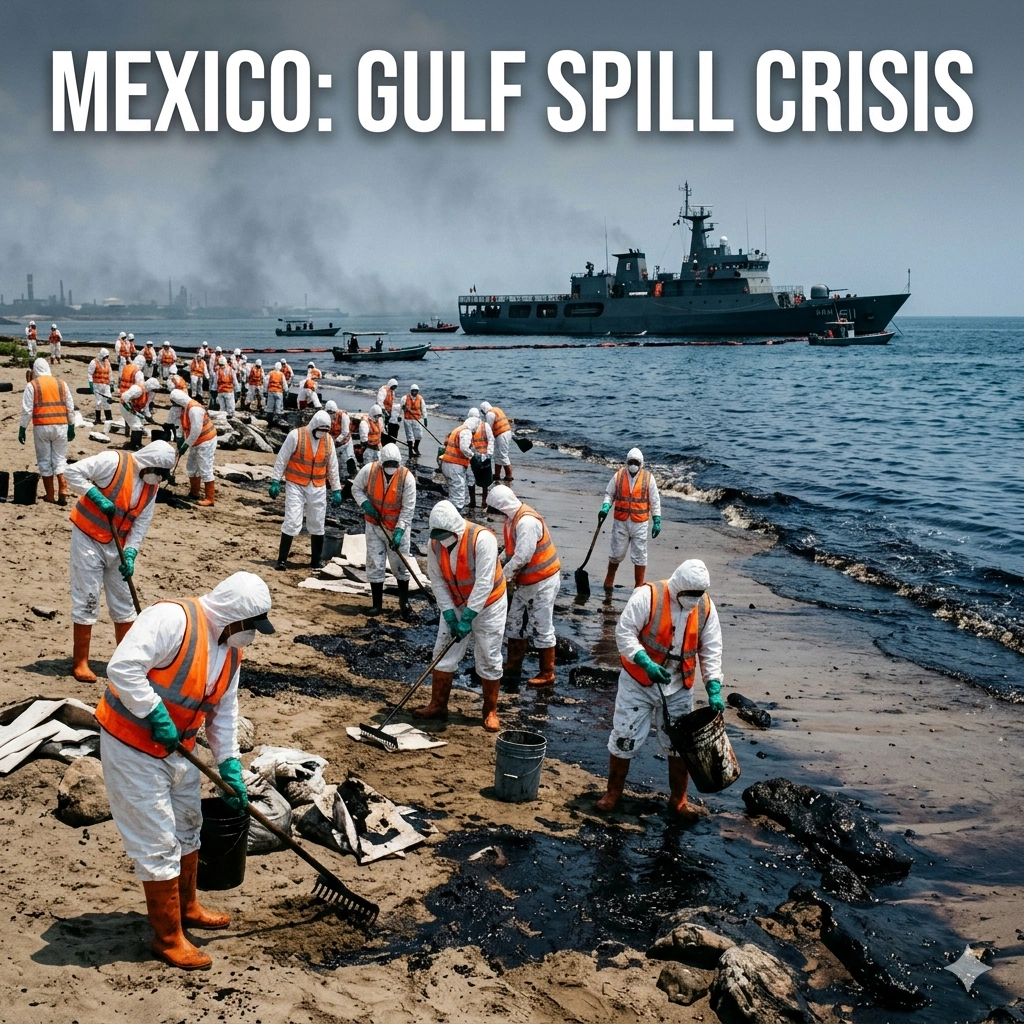
The Technical Investigation of Gulf Oil Spill Sources
The process of identifying the Gulf oil spill sources required a sophisticated combination of aerial surveillance and chemical fingerprinting. Experts from the Inter-Institutional Group analyzed the trajectory of the pollutants across 480 kilometers of sensitive coastline to trace them back to the illegal discharge. This specific source is believed to be a service vessel that bypassed environmental protocols, dumping waste into the open sea under the cover of night.
Understanding the Gulf oil spill sources is critical for the legal proceedings currently being prepared by the Mexican government. By pinning the blame on a combination of human negligence and natural phenomena, the state aims to manage the narrative surrounding the disaster. However, the presence of dense crude oil in the water has led some independent specialists to suggest that the sources might actually include aging subsea infrastructure that has not been properly maintained.
Government Response and the Permanent Environmental Observatory
In direct response to the identified Gulf oil spill sources, Mexico has launched a colossal recovery operation involving 46 vessels and seven aircraft. The state has already recovered over 780 tons of pollutants, but the environmental toll remains staggering for local ecosystems. To prevent a recurrence, the newly ordered Permanent Environmental Observatory will utilize high-resolution satellite imagery to monitor the Gulf 24 hours a day.
The establishment of this observatory is a direct consequence of the controversy surrounding the Gulf oil spill sources and the perceived lack of early urgency. President Sheinbaum’s administration is investing MX$217 million through PEMEX to fund these advanced monitoring systems. This move is intended to prove to international partners that Mexico is taking its environmental responsibilities seriously, especially in the wake of such a massive and public ecological crisis.
Gulf Oil Spill Sources: Debating the Chemical Evidence
A significant point of friction regarding the Gulf oil spill sources is the chemical profile of the sludge reaching the beaches of Tabasco. Critics and industry analysts argue that the thick, heavy crude observed is inconsistent with typical waste from a service vessel, which usually carries refined fuels or lighter lubricants. This discrepancy has raised serious questions about whether the official report on the Gulf oil spill sources is fully transparent.
Dermatologists and environmental health experts have also noted that the heavy metals found in the recovered oil suggest a deep-well origin rather than surface-level natural seepage. If the Gulf oil spill sources are linked to active extraction sites, the regulatory implications for PEMEX and its contractors would be severe. The government, however, maintains that the combination of the illegal discharge and the “chapopoteras” explains the volume and consistency of the pollution.
Economic Impact on Fishing Cooperatives and Local Trade
The search for the Gulf oil spill sources has deeply disrupted the livelihoods of those living along the Veracruz and Tabasco coastlines. At least 11 fishing cooperatives have been forced to halt operations due to the contamination of their traditional grounds, leading to a loss of income for thousands of families. In response, the government has allocated MX$15 million in direct aid to mitigate the immediate economic shock caused by these spills.
The identification of the Gulf oil spill sources provides little comfort to fishermen who see their equipment ruined by the persistent sludge. The long-term recovery of the local shrimp and fish populations depends entirely on how quickly the remaining pollutants are contained. Until the Permanent Environmental Observatory is fully operational, these communities remain vulnerable to any future leaks that might emerge from the same volatile Gulf oil spill sources.
USMCA Compliance and International Standing
Mexico’s standing in upcoming USMCA environmental compliance reviews could be significantly impacted by the investigation into the Gulf oil spill sources. North American trade partners have expressed concern over Mexico’s ability to regulate its offshore activities and protect shared marine resources. The recurring nature of these incidents, combined with the debate over the Gulf oil spill sources, suggests systemic regulatory weaknesses that may deter future energy investments.
To avoid sanctions, Mexico must demonstrate that the Gulf oil spill sources are being addressed through concrete policy changes rather than just temporary cleanup measures. The Permanent Environmental Observatory is a step in the right direction, but analysts warn that it must be accompanied by stricter enforcement of maritime laws. Failure to provide a transparent and accurate account of the Gulf oil spill sources could lead to diplomatic friction with the United States and Canada.
The Role of Natural Seepages in the Gulf
While human error is often the primary suspect, natural “chapopoteras” are undeniably among the Gulf oil spill sources identified in this latest report. These geological features allow hydrocarbons to escape from the seabed naturally, creating localized slicks that have existed for centuries. However, the sheer volume of the current disaster suggests that these natural Gulf oil spill sources were exacerbated by the illegal man-made discharge.
- Natural seepages account for a small but constant percentage of oil in the Gulf.
- Illegal discharges from vessels significantly amplify the environmental damage.
- The “chapopoteras” near Coatzacoalcos are among the most active in the region.
- Distinguishing between natural and man-made oil is vital for regulatory accountability.
The dual nature of the Gulf oil spill sources makes the cleanup process exceptionally difficult, as responders must distinguish between preventable pollution and natural ecological processes. By mapping these natural sources more accurately, the Permanent Environmental Observatory hopes to create a baseline that will make it easier to spot illegal dumping in the future. This scientific approach is necessary to restore trust in Mexico’s environmental management.
Critics Challenge the Official Findings
The narrative surrounding the Gulf oil spill sources continues to be challenged by environmental NGOs and independent researchers. These groups claim that the government’s focus on illegal vessels and natural seeps is a tactic to shield the state-run oil company from liability. They argue that the Gulf oil spill sources are more likely connected to neglected pipelines or offshore platforms that have suffered from recent budget cuts.
This skepticism is fueled by the fact that the MX$217 million PEMEX investment was only announced after the Gulf oil spill sources became a major political liability. If the investigation were to reveal that the spill originated from a PEMEX facility, the financial and legal consequences would be much higher than those for an anonymous vessel. As the cleanup continues, these critics are calling for an independent international audit of the Gulf oil spill sources to ensure full accountability.
Future Prevention and the New Marine Strategy
The lessons learned from the investigation into the Gulf oil spill sources are currently being integrated into a new national marine strategy. This plan includes the deployment of more “smart buoys” that can detect chemical changes in the water immediately. By integrating these tools with the Permanent Environmental Observatory, Mexico aims to create a defensive shield around its most valuable coastal assets, ensuring the Gulf oil spill sources are caught early.
The success of this strategy depends on the continued cooperation between the navy, the environment ministry, and the energy sector. Identifying the Gulf oil spill sources was only the first step in a long process of ecological restoration and institutional reform. As the coastal communities of Veracruz and Tabasco begin to recover, the focus remains on ensuring that the Gulf oil spill sources of today do not become the recurring disasters of tomorrow.
Conclusion: Restoring the Gulf of Mexico
The identification of three distinct Gulf oil spill sources marks a turning point in Mexico’s environmental policy for 2026. While the debate over the accuracy of the investigation persists, the move toward permanent monitoring suggests a newfound commitment to marine health. The Gulf oil spill sources have revealed deep vulnerabilities in maritime oversight, but they have also sparked a necessary conversation about the future of oil and gas regulation in Mexico.
Moving forward, the accuracy of the data provided by the Permanent Environmental Observatory will be the true test of the government’s resolve. If Mexico can successfully manage the risks associated with both natural and man-made Gulf oil spill sources, it may yet restore its environmental reputation on the global stage. For now, the focus remains on the 3,000 workers still on the ground, fighting to clean up the legacy of these complex and destructive leaks.
For more details & sources visit: Mexico Business
Read more on Mexico news: 360 News Orbit – Mexico