
Japan Southwest Island Fortification Strong Military Moves Toward Stability are reshaping the security landscape of the East China Sea as Tokyo responds to regional shifts. The Japanese government has accelerated its strategic defense initiatives across the Ryukyu arc to ensure national sovereignty remains intact during uncertain times. This rapid expansion of military infrastructure signifies a departure from previous decades of passive observation in the maritime domain. Defense planners now prioritize the rapid deployment of missile batteries and surveillance units to these remote outposts.
The strategic importance of these islands cannot be overstated given their geographic proximity to major international shipping lanes and neighboring territories. By establishing a permanent and robust presence, Japan aims to create a credible deterrent against any potential maritime incursions. Officials in Tokyo have emphasized that these measures are purely defensive but necessary to maintain the existing rules-based order. As construction crews work around the clock on new airstrips and barracks, the world watches how this fortification influences broader geopolitical dynamics.
Historical Context of the Region
For many years, the islands stretching toward the south remained quiet outposts known more for their natural beauty than their tactical utility. However, the changing security environment has forced a massive recalculation of risk by the Japanese Self-Defense Forces. The shift toward Japan Southwest Island Fortification began in earnest as maritime activities in the surrounding waters became more frequent and assertive. Modern history now records this period as a pivotal moment where Japan reclaimed its role as a proactive security partner in Asia.
The transition from a coastal monitoring posture to a sophisticated multi-domain defense network required significant legislative and financial backing. Public sentiment has gradually shifted to support these initiatives as the reality of regional tensions becomes more apparent to the average citizen. Understanding this historical trajectory is essential for grasping why Tokyo is currently investing billions of yen into remote island infrastructure. These developments are not merely reactive but represent a long-term vision for a secure and stable Indo-Pacific region.
Strategic Necessity of Japan Southwest Island Fortification
The primary driver behind the Japan Southwest Island Fortification is the need to monitor and control key chokepoints in the First Island Chain. These geographic features act as natural gateways between the East China Sea and the open Pacific Ocean, making them vital for naval movements. By placing advanced radar systems on islands like Ishigaki and Miyako, Japan gains an unblinking eye over movements in these critical corridors. This situational awareness is the cornerstone of modern deterrence and provides early warning capabilities that were previously limited.
Furthermore, the fortification serves as a psychological signal to both allies and competitors regarding Japan’s commitment to its territorial integrity. The presence of mobile anti-ship missile units ensures that any unauthorized entry into territorial waters carries a significant risk for the intruder. This strategic depth allows Japan to project power without necessarily escalating to open conflict, maintaining a delicate balance of power. The investment in these islands is a clear statement that Tokyo will not leave its southwestern flank exposed to external pressure or coercion.
Economic Implications for Local Communities
While the focus remains on defense, the Japan Southwest Island Fortification has brought unexpected economic changes to these small, isolated communities. Large-scale construction projects have injected capital into local economies, creating jobs for residents and demand for local services. New infrastructure, including improved ports and expanded airports, often serves a dual-purpose role for both military and civilian use. This development has transformed once-sleepy fishing villages into hubs of strategic activity and modern logistical capability.
However, the influx of military personnel and hardware has also sparked debates regarding the long-term impact on tourism and the environment. Local leaders are working closely with the central government to ensure that the unique ecosystems of the islands are protected during construction. Compensation packages and community grants have been implemented to mitigate the disruption caused by the increased military footprint. Balancing national security needs with the well-being of local citizens remains a complex but essential task for the administration in Tokyo.
Japan Southwest Island Fortification
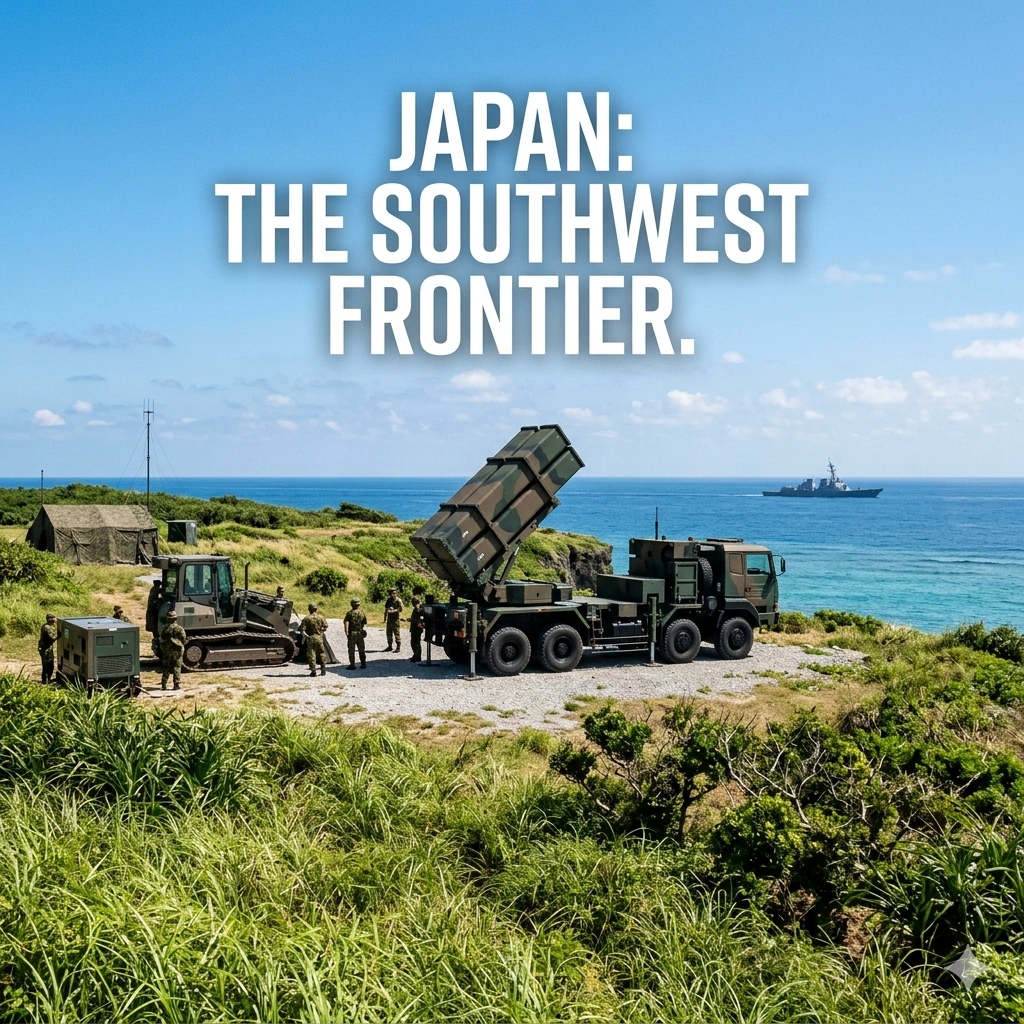
The process of Japan Southwest Island Fortification involves the integration of high-tech weaponry with traditional ground defense strategies. Surface-to-air missile systems are now a common sight on several islands, providing a layered defense against aerial threats. These units are highly mobile, allowing them to relocate quickly to avoid detection or to cover different sectors of the maritime border. The integration of these assets into a unified command structure ensures a seamless response to any emerging security challenges.
In addition to kinetic capabilities, the fortification includes significant investments in electronic warfare and cyber defense infrastructure. Protecting communication lines between the islands and the mainland is a top priority for defense planners who fear signal jamming or interception. Hardened bunkers and underground command centers are being built to withstand potential strikes, ensuring continuity of operations. This comprehensive approach to island defense reflects the multi-dimensional nature of modern warfare where information is as valuable as firepower.
International Alliances and Support
The Japan Southwest Island Fortification is not a solitary endeavor but is supported by deep cooperation with international security partners. The United States has played a significant role in providing technical expertise and conducting joint exercises in the region. These drills test the interoperability of Japanese and American forces, ensuring they can operate effectively in a combined environment. This partnership reinforces the credibility of the defense posture and signals a unified front to any potential adversaries.
- Joint naval patrols are conducted regularly to maintain freedom of navigation in international waters.
- Intelligence sharing agreements have been strengthened to provide a comprehensive picture of regional activities.
- Technical collaboration on missile defense technology continues to advance the capabilities of the island chain.
- Diplomatic coordination ensures that the fortification efforts are understood as defensive measures by the global community.
Environmental Considerations and Conservation
Building massive military installations in sensitive ecological zones requires a careful approach to conservation during the Japan Southwest Island Fortification process. Many of the islands are home to endangered species and unique coral reefs that are vital to the marine ecosystem. Environmental impact assessments are conducted before any major ground is broken to identify and protect these natural assets. Engineers have implemented innovative building techniques to minimize the footprint of barracks and radar towers on the local landscape.
Despite these efforts, some environmental groups remain concerned about the long-term effects of increased military activity on biodiversity. The government has responded by funding restoration projects and creating protected marine sanctuaries adjacent to the fortified areas. These initiatives aim to offset the environmental cost of security infrastructure and demonstrate a commitment to sustainable development. Ongoing monitoring of water quality and wildlife populations ensures that the military presence does not lead to irreparable ecological damage.
Technological Advancements in Defense
The technology deployed during the Japan Southwest Island Fortification represents the cutting edge of modern military hardware. Unmanned aerial vehicles (UAVs) are used extensively for persistent surveillance of the surrounding seas, reducing the need for manned flights. These drones can stay aloft for extended periods, providing real-time data to command centers on the mainland and the islands. This automation increases the efficiency of the defense network and allows for a more rapid response to suspicious activities.
- Advanced sensors can detect low-observable aircraft and maritime vessels at great distances.
- Satellite communication links provide secure and redundant data transmission across the entire island chain.
- AI-driven analysis helps operators identify patterns in maritime traffic and flag potential threats.
- Automated logistics systems ensure that remote garrisons are always supplied with essential fuel and equipment.
Training and Personnel Readiness
The success of the Japan Southwest Island Fortification depends heavily on the readiness and training of the personnel stationed there. Soldiers and sailors undergo rigorous training in island warfare tactics, focusing on rapid deployment and autonomous operations. The unique geography of the islands requires specialized skills in logistics and communications that are not found in mainland units. Regular readiness drills ensure that troops can transition from peacetime monitoring to active defense at a moment’s notice.
Life on these remote outposts can be challenging, and the government has invested in improving the quality of life for service members. Modern housing, recreational facilities, and enhanced medical services have been established to maintain high morale among the troops. Personnel are rotated frequently to prevent fatigue and ensure that everyone stays sharp and focused on their mission. This focus on the human element of defense is what ultimately makes the physical fortifications effective as a deterrent.
Regional Reactions and Diplomacy
The ongoing Japan Southwest Island Fortification has naturally drawn reactions from neighboring countries, some of whom view the moves with suspicion. Tokyo has engaged in a proactive diplomatic campaign to explain its security concerns and the defensive nature of its actions. Transparent communication is seen as a way to prevent misunderstandings that could lead to accidental escalation in the East China Sea. By being open about its intentions, Japan hopes to maintain regional stability while still protecting its sovereign interests.
International forums have become stages for discussing the legal and security implications of the fortification efforts. Japan consistently references international law and the right to self-defense as the legal basis for its military expansion. While some neighbors have criticized the moves as provocative, others have quietly expressed support for a stronger Japanese presence as a counterweight to regional hegemony. The diplomatic landscape remains fluid as countries adjust their own strategies in response to Japan’s new defense posture.
Logistics and Supply Chain Resilience
Maintaining a military presence on remote islands during the Japan Southwest Island Fortification requires a robust and resilient logistics network. Supply lines from the mainland are long and vulnerable to disruption by weather or hostile action, making self-sufficiency a key goal. Large stockpiles of food, ammunition, and fuel are maintained on each island to ensure they can hold out during a crisis. Desalination plants and renewable energy sources are also being integrated to reduce dependence on external supplies.
- Specialized transport vessels have been commissioned to move heavy equipment between the islands.
- Modular construction techniques allow for the quick repair or expansion of facilities.
- Local sourcing of certain supplies helps support the island economies while ensuring availability.
- Redundant communication networks use undersea cables and satellite links to prevent isolation.
The Role of Air Power
Air superiority is a critical component of the Japan Southwest Island Fortification strategy, as the islands provide vital platforms for aerial operations. Expanded runways on several islands now allow for the operation of fighter jets and maritime patrol aircraft closer to potential flashpoints. These forward-deployed assets significantly reduce response times for intercepting unauthorized aircraft entering Japanese airspace. The ability to launch and recover aircraft from multiple locations complicates the planning of any potential aggressor.
In addition to fixed-wing aircraft, helicopter units play a vital role in transporting troops and supplies between the islands. These versatile machines are essential for rapid reaction forces that may need to deploy to uninhabited rocks or reefs. The integration of air defense systems with these aviation assets creates a “no-fly zone” that protects the sovereignty of the island chain. This synergy between ground-based missiles and air power is the backbone of Japan’s southern defense architecture.
Public Opinion and National Consensus
The Japan Southwest Island Fortification has been a subject of intense debate within the Japanese parliament and among the general public. While there is a broad consensus on the need for national defense, the scale and speed of the fortification have raised questions about its impact on pacifist traditions. Proponents argue that the changing security environment requires a pragmatic approach to defense that moves beyond old ideologies. Critics, meanwhile, worry that the buildup could lead to an arms race that makes the region less safe in the long run.
Media coverage of the island developments has played a significant role in shaping public perception of the threat landscape. Documentaries and news reports highlighting maritime incursions have increased support for the government’s defense policies. Educational programs are also used to inform the public about the strategic value of the southwest islands and the importance of maintaining a credible deterrent. This national dialogue is a healthy part of a functioning democracy as it grapples with serious security challenges.
Future Outlook for the Island Chain
As the Japan Southwest Island Fortification continues to evolve, the focus is likely to shift toward the integration of even more advanced technologies. Directed energy weapons and hypersonic missile defense systems are already being discussed as potential additions to the island arsenals. The goal is to stay ahead of the technological curve and ensure that the defenses remain effective against emerging threats. Continuous modernization is the only way to maintain the status quo in a rapidly changing geopolitical environment.
The long-term success of these efforts will depend on Japan’s ability to maintain economic growth and political stability at home. Funding such an extensive defense network requires a sustained financial commitment that must be balanced against other social needs. However, the prevailing view in Tokyo is that security is the foundation upon which all other prosperity is built. By securing its southwestern frontier today, Japan is investing in a peaceful and prosperous future for the entire nation.
Collaborative Defense Exercises
Frequent drills are a hallmark of the Japan Southwest Island Fortification, involving both domestic and international forces. these exercises simulate various scenarios, from disaster relief to repelling a full-scale amphibious assault on the islands. Training in the actual environment where a conflict might occur provides invaluable experience for the troops and commanders involved. It also allows for the testing of new equipment and tactics in the humid, salt-heavy conditions of the East China Sea.
- Amphibious rapid deployment brigades practice landing operations on remote beaches.
- Missile units conduct simulated fire missions against maritime targets.
- Search and rescue teams coordinate with local authorities to prepare for emergencies.
- Cyber defense units work to protect the digital infrastructure of the island garrisons.
Conclusion and Final Thoughts
The Japan Southwest Island Fortification represents a historic shift in how the nation views its security and its role in the world. By transforming these remote islands into bastions of defense, Japan is taking proactive steps to ensure that peace and stability prevail in the region. The complexity of this project, involving technology, diplomacy, and local community engagement, highlights the multifaceted nature of modern sovereignty. As the 2020s progress, the strength of this island chain will remain a central pillar of Japan’s national defense strategy.
Ultimately, the goal of the Japan Southwest Island Fortification is to prevent conflict by making the cost of aggression too high to bear. This strategy of deterrence through strength is designed to protect not just territory, but the freedom of the seas and the international order. As long as tensions remain in the region, the work on these islands will continue, serving as a silent but powerful sentinel in the East China Sea. The commitment of the Japanese people and their government to this cause is a testament to their resolve in a challenging era.
For more details & sources visit: The Wall Street Journal (WSJ)
Read more about Japan news on 360 News Orbit – Japan.