
The Pakistan’s Sovereign AI initiative has officially reached a global milestone following the launch of a strategic white paper at the 2026 Zhongguancun Forum in Beijing. This collaborative document, spearheaded by the Pakistani Embassy in China alongside partners from Brazil, Malaysia, and China, marks a decisive shift toward technological independence. By defining AI as a core national capability, Pakistan is signaling its intent to move away from a reliance on foreign digital infrastructure. The white paper outlines a future where domestic data remains under national control, ensuring that the benefits of automation are tailored to local needs rather than global corporate interests.
Khan Muhammad Wazir, the tech affairs counselor at the Pakistani Embassy, emphasized that for Pakistan’s Sovereign AI, the focus extends far beyond mere data security. The initiative aims to catalyze the development of large language models and automation tools that reflect the linguistic diversity and specific regulatory requirements of the Pakistani people. By participating in this high-level forum, Pakistan is positioning itself as a proactive player in the global AI governance landscape. This move is expected to attract significant private-sector investment, particularly from Chinese tech giants looking to collaborate on localized digital frameworks.
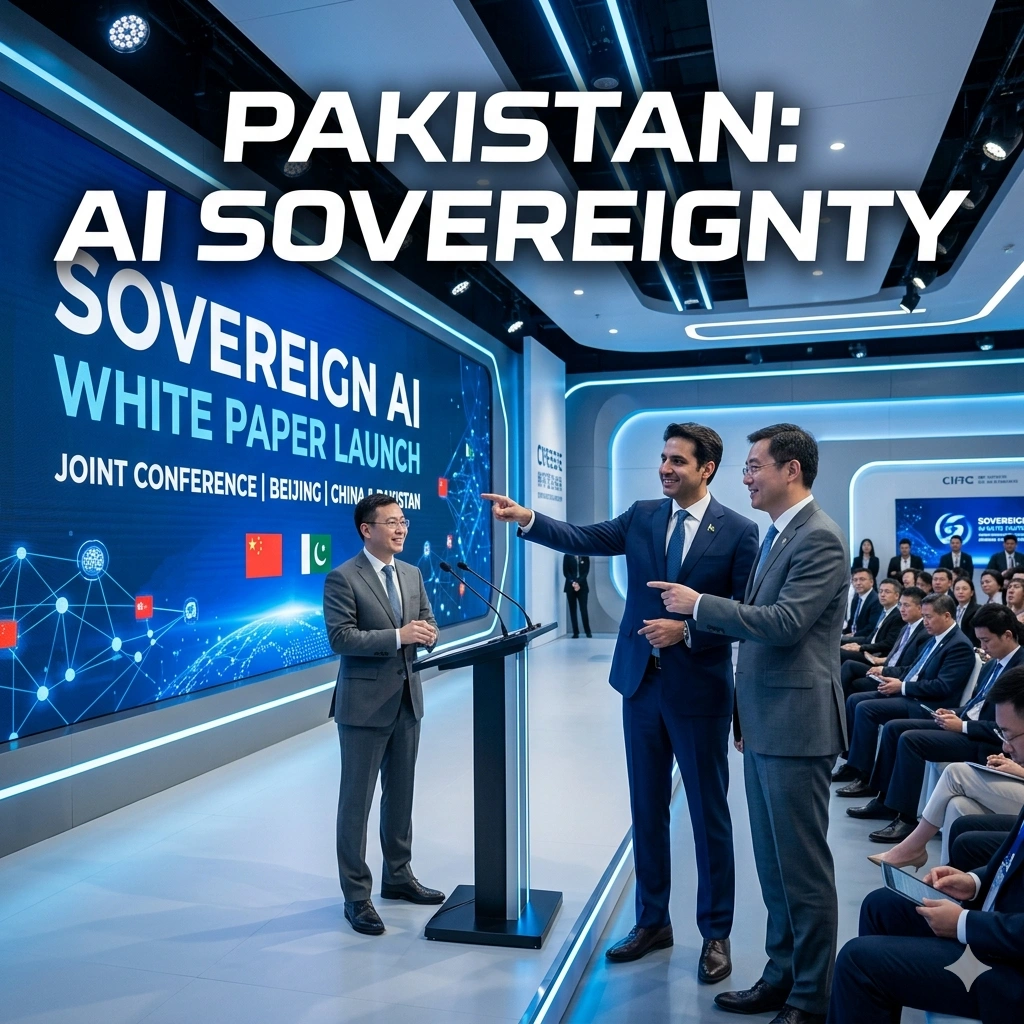
Pakistan’s Sovereign AI
The Pakistan’s Sovereign AI movement is fundamentally about ensuring that the nation’s data and infrastructure are not controlled by external entities. In the context of the 2026 white paper, “Sovereign AI” refers to the ability of a state to produce and manage its own artificial intelligence capabilities. This includes everything from the physical servers and data centers to the algorithms that process public information. For Pakistan, this is a matter of national security, as the reliance on foreign cloud providers can expose sensitive citizen data to international surveillance or sudden service disruptions.
The strategic document launched at the Zhongguancun Forum highlights that Pakistan’s Sovereign AI must be built on a foundation of local linguistic integration. Most global AI models are trained predominantly on English-language datasets, which can lead to biases or inaccuracies when applied to Urdu or regional Pakistani languages. By developing indigenous models, Pakistan can ensure that AI-driven public services are accessible to all citizens, regardless of their primary language. This focus on “linguistic sovereignty” is a key pillar of the new white paper and a major goal for the Pakistani tech affairs office.
- Data Independence: Keeping sensitive public and private data within national borders.
- Linguistic Tailoring: Creating AI models that fluently process Urdu and regional dialects.
- Economic Upgrading: Using domestic AI to modernize traditional sectors like manufacturing and textiles.
- Infrastructure Control: Reducing dependence on Western and foreign-owned cloud technologies.
Moreover, Pakistan’s Sovereign AI is seen as a vehicle for rapid economic upgrading in the South Asian region. By collaborating with leading firms like Zhipu AI, Pakistan can fast-track its digital transformation without the prohibitive costs of starting from scratch. These partnerships allow for a transfer of knowledge and technology that empowers local developers and engineers to build solutions for their own communities. The white paper serves as a formal invitation for more private-sector engagement, suggesting that the future of Pakistani tech lies in a blend of national oversight and international expertise.
The Zhongguancun Forum Milestone
The Zhongguancun Forum (ZGC) in Beijing provided the perfect stage for the debut of the Pakistan’s Sovereign AI white paper. Known as “China’s Silicon Valley,” Zhongguancun is a global hub for innovation, making it a symbolic location for an alliance focused on technological autonomy. Pakistan’s participation alongside heavyweights like Brazil and Malaysia demonstrates a growing “Global South” consensus on AI ethics and governance. This collective front challenges the current duopoly of AI development, advocating for a more multipolar and inclusive digital future for developing nations.
During the forum, the Pakistani delegation held several high-level meetings with Chinese technology leaders to discuss the practical implementation of Pakistan’s Sovereign AI. These discussions focused on establishing joint research centers and talent exchange programs that would see Pakistani students training in top-tier Chinese AI labs. By embedding its experts in the ZGC ecosystem, Pakistan is ensuring it stays at the cutting edge of sovereign technology development. This level of international networking is vital for a country that is currently trying to leapfrog older stages of industrialization.
Khan Muhammad Wazir on Development Priorities
Khan Muhammad Wazir has been a vocal advocate for the Pakistan’s Sovereign AI project, stressing that technology must serve the specific developmental needs of the country. At the forum, he explained that Sovereign AI is not an isolationist policy but a strategic one that allows Pakistan to choose its partners and its path. He noted that the white paper specifically calls for AI governance that prioritizes human-centric development and local ethical standards. This approach ensures that as Pakistan automates its economy, it does so in a way that is culturally and socially responsible.
Wazir’s contribution to the white paper on Pakistan’s Sovereign AI also touched on the importance of rural connectivity and agricultural technology. In a country where agriculture remains the largest employer, AI-driven weather prediction and crop management could revolutionize the lives of millions. By owning the AI “sovereignty” behind these tools, the Pakistani government can ensure that the technology remains affordable and accessible to small-scale farmers. This direct link between high-tech policy and ground-level economic reality is what sets the Pakistani sovereign vision apart from purely academic AI discussions.
- Human-Centric AI: Ensuring technology enhances human labor rather than merely replacing it.
- Ethical Standards: Aligning AI decision-making with Pakistan’s cultural and legal frameworks.
- Rural Impact: Focusing on AI tools for the 60% of the population living in rural areas.
Expanding Science and Tech Cooperation
The Pakistan’s Sovereign AI initiative is the latest chapter in a long history of science and technology cooperation between Pakistan and China. This partnership has evolved from basic infrastructure projects like the Karakoram Highway to advanced aerospace and digital connectivity ventures. The Sovereign AI white paper represents the “software” side of this relationship, focusing on the intelligence that will run the digital infrastructure built under the CPEC (China-Pakistan Economic Corridor). It marks a transition from physical hardware to high-level cognitive technology.
One of the key outcomes of this expanded cooperation is the focus on private-sector engagement within the Pakistan’s Sovereign AI framework. The government is actively encouraging Pakistani startups to partner with Chinese firms to co-develop applications for the local market. This cross-border collaboration is expected to spark a new wave of innovation in the Pakistani “Silicon Gulf,” particularly in the areas of fintech and healthtech. By joining the global alliance for Sovereign AI, Pakistan is giving its private sector the legal and strategic backing needed to compete on a global scale.
Reducing Foreign Technological Reliance
A primary motivator for the Pakistan’s Sovereign AI white paper is the urgent need to reduce dependence on foreign-owned technology stacks. Currently, much of Pakistan’s digital economy relies on tools and platforms developed in the United States or Europe, which can lead to “technological lock-in.” This means that changing providers or customizing tools becomes prohibitively expensive or technically impossible. Sovereign AI offers a way out of this trap by promoting open-source and indigenously developed alternatives that give the nation more leverage in global tech negotiations.
- Cloud Sovereignty: Building local data centers to host Pakistani public service applications.
- Algorithm Transparency: Ensuring that the AI used in government decision-making is auditable by local experts.
- Vendor Diversification: Moving away from a single-source reliance on Western tech giants.
The white paper argues that Pakistan’s Sovereign AI is essential for protecting the country’s “digital borders.” Just as physical borders protect a nation’s territory, digital borders protect its information and intellectual property. In an era of increasing cyber-warfare and digital espionage, the ability to control one’s own AI infrastructure is a critical defensive measure. This focus on security is why the Pakistani defense and tech ministries have been so heavily involved in the drafting of the Sovereign AI document.
Impact on Agriculture and Education
The Pakistan’s Sovereign AI framework explicitly targets the transformation of the agriculture and education sectors as its first major testing grounds. In education, sovereign AI can power personalized learning platforms that adapt to the specific learning paces and linguistic nuances of Pakistani students. This is particularly important for regional areas where qualified teachers may be in short supply. By owning the AI platform, the Ministry of Education can ensure that the curriculum remains aligned with national standards while providing world-class digital learning tools.
In the agricultural sector, Pakistan’s Sovereign AI can process vast amounts of satellite and soil data to provide farmers with real-time advice on irrigation and fertilization. Because this AI is “sovereign,” the data it generates remains the property of the Pakistani state and its farmers, rather than being harvested by international agri-tech giants. This ensures that the economic benefits of increased yields stay within the local community. The white paper highlights these use cases as proof that Sovereign AI is a practical tool for sustainable development rather than just a high-level policy concept.
- Education: AI tutors capable of teaching in Urdu, Pashto, Punjabi, and Sindhi.
- Agriculture: Low-cost AI sensors for monitoring soil health in the Indus Basin.
- Healthcare: Sovereign AI diagnostics for rural clinics that lack full-time specialists.
Modernizing the Digital Framework
The modernization of Pakistan’s digital framework under the Pakistan’s Sovereign AI initiative is a multi-year project that requires significant investment in talent. The white paper calls for a nationwide push in AI literacy and high-end engineering training to ensure there is a workforce capable of maintaining sovereign systems. This includes the creation of specialized “AI Zones” in major cities like Lahore and Islamabad, where researchers can collaborate on sovereign projects without the interference of foreign intellectual property constraints.
As Pakistan’s Sovereign AI infrastructure matures, it will allow for more efficient public service delivery, from automated tax filing to AI-managed traffic systems in major metropolises. These “Smart City” initiatives are a major part of the 2026 economic roadmap. By utilizing sovereign AI, the government can ensure that these systems are resilient against external cyber-threats and can be updated locally without waiting for foreign vendor approvals. This responsiveness is key to maintaining a modern, functional state in the mid-21st century.
Future Outlook: Beyond AI
While the focus of the current white paper is on Pakistan’s Sovereign AI, the alliance formed at the ZGC Forum is expected to expand into other frontier technologies. Discussions are already underway regarding sovereign quantum computing and blockchain-based financial systems. The goal is to build a comprehensive “Sovereign Tech Stack” that covers all aspects of modern life. Pakistan’s early entry into this alliance puts it at the forefront of this movement, allowing it to help shape the global rules for how nations manage their digital futures.
The success of Pakistan’s Sovereign AI will ultimately depend on the continued partnership between the government, the private sector, and international allies. As more nations join the alliance, the pool of shared resources will grow, making it easier for Pakistan to achieve its goals of technological autonomy. The 2026 ZGC Forum was the starting gun for a new era of digital independence, and Pakistan is clearly ready to run the race. The nation’s journey toward a sovereign digital future is not just about technology—it’s about reclaiming the power to define its own destiny in the age of AI.
For more details & sources visit: The Nation
Read more about Pakistan news on 360 News Orbit – Pakistan.