
Malaysia 98% Internet Penetration marks a historic milestone in the nation’s journey toward becoming a high-income, AI-driven society. This achievement, driven by the aggressive Jendela and MyDIGITAL initiatives, has effectively bridged the long-standing rural-urban digital divide. With nearly the entire population now connected to high-speed infrastructure, the government is shifting its focus toward total digital inclusion. However, this massive expansion of connectivity is being met with intense international scrutiny. While the technical rollout is a success, the accompanying regulatory framework has sparked a fierce debate. Critics are concerned that the price of this connectivity is a significant loss of personal digital privacy.
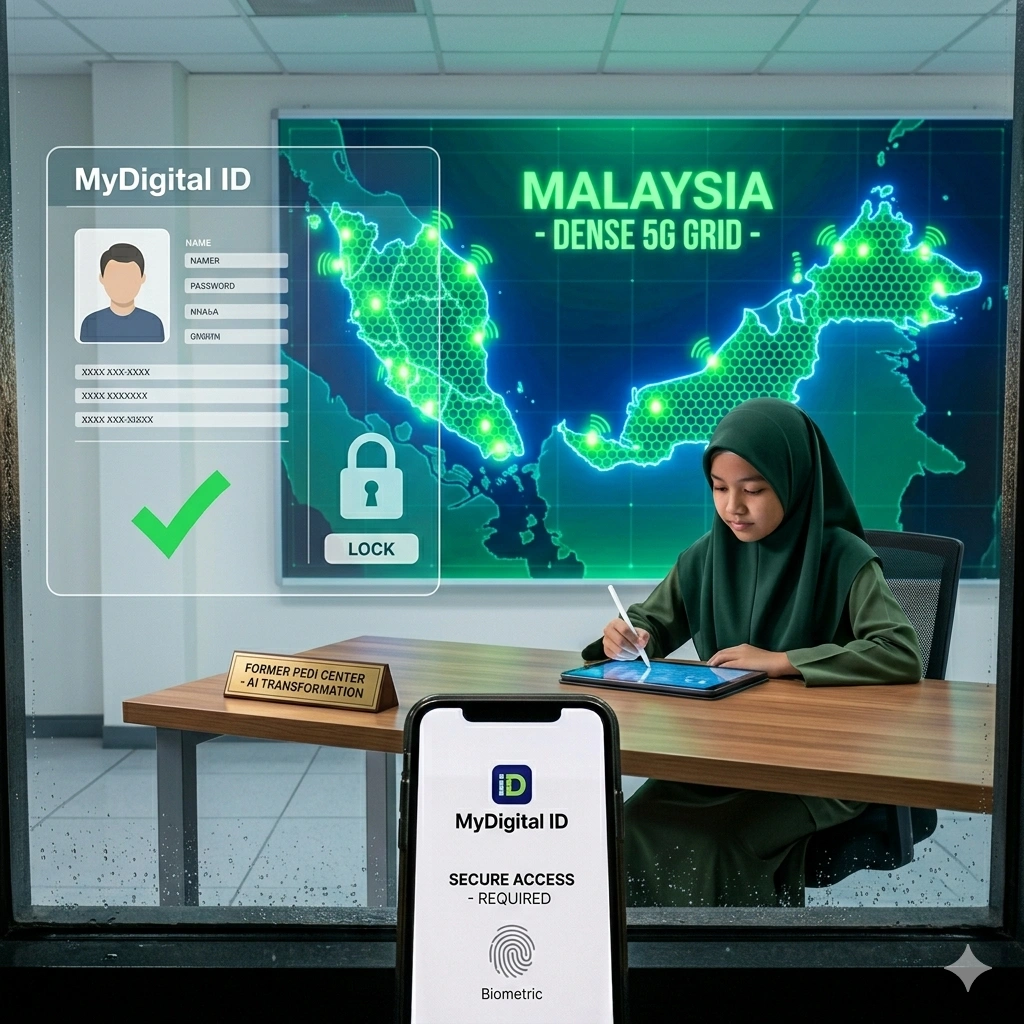
The Infrastructure Behind Malaysia 98% Internet Penetration
The success of the Jendela infrastructure plan is the primary driver behind the Malaysia 98% Internet Penetration statistics reported today. By expanding 5G coverage and fiber-optic networks, the government has boosted median mobile speeds to over 140 Mbps nationwide. Rural household access has surged to 89.4%, a figure that was unthinkable just a few short years ago. To reach the most isolated communities, the government has utilized satellite subsidies, providing Starlink kits to Sarawakian and Orang Asli groups. These efforts ensure that even the most remote citizens can participate in the burgeoning digital economy.
Upgrading traditional PEDi neighborhood telecenters into “AI Transformation Centers” has also played a crucial role in reaching the Malaysia 98% Internet Penetration goal. these centers provide rural entrepreneurs with the tools and training needed to automate their businesses using modern AI technologies. This transition from basic connectivity to functional digital literacy is a cornerstone of the MyDIGITAL framework. By providing localized support, the state has ensured that the hardware rollout translates into real economic growth. The focus is no longer just on getting people online, but on how they use that connection.
However, maintaining the momentum of Malaysia 98% Internet Penetration requires constant investment in maintenance and energy efficiency. As data usage skyrockets, the national grid is facing new pressures to power the expanding network of towers and data centers. The government has committed to using renewable energy sources for new infrastructure to meet its sustainability goals. This green approach is intended to balance the environmental impact of such a massive technological undertaking. Investors are watching closely to see if these high speeds can be maintained as the network reaches its final capacity.
Malaysia 98% Internet Penetration
The achievement of Malaysia 98% Internet Penetration has been shadowed by the implementation of the Online Safety Act 2025. This regulation requires all social media accounts to be linked directly to MyKad or MyDigital IDs, effectively ending online anonymity. While the government argues this is necessary to combat cybercrime and misinformation, human rights advocates are alarmed. They suggest that the elimination of anonymity creates a permanent record of all digital interactions. This move is seen by many as a step toward a more controlled and monitored digital environment.
The new powers granted to the MCMC to remove content without court orders have added to the tension surrounding Malaysia 98% Internet Penetration. Under the 2024 Cyber Security Act, the state has broad authority to define what constitutes a threat to national stability. This has led to concerns that the “Unity Package” of affordable broadband comes with a hidden cost of state surveillance. Critics argue that a “rights-based approach” to the internet cannot exist without the freedom to speak without fear of reprisal. The balance between national security and individual liberty is now the central theme of Malaysian political discourse.
- All social media platforms must now operate under a mandatory local license.
- Digital IDs are now a prerequisite for accessing most government-linked online services.
- The “Kill Switch” law allows for the temporary suspension of services during “emergencies.”
Despite these concerns, the government maintains that Malaysia 98% Internet Penetration is a net positive for the country. They point to the reduction in online fraud and the increased efficiency of digital governance as proof of the system’s benefits. By integrating identity verification into the web, the state aims to create a “trusted” digital ecosystem for commerce. However, the lack of a robust data protection framework that can check state power remains a point of contention. The international community is monitoring how these laws affect foreign tech investments in the region.
The Transition to an AI-Driven Society
With Malaysia 98% Internet Penetration secured, the nation is now pivoting toward large-scale AI integration in the public sector. The MyDIGITAL initiative envisions a future where AI handles everything from traffic management to healthcare diagnostics. This requires a level of data collection that is only possible with a fully connected population. The high-speed infrastructure provides the “pipes” through which the massive amounts of data required for AI training can flow. This transition is expected to boost the national GDP significantly over the next five years.
The social implications of this AI transition are being felt in the labor market as automation becomes more common. The Malaysia 98% Internet Penetration milestone allows the government to deliver digital retraining programs to workers in every corner of the country. These programs are designed to help the workforce adapt to a world where routine tasks are handled by algorithms. However, the transition is not without its risks, as the digital divide could be replaced by an “AI divide.” Those who cannot master these new tools may find themselves left behind in the new economy.
Furthermore, the ethical use of AI in surveillance is a major talking point among the Malaysian youth. As the Malaysia 98% Internet Penetration era begins, many are questioning the long-term impact of facial recognition and predictive policing. The government’s ability to track individuals through their digital IDs and high-speed connections is a powerful tool. Ensuring that this power is not abused will require a level of transparency that has not yet been fully realized. The debate over digital justice is only just beginning as the technology becomes more sophisticated.
Bridging the Rural-Urban Divide with Satellite Tech
A key component of reaching Malaysia 98% Internet Penetration was the strategic use of LEO (Low Earth Orbit) satellites. In the rugged terrains of Sabah and Sarawak, laying fiber-optic cable was both logistically and financially prohibitive. By partnering with companies like Starlink, the Malaysian government provided an immediate solution for these underserved areas. This has allowed rural students to access the same educational resources as those in Kuala Lumpur. The impact on social mobility in these regions is expected to be transformative.
The government’s satellite subsidy program was essential for ensuring that the Malaysia 98% Internet Penetration goal was inclusive. Without state intervention, the cost of satellite hardware would have been out of reach for many Orang Asli communities. Now, these groups can use the internet to preserve their languages and market their traditional crafts to a global audience. This “digital heritage” project is one of the more positive aspects of the national connectivity plan. It demonstrates how technology can be used to empower marginalized groups when implemented with cultural sensitivity.
- Satellite kits are provided free of charge to registered low-income households in remote areas.
- Local community leaders are trained to manage and maintain the satellite equipment.
- Connectivity is used to provide “Tele-health” services to regions without permanent clinics.
As the country celebrates Malaysia 98% Internet Penetration, the focus is shifting to the quality of the connection. While 140 Mbps is the median, some rural areas still experience fluctuations during heavy rain or solar events. Improving the resilience of these satellite links is the next technical challenge for the Jendela team. They are working on hybrid systems that combine satellite with local mesh networks to provide more stable service. This technical evolution is necessary to support the high-bandwidth requirements of modern AI applications.
Privacy Concerns in the Era of Digital IDs
The most contentious part of the Malaysia 98% Internet Penetration narrative is the mandatory use of the MyDigital ID. This system links a citizen’s physical identity to their every move in the digital world, from banking to social media. While it simplifies logins and increases security against identity theft, it also creates a centralized database of human behavior. Privacy advocates warn that this is a “honey pot” for hackers and a tool for state overreach. The security of this database is now a matter of national importance.
The implementation of these IDs coincided with the achievement of Malaysia 98% Internet Penetration, suggesting a coordinated strategy for digital control. The government argues that in a high-income society, anonymity is a luxury that facilitates crime. They believe that a “verified” internet is a safer internet for everyone. However, this perspective is not shared by younger Malaysians who have grown up with a different understanding of digital freedom. The clash between these two worldviews will likely define the next decade of Malaysian politics.
To mitigate some of these concerns, the government has promised that the MyDigital ID data will be protected by advanced encryption. They have also established a new oversight committee to monitor how the data is used by various agencies. However, the effectiveness of this committee is being questioned, as it operates under the executive branch. For Malaysia 98% Internet Penetration to be truly successful, the public must trust that their personal information is not being used against them. Building this trust will require more than just technical security; it will require legal accountability.
Economic Opportunities in the Connected Economy
The Malaysia 98% Internet Penetration milestone has opened the doors for a new wave of digital entrepreneurship. With nearly everyone online, the potential market for e-commerce and digital services has expanded exponentially. Small businesses that were once limited to their local villages can now reach customers across the ASEAN region. The government is supporting this growth through grants and tax incentives for “digital-native” companies. This is a key part of the plan to move Malaysia away from its reliance on manufacturing and commodities.
The gig economy is also thriving in the wake of Malaysia 98% Internet Penetration, providing flexible income for thousands of workers. From ride-sharing to freelance coding, the high-speed network allows for a more dynamic and responsive labor market. However, this has also led to calls for better labor protections for digital workers who often lack traditional benefits. The government is currently drafting new regulations to address the “Precarity of the Platform” and ensure a fair deal for all. Connectivity is a tool for empowerment, but it must be backed by a fair legal framework.
- Digital grants are available for SMEs to adopt cloud-based accounting and inventory tools.
- The “Malaysia Digital” status offers 10 years of tax breaks for high-tech startups.
- New crowdfunding platforms are being regulated to provide capital for rural innovators.
As the economy becomes more digitized, the demand for cybersecurity professionals is reaching an all-time high. The Malaysia 98% Internet Penetration achievement has made the country a bigger target for international cybercrime syndicates. Protecting the national infrastructure and private data is now a major industry in itself. This creates a new career path for young Malaysians, further driving the transition to a high-income society. The security of the network is just as important as its speed and reach.
Balancing Connectivity and Human Rights
The core of the debate surrounding Malaysia 98% Internet Penetration is whether digital access should be considered a fundamental human right. If it is a right, then the conditions placed upon that access—such as the loss of anonymity—become a human rights issue. The Malaysian government claims it is taking a “rights-based approach” by ensuring everyone has access to the web. However, international organizations argue that access without privacy is a hollow victory. This philosophical divide is at the heart of the current legislative battles in Parliament.
The Online Safety Act 2025 is often cited as the primary example of this tension within the Malaysia 98% Internet Penetration era. By giving the state the power to remove content, the law could be used to silence political dissent. The government insists the law is only meant to target “harmful” content like child exploitation and hate speech. However, the definition of “harmful” is notoriously subjective and open to abuse. Without judicial oversight, the potential for censorship is a significant concern for journalists and activists.
Finding a middle ground will be the biggest challenge for the current administration as they move past the Malaysia 98% Internet Penetration goal. They must find a way to secure the digital space without suffocating the vibrant online culture that has developed in Malaysia. This may involve refining the Cyber Security Act to include more explicit protections for free expression. It could also involve a more transparent process for content removal that includes an independent appeals process. The future of Malaysian democracy may depend on how these digital rules are written and enforced.
The Role of International Tech Partners
The achievement of Malaysia 98% Internet Penetration would not have been possible without the participation of global tech giants. Companies like Amazon, Google, and Microsoft have invested billions in local data centers and cloud infrastructure. These partnerships provide the technical backbone for the MyDIGITAL initiatives. However, these companies are also caught in the middle of the debate over surveillance and privacy. They must comply with local laws while also adhering to their own global corporate standards for data protection.
As Malaysia 98% Internet Penetration becomes the new norm, these tech partners are being asked to provide more than just infrastructure. They are being called upon to help develop local AI talent and support ethical tech initiatives. This collaboration is vital for the long-term sustainability of the Malaysian digital economy. However, if the regulatory environment becomes too restrictive, these companies may reconsider their future investments. Maintaining a balance between state control and a business-friendly climate is a delicate act for the Malaysian government.
The use of Starlink to reach the final two percent of the population is a perfect example of this collaboration. By leveraging LEO satellite technology, the government was able to bypass the physical limitations of the landscape. This partnership was a key “last mile” solution that allowed the country to announce the Malaysia 98% Internet Penetration milestone. It shows that when the state and private sector work together, they can overcome even the most difficult challenges. The question now is how this partnership will evolve as the focus shifts toward AI and advanced data analytics.
Conclusion: A Connected but Complex Future
The story of Malaysia 98% Internet Penetration is one of incredible progress mixed with significant social challenges. On one hand, the nation has achieved a level of connectivity that many developed countries would envy. This provides a solid foundation for future economic growth and social development. On the other hand, the new laws governing this connected space raise serious questions about the future of privacy and free speech. The “Digital Justice” that the government speaks of is still a work in progress.
As the final phase of the Jendela plan concludes, the Malaysia 98% Internet Penetration era is just beginning. The true impact of these changes will be felt in the years to come as the population adjusts to a life without digital anonymity. Whether this leads to a safer, more prosperous society or a more controlled and stagnant one remains to be seen. What is clear is that Malaysia has firmly established itself as a leader in the digital transformation of Southeast Asia. The eyes of the world will continue to be on this nation as it navigates the complex intersection of technology and human rights.
The legacy of Malaysia 98% Internet Penetration will not just be about the miles of fiber or the number of towers. It will be about how the people of Malaysia use their newfound connectivity to shape their own future. If they can find a way to protect their rights while embracing the benefits of technology, they will truly have achieved something remarkable. The journey toward 100% penetration continues, but the most important work is now in the realm of policy and ethics. The world is watching to see if Malaysia can become a model for a “connected and free” digital society.
For more details & sources visit: OpenGlobalRights
Read more about Malaysia news on 360 News Orbit – Malaysia.