
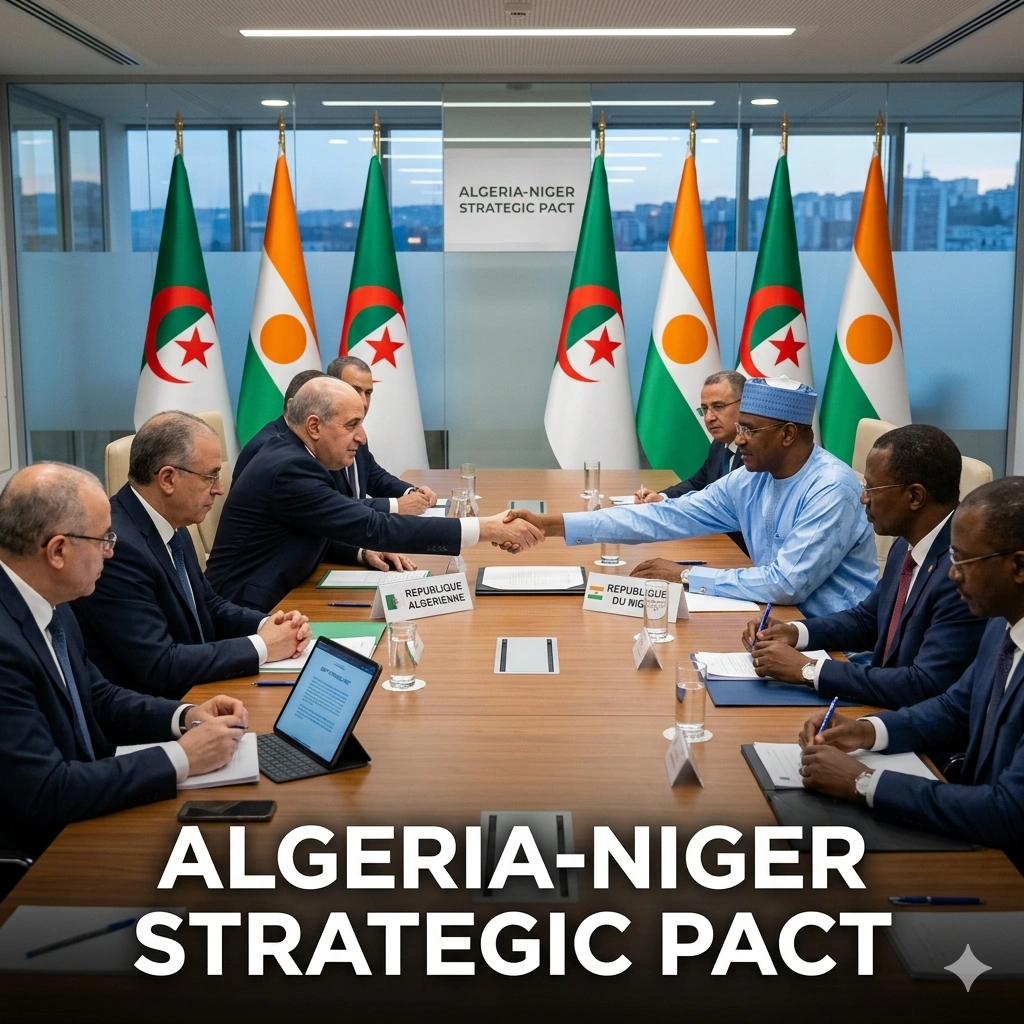
Algeria Niger Strategic cooperation reached a new milestone today as high-level experts from both nations convened to solidify a massive bilateral partnership. This expert-level committee is currently laying the groundwork for an upcoming summit designed to transform the economic landscape of North Africa and the Sahel. As global energy markets shift in 2026, the collaboration between Algiers and Niamey is becoming a cornerstone for regional stability and industrial integration. The meeting focused on accelerating infrastructure projects that have been in development for several years.
The Algeria Niger Strategic dialogue is prioritizing several “mega-projects” that will connect the Mediterranean coast directly to the heart of the African continent. Officials from diverse ministerial sectors are evaluating current trade volumes and identifying bottlenecks that have previously slowed cross-border investment. By aligning their regulatory frameworks, both nations hope to create a seamless corridor for goods, services, and energy resources. This initiative is seen as a direct response to the increasing demand for secure trade routes within the African Continental Free Trade Area.
Energy Exploration and the Trans-Saharan Pipeline
The Algeria Niger Strategic energy agenda is dominated by the ambitious Trans-Saharan Gas Pipeline, which aims to transport natural gas from Nigeria through Niger to Algerian ports. Experts at the Sunday meeting reviewed the technical progress of the Nigerien section of the pipeline, which is vital for Europe’s energy diversification. By securing this route, both nations position themselves as indispensable players in the global energy supply chain. This project is expected to generate thousands of local jobs and provide a steady stream of transit revenue for Niamey.
In addition to gas, the Algeria Niger Strategic committee is exploring joint ventures in renewable energy, particularly solar power. Both countries possess vast desert territories that are ideal for large-scale solar farms capable of powering entire industrial zones. The technical teams are discussing the possibility of a shared power grid that would stabilize electricity costs across the border. Such an integrated energy market would make the region highly attractive to international manufacturing firms looking for low-cost, green energy.
Furthermore, the Algeria Niger Strategic talks include cooperation in the oil sector, with Sonatrach playing a key role in assisting Niger with its extraction capabilities. Algeria’s decades of experience in the hydrocarbon industry provide a valuable blueprint for Niger’s emerging energy market. This mentorship-style partnership ensures that Niger can maximize its natural wealth while adhering to modern environmental standards. The experts are currently drafting the legal framework for these joint extraction operations to begin by late 2026.
Algeria Niger Strategic
The Algeria Niger Strategic security framework is perhaps the most critical component for ensuring the success of long-term infrastructure projects. Both nations share a long and complex border that requires constant monitoring to prevent the movement of non-state armed groups. The committee has proposed the creation of a joint border security task force that will utilize advanced satellite imagery and drone technology. This enhanced security environment is necessary to protect the workers and equipment involved in the Trans-Saharan highway construction.
Under the Algeria Niger Strategic agreement, intelligence sharing between the two capitals will be significantly increased to combat cross-border smuggling. This initiative not only protects national security but also ensures that tax revenues from legal trade are properly collected. The experts noted that a secure border is a prerequisite for the “Saharans Gate” project, which aims to turn the border region into a hub for legitimate commerce. This holistic approach to security combines military readiness with economic opportunity for local border communities.
The Algeria Niger Strategic partnership also focuses on the “human security” aspect of the Sahelian crisis. By investing in water management and agricultural projects along the border, the two nations are addressing the root causes of instability, such as poverty and resource scarcity. The joint committee has allocated funds for several pilot irrigation projects that will use Algerian desalination technology to support Nigerien farmers. This blend of security and development is the hallmark of the 2026 bilateral strategy.
Infrastructure and the Mediterranean Connection
A major goal of the Algeria Niger Strategic committee is the completion of the Trans-Saharan Highway, a project that will link Algiers to Lagos. This massive road network is nearly complete, and the current meetings are focusing on the final logistical details of the Nigerien segments. Once finished, this highway will reduce transport times by 40%, making African exports more competitive on the global market. The experts are also discussing the implementation of electronic toll systems and unified customs procedures to speed up transit.
The Algeria Niger Strategic infrastructure plan also includes a significant telecommunications component. Algeria is assisting Niger in laying fiber-optic cables alongside the highway to provide high-speed internet to remote Saharan towns. This digital backbone is essential for the modernization of the banking sector and the expansion of e-commerce in the region. By connecting the Sahel to the Mediterranean fiber-optic network, the partnership is effectively closing the digital divide in North Africa.
Moreover, the Algeria Niger Strategic committee is evaluating the potential for a joint railway system that would parallel the highway. While this is a long-term goal, the preliminary feasibility studies were a key topic of discussion during the Sunday sessions. A railway would allow for the bulk transport of minerals and agricultural products at a fraction of the current cost. This visionary infrastructure project demonstrates the high level of ambition that defines the 2026 Algeria–Niger relationship.
Banking and Financial System Integration
The Algeria Niger Strategic financial roadmap includes the establishment of joint banking branches in both Algiers and Niamey. Currently, cross-border payments can be slow and expensive, hindering the growth of small and medium-sized enterprises. By integrating their banking systems, the two nations will allow for real-time currency exchange and simplified trade financing. This move is expected to double the volume of bilateral trade within the first two years of implementation.
- Standardizing banking regulations to facilitate easier capital movement.
- Creating a joint investment fund for Saharan infrastructure projects.
- Training Nigerien financial officers in Algerian banking technology.
- Launching a digital payment platform for cross-border traders.
These Algeria Niger Strategic financial reforms are being designed to withstand the volatility of global markets. By creating a localized financial ecosystem, the two countries reduce their dependence on external currencies for regional trade. The committee experts highlighted that financial sovereignty is just as important as energy or food security. These measures will provide a safety net for local businesses operating in the often-unpredictable Saharan economic environment.
Technical Expertise and Knowledge Transfer
A core pillar of the Algeria Niger Strategic partnership is the “South-South” cooperation model, which emphasizes learning from regional peers. Algeria has committed to hosting hundreds of Nigerien technicians in its specialized training centers for energy and telecommunications. This hands-on training ensures that the high-tech equipment provided through joint ventures can be maintained locally. This strategy builds long-term capacity and reduces the need for expensive foreign contractors.
- Engineering scholarships for Nigerien students at Algerian universities.
- Vocational training for highway maintenance and logistics management.
- Joint research projects on desert agriculture and water conservation.
- Technology transfer for mobile banking and digital government services.
The Algeria Niger Strategic committee believes that this transfer of knowledge is the most sustainable form of foreign aid. It empowers the local workforce and fosters a sense of ownership over the massive infrastructure projects currently underway. The Sunday meetings concluded with the signing of several memoranda of understanding regarding these educational exchanges. This investment in human capital will be the engine of growth for the region for the next decade.
Regional Stability and the Mediterranean Link
The Algeria Niger Strategic alliance is sending ripples through the African Union and the Mediterranean community. By stabilizing the Sahel, Algeria is effectively protecting the southern flank of the European Union, making this partnership a matter of international importance. International observers have noted that the success of this bilateral committee could serve as a template for other African nations. The “Mediterranean Link” is no longer just a dream but a rapidly approaching reality.
As the Algeria Niger Strategic committee wraps up its current session, the agenda for the High Joint Committee is now clear. The focus remains on high-impact projects that provide immediate economic relief while building a foundation for long-term prosperity. The synergy between Algeria’s industrial might and Niger’s vast natural resources is a powerful combination. We are witnessing the birth of a new economic axis in Africa that will redefine trade for the 21st century.
The technical findings of the Algeria Niger Strategic experts will be presented to the heads of state later this month. Early reports indicate that nearly all major milestones for the pipeline and highway projects are being met or exceeded. This level of efficiency is a testament to the strong political will in both Algiers and Niamey to succeed despite regional challenges. The partnership is a beacon of hope for a continent striving for integrated and sustainable growth.
Environmental Stewardship in the Sahara
While the Algeria Niger Strategic plans are heavy on industrialization, they also include significant environmental safeguards. The Sahara is a fragile ecosystem, and the experts have spent considerable time discussing how to minimize the carbon footprint of the new highway and pipeline. This includes the use of sustainable building materials and the implementation of strict waste management protocols. Protecting the desert environment is seen as vital for the tourism potential of the region.
The Algeria Niger Strategic environmental sub-committee is specifically looking at the preservation of underground aquifers. These water sources are the lifeblood of Saharan oases and must be protected from industrial contamination. The joint partnership includes the deployment of sensors to monitor water quality along the path of the new infrastructure projects. This proactive approach ensures that today’s economic gains do not come at the expense of tomorrow’s water security.
Finally, the Algeria Niger Strategic initiative includes a “Green Belt” project to plant millions of drought-resistant trees along the Trans-Saharan Highway. This will combat desertification and provide shade for travelers, while also acting as a carbon sink. This project combines ecological restoration with infrastructure development, showing that the two nations are thinking holistically about their shared future. The Sahara is being transformed from a barrier into a bridge of green innovation.
Looking Ahead to the High Joint Committee
The conclusion of the Algeria Niger Strategic expert sessions marks the beginning of a new era in North-Sahelian relations. The groundwork has been laid, the maps have been drawn, and the financing is being secured. All eyes are now on the upcoming High Joint Committee summit, where the final signatures will be placed on these historic agreements. This is more than just a meeting of experts; it is the construction of a shared destiny.
As we look toward the end of 2026, the Algeria Niger Strategic partnership will likely be cited as the turning point for the region. The integration of energy, security, and finance will create a resilient block capable of navigating any global crisis. For the people of Algeria and Niger, these deals promise a future of stability, connectivity, and unprecedented opportunity. The path from the Sahel to the Mediterranean is finally being paved with the stones of cooperation and mutual respect.
In the final analysis, the Algeria Niger Strategic committee has proven that neighboring nations can achieve extraordinary things when they align their interests. The “Meeting of Waters” in Brazil or the energy deals in Russia may grab the headlines, but the quiet, steady work in Algiers and Niamey is equally transformative. This is the new Africa—confident, connected, and completely committed to its own success. The pilgrimage toward prosperity has officially begun.
For more details & sources visit: AL24 News
Read more about Algeria news on 360 News Orbit – Algeria.