
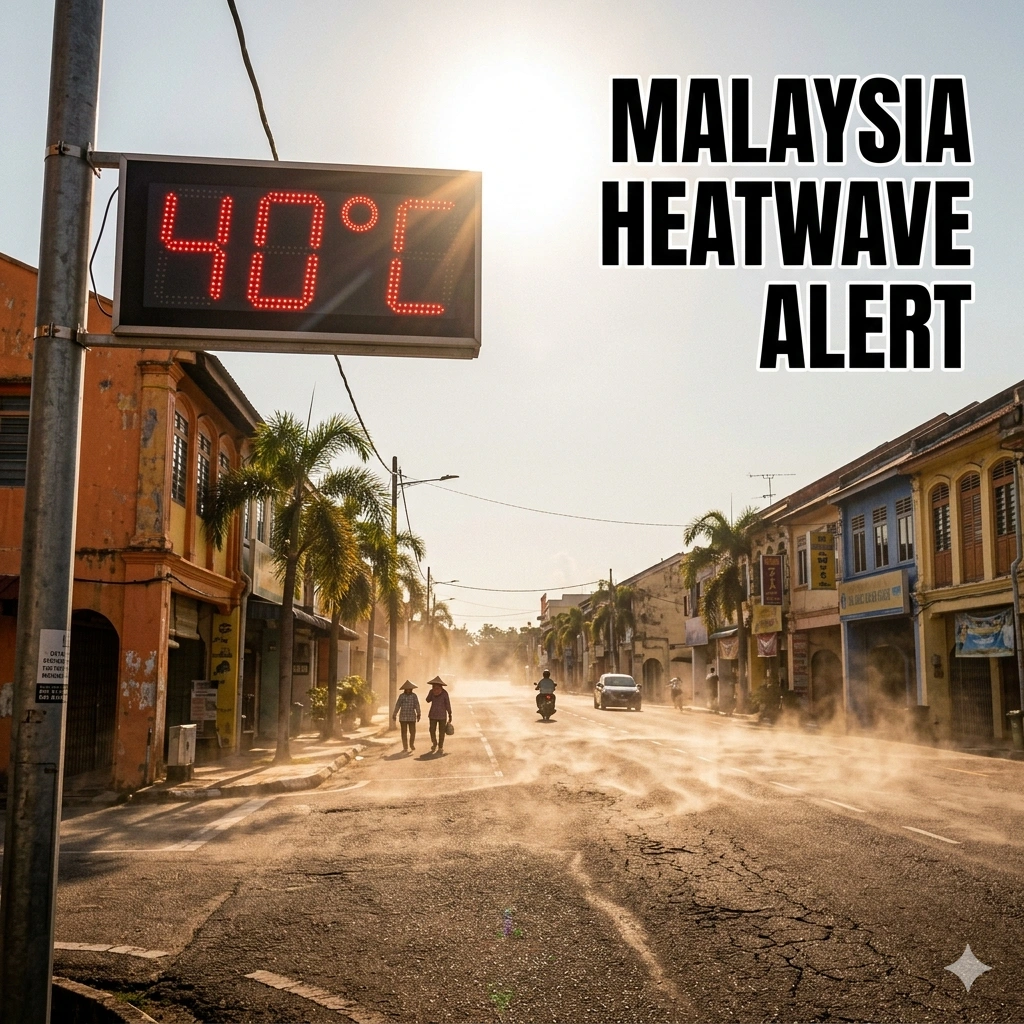
The Malaysia Heatwave 2026 situation has reached a critical threshold as the Malaysian Meteorological Department (MetMalaysia) issued a Level 1 “yellow” alert for several districts. This persistent rise in temperatures is primarily attributed to the tail end of the El Niño phenomenon, which has historically caused drier and hotter conditions across Southeast Asia. Temperatures in certain areas of the peninsula and Sabah were recorded consistently between 35°C and 37°C for three consecutive days. Authorities are now closely monitoring these regions to prevent heat-related illnesses among the vulnerable population.
As the Malaysia Heatwave 2026 continues to bake the region, the Ministry of Health has advised citizens to limit outdoor activities during peak sunlight hours. This heat surge is not merely a seasonal shift but a significant climatic event that is affecting agriculture, water reserves, and public health infrastructure. Schools in affected districts have been instructed to suspend all outdoor co-curricular activities to protect students from heat exhaustion. With the lack of significant rainfall over the past week, the humidity levels have also fluctuated, making the “real feel” temperature significantly higher than the recorded numbers.
Meteorological Drivers of Malaysia Heatwave 2026
The meteorological drivers behind the Malaysia Heatwave 2026 are linked to a shift in regional wind patterns and a prolonged dry spell. Meteorologists explain that the lack of cloud cover has allowed intense solar radiation to reach the surface, rapidly heating the ground and the air above it. The current Level 1 alert serves as a warning that the weather is significantly hotter than the long-term average for March. If temperatures exceed 37°C for three more days, the alert level could be upgraded to Level 2, which would trigger more stringent emergency protocols across the nation.
- Northern states like Kedah and Perlis are currently the most affected by the high temperature.
- Parts of Sarawak and Sabah have also reported localized heat spikes exceeding 35°C.
- The Klang Valley is experiencing “urban heat island” effects, trapping warmth within city centers.
- MetMalaysia predicts the dry spell will likely persist until the inter-monsoon season begins.
The Malaysia Heatwave 2026 is also putting a strain on the national power grid as residents and businesses increase their air conditioning usage. Energy providers have urged the public to practice energy efficiency to avoid potential outages during these peak demand periods. Furthermore, water authorities are keeping a close watch on dam levels, as high evaporation rates could impact the water supply for millions of residents. The government is considering cloud seeding operations in critical catchment areas if the dry weather continues into the next month without reprieve.
Public Health Impact of Malaysia Heatwave 2026
The public health impact of the Malaysia Heatwave 2026 is a major concern for the Ministry of Health, which has reported a rise in heat-related consultations. Symptoms such as severe dehydration, heat cramps, and heatstroke are being monitored at clinics nationwide. Health officials emphasize that the elderly, young children, and outdoor workers are at the highest risk during this period of extreme weather. Public awareness campaigns have been launched through social media and local news outlets to educate the population on the importance of hydration and seeking shade.
- Drink at least 2 to 3 liters of water daily, even if you do not feel thirsty.
- Wear lightweight, light-colored, and loose-fitting clothing to allow skin to breathe.
- Avoid caffeinated and alcoholic beverages, which can accelerate dehydration.
- Recognize the early signs of heat exhaustion, such as dizziness and rapid pulse.
In the context of the Malaysia Heatwave 2026, the Department of Environment is also monitoring the Air Pollutant Index (API) for signs of haze. Dry conditions often lead to an increase in localized fires or the drift of smoke from neighboring regions, which can exacerbate respiratory issues. The combination of high heat and poor air quality presents a double threat to public safety. Consequently, a strict ban on open burning has been enforced, with heavy penalties for violators to prevent the situation from deteriorating further during this sensitive climatic phase.
Malaysia Heatwave 2026
The Malaysia Heatwave 2026 has prompted the National Disaster Management Agency (NADMA) to coordinate with local councils to provide “cooling relief” stations in high-traffic areas. These stations offer free water and shaded seating for commuters and the homeless population who are most exposed to the elements. This proactive stance reflects the government’s commitment to mitigating the effects of climate change-related weather events. While Malaysia is accustomed to tropical heat, the persistence and intensity of the current heatwave have necessitated an extraordinary administrative response.
The agricultural sector is also feeling the pressure of the Malaysia Heatwave 2026, particularly in the northern “rice bowl” regions. Farmers are reporting concerns over soil moisture levels, which could impact the upcoming harvest if irrigation systems are not optimized. The Ministry of Agriculture is providing guidance on water-saving techniques and heat-resistant crop management to minimize economic losses. This economic aspect of the heatwave underscores the multi-faceted nature of the crisis, affecting everything from food security to national health statistics as the year 2026 progresses.
Regional Comparison and Malaysia Heatwave 2026
The Malaysia Heatwave 2026 is part of a broader regional trend affecting Southeast Asia, with neighboring Thailand and Vietnam also reporting record-breaking temperatures. This synchronized heat event suggests a larger shift in the Pacific climate system that could lead to more frequent and intense heatwaves in the future. Regional cooperation through the ASEAN Specialized Meteorological Centre is vital for sharing data and predicting the movement of these hot air masses. By comparing data with neighbors, Malaysia can better prepare for the long-term impacts of these recurring temperature spikes.
- Thailand has reported temperatures reaching 40°C in some northern provinces this week.
- Vietnam’s southern regions are dealing with significant saltwater intrusion due to the drought.
- Singapore is seeing a spike in UV index ratings, prompting similar health warnings.
- Regional climate models suggest a 20% increase in heatwave frequency by 2030.
The persistence of the Malaysia Heatwave 2026 serves as a wake-up call for urban planners to integrate more green spaces into city designs. Trees and parks can significantly lower ground temperatures, providing much-needed relief during extreme weather events. The current crisis has accelerated discussions on “cool roof” technologies and more sustainable building materials that reduce the need for mechanical cooling. As the nation adapts to the realities of 2026, these long-term structural changes will be essential for building a climate-resilient society.
Malaysia Heatwave 2026 and Wildlife Conservation
Wildlife and biodiversity are also victims of the Malaysia Heatwave 2026, with reports of animals seeking water in human settlements. The Department of Wildlife and National Parks (Perhilitan) has noted that natural water sources in forest reserves are drying up, forcing wildlife to move closer to the fringes. This increases the risk of human-wildlife conflict and impacts the survival rates of sensitive species. Conservationists are calling for the protection of forest corridors and the creation of artificial watering holes to support the ecosystem during this intense dry spell.
- Monitor wildlife sightings near residential areas and report to authorities.
- Avoid leaving food waste outside, which can attract animals seeking hydration.
- Support local reforestation efforts to restore natural shade and water cycles.
The Malaysia Heatwave 2026 is a complex event that touches every part of Malaysian life, from the economy to the environment. While the immediate focus is on public health and safety, the long-term lessons learned from this heatwave will shape the nation’s environmental policies for years to come. As the Level 1 alert remains in place, the collective effort of the government, private sector, and the public is required to navigate this challenging period. Stay informed through official MetMalaysia updates to ensure you and your family remain safe from the heat.
Conclusion of Malaysia Heatwave 2026 Report
In conclusion, the Malaysia Heatwave 2026 is a significant climatic challenge that has triggered national alerts and health warnings across the country. The persistence of temperatures above 35°C highlights the urgent need for both immediate relief efforts and long-term climate adaptation strategies. By following health guidelines and practicing environmental responsibility, the Malaysian public can help mitigate the risks associated with this extreme weather. The government remains vigilant, ready to upgrade alert levels and deploy resources as the situation evolves in the coming days.
The Ministry of Health and MetMalaysia will continue to provide daily updates on the Malaysia Heatwave 2026 status to keep the public informed. It is essential to rely on verified information and avoid spreading unverified claims that could cause unnecessary panic. Together, with resilience and cooperation, the nation will weather this heatwave and emerge better prepared for the future challenges of a changing global climate. The safety and well-being of all Malaysians remain the top priority during this March 2026 heat crisis.
For more details & sources visit: News.az (citing Xinhua)
Read more about Malaysia news on 360 News Orbit – Malaysia.