
Congress Social Media Crackdown allegations have ignited a fierce political storm in New Delhi this week. The Indian National Congress has formally accused the Central government of orchestrating a systematic and undemocratic campaign to silence digital dissent across major platforms. Party leaders claim that independent voices on X, YouTube, and Instagram are being targeted for highlighting public grievances and criticizing official state policies.
The opposition’s outcry follows a series of high-profile account suspensions and content removals that have raised significant concerns regarding freedom of speech. During a heated press conference, Congress spokespersons argued that the administration is extending its influence from traditional media into the digital sphere. This Congress Social Media Crackdown narrative suggests a growing shift toward total information control in the world’s largest democracy.
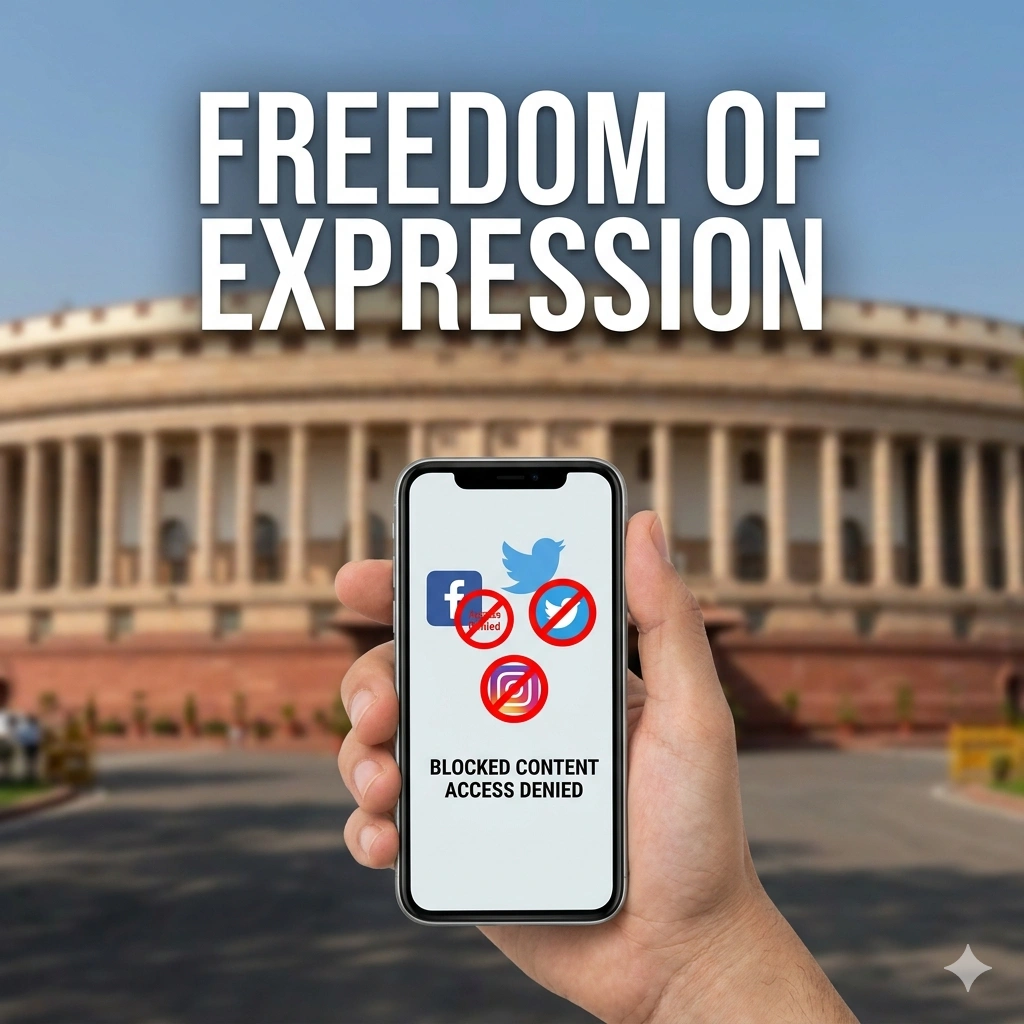
Section 69A and the Congress Social Media Crackdown
The legal basis for the alleged Congress Social Media Crackdown revolves around the controversial Section 69A of the Information Technology Act. This specific provision grants the government the power to issue blocking orders for content in the interest of national sovereignty or public order. However, the Congress party asserts that these powers are being weaponized to target political opponents and independent content creators.
Supriya Shrinate, the Chairperson of social media for Congress, highlighted that bureaucrats are increasingly acting as digital censors. By bypassing public debate and moving directly to platform mandates, the administration is accused of creating a “chilling effect” on free expression. The Congress Social Media Crackdown argument posits that the lack of transparency in these blocking orders makes it nearly impossible for creators to seek legal recourse.
Targeted Voices in the Congress Social Media Crackdown
A central theme of the Congress Social Media Crackdown is the protection of independent journalists and YouTubers. Shrinate cited specific examples, such as the recent detention of a digital creator who was simply reporting on local gas shortages. Such incidents are framed not as isolated legal matters, but as part of a broader strategy to eliminate any narrative that contradicts the official government line.
- Independent YouTubers reporting on rural distress have seen their reach throttled.
- X accounts belonging to activists have been suspended without clear justification.
- Instagram reels highlighting economic challenges are reportedly being flagged as “misleading.”
- The crackdown appears to focus on creators with large following among the youth.
Congress Social Media Crackdown
The Congress Social Media Crackdown is being described by the opposition as a direct assault on democratic accountability. When the government controls the digital narrative, citizens are deprived of the diverse viewpoints necessary for an informed electorate. Congress leaders emphasize that their defense of digital rights extends even to those who might be critical of the opposition party itself.
This principled stance on the Congress Social Media Crackdown aims to frame the issue as a constitutional crisis rather than a mere partisan bickering. By positioning themselves as the defenders of the “Right to Speak,” Congress hopes to mobilize the digital-native generation that relies on social media for news. The party has vowed to raise these concerns in the upcoming parliamentary sessions to demand greater oversight of IT Act applications.
Bureaucratic Influence and Congress Social Media Crackdown
The role of the bureaucracy is a major point of contention in the Congress Social Media Crackdown debate. Shrinate argued that unelected officials in various ministries are now deciding what information Indian citizens are allowed to consume. This shift from judicial oversight to executive fiat is seen as a dangerous precedent that undermines the separation of powers in the Indian state.
Critics of the government’s approach suggest that the digital space was the last remaining frontier for honest public discourse. Mainstream media is often viewed as being under significant corporate and political pressure, leaving social media as the primary outlet for grassroots reporting. The Congress Social Media Crackdown is therefore seen as an attempt to “close the loop” on all forms of public scrutiny regarding economic and foreign policy.
Government Response to Congress Social Media Crackdown
While the Central government has not issued a specific rebuttal to every point of the Congress Social Media Crackdown allegations, officials often cite national security. The Ministry of Electronics and Information Technology frequently maintains that content removals are necessary to prevent the spread of misinformation and communal disharmony. This “security vs. speech” tug-of-war is at the heart of the current political impasse.
- The government maintains that platforms must comply with the laws of the land.
- Officials argue that “anti-India” narratives are being funded by external actors.
- Supporters of the IT Act say it is a necessary tool in the age of deepfakes.
- Data privacy and user safety are often cited as the primary motives for regulation.
Institutional Trust and Congress Social Media Crackdown
The Congress Social Media Crackdown has further eroded institutional trust between the government and the tech giants. Platforms like X and Google are often caught in the middle of these domestic political battles, facing legal threats if they do not comply with local removal requests. This creates a complex landscape where international tech policy intersects with Indian constitutional rights.
Congress argues that by forcing these platforms to comply with “unconstitutional” orders, the government is damaging India’s reputation as a tech-friendly democracy. The Congress Social Media Crackdown is portrayed as a regression that could drive digital innovation away from the country. Ensuring that platforms remain neutral ground for political discourse is a key demand of the opposition’s current campaign.
The Impact on Public Grievance in Congress Social Media Crackdown
A significant portion of the Congress Social Media Crackdown involves the suppression of “public grievance” content. This includes videos of citizens waiting in long lines for essentials or local protests that are not covered by national news channels. Congress asserts that by blocking this content, the government is effectively hiding the reality of the ground-level economy from the rest of the world.
Shrinate emphasized that the party would continue to provide a platform for these voices, even if their own official accounts face scrutiny. The Congress Social Media Crackdown has led to the creation of “mirror” accounts and alternative distribution networks to ensure that critical reporting survives the censorship. This digital cat-and-mouse game has become a staple of the 2026 Indian political landscape.
Congress Social Media Crackdown
The long-term effects of the Congress Social Media Crackdown could redefine the relationship between the Indian state and its citizens. If the government’s digital influence continues to expand unchecked, the concept of a “digital public square” may become a thing of the past. Congress is calling for a multi-stakeholder review of the IT Act to ensure that Section 69A cannot be misused for political ends.
This push for reform is part of the party’s broader “Digital Justice” manifesto. They argue that a stable democracy requires a robust and free internet where dissent is not equated with treason. The Congress Social Media Crackdown serves as a rallying cry for activists, lawyers, and journalists who fear that the current trajectory leads toward a centralized, state-controlled internet model similar to those in more authoritarian regimes.
Digital Dissent and Congress Social Media Crackdown
Digital dissent has become the frontline of political opposition in 2026. The Congress Social Media Crackdown is seen as an admission by the government that they are losing the narrative battle online. By resorting to bans and detentions, the administration is allegedly showing its vulnerability to the power of viral, unscripted content that highlights administrative failures.
- Viral videos of infrastructure collapses are frequently targeted for removal.
- Criticism of high-ranking officials often leads to immediate account flags.
- Satirical content and political memes are being categorized as “harmful.”
- The lack of a clear appeals process for creators remains a major grievance.
Future Legal Challenges to Congress Social Media Crackdown
The Congress party has hinted at escalating the Congress Social Media Crackdown issue to the Supreme Court. They believe that the current application of Section 69A violates the fundamental right to freedom of speech and expression guaranteed under Article 19 of the Constitution. A legal showdown could potentially lead to new guidelines for how the government interacts with social media platforms.
Previous judgments have emphasized that any restriction on speech must be “reasonable” and “proportionate.” Congress legal teams are preparing a dossier of cases where they believe the government’s actions were neither. The outcome of such a legal battle would have far-reaching implications for the Congress Social Media Crackdown and the future of the internet in South Asia.
The Role of International Platforms in Congress Social Media Crackdown
International social media companies are under intense pressure due to the Congress Social Media Crackdown allegations. While they aim to remain neutral, the threat of employee arrests and office raids has forced many to comply with government orders. Congress has urged these platforms to be more transparent about the “legal requests” they receive from the Indian Ministry of Home Affairs.
Increased transparency would allow the public to see the scale of the Congress Social Media Crackdown for themselves. If citizens knew how many requests for content removal were based on political criticism rather than actual threats to security, it would change the public perception of the IT Act. For now, much of this process remains shrouded in confidentiality, which Congress argues is a deliberate strategy of the state.
Economic Narratives in Congress Social Media Crackdown
The Congress Social Media Crackdown is frequently linked to the country’s economic challenges. When inflation rises or unemployment figures are leaked, the digital space becomes flooded with criticism. Congress claims that the “systematic crackdown” is a way to manage the optics of a struggling economy by making sure the negative stories do not trend on national feeds.
By controlling the algorithm of dissent, the government can project an image of “all is well” to both domestic and international investors. The Congress Social Media Crackdown is thus a tool of economic propaganda, according to Supriya Shrinate. The party’s strategy is to keep highlighting these economic realities through whatever digital channels remain open to them.
Congress Social Media Crackdown
As the 2026 election cycle approaches, the Congress Social Media Crackdown will likely become a central campaign issue. The party intends to make “Digital Freedom” a key part of its appeal to urban and younger voters. They argue that a government that is afraid of a tweet or a YouTube video is a government that has lost its connection to the people.
The ability to campaign freely on social media is essential for an effective opposition. If the Congress Social Media Crackdown continues, it could tilt the playing field in favor of the ruling party, which has its own massive digital infrastructure. Congress is demanding an “equal opportunity” digital environment where all political viewpoints can compete on their own merits without state interference.
Satire and the Congress Social Media Crackdown
Satire and parody accounts have also been caught in the net of the Congress Social Media Crackdown. Comedy has traditionally been a safe way to critique power, but the latest interpretation of the IT rules treats parody as “impersonation” or “misinformation.” Congress leaders have slammed this lack of a sense of humor, arguing that it is a sign of an increasingly fragile and insecure leadership.
- Parody accounts of ministers have been permanently disabled without notice.
- Comedians have reported receiving “legal notices” for their scripts.
- Satirical news sites have seen their traffic redirected by major ISPs.
- The distinction between “fake news” and “humor” is being intentionally blurred.
Conclusion of the Congress Social Media Crackdown Debate
The Congress Social Media Crackdown represents a critical moment for the future of Indian democracy. The allegations brought forward by Supriya Shrinate and the Congress party highlight a deep-seated tension between state power and individual liberty in the digital age. Whether the government is protecting the nation or its own image remains the central question of this 2026 political saga.
As the bill for more stringent digital regulations makes its way through Parliament, the Congress Social Media Crackdown will serve as a historical benchmark for the opposition’s resistance. The final outcome will determine whether India remains a vibrant, noisy democracy online or moves toward a more sanitized and state-approved digital culture. For now, the battle for the “Indian internet” continues to rage in the halls of power and on the screens of millions.
Final Thoughts on Congress Social Media Crackdown
The Congress Social Media Crackdown is a reminder that in the modern world, the pen (or the keyboard) is still mightier than the sword—and just as likely to be targeted by those in power. The defense of digital dissent is the defense of democracy itself. As the Congress party continues its oversight, the world will be watching to see if India’s democratic foundations are strong enough to withstand the pressures of the digital era.
Ensuring that the Congress Social Media Crackdown does not become a permanent feature of Indian governance is the primary goal of the opposition today. They seek a future where every citizen can record a video, post a tweet, or share an image without the fear of a midnight knock from the authorities. The road to that future is currently blocked by the very laws designed to protect the digital realm.
For more details & sources visit: Clarion India
For the latest updates from India, visit our India news page.