
Germany Catholic Exodus remains a defining crisis for the European faith landscape as new data from the German Bishops’ Conference (DBK) confirms a continued mass departure of the faithful. In 2025 alone, 307,117 Catholics formally severed their ties with the institution, marking a period of profound instability. While this figure represents a slight decrease from previous record-breaking years, the sustained high volume of exits suggests a deep-seated structural and spiritual disconnect within the nation.
The current situation is heavily influenced by the controversial “Synodal Way” reform movement, which has divided the hierarchy and the laity alike. As the Church attempts to modernize its stance on sexual ethics and clerical roles, it faces a paradoxical backlash that seems to accelerate the Germany Catholic Exodus rather than halt it. This trend is further complicated by unique financial pressures that make formal resignation a practical economic choice for many German citizens.
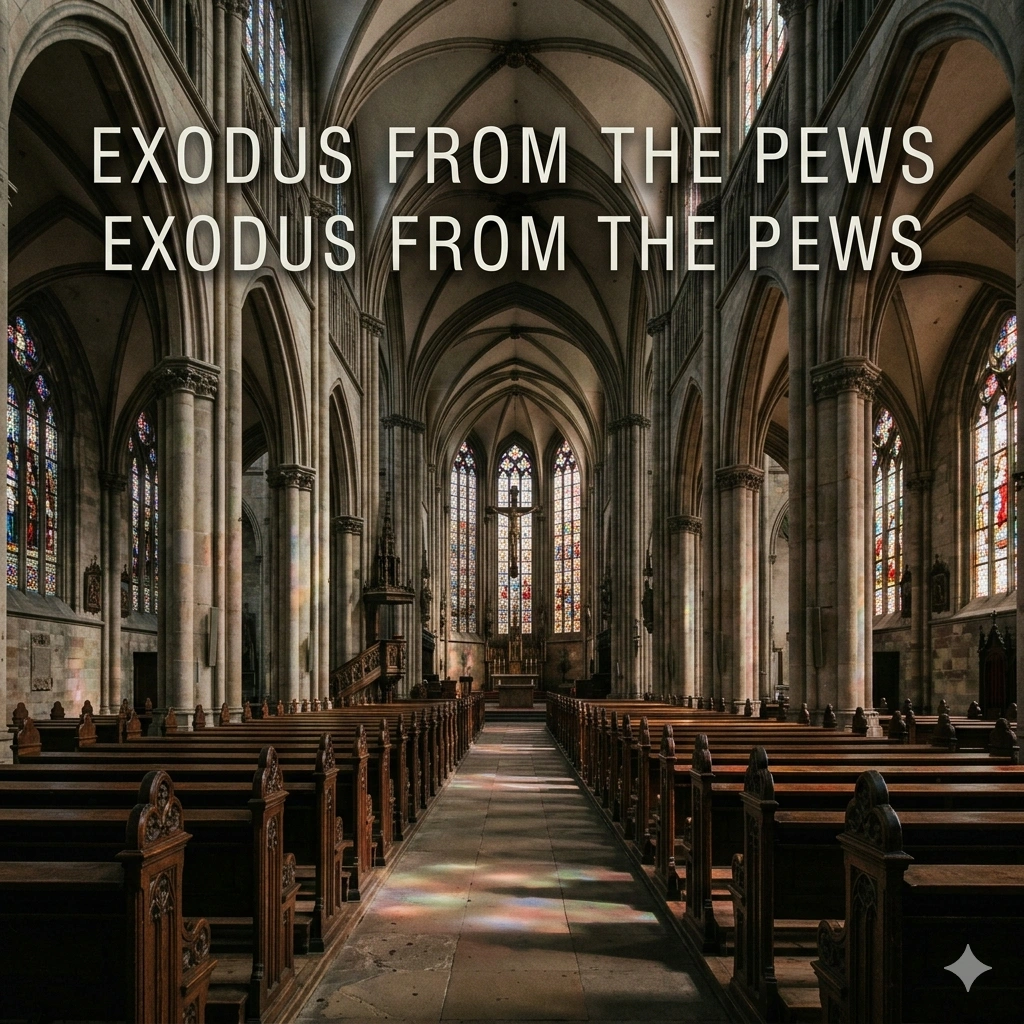
The Economic Driver of Germany Catholic Exodus
Germany Catholic Exodus is uniquely tied to the country’s “Kirchensteuer,” or church tax system, which creates a direct financial link between faith and the state. Citizens who are formally registered as Catholics are required to pay an additional 8–9% of their total income tax bill directly to the Church. For many, the decision to leave is a pragmatic financial move intended to increase take-home pay during times of global economic uncertainty.
The process of formally leaving, known as Kirchenaustritt, provides immediate relief from this tax but carries heavy spiritual consequences. Those who exit are barred from receiving the sacraments, including the Eucharist, and are generally denied Church funerals. Despite these severe ecclesiastical penalties, hundreds of thousands of individuals each year decide that the financial burden of the tax outweighs their formal membership in the Catholic community.
Synodal Way Tensions and Germany Catholic Exodus
Germany Catholic Exodus cannot be understood without analyzing the “Synodal Way,” a series of high-level conferences aimed at radical reform. This movement has pushed for heterodox changes, including the ordination of women and the blessing of same-sex unions, which has created a massive rift with the Vatican. While progressive leaders hoped these shifts would attract younger generations, the data suggests that the internal strife is actually driving more people away.
- Traditionalists feel the Church is abandoning core Catholic doctrines.
- Progressives are frustrated by the slow pace of actual implementation.
- The resulting confusion leads to a loss of institutional trust.
- Counter-initiatives like “Der Neue Anfang” have emerged to protest the reforms.
Germany Catholic Exodus
Germany Catholic Exodus has seen a staggering rise over the last decade, with current departure rates nearly double what they were in 2016. Although the numbers have retreated from the absolute peak of 522,000 in 2022, the 2025 figure of 307,117 still represents a historic high. This “new normal” of mass resignation suggests that the Church is failing to provide a compelling reason for the modern German citizen to remain within the fold.
Experts note that once an individual goes through the legal process of Kirchenaustritt, they rarely return. This permanent loss of membership is eroding the social and political influence of the Church in Germany, once one of its strongest global strongholds. The Germany Catholic Exodus is therefore not just a religious phenomenon, but a major demographic shift that will impact German society for generations to come as the Catholic presence fades from public life.
Sacramental Stability Amidst Germany Catholic Exodus
Despite the alarming scale of the Germany Catholic Exodus, there are small signs of resilience within the remaining core of the faithful. Preliminary data for 2025 shows that the number of first Communions and Confirmations remained relatively stable compared to previous years. This suggests that families who have chosen to stay are still committed to passing on the faith to the next generation, despite the surrounding chaos.
Furthermore, Mass attendance saw a marginal increase to 6.8% in 2025, up from the lows seen during and immediately after the pandemic. While this is still a fraction of historical attendance levels, it indicates that those who remain are becoming more active in their liturgical life. This “smaller but more committed” Church may be the ultimate outcome of the Germany Catholic Exodus, as the nominal members exit and only the dedicated practitioners remain.
The Vatican’s Response to Germany Catholic Exodus
The Vatican has watched the Germany Catholic Exodus with increasing concern, frequently issuing warnings to the German bishops about the risks of schism. Pope Francis has expressed reservations about the Synodal Way, emphasizing that true reform must come from spiritual renewal rather than parliamentary-style voting on doctrine. The tension between Rome and Berlin is a central theme in the ongoing narrative of the German Church’s decline.
- Rome fears that the German reforms could trigger similar movements in other nations.
- The DBK argues that local contexts require unique pastoral solutions.
- Frequent “ad limina” visits have failed to resolve the theological differences.
- The Germany Catholic Exodus provides “ammunition” for both sides of the debate.
Modernization vs. Tradition in Germany Catholic Exodus
A central question in the Germany Catholic Exodus debate is whether the Church should prioritize modernization or a return to tradition. Progressive bishops argue that without the Synodal Way reforms, the exodus would be even larger as the Church becomes irrelevant to modern values. Conversely, conservative critics argue that the abandonment of tradition is exactly what is making the Church indistinguishable from secular NGOs, leading people to see no value in membership.
The rise of groups like “Der Neue Anfang” highlights this internal conflict. These organizations argue that the Germany Catholic Exodus is a direct result of “protestantizing” the Catholic faith. They believe that by mimicking secular culture, the Church loses its unique identity and its spiritual authority. This debate is far from over, and the 2026 statistics will likely be the next major battleground for these competing ideologies.
Impact of the Abuse Crisis on Germany Catholic Exodus
The long-standing fallout from the clerical abuse crisis continues to fuel the Germany Catholic Exodus. Many of those leaving cite the institutional handling of abuse cases as a primary reason for their loss of faith. While the Church has implemented new safeguarding measures, the “trust deficit” remains massive, and every new report of historical misconduct triggers a fresh wave of formal departures.
This lack of trust makes it difficult for the Church to market its reforms effectively. Even when the Synodal Way proposes positive changes, a skeptical public often views them as “too little, too late” or as a distraction from the core issues of accountability. The Germany Catholic Exodus is, in many ways, the ultimate price the institution is paying for the systemic failures of the past several decades.
Germany Catholic Exodus
The Germany Catholic Exodus has profound implications for the future of the nation’s social services. The Church is one of the largest employers in Germany, running thousands of hospitals, schools, and kindergartens. As the church tax revenue declines due to the exodus, the funding for these vital institutions is increasingly at risk, forcing the state to step in or see services close.
This economic reality adds a layer of urgency to the Germany Catholic Exodus that transcends religious belief. If the Church continues to lose members at this rate, it will eventually lack the financial resources to maintain its role as a major social provider. The transition of these services to state or private secular control would represent one of the largest shifts in German civil society since the post-war era.
Geographical Variations in Germany Catholic Exodus
The Germany Catholic Exodus is not uniform across the country, with significant variations between the more traditional south and the secularized north and east. In Bavaria, the traditional heartland of German Catholicism, the departures are particularly shocking to the local culture. Even in areas where the Church was once the center of village life, the process of Kirchenaustritt is becoming socially acceptable and even common.
- Southern states like Bavaria and Baden-Württemberg are seeing record numbers of exits.
- Urban centers show a higher rate of departure than rural communities.
- East Germany remains the most secularized, with very low baseline membership.
- The North continues to see a steady erosion of the Catholic minority.
The Role of Leadership in Germany Catholic Exodus
Leadership within the DBK has come under intense fire as the Germany Catholic Exodus continues. Bishop Georg Bätzing, the president of the conference, has been a vocal proponent of the Synodal Way, but he faces pressure from all sides. He must balance the demands of the German laity for reform with the strict requirements of the Vatican, all while managing the public relations disaster of the annual exit statistics.
The perceived lack of a unified vision at the top of the Church is often cited as a contributing factor to the Germany Catholic Exodus. When bishops disagree publicly on matters of faith and morals, the average parishioner often feels adrift. This leadership vacuum has allowed the narrative of decline to become the dominant story of the Catholic Church in Germany today.
Germany Catholic Exodus and the Youth Vote
The youth demographic is the most “at-risk” group in the context of the Germany Catholic Exodus. Younger Germans are significantly less likely to feel a sense of institutional loyalty and are more sensitive to the financial cost of the church tax. Outreach programs designed to stem the tide of departures among 18-to-30-year-olds have had mixed results at best.
Many young people view the Church’s stances on social issues as irreconcilable with their personal values. Even with the Synodal Way’s efforts to move toward more progressive sexual ethics, the speed of change is often viewed as insufficient by the youth. Securing a future for the faith requires winning over this demographic, but the Germany Catholic Exodus data suggests that the “break” with the younger generation is already well underway.
Future Projections for Germany Catholic Exodus
Statisticians and theologians are now looking toward 2030 to predict the long-term scale of the Germany Catholic Exodus. Some models suggest that by the middle of the century, the Catholic and Protestant churches combined will represent less than 30% of the German population. This would be a historic low that would effectively end Germany’s status as a “Christian nation” in the traditional sense.
The Germany Catholic Exodus is often described as a “controlled demolition” by some critics, while others see it as a “purification.” Regardless of the terminology, the trajectory is clear: the institution is shrinking. The challenge for the remaining leadership is to decide what kind of Church will emerge from the ruins of this mass departure and how it will function in a post-Christian Germany.
The Global Perspective on Germany Catholic Exodus
The Germany Catholic Exodus is being studied by Catholic leaders worldwide as a cautionary tale. Countries with similar tax-based or state-supported religious systems are looking for ways to avoid the “German trap” of financial-led departures. The situation serves as a reminder that institutional wealth does not necessarily equate to spiritual health or congregational loyalty.
In many developing nations, the Catholic Church is growing rapidly, creating a stark contrast with the Germany Catholic Exodus. This shift in the “center of gravity” of the Church from Europe to the Global South is being accelerated by the events in Germany. As the German Church loses influence, the voices of bishops from Africa and Asia are becoming more prominent in the halls of the Vatican.
Communication Failures in Germany Catholic Exodus
Effective communication has been a major struggle for the Church during the Germany Catholic Exodus crisis. The complexity of the Synodal Way and the technical nature of the church tax make it difficult to craft a message that resonates with the average person. Too often, the Church appears defensive or overly bureaucratic, which only further alienates those on the fence about leaving.
- The Church’s digital presence is often criticized as being out of touch.
- Theological jargon in the Synodal Way documents is inaccessible to many laity.
- Public statements often fail to address the emotional pain of the abuse crisis.
- The benefits of Church membership are rarely articulated in modern, secular terms.
Conclusion of the Germany Catholic Exodus Report
The 2025 data confirming 307,117 departures is a sobering reminder that the Germany Catholic Exodus is a persistent and evolving challenge. The combination of financial pressure, theological division, and institutional scandal has created a “perfect storm” that the Church has yet to navigate successfully. While the Synodal Way represents a bold attempt at reform, its impact on retention remains questionable at best.
As the Church moves through 2026, the focus will likely remain on whether the slight decrease in departures can be sustained or if the numbers will trend upward again. The Germany Catholic Exodus is more than just a statistic; it is a signal of a profound cultural shift in one of Europe’s most influential nations. The steps taken today will determine whether the German Church can find a new way to exist in a rapidly changing world.
Final Thoughts on Germany Catholic Exodus
The Germany Catholic Exodus serves as a mirror for the wider challenges facing traditional religion in the West. It highlights the difficulty of maintaining an ancient institution in a hyper-modern, high-tax, and highly skeptical society. Whether the Synodal Way is the cure or part of the disease is a question that only time—and future exit statistics—will answer.
The coming years will be a period of intense reflection for the German bishops. They must find a way to reconcile their desire for reform with the need for unity and the reality of a shrinking flock. The Germany Catholic Exodus is a call to action that requires more than just administrative changes; it requires a fundamental re-evaluation of what it means to be Catholic in the 21st century.
Strategic Shifts to Counter Germany Catholic Exodus
To truly address the Germany Catholic Exodus, some theologians suggest a radical shift in how the Church interacts with its members. This might include a voluntary contribution system rather than a state-mandated tax, which would remove the financial incentive for Kirchenaustritt. However, such a move would require a total overhaul of German law and Church finances, making it a difficult and unlikely path in the near term.
Other strategies involve a greater focus on small-group ministry and community building at the parish level. By making the faith feel more personal and less institutional, the Church hopes to build the kind of loyalty that can withstand the pressures of the Germany Catholic Exodus. These grassroots efforts are often seen as the only real hope for a long-term spiritual recovery in the region.
For more details & sources visit: The Catholic Herald
For the latest news from Germany, visit our Germany news page.