
West Antarctic Ice Shelf scientists have identified turbulent underwater “storms” beneath the ice shelf that are accelerating melt from below, adding a new dimension to climate-related risks in the region. These swirling vortices transport warm ocean water upward, eroding the underside of the floating ice shelf and potentially destabilizing one of the most sensitive areas of Antarctica.
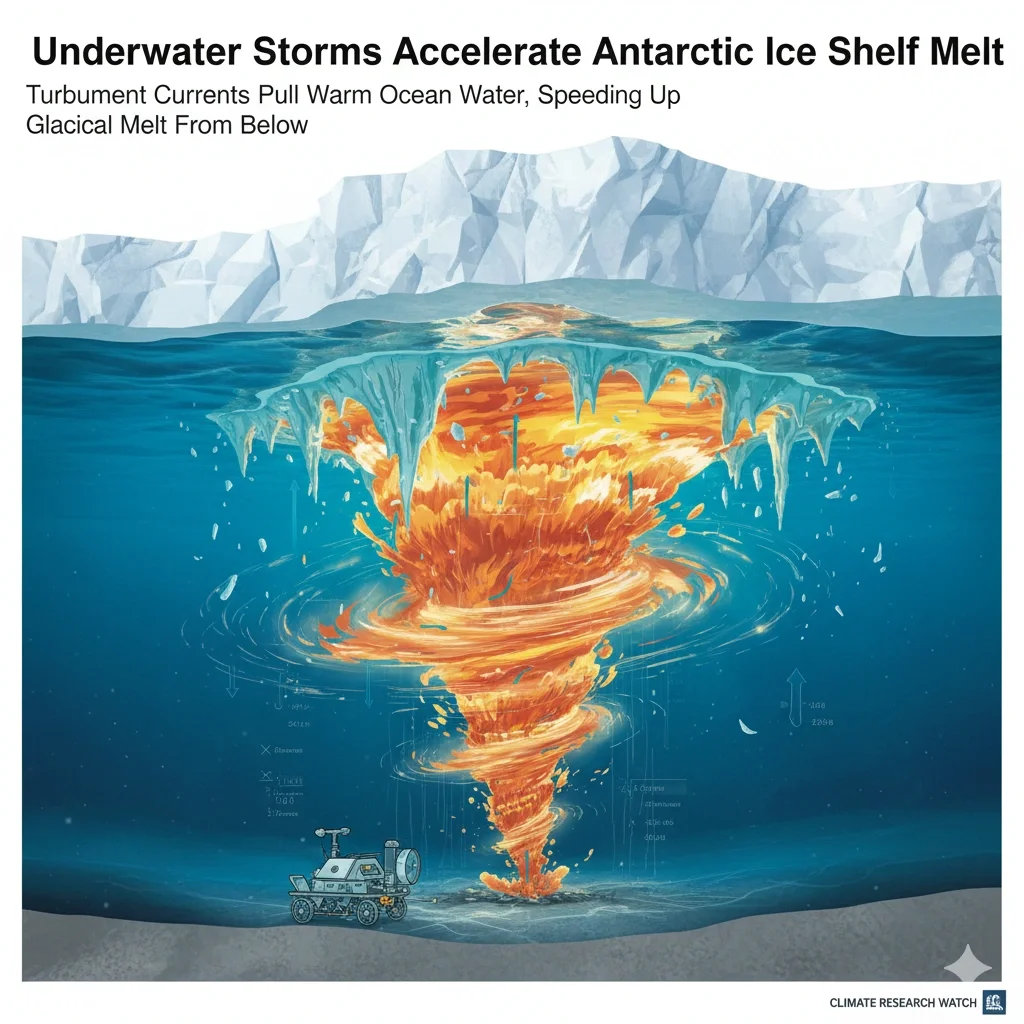
The research reveals that these storms are created by a combination of ocean salinity shifts, temperature gradients, and strong wind-driven currents. As seawater freezes and melts, layers of salty and fresh water mix, forming spiraling vortices that penetrate the cold protective layer beneath the ice shelf. This process allows warmer waters to reach previously insulated ice surfaces, accelerating thinning and mass loss.
Dr. Emily Grant, an oceanographer involved in the study, notes that these underwater storms “disrupt the natural insulation that protects the ice from warm ocean currents, potentially increasing the rate of basal melting beyond previous predictions.” The finding provides crucial insight into previously unexplained rapid ice losses observed in satellite and field measurements over the past decade.
Implications for Ice Shelf Stability
The West Antarctic Ice Shelf serves as a critical barrier, holding back inland glaciers. Increased melting from below can trigger faster grounding line retreat, destabilizing glaciers upstream and potentially contributing to global sea-level rise. These new storm-induced melt processes compound other known threats, including:
- Uneven ice geometry that enhances stress points
- Decline in surrounding sea ice, reducing natural wave and heat protection
- Long-term warming trends in Southern Ocean currents
Experts warn that as global temperatures rise, these underwater storms may intensify, making ice shelf monitoring and modeling more urgent. “Understanding these processes is critical for predicting how quickly Antarctic ice could contribute to global sea-level rise,” explains Dr. Grant.
Monitoring and Future Research
Advanced oceanographic instruments, including submersibles and autonomous sensors, are being deployed to monitor these underwater storm systems in real-time. Combining this data with satellite observations and climate models will improve projections of ice shelf stability and help policymakers develop mitigation strategies for vulnerable coastal regions worldwide.
The discovery highlights how interconnected climate processes, from wind-driven currents to ice-ocean interactions, can accelerate environmental change in ways not previously understood. By studying these hidden dynamics, scientists hope to better anticipate and manage the global implications of Antarctic ice loss.
Source: The Energy Mix
Read more on Antarctica news: 360 News Orbit – Antarctica