
Brazilian star Wagner Moura made headlines this week by sharply criticizing the recent U.S. military operation in Venezuela, calling it an act of “unacceptable imperialism” during a candid conversation on The Hollywood Reporter’s Awards Chatter podcast.
The Narcos icon, also known for his acclaimed roles in Elite Squad and the film The Secret Agent, spoke out amid his ongoing awards season buzz, including a series of major accolades for his latest work set during Brazil’s military dictatorship. Moura, a naturalized American citizen, drew intense parallels between the U.S. action against Venezuelan President Nicolás Maduro and past interventions in Latin America.
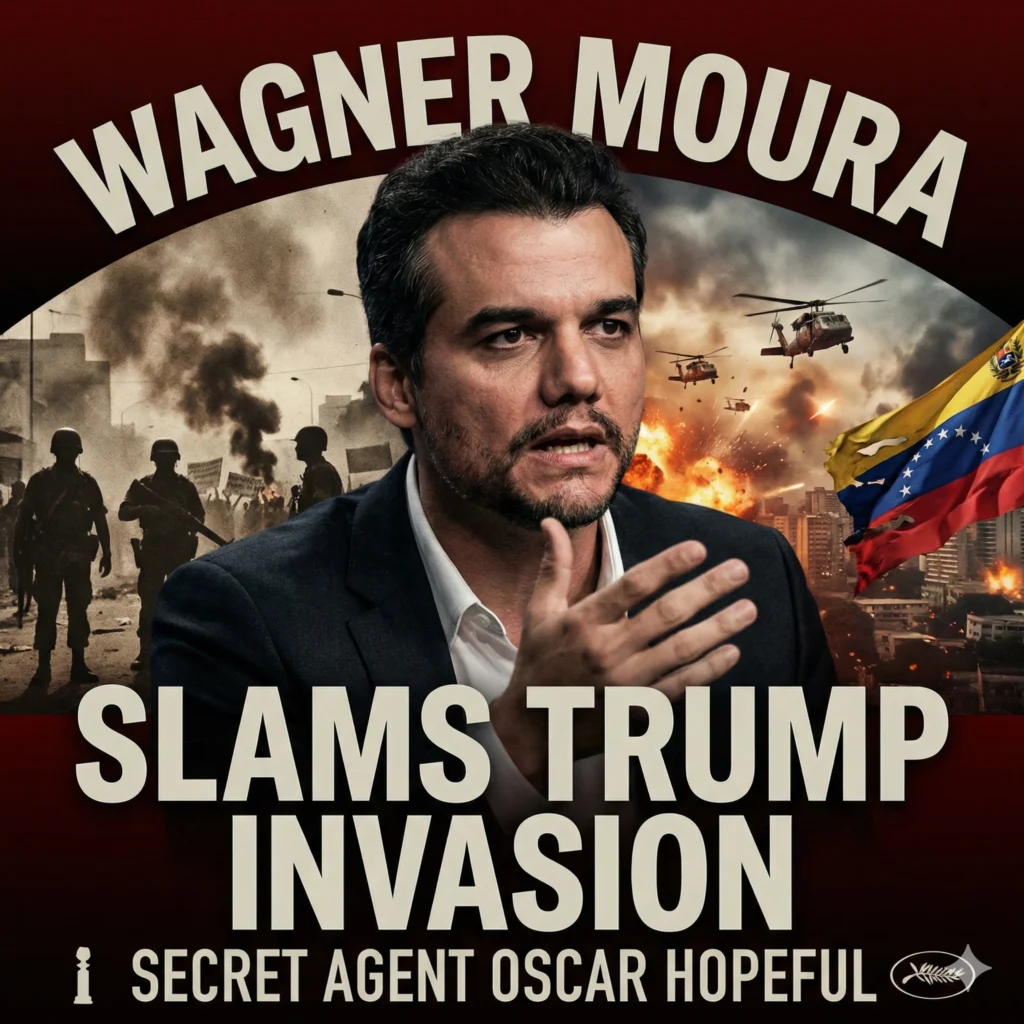
Wagner Moura on the Venezuela Operation
During the podcast, Wagner Moura called the United States’ raid on Venezuela and the capture of Maduro “simply unacceptable.” He made a point to clarify that he does not support Maduro’s government, stressing that Venezuela “deserves better” leadership. However, Moura strongly condemned the method used, criticizing the idea of foreign forces invading, bombing, and detaining a sitting president.
According to Wagner Moura, the operation sets what he described as a “very, very dangerous precedent.” He warned that such actions risk reopening wounds tied to decades of interventionist policies in South America. His remarks resonated with listeners familiar with the region’s turbulent political history.
Wagner Moura Draws on Latin American History
Moura linked the Venezuela operation to historical U.S. influence in Latin America, referencing the Monroe Doctrine and earlier CIA-backed military regimes. He argued that the situation echoes patterns seen throughout the 1960s and 1970s, when several South American countries experienced coups supported by foreign interests.
For Wagner Moura, these parallels are not abstract. Born in Salvador, Brazil, he grew up in a country still grappling with the legacy of its own military dictatorship. That personal and national history shapes how he interprets current geopolitical events, especially those involving foreign intervention.
Wagner Moura Connecting Politics and Art
Moura’s comments came while discussing The Secret Agent, a film inspired by Brazil’s military dictatorship from 1964 to 1985. The project marks a significant moment in Wagner Moura’s career, as it explores themes of surveillance, political persecution, and resistance.
He explained that the repression depicted in the film still resonates today, making conversations about sovereignty and foreign interference especially relevant. For Wagner Moura, storytelling becomes a way to preserve memory and challenge repeating cycles of power and control.
Despite the political weight of his comments, Moura’s artistic achievements continue to dominate awards conversations. His performance in The Secret Agent has earned widespread critical acclaim, Golden Globe nominations, and major wins from international critics’ circles.
Wagner Moura and the Global Reaction
Beyond his critique, Wagner Moura expressed disappointment with what he sees as a muted international response to the Venezuela operation. He argued that actions involving military force and regime change should face stronger scrutiny from global institutions that advocate for human rights and national sovereignty.
Online reaction to Moura’s stance has been mixed. Some praised Wagner Moura for using his platform to address serious geopolitical issues, while others questioned whether actors should engage so directly in political discourse. Still, his comments have fueled broader debate about U.S. foreign policy and accountability.
Film, History, and the Legacy of Wagner Moura
As Wagner Moura positions The Secret Agent for further awards attention, the film’s themes intersect powerfully with his public statements. By revisiting Brazil’s dark political past, the movie offers context for understanding why Moura remains outspoken about present-day interventions.
His reflections highlight how art and activism often intersect, particularly when artists draw from lived experience. For Wagner Moura, rejecting violence and defending sovereignty appear inseparable from his creative and personal values.
Final Takeaways
Wagner Moura’s outspoken critique of the U.S. action in Venezuela adds a compelling voice to an already charged political moment. By denouncing what he describes as imperialism, Moura challenges audiences to think more critically about power, intervention, and historical accountability.
Whether one agrees with his position or not, Wagner Moura exemplifies a growing trend of artists engaging directly with global issues. His comments remind audiences that entertainment, history, and politics often overlap in ways that shape public conversation.
For more details & sources visit: The Hollywood Reporter
For more regional updates and industry insights, visit our Brazil News Page.