
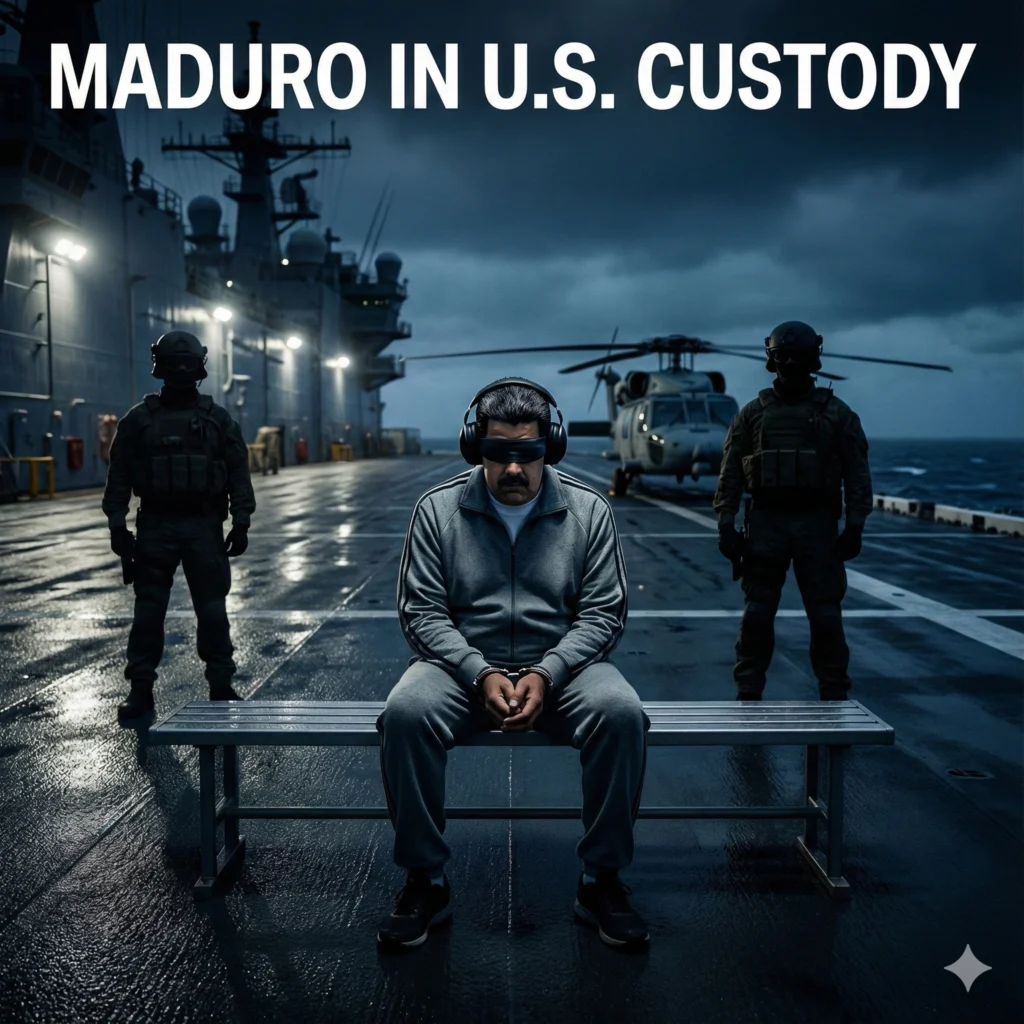
The USS Iwo Jima has become the focal point of global attention after US President Donald Trump released the first image of Venezuelan leader Nicolás Maduro in American custody. The photo, shared on Trump’s Truth Social account, shows Maduro aboard the US Navy warship following what Washington describes as a coordinated overnight military operation across Venezuela.
The dramatic image comes in the aftermath of large-scale US strikes that targeted multiple locations across the country. Venezuelan authorities responded swiftly by declaring a national emergency, while international concern continues to grow over the escalation and its implications for regional stability.
Venezuela Declares National Emergency After US Strikes
Venezuela’s government condemned the operation as an “imperialist attack,” accusing the United States of striking both civilian and military targets in several states. Officials in Caracas announced the immediate declaration of a national emergency, while security forces were placed on heightened alert.
Pro-government groups were mobilised across the country, with state media urging citizens to resist foreign intervention. The rapid escalation has raised fears of internal unrest and uncertainty over who now effectively controls power in Caracas following Maduro’s removal.
US Charges Maduro With Narco-Terrorism and Weapons Offenses
US Attorney General Pam Bondi confirmed that Maduro and Flores have been indicted in the Southern District of New York. The charges include narco-terrorism conspiracy, cocaine importation conspiracy, and possession and conspiracy to possess machine guns and destructive devices against the United States.
Bondi stated that the pair would soon face American courts, promising they would encounter “the full wrath of US justice.” US officials argue that the legal case is a culmination of long-running investigations into alleged ties between Venezuela’s leadership and international drug trafficking networks.
USS Iwo Jima Symbolizes US Military Control of the Operation
The choice of the USS Iwo Jima as the location where Maduro was photographed carries symbolic and strategic weight. As a key US naval asset, the vessel represents Washington’s ability to project power and maintain custody during high-risk international operations.
Military analysts note that placing Maduro aboard a US warship rather than transferring him immediately to US soil suggests operational caution, ongoing security assessments, and the need for controlled movement as legal and diplomatic processes unfold.
Global Reaction and Unanswered Questions
The release of the photo has intensified global debate over US intervention in Venezuela. Several governments and international organizations have called for clarity on the legal basis, duration of US involvement, and future governance of the country.
Key questions remain unresolved:
- Who is currently exercising authority in Caracas
- How long US forces will remain engaged
- What role international bodies will play in Venezuela’s transition
Human rights groups have also urged transparency and protection for civilians amid reports of widespread strikes and heightened security operations.
What Comes Next for Venezuela
As images from the USS Iwo Jima continue to circulate worldwide, Venezuela faces one of the most uncertain moments in its modern history. With Maduro in US custody, sweeping criminal charges announced, and Washington signaling deeper involvement, the country’s political future remains unclear.
Much will depend on how the United States manages the transition, how Venezuelans respond on the ground, and whether international pressure leads to diplomatic mediation or further escalation.
For continued coverage and official reporting, follow updates from Middle East Monitor and major international news outlets.
Final Thoughts
The release of the image aboard the USS Iwo Jima marks a defining moment in the escalating confrontation between Washington and Caracas. With Nicolás Maduro now in US custody, criminal charges formally announced, and Venezuela under a declared national emergency, the situation has moved beyond diplomatic tension into a new and uncertain phase. As international scrutiny intensifies, attention will turn to how the United States manages the legal process, the political transition in Venezuela, and the broader regional consequences of its actions in the days ahead.
For more details & sources visit: Middle East Monitor
For the latest updates from the United States, visit our U.S. news page.