
US War on Iran involves a catastrophic escalation in the Indian Ocean that has fundamentally shifted the geopolitical landscape of South Asia. Following the recent sinking of the Iranian frigate IRIS Dena by a United States nuclear submarine near the Sri Lankan coast, the region is now bracing for a prolonged period of instability. This military engagement represents a significant expansion of the conflict that began with the February strikes on Iranian leadership. As the international community watches with bated breath, the strategic implications for energy security and maritime diplomacy are becoming increasingly dire for neighboring nations like India.
The Strategic Context of Recent Maritime Hostilities
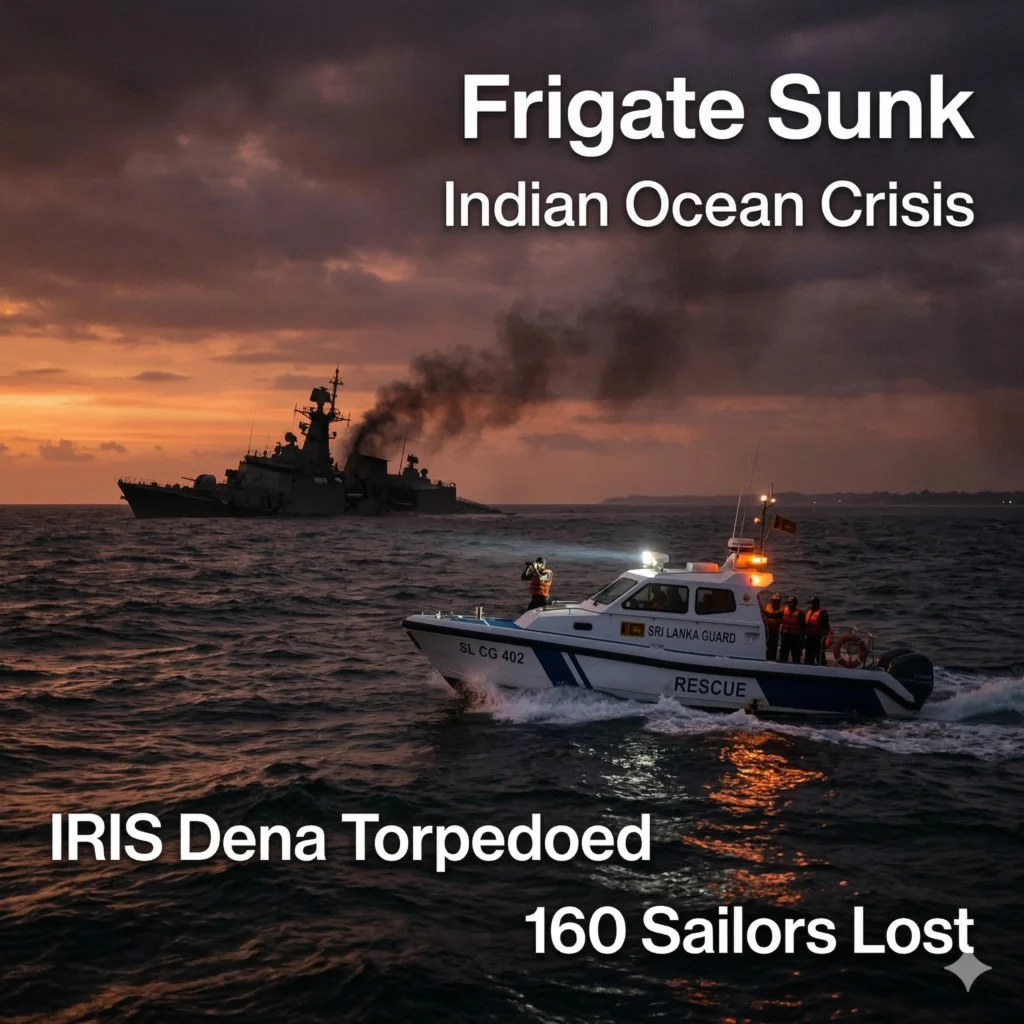
The US War on Iran has moved from targeted aerial strikes to open naval warfare in international waters. The destruction of the IRIS Dena occurred approximately twenty nautical miles from the port of Galle, marking a bold intervention by American forces. This vessel was not a random target but a sophisticated frigate that had just completed a high-profile diplomatic mission.
Military analysts suggest that the timing of this torpedo attack was intended to send a clear message regarding the reach of American naval power. By intercepting the frigate so close to Sri Lankan territory, the United States has effectively turned the Indian Ocean into an active combat zone. This development forces regional powers to reconsider their neutrality in the face of escalating violence.
The humanitarian cost of this specific engagement has been devastating, with roughly 160 Iranian sailors losing their lives in the frigid depths. While Sri Lankan naval units managed to rescue 32 survivors, the scale of the loss has sparked outrage across the Middle East. This incident further complicates the diplomatic tightrope that many Asian nations must walk during this volatile era.
US War on Iran
The US War on Iran is currently being defined by a series of aggressive military maneuvers that target both leadership and physical infrastructure. Since the assassination of the Supreme Leader in late February, the American military strategy has shifted toward total containment of Iranian naval assets. The sinking of the IRIS Dena is the latest chapter in this doctrine of overwhelming force.
In Washington, officials have been transparent about their objectives, with the Secretary of War confirming the destruction of the frigate as a successful military engagement. This public admission signals a departure from the “shadow wars” of previous decades, moving instead into a phase of direct and lethal confrontation. The lack of hesitation in these strikes indicates a commitment to dismantling Iranian influence across the globe.
However, the international community is raising questions about the legality and long-term consequences of such actions in neutral waters. As the conflict spills over into major trade routes, the economic fallout is beginning to surpass the military impact. The global shipping industry is now facing unprecedented insurance hikes and rerouting challenges that affect every major economy.
Diplomatic Silence and the Indian Navy Response
One of the most controversial aspects of the US War on Iran is the perceived lack of response from the Indian government. The IRIS Dena had been an invited guest at India’s MILAN naval exercise in Visakhapatnam just days before its destruction. The silence from New Delhi regarding the sinking of a guest vessel has drawn sharp criticism from domestic and international observers.
The Indian Navy, which had recently welcomed the Iranian frigate with full honors, now finds itself in a precarious position. While Prime Minister Modi was expressing solidarity against terrorism during his visit to Israel, his military partners were being targeted in India’s own maritime neighborhood. This disconnect suggests a complex struggle within India’s foreign policy establishment.
Critics argue that by failing to condemn the attack on a diplomatic guest, India may be compromising its reputation as a regional leader. The strategic autonomy that has defined Indian diplomacy for decades appears to be under immense pressure. As the US increases its demands for cooperation, the room for independent maneuvering is rapidly shrinking for the South Asian giant.
Energy Security Crisis and Oil Reserve Depletion
The US War on Iran has triggered an immediate and severe energy crisis for nations dependent on Persian Gulf oil. Following the closure of the Strait of Hormuz, India’s strategic oil reserves have plummeted to an estimated 25 days. This shortage poses a direct threat to the industrial stability and economic growth of the subcontinent.
The American government has compounded this pressure by ending waivers for Indian development at the Chabahar port. This port, once a cornerstone of India’s trade strategy with Central Asia, was reportedly targeted during the initial waves of airstrikes. The loss of this gateway further isolates Indian trade from its traditional northern partners.
Furthermore, Washington is exerting significant pressure on New Delhi to halt the purchase of discounted Russian oil. By pushing American energy exports as the primary alternative, the US is fundamentally altering the cost structure of India’s energy sector. These combined factors are creating an economic “shock” that could take years to resolve.
Impact on the International North-South Transport Corridor
The viability of the International North-South Transport Corridor (INSTC) is another casualty of the US War on Iran. This major trade route was designed to link India to Russia and Europe via Iranian territory, bypassing traditional bottlenecks. With Iran now a primary combat zone, the future of this multibillion-dollar project is in serious jeopardy.
- The disruption of INSTC eliminates a critical alternative to the Suez Canal for Indian exporters.
- Regional trade agreements signed over the last decade are being rendered obsolete by the current hostilities.
- Investment in infrastructure along the corridor has come to a standstill as risk assessments skyrocket.
As transport costs rise, the competitiveness of Indian goods in European markets is being eroded. The strategic vision of a connected Eurasia is being replaced by a fragmented landscape of sanctions and blockades. This shift represents a major setback for the economic integration of the Global South.
Regional Prestige and the Subordination of Interests
A primary concern for analysts monitoring the US War on Iran is the potential subordination of Indian interests to American strategic goals. The sinking of the IRIS Dena suggests that the Indian Ocean is no longer under the de facto influence of regional powers. Instead, it has become a theater for superpower projection where local sensitivities are secondary.
The contrast between India’s historical “Look West” policy and its current alignment with US-Israel objectives is striking. While the government emphasizes the need to fight terrorism, the economic and strategic costs of this alignment are mounting. The loss of access to Iranian energy and the targeting of shared infrastructure projects highlight this growing imbalance.
- India’s role as a “net security provider” in the region is being questioned by its neighbors.
- The abandonment of the Chabahar project signals a retreat from Central Asian strategic engagement.
- Small nations like Sri Lanka are finding themselves caught in the crossfire of a conflict they did not start.
Ultimately, the long-term security of the region depends on a balanced approach to maritime sovereignty. If local powers are seen as unable to protect their invited guests, the foundation of regional diplomacy may crumble. This transition marks a pivotal moment in the history of 21st-century geopolitics.
Humanitarian Consequences and Rescue Operations
The human element of the US War on Iran often gets lost in discussions of high-level strategy and energy reserves. The sinking of a frigate involves the loss of lives, families, and the professional core of a nation’s navy. The rescue operation conducted by Sri Lanka highlights the frantic nature of the conflict’s collateral damage.
Survivors pulled from the water near Galle have provided harrowing accounts of the speed and precision of the American torpedo strike. With 160 crew members confirmed dead, the Iranian public’s hostility toward the US and its perceived allies has reached a fever pitch. This emotional escalation makes a negotiated peace increasingly unlikely in the near future.
- Medical teams in Sri Lanka have worked tirelessly to stabilize the few survivors found in the debris.
- International maritime law regarding the duty to assist vessels in distress is being tested by the combat conditions.
- The environmental impact of sunken military vessels in ecologically sensitive areas is a growing concern.
As the body count rises, the calls for a ceasefire are being drowned out by the rhetoric of total victory. The humanitarian crisis is not limited to the battlefield but extends to the millions of civilians affected by sanctions and fuel shortages. The “shock” of this war is felt in every household across the region.
Future Outlook for Indo-US Strategic Relations
The trajectory of the US War on Iran will inevitably dictate the future of Indo-US strategic relations for the next decade. While the current administration in New Delhi appears committed to the partnership, the domestic pressure from rising energy prices and loss of trade routes is building. The sustainability of this policy remains a subject of intense debate.
If the conflict continues to expand, India may find itself forced to make even more difficult choices regarding its defense acquisitions and energy partners. The transition from Russian and Iranian dependency to American reliance comes with a high price tag and significant political strings. This evolution represents a fundamental restructuring of India’s global standing.
- Defense cooperation between Washington and New Delhi is expected to increase in the naval sector.
- New energy deals are being negotiated to mitigate the loss of Middle Eastern crude.
- Intelligence sharing regarding Iranian movements has become a cornerstone of the bilateral relationship.
However, the question remains whether this alignment provides a net benefit to India’s long-term security. As the US War on Iran redraws the map of the Middle East and South Asia, the traditional pillars of stability are being replaced by a new and uncertain order. The coming months will reveal whether this strategy leads to regional security or perpetual conflict.
For more details & sources visit: Counterview
For the latest updates from India, visit our India news page.