
US Sanctions Threat Iraq is the central geopolitical flashpoint currently destabilizing the Middle East as Washington takes a hardline stance against the return of Nouri al-Maliki. The United States has officially warned the Iraqi government that reappointing the former Prime Minister could lead to severe economic penalties and a total reassessment of bilateral relations. This escalation comes at a time when Iraq is already struggling to navigate a complex post-election landscape marked by deep sectarian rifts.
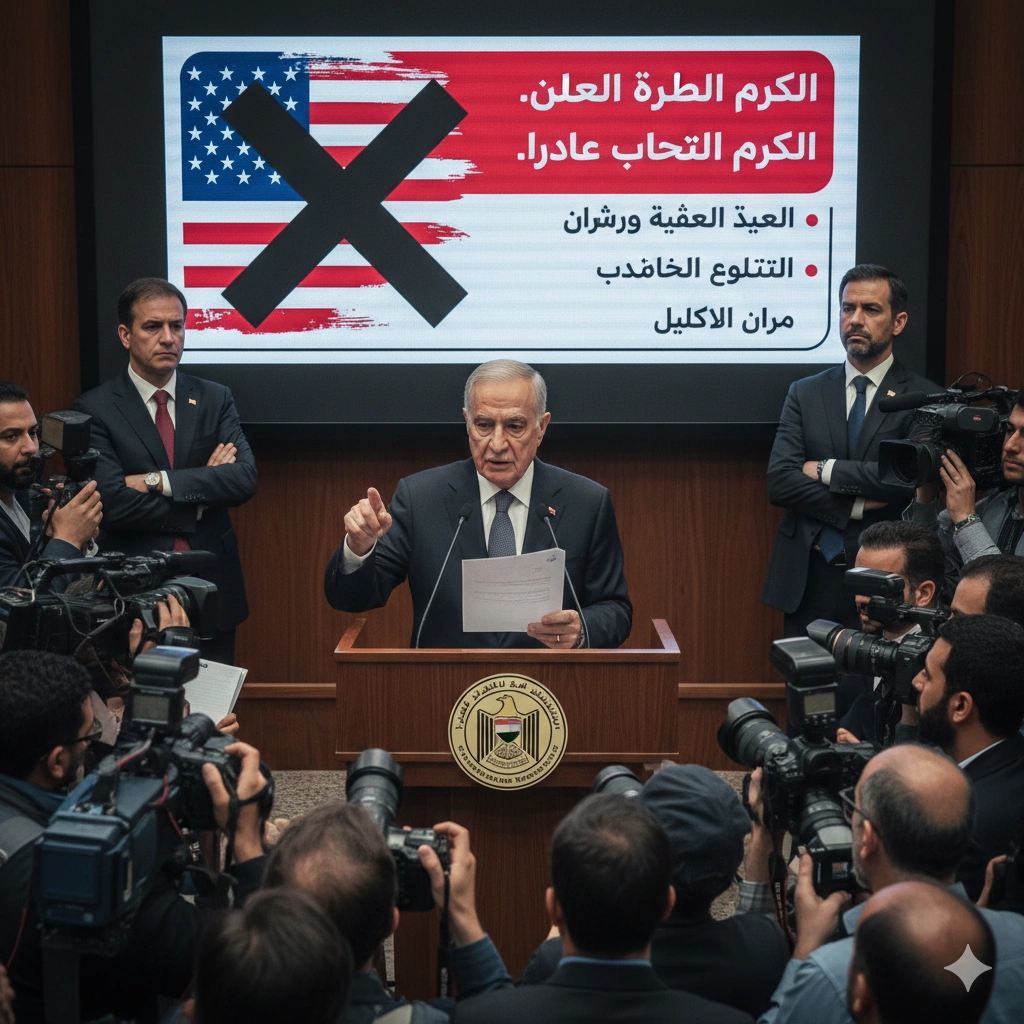
The diplomatic standoff was triggered by the Coordination Framework’s decision to nominate al-Maliki despite clear signals from the White House that his leadership is considered unacceptable. US officials argue that his previous tenure was defined by corruption and sectarian policies that paved the way for the rise of extremist groups. Consequently, the US Sanctions Threat Iraq has become a primary tool for Washington to influence the formation of the next cabinet in Baghdad.
As the largest Shiite parliamentary bloc remains defiant, the potential for a full-scale diplomatic crisis continues to grow. Iraqi officials have expressed outrage at what they characterize as blatant interference in their sovereign affairs, yet the economic reality of US leverage cannot be ignored. The following sections will detail the specific implications of this threat and the broader impact on the region’s stability and future governance.
US Sanctions Threat Iraq
The US Sanctions Threat Iraq has sent shockwaves through the political establishment in Baghdad, forcing various factions to reconsider their support for Nouri al-Maliki. According to recent reports from the Iraqi Foreign Ministry, a verbal message was delivered to the Iraqi embassy in Washington outlining the specific consequences of his reappointment. This includes potential sanctions on key individuals and financial institutions linked to the Coordination Framework and its leadership.
The message from the United States emphasizes that any future cooperation will be contingent on the formation of a government that prioritizes transparency and regional stability. By focusing on the US Sanctions Threat Iraq, the Biden-Trump transition administration is signaling a return to a more interventionist approach in Iraqi domestic politics. This policy is designed to curb the influence of Iran-aligned figures who have historically dominated the country’s security and political apparatus.
Furthermore, the threat extends beyond individual penalties to encompass broader economic cooperation and security assistance. The US has hinted that the current framework for joint military operations and financial support could be fundamentally redefined if al-Maliki takes office. This possibility has created a sense of urgency among Iraqi leaders who fear that losing American backing would leave the country vulnerable to internal collapse and external aggression.
Nouri al-Maliki and the Post-Election Deadlock
The nomination of Nouri al-Maliki has plunged Iraq into a deep political deadlock following the elections held in November 2025. As the leader of the State of Law Coalition, al-Maliki remains a deeply divisive figure whose return to power is viewed with skepticism by Sunni and Kurdish factions. The US Sanctions Threat Iraq serves as a secondary layer of pressure on top of these existing domestic tensions, making consensus nearly impossible.
Despite the external warnings, the Coordination Framework has doubled down on its choice, citing al-Maliki’s extensive experience in state management. They argue that the country needs a strong hand to navigate the current economic and security challenges facing the nation. However, critics within Iraq and abroad point to his previous terms as evidence of a leadership style that promotes division rather than national unity.
The deadlock is not just about one man; it reflects the broader struggle for the soul of the Iraqi state between pro-Iran and pro-Western factions. The US Sanctions Threat Iraq is a direct response to this struggle, as Washington seeks to ensure that Baghdad remains a viable partner in its regional strategy. Without a resolution to this impasse, the government formation process could drag on for months, leaving the country without a functional executive.
President Trump and the Rhetoric of Chaos
The US Sanctions Threat Iraq gained significant momentum following a series of sharp rebukes from President Donald Trump on social media. Labeling al-Maliki’s prior tenure as a descent into “chaos and poverty,” the President made it clear that Washington would not provide assistance to a government led by him. This public stance has emboldened domestic opponents of the nomination while infuriating those who support the Shiite leader.
The use of the term “chaos” in the President’s rhetoric is a strategic choice meant to remind the international community of the security failures that led to the ISIS occupation of 2014. By framing the US Sanctions Threat Iraq as a preventative measure against a repeat of history, the administration is seeking to justify its interference. This narrative has been effective in swaying some neutral parties within the Iraqi parliament who are wary of returning to the sectarian violence of the past.
Moreover, the President’s “Make Iraq Great Again” slogan in his posts highlights a transactional view of foreign policy that prioritizes American interests and regional order. This approach suggests that the US Sanctions Threat Iraq is not just a warning but a cornerstone of a new, more aggressive Middle East policy. The rhetoric has forced the Coordination Framework to weigh the ideological benefits of an al-Maliki premiership against the very real risk of total economic isolation.
Sanctions on Financial Institutions and Oil
One of the most concerning aspects of the US Sanctions Threat Iraq is the potential targeting of the State Oil Marketing Organization (SOMO) and the Central Bank. Because Iraq’s oil revenues are largely held in accounts at the New York Federal Reserve, the United States possesses immense leverage over the country’s economy. Any restriction on these funds would result in an immediate fiscal crisis, making it impossible for the government to pay salaries or fund public services.
The threat to sanction the Central Bank of Iraq is particularly potent, as it would effectively cut the country off from the global financial system. This would lead to a rapid devaluation of the dinar and hyperinflation, sparking widespread civil unrest. The US Sanctions Threat Iraq is thus viewed by many as an “economic nuclear option” that Washington is prepared to use if its red lines are crossed.
Given these stakes, even the most staunch supporters of al-Maliki are beginning to feel the pressure of the US Sanctions Threat Iraq. The business community in Baghdad has already expressed concern that the mere hint of sanctions is discouraging foreign investment and destabilizing the markets. If the threats are carried out, the resulting economic devastation would likely lead to the very chaos that Washington claims it is trying to prevent.
Sovereignty and Foreign Meddling Debates
The Iraqi Foreign Ministry’s confirmation of the US warnings has sparked a fierce debate over national sovereignty and foreign meddling. Many Iraqi politicians argue that the US Sanctions Threat Iraq is a violation of the democratic process and an insult to the will of the voters. They maintain that the selection of a Prime Minister is an internal matter that should be free from external dictates or threats of punishment.
This sentiment is shared by several regional neighbors who are also wary of American interventionism in the Middle East. However, supporters of the US stance argue that sovereignty does not exist in a vacuum and that Iraq’s stability is a matter of international concern. They contend that the US Sanctions Threat Iraq is a necessary intervention to protect the country from falling under the absolute control of a single faction or foreign power.
The tension between these two perspectives has led to a stalemate within the halls of the Iraqi parliament. While the Coordination Framework remains publicly committed to al-Maliki, private discussions are increasingly focused on finding a compromise candidate. The US Sanctions Threat Iraq has successfully changed the cost-benefit analysis for many key players, making the prospect of an al-Maliki premiership look more like a liability than an asset.
The Role of Iran in the Leadership Crisis
The shadow of Iran looms large over the current leadership crisis, with many viewing the US Sanctions Threat Iraq as a proxy battle between Washington and Tehran. Nouri al-Maliki has long been seen as one of Iran’s closest allies in Baghdad, and his return to power would undoubtedly strengthen Tehran’s hand in the region. For the United States, preventing this outcome is a strategic priority that justifies the use of economic coercion.
Iran, for its part, has encouraged the Coordination Framework to resist the US Sanctions Threat Iraq and assert its independence. Tehran views the threats as evidence of American weakness and a desperate attempt to maintain relevance in a changing Middle East. However, the Iranian government is also mindful of the economic damage that sanctions could do to an allied state, which might eventually limit its own influence.
This tug-of-war has put the Iraqi people in a difficult position, as they are caught between two powerful external forces. The US Sanctions Threat Iraq is a clear sign that Washington is no longer willing to tolerate a government that is overly beholden to Iranian interests. As the deadline for government formation approaches, the pressure on all parties involved will only continue to intensify.
Reassessing the US-Iraq Strategic Framework
The possibility of a redefined relationship between Washington and Baghdad is perhaps the most significant long-term consequence of the US Sanctions Threat Iraq. For years, the two nations have operated under a Strategic Framework Agreement that covers everything from security to education. The US has now made it clear that this agreement is not unconditional and can be dismantled if the political situation in Iraq deteriorates.
A withdrawal of US support would have immediate consequences for the Iraqi security forces, which still rely on American intelligence, logistics, and air support. The US Sanctions Threat Iraq implies that the fight against insurgent remnants could be jeopardized if the next government does not meet certain criteria. This prospect is particularly alarming given the recent increase in activity by militant groups along the Syrian-Iraqi border.
Ultimately, the US Sanctions Threat Iraq is forcing a fundamental conversation about the future of the partnership. Does Iraq want to remain part of the Western-aligned international order, or will it choose a path of isolation and regional alignment with Tehran? The choice made in the coming weeks will determine the country’s trajectory for the next decade and beyond.
Internal Divisions Within the Shiite Bloc
Interestingly, the US Sanctions Threat Iraq has begun to create fissures within the Coordination Framework itself. While some members are determined to see al-Maliki return to office, others are privately advocating for a less controversial figure to avoid the risk of sanctions. These internal divisions are being exploited by opposition groups who see an opportunity to weaken the largest parliamentary alliance.
Reports suggest that meetings between alliance leaders have been cancelled or delayed as they struggle to reach a consensus on how to handle the US Sanctions Threat Iraq. Some factions within the bloc, such as those led by Hadi al-Amiri or Qais al-Khazali, are being pressured by their own supporters to prioritize economic stability over political loyalty. This shifting dynamic suggests that the threat of sanctions is having a tangible impact on the ground.
If the Coordination Framework eventually decides to withdraw al-Maliki’s nomination, it would be seen as a major victory for the US Sanctions Threat Iraq policy. However, such a move would also carry the risk of alienating al-Maliki’s base and causing a split within the Shiite political community. The stakes are incredibly high, and the path forward remains fraught with political and personal risks for everyone involved.
Future Implications for Regional Stability
The resolution of the al-Maliki nomination crisis will have profound implications for the stability of the entire Middle East. If the US Sanctions Threat Iraq succeeds in blocking his return, it may set a precedent for future interventions in the political processes of other nations. Conversely, if al-Maliki is appointed despite the threats, it could signal a major decline in American influence in the region.
The ongoing instability in Iraq is also being watched closely by neighboring countries like Saudi Arabia and Turkey, who have their own interests in the outcome. A government that is perceived as being too close to Iran could trigger a regional arms race or lead to new proxy conflicts. The US Sanctions Threat Iraq is thus part of a much larger geopolitical puzzle that involves multiple actors and competing visions for the future.
As the international community looks on, the people of Iraq are left to wonder if they will ever achieve a government that is truly representative and independent. The US Sanctions Threat Iraq highlights the fragility of the nation’s democratic institutions and the heavy hand of global powers. Whether this crisis leads to a more stable government or a further descent into chaos remains to be seen.
The Path Toward a Compromise Candidate
In light of the US Sanctions Threat Iraq, the search for a compromise candidate has become the primary focus of backroom negotiations in Baghdad. Several names have been floated as potential alternatives who could satisfy both the Coordination Framework and the international community. These figures are generally seen as more technocratic and less tied to the sectarian conflicts of the past.
However, finding someone who is acceptable to all parties—including the influential Sadrists and the Kurdish leadership—is a monumental task. The US Sanctions Threat Iraq has narrowed the field of potential candidates, as any nominee must now pass a “veto” from Washington. This has led to accusations that the next Prime Minister will be a puppet of foreign powers rather than a leader of the Iraqi people.
Despite these criticisms, a compromise may be the only way to avoid the devastating consequences of the US Sanctions Threat Iraq. As the deadline for the election of a new President approaches, the pressure to find a middle ground is reaching a breaking point. The outcome will depend on whether the Iraqi political elite values their personal ambitions more than the economic survival of their country.
For more details & sources visit: The National
Read more about Iraq news on 360 News Orbit – Iraq.