
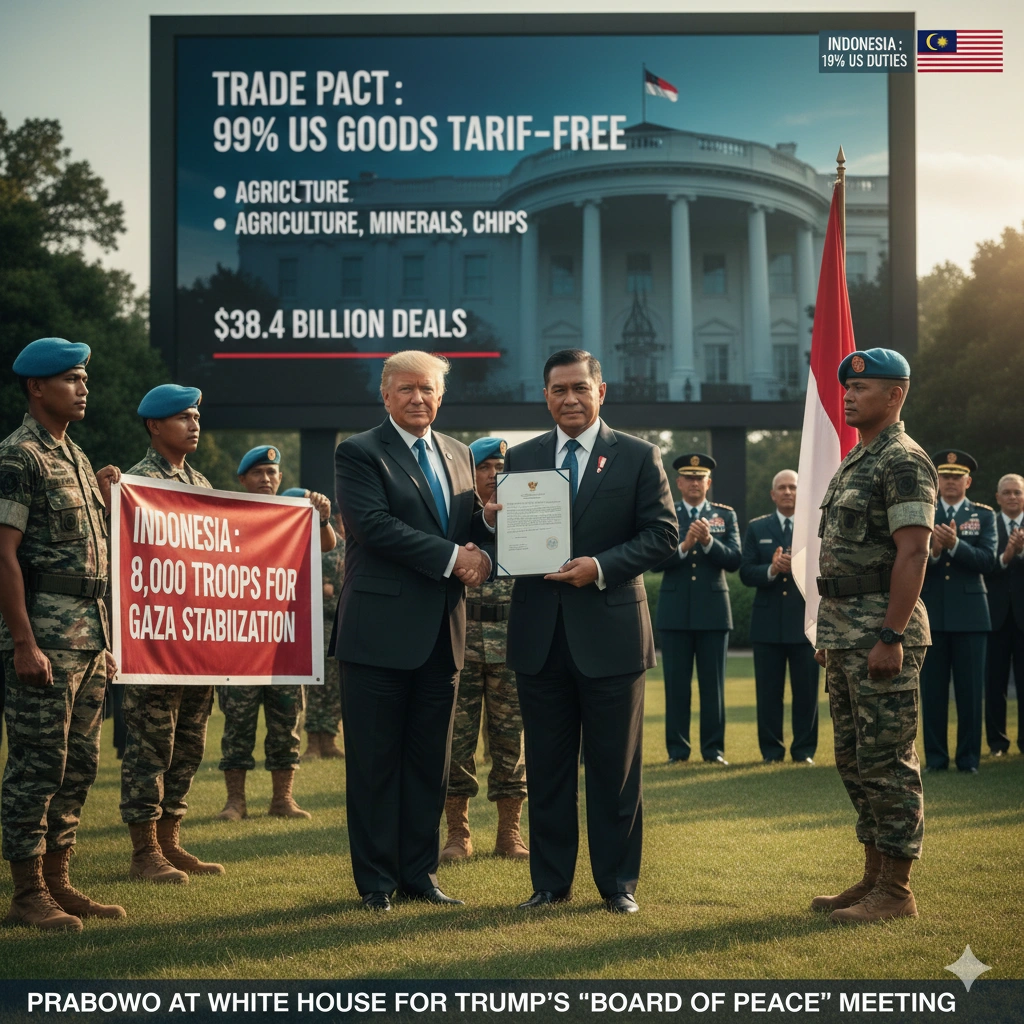
The US-Indonesia trade deal has officially been finalized, marking a historic shift in Southeast Asian economic diplomacy under the current global administration. President Prabowo Subianto’s high-profile visit to the White House resulted in a reciprocal trade pact that eliminates tariffs on 99% of American goods entering Indonesia. This landmark agreement aims to strengthen bilateral ties while addressing urgent geopolitical security concerns in the Middle East. As part of the broader diplomatic package, Indonesia has pledged a significant military commitment to help stabilize the Gaza region.
This economic transformation occurs at a time when global supply chains are being restructured to prioritize reliable partners in the Indo-Pacific. The $38.4 billion in bilateral deals covers essential sectors including agriculture, semiconductor chips, and critical minerals. By aligning with the Board of Peace initiative, Indonesia secures its position as a primary strategic ally for the United States. Observers note that this deal is not merely about commerce; it is a profound statement of shared security interests and mutual economic growth.
Strategic Framework of the US-Indonesia Trade Deal
The strategic framework of the US-Indonesia trade deal focuses on creating a balanced trade environment that benefits both nations. Indonesia has agreed to slash non-tariff barriers that previously hindered American exports, particularly in the agricultural sector. In exchange, the United States will apply a 19% duty on certain Indonesian exports, a rate that aligns with current regional standards for Malaysia and Cambodia. This structure is designed to foster fair competition while protecting domestic industries in both countries.
Agricultural giants in the United States stand to benefit significantly from this arrangement, with guaranteed purchases of soybeans, corn, and wheat. The deal also ensures a steady flow of high-quality American cotton to Indonesia’s expanding textile manufacturing hubs. This reciprocal access is a cornerstone of the new economic policy, aimed at reducing trade deficits while ensuring food security for the Indonesian population. Leaders from both sides have hailed the framework as a “solid understanding” for the future of trans-Pacific trade.
The energy sector also plays a vital role in this strategic partnership, with new ventures in oil recovery and critical mineral extraction. As the global demand for battery components increases, Indonesia’s vast mineral wealth becomes a critical asset for American technology firms. The US-Indonesia trade deal provides the necessary legal and economic protections to encourage long-term investment in these capital-intensive industries. This synergy is expected to create thousands of jobs in both the mining sectors of Indonesia and the high-tech manufacturing corridors of the United States.
US-Indonesia Trade Deal
The signing ceremony for the US-Indonesia trade deal was the culmination of intensive negotiations led by US Trade Representative Jamieson Greer and Indonesia’s Airlangga Hartarto. These talks addressed complex issues ranging from environmental standards to biofuel blending targets. Indonesia has committed to implementing E5-E10 biofuel blending, a move that aligns with global sustainability goals while providing a new market for agricultural byproducts. This commitment was a key requirement for finalizing the broader economic pact.
Furthermore, the US-Indonesia trade deal includes specific exemptions to protect Indonesia’s most sensitive exports. Items such as palm oil, coffee, and cocoa will be shielded from certain tariff hikes to maintain the livelihoods of millions of Indonesian smallholder farmers. This balance of liberalization and protectionism highlights the nuanced approach taken by negotiators to ensure political stability within the archipelago. President Prabowo emphasized that these exemptions were crucial for securing domestic support for the international agreement.
On the import side, Indonesia has pledged to maintain minimum import levels for American beef and other high-value livestock products. This ensures that American ranchers have a predictable and growing market in Southeast Asia’s largest economy. The US-Indonesia trade deal serves as a model for how the current administration intends to use trade as a tool for both economic prosperity and geopolitical leverage. The integration of agricultural quotas with manufacturing incentives represents a sophisticated evolution in modern trade agreements.
Gaza Stabilization and the Military Pledge
While the economic aspects of the US-Indonesia trade deal are substantial, the accompanying military pledge is equally significant. President Prabowo has committed 8,000 Indonesian troops to assist in the stabilization of Gaza as part of the Board of Peace program. This move positions Indonesia as a leading Muslim-majority nation willing to take a physical role in Middle Eastern security. The deployment is seen as a gesture of goodwill that helped smooth the path for the multi-billion dollar trade negotiations.
The inclusion of security commitments within a trade framework is a hallmark of the current “peace through strength” diplomatic strategy. By linking economic benefits to regional security contributions, the United States is encouraging allies to take a more active role in global policing. This 8,000-troop commitment is one of the largest foreign deployments in Indonesia’s modern history, signaling a new era of assertive foreign policy under Prabowo’s leadership. The troops are expected to focus on humanitarian corridors and peacekeeping infrastructure.
International analysts suggest that this military commitment was the “power move” needed to finalize the US-Indonesia trade deal. It demonstrates that Indonesia is not just a passive recipient of trade benefits but a proactive partner in global stability. This synergy between the Department of Defense and the Office of the Trade Representative represents a unified front in American foreign policy. The successful integration of these diverse interests has set a new precedent for future bilateral negotiations in the region.
Critical Minerals and the Semiconductor Supply Chain
A major pillar of the US-Indonesia trade deal involves the secure supply of critical minerals necessary for modern electronics and green energy. Indonesia holds some of the world’s largest deposits of nickel and other essential elements used in high-tech manufacturing. The trade deal establishes a transparent regulatory environment that allows American companies to invest directly in Indonesian refining facilities. This move is designed to reduce reliance on third-party nations for essential semiconductor components.
The agreement also includes provisions for joint ventures in the “chips” sector, aiming to build out Indonesia’s technical infrastructure. By sharing American expertise in semiconductor design and manufacturing, the US-Indonesia trade deal helps elevate the Indonesian workforce into higher-value economic activities. This technological exchange is seen as a long-term investment in a reliable supply chain that is less susceptible to regional disruptions. The deals are valued in the billions and are expected to break ground within the fiscal year.
Moreover, the oil recovery ventures outlined in the pact will utilize advanced American technology to rejuvenate aging Indonesian oil fields. This partnership not only boosts Indonesia’s energy independence but also provides a lucrative market for American engineering firms. The US-Indonesia trade deal effectively creates a circular economy of energy and technology, where Indonesian raw materials are traded for American expertise and finished high-tech goods. This symbiotic relationship is the engine driving the $38.4 billion investment package.
Strategic Points of the Bilateral Pact
- Indonesia eliminates tariffs on 99% of US goods, including machinery and electronics.
- The US applies a 19% duty on Indonesian goods to match regional trade standards.
- $38.4 billion in total deals signed across agriculture, minerals, and technology.
- Indonesia pledges 8,000 troops for Gaza stabilization under the Board of Peace.
These points represent the core achievements of the current administration’s outreach to Southeast Asia. The US-Indonesia trade deal serves as a pivot point, pulling Indonesia closer to the American economic orbit while providing the resources necessary for its own internal development. The logistical coordination required to manage such a massive influx of trade and military commitment is already being established in Jakarta and Washington.
The reaction from the business community has been overwhelmingly positive, with major corporations praising the clarity provided by the new tariff structures. For years, non-tariff barriers were a major complaint for American exporters looking to tap into the Indonesian market. With these obstacles removed by the US-Indonesia trade deal, companies can now plan long-term expansion strategies with greater confidence. The predictability of the 19% US duty also allows Indonesian exporters to calculate their costs more accurately for the American market.
Biofuel Targets and Environmental Standards
A unique aspect of the US-Indonesia trade deal is the specific focus on biofuel blending targets. Indonesia’s commitment to E5-E10 blending represents a significant shift in its domestic energy policy. By integrating more ethanol and biodiesel into its fuel supply, Indonesia can reduce its carbon footprint while supporting its own agricultural sector. This move was heavily encouraged by American negotiators who see it as a way to stabilize global energy markets and promote cleaner burning fuels.
The deal also includes strict environmental oversight for the critical mineral mining operations funded by American capital. The US-Indonesia trade deal stipulates that all new mining ventures must adhere to modern ecological standards to prevent the degradation of Indonesia’s unique biodiversity. This ensures that the economic boom resulting from the trade deal does not come at the expense of the environment. These green provisions were essential for gaining support from international stakeholders and environmental advocacy groups.
Furthermore, the technological transfer involved in the biofuel sector will help Indonesia develop its own refining capabilities. American firms specializing in renewable energy will provide the hardware and software necessary to reach the E10 blending targets within the next three years. This component of the US-Indonesia trade deal highlights the forward-thinking nature of the agreement, looking beyond immediate profits toward a sustainable and integrated energy future. The focus on biofuels also helps balance the interests of the powerful palm oil industry.
Impact on Regional Trade Dynamics
The signing of the US-Indonesia trade deal is likely to trigger a chain reaction among other Southeast Asian nations. With Indonesia securing such a comprehensive agreement, neighbors like Vietnam and Thailand may feel pressured to seek similar reciprocal pacts to remain competitive. This “domino effect” is a key part of the Trump administration’s strategy to reshape trade in the Indo-Pacific through bilateral rather than multilateral agreements. The US-Indonesia trade deal is the flagship of this new policy.
By setting the duty rate at 19%, the United States is establishing a new baseline for regional trade expectations. This consistency helps stabilize the market and prevents a “race to the bottom” regarding labor and environmental standards. The US-Indonesia trade deal proves that high-standard agreements are possible even with developing economies when the incentives are correctly aligned. Indonesia’s willing participation suggests that the benefits of direct access to the American market outweigh the costs of domestic policy adjustments.
Regional security experts also note that the military component of the deal changes the geopolitical map of the area. Indonesia’s active role in Gaza stabilization demonstrates a level of international leadership that has been absent in recent decades. The US-Indonesia trade deal has effectively turned an economic partnership into a comprehensive strategic alliance. This move complicates the influence of other global powers in the region, as Indonesia becomes more deeply entwined with the American security architecture.
Agricultural Growth and Food Security
The agricultural provisions within the US-Indonesia trade deal are expected to revolutionize the food supply chain in the archipelago. Guaranteed access to American soybeans and corn will help stabilize prices for the Indonesian poultry and livestock industries. This, in turn, makes protein more affordable for the average Indonesian citizen, contributing to national food security. The deal ensures that American farmers are the primary beneficiaries of Indonesia’s growing middle-class demand for high-quality food.
On the other side, the exemptions for Indonesian coffee and cocoa ensure that American consumers continue to have access to these premium products at reasonable prices. The US-Indonesia trade deal recognizes the cultural and economic importance of these crops to the Indonesian identity. By protecting these sectors, the agreement avoids the social unrest that often accompanies radical trade liberalization in agrarian societies. This sensitive approach to trade has been praised by developmental economists as a “human-centric” model of commerce.
The commitment to minimum beef imports also opens a massive new door for the American cattle industry. Indonesia, with its large population and increasing urbanization, represents a high-growth market for premium beef products. The US-Indonesia trade deal provides the necessary sanitary and phytosanitary frameworks to ensure that these exports are safe and consistent. This level of agricultural integration creates a “win-win” scenario where American production meets Indonesian consumption in a highly efficient manner.
Key Outcomes of the Prabowo-Trump Summit
- Finalization of the $38.4 billion investment package covering diverse sectors.
- Immediate implementation of tariff removals on 99% of US agricultural and industrial goods.
- Agreement on the 8,000-troop deployment for Gaza peacekeeping.
- Establishment of the E10 biofuel blending roadmap for the Indonesian energy grid.
These outcomes highlight the efficiency of the “Board of Peace” approach to international relations. Instead of years of bureaucratic stalling, the US-Indonesia trade deal was finalized through direct leadership and clear-cut objectives. The personal rapport between President Prabowo and President Trump is cited as a major factor in overcoming the final hurdles of the negotiation. This summit has redefined the relationship between the two nations for the next decade.
The success of the summit also provides a domestic boost for both leaders. For Prabowo, the US-Indonesia trade deal brings in much-needed foreign investment and validates his “active and independent” foreign policy on a global stage. For Trump, the deal is a tangible victory for his tariff strategy and his efforts to secure American jobs through aggressive trade negotiation. The synergy between their political goals made the ambitious scope of the agreement possible.
Future Projections for the US-Indonesia Trade Deal
Looking ahead, the US-Indonesia trade deal is expected to increase total bilateral trade volume by over 40% within the next five years. The influx of American capital into Indonesian infrastructure will likely trigger a secondary wave of development in the digital and service sectors. As the critical mineral refining facilities come online, Indonesia will move up the global value chain, transitioning from a raw material exporter to a high-tech manufacturing hub. This evolution is the ultimate goal of the trade pact.
The military cooperation in Gaza will also lead to closer ties between the Pentagon and the Indonesian National Armed Forces (TNI). Joint training exercises and equipment sharing are expected to increase as the 8,000-troop deployment progresses. This military integration further solidifies the bonds created by the US-Indonesia trade deal, making the partnership resilient to future political shifts. The “Solid Understandings” mentioned by Prabowo are expected to form the foundation of a permanent strategic bloc.
Finally, the semiconductor chip manufacturing ventures will provide a necessary hedge against global supply shocks. By diversifying the production of essential electronics into Indonesia, the United States is securing its technological future. The US-Indonesia trade deal is more than just a document; it is a living roadmap for a more secure and prosperous Indo-Pacific region. As the first projects begin to break ground, the world will see the true transformative power of this historic agreement.
Final Summary of Economic and Security Benefits
- Massive $38.4 billion in new contracts across the energy and tech sectors.
- Elimination of long-standing non-tariff barriers for American agricultural exports.
- Direct military involvement in Gaza, enhancing Indonesia’s global prestige.
The US-Indonesia trade deal stands as a testament to what can be achieved when economic incentives and security needs are aligned. It offers a blueprint for future trade relations in a multipolar world, emphasizing reciprocity and mutual benefit. As the 99% tariff elimination takes effect, the flow of goods and services between these two nations will reach unprecedented levels. This is truly a new chapter in the history of US-Indonesia relations.
The deal also serves as a warning to those who doubt the effectiveness of bilateral trade strategies. By cutting through the complexities of multilateralism, the US-Indonesia trade deal has delivered immediate and significant results for both populations. The combination of agricultural, mineral, and security commitments ensures that the deal is balanced and sustainable. The era of the “Board of Peace” has officially begun with a landmark victory in Southeast Asia.
For more details & sources visit: Yahoo News
For the latest updates from Indonesia, visit our Indonesia news page.