
The joint military operation known as Operation Epic Fury has entered its third day, as the United States and Israel military offensive continues to reshape the geopolitical landscape of the Middle East. Since the initial strikes on Saturday, the coalition has deployed over 1,200 munitions across 24 Iranian provinces, specifically targeting military infrastructure and command centers. This massive aerial campaign has resulted in significant casualties, with at least 555 fatalities reported across Iran according to local health officials.
The United States and Israel military offensive represents a historic level of coordination between the two allies, aiming to degrade the Islamic Revolutionary Guard Corps’ (IRGC) capabilities. Israeli air force commanders confirmed that the strikes have reached 131 counties, marking one of the most geographically diverse air campaigns in modern history. However, the human cost has been high, including a tragic incident at an elementary girls’ school in Minab where approximately 180 children were killed.
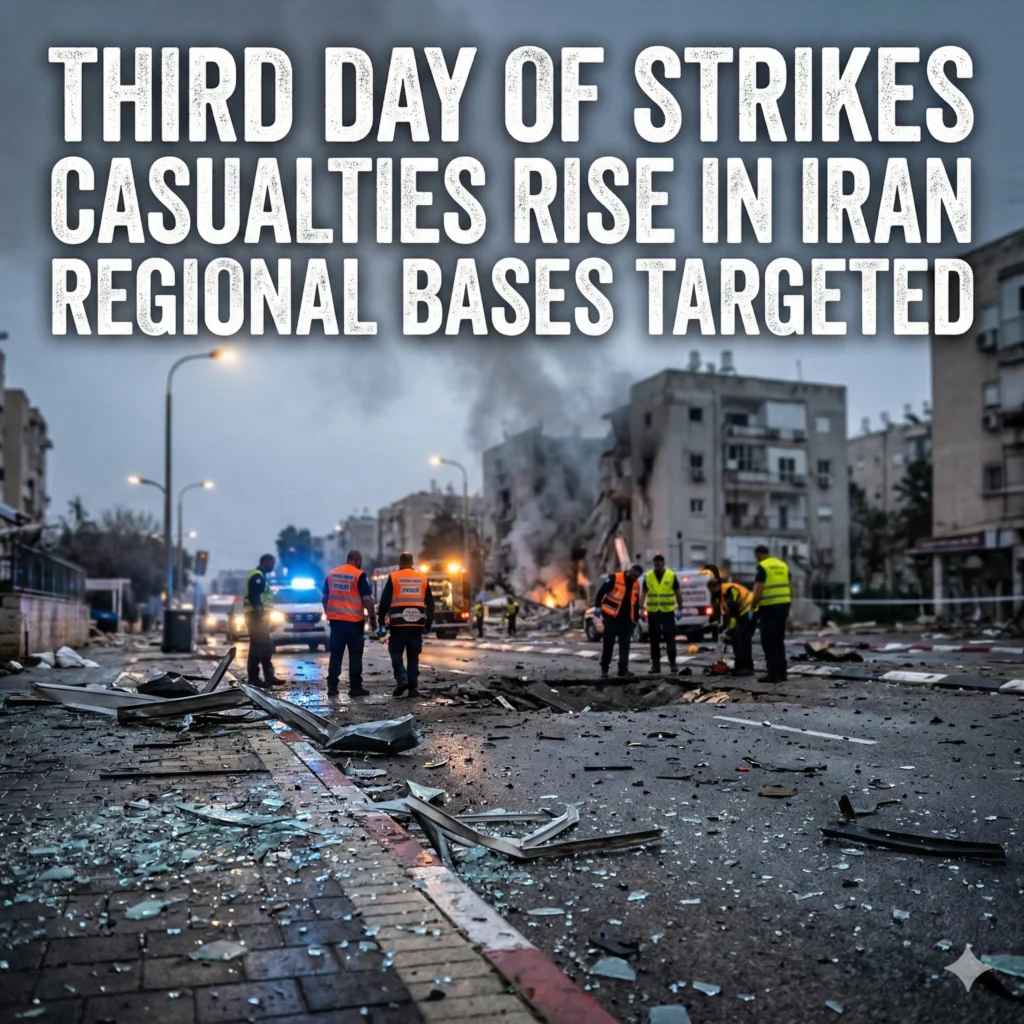
The United States and Israel Military Offensive
The technical execution of the United States and Israel military offensive involves the most advanced stealth technology and precision-guided munitions available. By targeting 24 of Iran’s 31 provinces, the coalition has managed to disrupt the central command structure of the Iranian military. These strikes are designed to neutralize missile launch sites and drone production facilities before they can be used for further escalation.
Despite the focus on military assets, the scale of the United States and Israel military offensive has led to widespread collateral damage. The destruction of infrastructure in various counties has caused power outages and disrupted communication networks across the Iranian plateau. International observers are calling for a pause in the United States and Israel military offensive to allow for humanitarian aid to reach the most affected civilian areas.
Strategic analysts suggest that the United States and Israel military offensive is unlikely to conclude until specific high-value targets are neutralized. The persistence of the sorties indicates a long-term plan to reshape regional security by force. As both sides dig in, the world watches with growing concern over the potential for a full-scale ground invasion following these initial air operations.
Retaliation Against Coalition Bases
In direct response to the United States and Israel military offensive, Iran has launched strikes against 27 military bases housing coalition troops. These retaliatory measures have been recorded in Bahrain, Iraq, Jordan, Kuwait, Oman, Qatar, Saudi Arabia, and the United Arab Emirates. This broad retaliation shows that Tehran is willing to target any nation hosting assets involved in the United States and Israel military offensive.
In Kuwait, the United States Central Command confirmed that three American soldiers were killed during a missile engagement at a joint facility. This loss of life highlights the extreme danger faced by personnel on the ground while the United States and Israel military offensive continues in the skies. Five other soldiers were seriously wounded, requiring immediate medical evacuation to specialized trauma centers in Europe.
The headquarters of the US Navy’s 5th Fleet in Bahrain was also a primary target for Iranian missiles. This facility is a critical hub for maritime security and the coordination of the United States and Israel military offensive. While the base’s air defenses intercepted several threats, falling debris resulted in the death of an Asian worker on a nearby foreign vessel, showing the indiscriminate nature of the fighting.
Israeli Home Front Casualties
The United States and Israel military offensive has not left the Israeli home front untouched, as Iranian ballistic missiles have reached deep into Israeli territory. A major strike in the city of Beit Shemesh resulted in the deaths of nine people on Sunday afternoon. Rescue workers are still working through the rubble of residential buildings to find survivors as the sirens continue to wail across the country.
This direct attack on Israeli civilians is seen as a move to pressure the government to end the United States and Israel military offensive. However, Israeli leadership has indicated that the strikes in Iran will only intensify in response to these domestic casualties. The cycle of “strike and counter-strike” has become the new normal for residents who are now spending the majority of their time in bomb shelters.
Iron Dome and Arrow defense systems are working at full capacity to protect the population from the fallout of the United States and Israel military offensive. Despite a high interception rate, the sheer number of missiles being fired means that some inevitably get through. The psychological impact on the public is immense, as the United States and Israel military offensive enters this highly volatile and unpredictable phase.
Impact on Iraqi Sovereignty
Iraq has once again become a central battlefield because of the United States and Israel military offensive against Iranian interests. Strikes in the Jurf al-Sakher area south of Baghdad killed two members of the Popular Mobilization Forces, sparking outrage among local political factions. This incident has led to increased demands for the withdrawal of foreign troops from Iraqi soil immediately.
Furthermore, explosions were reported near the United States consulate and the international airport in Erbil. These attacks are a direct consequence of the United States and Israel military offensive, as Iran seeks to strike American assets wherever they are most vulnerable. The northern region of Iraq, which had been relatively stable, is now facing a significant security crisis as projectiles cross its borders.
The Iraqi government is struggling to maintain its neutrality while the United States and Israel military offensive rages on its doorstep. Local leaders fear that the country will be dragged into a war that it cannot afford to fight. The diplomatic pressure on Baghdad to choose a side is reaching a record level as the conflict shows no signs of a peaceful resolution.
Humanitarian Crisis in Iran
The civilian toll within Iran from the United States and Israel military offensive is reaching catastrophic proportions. The death of 180 children at the school in Minab has become a symbol of the suffering caused by this high-intensity conflict. Hospitals in major cities are overwhelmed by the number of wounded, and there is a critical shortage of medical supplies and clean water.
Many Iranians are attempting to flee the target zones, creating a massive internal displacement problem. The United States and Israel military offensive has made major highways dangerous, as any moving convoy can be misidentified as a military target. International human rights organizations are warning of a “strong” likelihood of a humanitarian disaster if the fighting does not cease soon.
The Iranian government has used the civilian casualties from the United States and Israel military offensive to galvanize its population and recruit more volunteers for the front lines. This ideological mobilization suggests that the conflict could transform into a long-term war of attrition. The resolve of the Iranian people is being tested by the relentless nature of the United States and Israel military offensive.
Global Economic Consequences
The global economy is feeling the shockwaves of the United States and Israel military offensive as oil prices surge to record highs. Markets are reacting to the instability in the Strait of Hormuz, a vital artery for the world’s energy supply. Any disruption in this region, caused by the United States and Israel military offensive, threatens to trigger a global recession.
Shipping companies are rerouting vessels away from the Gulf to avoid the risk of being caught in the crossfire of the United States and Israel military offensive. This change in logistics is adding significant costs to international trade and causing delays in the delivery of essential goods. The uncertainty surrounding the duration of the United States and Israel military offensive is keeping investors on edge.
Major economic powers are calling for de-escalation, but the momentum of the United States and Israel military offensive appears difficult to stop. The focus on military objectives has overshadowed the long-term economic stability of the region. As the cost of the war mounts, the financial burden on the participating nations will become a major domestic political issue.
Technical Failure and Friendly Fire
Amidst the chaos of the United States and Israel military offensive, reports of technical failures and friendly fire have begun to emerge. The high-stress environment of modern air defense has led to several tragic misidentifications over the last 48 hours. These errors highlight the risks inherent in such a massive and fast-paced military operation as the United States and Israel military offensive.
In one instance, allied air defenses mistakenly targeted friendly aircraft, leading to the loss of advanced airframes. The complexity of managing thousands of flight paths during the United States and Israel military offensive is a significant challenge for even the most advanced command systems. Military investigators are now looking into the software and communication glitches that contributed to these incidents.
The survival of aircrew members in these accidents is a testament to the safety systems built into modern jets. However, the loss of tactical momentum caused by these errors is a major concern for coalition commanders. Ensuring that the United States and Israel military offensive remains focused on the enemy rather than friendly forces is a top priority for the next phase of the campaign.
United States and Israel Military Offensive
The long-term goals of the United States and Israel military offensive remain centered on the permanent removal of the Iranian nuclear threat. Military planners believe that only a sustained and overwhelming force can convince Tehran to abandon its ambitions. The United States and Israel military offensive is seen as the final tool in a diplomatic effort that has spanned several decades.
Critics of the strategy argue that the United States and Israel military offensive will only lead to more radicalization and a never-ending cycle of violence. They point to the civilian casualties and the regional instability as evidence that the cost of the offensive is too high. Despite these criticisms, the coalition remains committed to the current course of action.
The United States and Israel military offensive has redefined the relationship between Washington and Jerusalem. This level of joint operational planning has not been seen in the region for a generation. The success or failure of the United States and Israel military offensive will likely determine the security architecture of the Middle East for the next century.
Regional Defense Coordination
Nations in the path of the United States and Israel military offensive are working to coordinate their air defense networks. Bahrain, Qatar, and the UAE are sharing radar data to better protect their populations from retaliatory strikes. This coordination is essential for minimizing the damage caused by the projectiles launched in response to the United States and Israel military offensive.
The role of the United States 5th Fleet remains vital for the naval component of the United States and Israel military offensive. Ships are positioned to intercept missiles over the water before they can reach land-based targets. This maritime shield is a critical layer of the overall strategy to contain the Iranian response to the United States and Israel military offensive.
Local governments are also issuing “strong” warnings to their citizens to follow safety protocols and stay indoors during peak engagement times. The reality of living under the shadow of the United States and Israel military offensive has changed daily life for millions. The resilience of these regional partners is being tested by the ongoing combat operations.
Media and Information Warfare
The United States and Israel military offensive is being fought as much in the media as it is on the battlefield. Both sides are using social media and traditional news outlets to shape the narrative of the conflict. The coalition emphasizes the precision of the United States and Israel military offensive, while Tehran focuses on the civilian casualties and collateral damage.
Information warfare has become a tool to maintain morale and gain international support for the United States and Israel military offensive. Counter-propaganda units are working to verify reports coming out of the conflict zones to ensure accuracy. The speed of information in 2026 makes it difficult to control the narrative of a fast-moving campaign like the United States and Israel military offensive.
Journalists on the ground are facing immense risks to report on the impact of the United States and Israel military offensive. Several news bureaus have been damaged by strikes, and movement is severely restricted. Despite these challenges, the world is receiving a record amount of live footage and data from the front lines of the United States and Israel military offensive.
Future Projections for the Conflict
As the United States and Israel military offensive enters its third day, the question on everyone’s mind is how it will end. Military experts suggest that the “strong” possibility of a ceasefire is still several days, if not weeks, away. The coalition intends to complete its target list regardless of the diplomatic pressure to stop the United States and Israel military offensive.
If Tehran continues its retaliation, the scope of the United States and Israel military offensive could expand to include more infrastructure targets. This escalation would further devastate the Iranian economy and could lead to internal unrest. The outcome of the United States and Israel military offensive depends on which side can sustain its operations the longest under these extreme conditions.
The international community is calling for a “record” effort in diplomacy to bring the parties to the table. However, with the United States and Israel military offensive in full swing, the appetite for talks is low in both Washington and Jerusalem. The focus remains on the military objectives as the coalition seeks a definitive victory in the skies over Iran.
Ethical Considerations of the Air Campaign
The ethics of the United States and Israel military offensive are being debated by scholars and politicians around the world. The targeting of military assets in urban areas raises questions about the proportionality of the response. The high number of child casualties has intensified this debate, leading to calls for an independent investigation into the United States and Israel military offensive.
Proponents of the offensive argue that the threat from a nuclear-armed Iran is so great that it justifies the United States and Israel military offensive. They believe that the long-term safety of the world is worth the immediate and tragic cost of the war. These ethical dilemmas are at the heart of the decision-making process for the leaders of the United States and Israel military offensive.
Humanitarian law requires that every effort be made to minimize civilian harm, but the realities of the United States and Israel military offensive make this difficult. The dense population centers in Iran often house military command centers within residential blocks. This deliberate placement makes the United States and Israel military offensive a complex and painful operation for all involved.
Final Summary of Day Three Operations
In summary, the third day of the United States and Israel military offensive has seen a massive increase in the intensity of the fighting. The coalition has demonstrated its ability to strike across the entire territory of Iran, but the cost in human lives and regional stability is mounting. The United States and Israel military offensive is now a defining moment for the 21st century.
The survival of the Iranian regime and the security of the coalition forces are at stake as the United States and Israel military offensive continues. The world is witnessing a “record” level of military engagement that will have lasting consequences for everyone. The focus now shifts to the overnight sorties as the United States and Israel military offensive moves into its fourth day.
For more details & sources visit: Al Jazeera
Read more on global developments: 360 News Orbit – Extended Orbit