
Sudan genocide report details how the Independent International Fact-Finding Mission for Sudan has documented systemic atrocities committed by the Rapid Support Forces during their military operations. This comprehensive investigation highlights a dark chapter in the ongoing conflict, focusing on the seizure of El-Fasher and the subsequent humanitarian catastrophe.
The Independent International Fact-Finding Mission for Sudan recently released a harrowing report detailing the absolute horror experienced by civilians during the transition of power in October. This UN-mandated body spent eighteen months investigating the siege and the resulting ethnic massacres that have redefined the scale of the conflict.
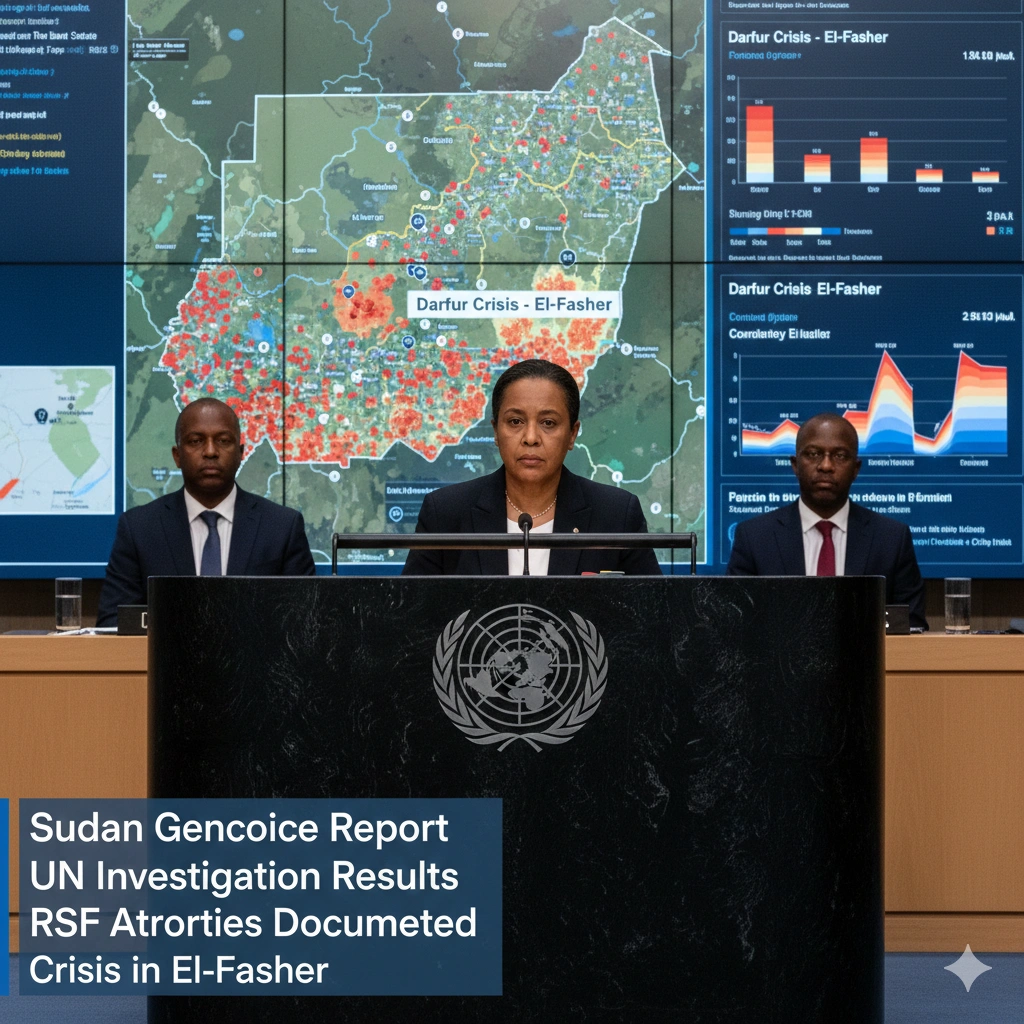
Sudan genocide report
The findings within the Sudan genocide report indicate that the violence in El-Fasher was characterized by three days of absolute horror. During this window, the Rapid Support Forces allegedly carried out a series of planned atrocities designed to eliminate specific ethnic demographics.
Witnesses described how the military offensive turned into a manhunt, with soldiers going door-to-door to identify and remove men of fighting age. This systematic approach suggests a level of command and control that points directly to high-ranking leadership within the paramilitary structure.
The Sudan genocide report also highlights the use of sexual violence as a weapon of war, documenting cases involving victims from ages seven to seventy. Such pervasive abuse indicates a breakdown of humanitarian norms and a deliberate attempt to terrorize the local population into total submission.
Legal experts suggest that the evidence compiled in the Sudan genocide report meets the high threshold required for international intervention. By documenting the intent to destroy a specific group, the mission has provided the necessary framework for future criminal prosecutions.
The international community is now facing immense pressure to act upon the recommendations found within the Sudan genocide report to prevent further bloodshed. Protecting civilians in Kordofan and other vulnerable states has become a primary objective for human rights organizations following these revelations.
Systematic Ethnic Cleansing in El-Fasher
The displacement of millions of people is not merely a byproduct of the war but a central strategy identified in the Sudan genocide report. By forcing the Zaghawa and other groups out of their ancestral lands, the RSF is effectively altering the demographic landscape of the region.
The Sudan genocide report details how exit routes from the city were turned into killing fields where those attempting to flee were instead met with gunfire. This prevented the safe passage of non-combatants and ensured that the civilian toll remained high during the heat of the military transition.
Food and water supplies were reportedly cut off during the siege, a tactic the Sudan genocide report labels as a deliberate attempt to starve the population. This secondary layer of violence exacerbated the suffering of those trapped within the city walls during the October offensive.
Many survivors interviewed in Chad and South Sudan for the Sudan genocide report spoke of the psychological trauma of seeing their neighbors executed. The long-term impact of such violence on the social fabric of Sudan will likely take generations to heal, if reconciliation is even possible.
The Sudan genocide report serves as a formal record of these events, ensuring that the names of the victims and the nature of the crimes are not forgotten. It provides a voice to those who were silenced during the three days of terror that gripped El-Fasher.
International Response to the Humanitarian Crisis
The establishment of the Fact-Finding Mission in October 2023 was a direct response to the escalating reports of international law violations. The document is the culmination of that mandate, providing a roadmap for how the global community should respond to these atrocities.
Global leaders have expressed shock and condemnation following the release of the findings, though many activists argue that words are no longer sufficient. There are growing calls for targeted sanctions against the leaders of the Rapid Support Forces responsible for the El-Fasher massacre.
The investigation emphasizes that the failure to protect civilians in the past has emboldened perpetrators to continue their campaigns of violence. Without a robust international peacekeeping presence, the patterns of genocide are likely to repeat in other contested territories.
Humanitarian aid organizations are using the evidence to advocate for better access to conflict zones where millions remain at risk of starvation. The report clarifies that the humanitarian crisis is a direct result of the military tactics employed by the warring factions.
The Sudan genocide report also mentions the role of external actors who may be fueling the conflict through the provision of weapons and financial support. Identifying these networks is crucial to cutting off the resources that allow the Rapid Support Forces to continue their operations.
Patterns of Sexual Violence and Physical Abuse
One of the most disturbing sections of the Sudan genocide report focuses on the widespread and systematic use of rape against women and girls. These acts were reportedly carried out in public spaces to maximize the humiliation and terror felt by the victim’s community.
Medical professionals who treated survivors in refugee camps provided corroborating evidence for the Sudan genocide report regarding the severity of the injuries. Many victims suffered from permanent physical damage and profound psychological distress that requires specialized long-term care.
The records note that the lack of accountability within the RSF ranks allowed these crimes to go unpunished during the El-Fasher occupation. In many cases, commanders were seen witnessing or even encouraging the abuse of civilians as a reward for their soldiers.
Addressing the findings of the Sudan genocide report will require a multi-faceted approach that includes justice for victims and support for survivors. The UN has called for the immediate cessation of all forms of gender-based violence as a prerequisite for any future peace talks.
The Sudan genocide report remains a vital tool for advocacy, helping to keep the world’s attention on a conflict that is often overshadowed by other global events. It serves as a stark reminder that “never again” is a promise that is currently being broken in the heart of Africa.
The Role of Digital Evidence in Investigations
The use of authenticated videos in the investigation marks a significant advancement in how international crimes are documented in the digital age. These recordings provide undeniable proof of the physical brutality that occurred when the city fell to paramilitary forces.
Investigators used geolocation and chronological analysis to ensure the videos accurately depicted the events in El-Fasher. This technical rigor adds a layer of credibility that is essential for legal proceedings in the International Criminal Court.
Many of these videos were captured by the perpetrators themselves, appearing to boast about their actions in the evidence files. This self-incriminating material provides a direct link between the soldiers on the ground and the atrocities committed during the siege.
The Sudan genocide report also utilized satellite imagery to track the destruction of civilian infrastructure and the movement of large groups of displaced people. This birds-eye view confirms the testimonies of survivors who described the systematic burning of entire neighborhoods.
By synthesizing digital data with human testimony, the mission creates a comprehensive picture of the genocide that is difficult to refute. This holistic approach to evidence gathering is becoming the standard for modern human rights investigations.
Urgent Warnings for the Kordofan Region
The Sudan genocide report concludes with an urgent warning about the potential for similar atrocities in the neighboring state of Kordofan. As the RSF pushes further into new territories, the risk of ethnic massacres remains extremely high for vulnerable populations.
Mission members have urged the UN Security Council to take immediate steps based on the findings to create safe zones. Without these protections, the “coordinated operation” seen in El-Fasher is likely to be replicated across the country.
The investigation highlights that the cycle of violence is fueled by a total lack of accountability for those in positions of power. Ending the culture of impunity is the only way to break the pattern of genocide and bring lasting peace to the people of Sudan.
Local leaders in Kordofan are already reporting signs of tension that mirror the early stages of the El-Fasher siege. The international community must act on this early warning to prevent another humanitarian catastrophe of this magnitude.
The Sudan genocide report will likely serve as the primary evidence base for any future UN resolutions regarding the conflict in Sudan. Its findings are a call to action for every nation that values human rights and the sanctity of civilian life.
Conclusions from the Fact-Finding Mission
The final chapters of the report reiterate that the crisis in Sudan is one of the most severe in the modern era. The combination of ethnic targeting and mass displacement has created a situation that demands a global response.
- The findings identified targeted killings of the Zaghawa ethnic group.
- Investigators verified twenty-five videos showing extreme physical brutality.
- Over three hundred witnesses provided testimony for the investigation.
- The mission calls for immediate international protection for Kordofan civilians.
The Sudan genocide report emphasizes that the Rapid Support Forces must be held responsible for the three days of absolute horror in El-Fasher. There can be no path toward peace that does not include a full accounting of the crimes documented in this investigation.
The report serves as both a memorial to the victims and a legal framework for future justice. It is an essential document for anyone seeking to understand the true nature of the violence currently unfolding in Sudan.
The Sudan genocide report makes it clear that the time for silence has passed, and the time for international intervention is now. The world cannot afford to look away as another genocide unfolds, leaving a trail of destruction and broken lives in its wake.
The findings are a testament to the bravery of the survivors who risked their lives to tell their stories. Their courage ensures that the truth about El-Fasher will eventually lead to the accountability the victims so rightfully deserve.
The investigation also highlights the need for increased funding for humanitarian efforts in Chad and South Sudan. These neighboring countries are struggling to support the millions of refugees fleeing the violence documented by the Fact-Finding Mission.
In the end, the report is a reminder of the fragility of peace and the devastating consequences of unchecked power. It stands as a definitive record of a tragedy that the world must resolve to never let happen again.
As we analyze the data, it becomes evident that the paramilitary forces acted with a sense of total entitlement to the lives and property of others. This mindset is the core driver of the genocide and must be addressed through both legal and political means.
The investigation remains the most authoritative source on the atrocities in El-Fasher to date. Its release marks a turning point in the international perception of the Sudan conflict, shifting the focus toward the urgent need for justice.
The report concludes that only a unified global front can stop the momentum of the Rapid Support Forces. Without collective action, the findings of this report will simply be the first of many such documents detailing the destruction of Sudan.
The Sudan genocide report is not just a collection of facts; it is a plea for the lives of those still in the crosshairs of this brutal war. We must heed the warnings before the next city falls to the same fate as El-Fasher.
The report serves as a crucial piece of evidence for the international legal community. It provides the necessary documentation to begin the process of identifying and prosecuting those responsible for the genocide.
The findings have brought to light the sheer scale of the suffering in Sudan. It is a stark reminder that human rights are universal and must be defended wherever they are under attack.
The investigation is a call to action for all who believe in justice. We must support the findings of the Fact-Finding Mission and demand that the recommendations be implemented immediately.
The Sudan genocide report has set a high bar for future investigations. Its rigorous methodology and use of digital evidence have made it a model for how to document atrocities in the 21st century.
The records will continue to be a vital resource for years to come. It is a definitive account of a dark period in history that must never be forgotten.
The investigation is a testament to the power of truth. Despite the attempts to silence the victims, the findings have ensured that their voices will be heard by the entire world.
The report is a reminder that we all have a responsibility to stand up against genocide. We must use the information provided to advocate for a peaceful and just resolution to the conflict in Sudan.
The documentation is a beacon of hope for those seeking justice. It shows that even in the midst of war, it is possible to document the truth and hold those responsible accountable.
The findings are a powerful tool for change. By exposing the atrocities in El-Fasher, the investigation has created a momentum for action that cannot be ignored.
The report is a legacy for the victims of the genocide. It ensures that their suffering was not in vain and that the truth about what happened to them will be known to future generations.
The investigation is a call for a better future. It challenges us to build a world where genocide is no longer possible and where human rights are respected by all.
The report is a reminder of the resilience of the human spirit. Despite the horrors they have faced, the survivors of the genocide are still fighting for justice and for a better future for their country.
The mission findings are a tribute to the work of the Fact-Finding Mission. Their dedication to the truth has provided a voice for the voiceless and a path toward justice for the victims of the genocide.
The documentation is a document of profound importance. It is a record of a tragedy that must be learned from so that it never happens again.
The report is a call to the international community to do more. We must provide the support and resources needed to end the conflict and bring justice to the victims.
The findings are a reminder that we are all connected. The suffering of the people in Sudan is a tragedy for all of humanity, and we must all work together to end it.
The investigation is a final plea for peace. Let us use the findings of this report to build a future where the people of Sudan can live in safety and dignity.
For more details & sources visit: Dawn
Read more on Sudan news: 360 News Orbit – Sudan.