
The advance of UAE-backed forces in Yemen has taken a dramatic turn as the Southern Transitional Council (STC) captures key eastern governorates, deepening divisions with Saudi Arabia and raising new questions about Yemen’s unity and fragile peace process. The rapid territorial gains underscore growing competition between Riyadh and Abu Dhabi, once close allies in the Yemen conflict.
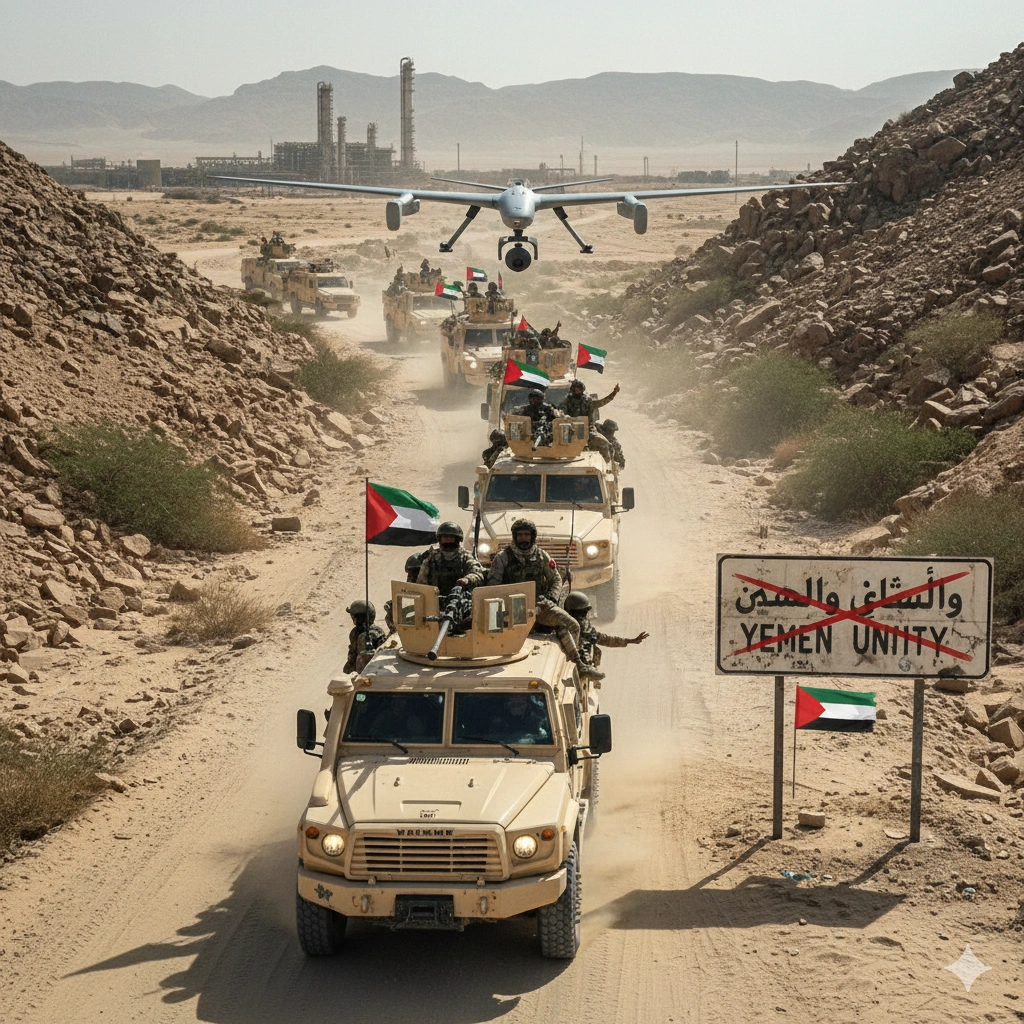
UAE-Backed Forces Yemen Expand Control in the East
Over the past two weeks, UAE-backed forces in Yemen, operating under the banner of the Southern Transitional Council, have taken control of the strategic governorates of al-Mahra and Hadhramaut. These areas are among Yemen’s most geopolitically significant regions due to their border access, energy resources, and trade routes.
The STC ousted Yemeni army units and Saudi-backed Homeland Shield Forces, consolidating its authority over key military camps, government offices, and border crossings with both Oman and Saudi Arabia. The swift takeover has effectively shifted the balance of power in eastern Yemen, an area previously viewed as relatively stable.
Strategic Importance of al-Mahra and Hadhramaut
The seizure of al-Mahra and Hadhramaut by UAE-backed forces in Yemen carries major strategic implications:
- Border control: The regions provide access to Oman and Saudi Arabia, making them vital for trade and security
- Energy resources: Hadhramaut is rich in oil reserves crucial to Yemen’s economy
- Military positioning: Control of camps and ports enhances the STC’s operational reach
Analysts warn that dominance over these territories strengthens the STC’s push for southern autonomy and weakens the authority of Yemen’s internationally recognized government.
STC Leadership Signals Further Ambitions
Aidarus al-Zoubaidi, head of the Southern Transitional Council, defended the military actions, framing them as necessary to counter Iranian influence and Houthi expansion. However, his warning that Sanaa could be the next target alarmed regional observers.
Such statements suggest that UAE-backed forces in Yemen may pursue broader territorial ambitions, potentially escalating conflict beyond the east and undermining ongoing diplomatic efforts.
Saudi Arabia Responds with Reinforcements
Saudi Arabia reacted swiftly to the STC’s advance. Riyadh deployed additional military reinforcements and sent a high-level delegation led by Maj. Gen. Mohammed al-Qahtani to Hadhramaut. The mission aimed to defuse tensions, restore coordination among allied forces, and prevent direct clashes between Saudi-aligned units and UAE-backed groups.
The response highlights growing strains between Saudi Arabia and the UAE, whose competing strategies in Yemen are increasingly visible on the ground.
Yemeni Leadership Condemns the Takeover
Rashad al-Alimi, head of Yemen’s Presidential Leadership Council, strongly condemned the actions of UAE-backed forces in Yemen, describing them as a direct threat to the country’s unity and political transition.
He warned that unilateral military moves risk dismantling state institutions and fragmenting Yemen further at a time when international mediation is attempting to stabilize the conflict.
UN Warns of Wider Destabilization
United Nations Special Envoy Hans Grundberg urged restraint and dialogue, cautioning that continued escalation in eastern Yemen could derail peace efforts nationwide. The UN emphasized that disputes among anti-Houthi factions weaken the broader objective of ending the war.
International observers note that divisions among regional backers may prolong instability, even as negotiations with the Houthis remain stalled.
Implications for Yemen’s Future
The rise of UAE-backed forces in Yemen as a dominant power in the east has far-reaching consequences:
- Threat to national unity: Strengthens separatist ambitions
- Regional rivalry: Exposes widening Saudi-UAE policy divergence
- Peace process risks: Undermines confidence in negotiated settlements
Unless diplomatic engagement succeeds, analysts warn Yemen could face a new phase of fragmentation driven not only by the Houthi conflict but also by rivalries within the anti-Houthi camp.
Conclusion: A Turning Point in Yemen’s Conflict
The rapid expansion of UAE-backed forces in Yemen marks a critical turning point in the country’s conflict. As the STC consolidates control over strategic eastern territories, tensions with Saudi Arabia are intensifying, and Yemen’s political future grows more uncertain.
Whether dialogue can prevent further escalation will determine if Yemen moves toward stabilization—or deeper division.
For the latest updates from India, visit our Saudi Arabia page.