
Türkiye and Canada Sign Nuclear Agreement to establish a sophisticated technical framework aimed at evaluating CANDU reactor technology for future energy projects. This landmark memorandum of understanding was signed between the Türkiye Nuclear Energy Company (TÜNAŞ) and AtkinsRéalis during a prestigious mining congress. As the global energy landscape shifts toward decarbonization, this partnership represents a strategic move to enhance Turkey’s nuclear capacity and diversify its national energy basket. By exploring Canadian expertise, the Turkish government aims to secure a stable and sustainable power supply for its rapidly growing industrial sector and domestic population.
The collaboration involves an extensive exchange of technical data to determine the suitability of CANDU reactors for specific sites identified by Turkish authorities. Türkiye and Canada Sign Nuclear Agreement at a time when energy security has become a paramount concern for nations across the globe. This agreement is not merely a technical exchange but a foundational step toward a long-term alliance in the nuclear sector. It covers everything from regulatory alignment to the exploration of innovative financing models, ensuring that any future projects are both scientifically sound and economically viable for the Republic of Türkiye.
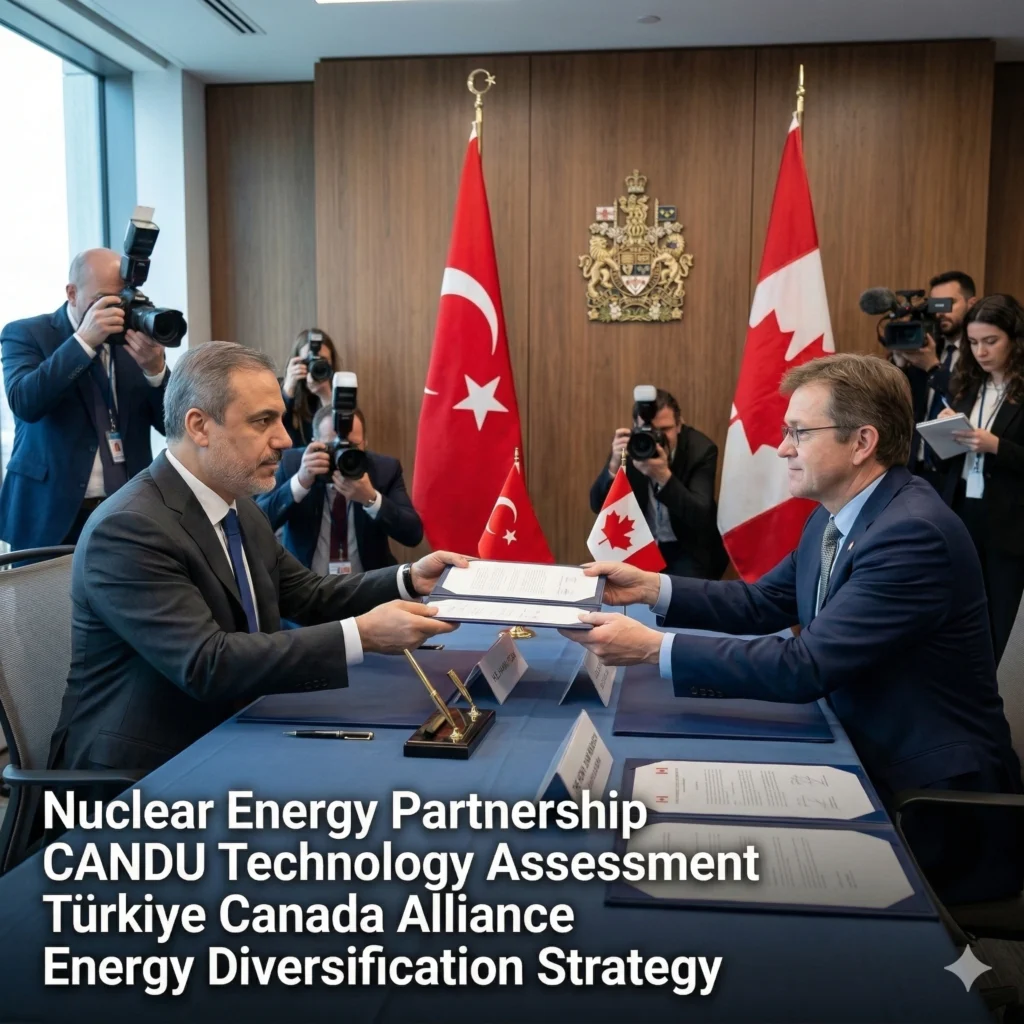
Türkiye and Canada Sign Nuclear Agreement
The formal signing ceremony took place on the sidelines of a major international mining congress, highlighting the intersection of raw material security and energy production. Türkiye and Canada Sign Nuclear Agreement to leverage the 60-year operational lifespan and refurbishment capabilities of the 31 CANDU reactors currently active worldwide. Minister of Energy and Natural Resources, Alparslan Bayraktar, underscored that international partnerships are essential for achieving the country’s ambitious nuclear targets. This agreement facilitates a deep dive into how localization and human capital development can be maximized during the construction and operation phases.
Furthermore, the document outlines a roadmap for assessing licensing requirements that meet both Turkish and international safety standards. As Türkiye and Canada Sign Nuclear Agreement, both parties are committing to a transparent evaluation of potential business models that could support large-scale infrastructure. The focus on localization ensures that Turkish engineering firms and laborers will benefit directly from the technology transfer. This holistic approach is designed to create a self-sustaining nuclear ecosystem within Türkiye, reducing reliance on external providers for maintenance and operation over the coming decades.
Technical Framework for CANDU Reactors
The core of this partnership lies in the rigorous evaluation of CANDU (Canada Deuterium Uranium) technology, which uses pressurized heavy water as a moderator. Türkiye and Canada Sign Nuclear Agreement to explore this specific design because of its unique ability to use natural uranium as fuel. This feature offers a significant advantage in fuel flexibility and supply chain security compared to other light-water reactor designs. The technical teams from TÜNAŞ and AtkinsRéalis will analyze site-specific data to ensure the technology can withstand local geological and environmental conditions.
Engineers are also looking into the refurbishment potential of these units, which can extend a plant’s life significantly beyond its initial design. While Türkiye and Canada Sign Nuclear Agreement, the focus remains on long-term reliability and low operational costs. The technical exchange will include detailed safety assessments and performance modeling based on existing CANDU plants in Canada, Romania, and South Korea. This data-driven approach allows Türkiye to make informed decisions about its energy future while minimizing the risks associated with adopting new technological frameworks for its second or third nuclear sites.
Strategic Energy Diversification in Türkiye
Türkiye is currently in the midst of a massive energy transition aimed at reducing its dependence on imported fossil fuels. Türkiye and Canada Sign Nuclear Agreement as a key pillar of this strategy, which includes the ongoing construction of the Akkuyu nuclear power plant. Once fully operational by 2028, Akkuyu is expected to provide approximately 10% of the country’s total electricity needs. However, the government realizes that one plant is not enough to meet the projected demand of a modernizing economy, hence the push for additional sites and technologies.
The diversification strategy also includes a significant focus on small modular reactors (SMRs) and renewable energy sources like wind and solar. By the time Türkiye and Canada Sign Nuclear Agreement, the national goal is to add at least 5 gigawatts of capacity through SMRs by 2050. This multi-tiered approach ensures that the energy grid remains resilient against geopolitical shocks or fluctuations in global commodity prices. The inclusion of Canadian technology provides a middle-ground solution that complements the existing Russian-led projects, creating a balanced and competitive nuclear energy sector.
Economic Impact and Localization Opportunities
One of the most critical aspects of the memorandum is the focus on localization and the development of a local supply chain. Türkiye and Canada Sign Nuclear Agreement to ensure that a significant portion of the project’s value remains within the Turkish economy. This includes the manufacturing of components, specialized construction services, and the training of a high-tech workforce. By integrating Turkish companies into the global CANDU supply chain, the country can develop exportable expertise in nuclear engineering and specialized manufacturing.
- Training programs for Turkish engineers in Canadian nuclear facilities.
- Development of local manufacturing standards for nuclear-grade components.
- Creation of thousands of high-skilled jobs in the energy and construction sectors.
- Potential for Turkish firms to participate in global CANDU refurbishment projects.
Geopolitical Alliances in the Energy Sector
The shifting dynamics of global politics have necessitated the formation of new alliances between traditional partners. Türkiye and Canada Sign Nuclear Agreement to strengthen their bilateral ties through high-stakes technological cooperation. Minister Bayraktar noted that the current global environment requires reliable partnerships that can withstand diplomatic pressures. Canada’s reputation as a stable and transparent nuclear exporter makes it an ideal partner for Türkiye as it seeks to expand its nuclear footprint.
This agreement also signals to the international community that Türkiye is open to diverse technological solutions and multiple international partners. While Türkiye and Canada Sign Nuclear Agreement, it sends a message of proactive energy diplomacy. The collaboration helps bridge the gap between North American technical standards and the growing energy needs of the Eurasian region. This partnership is expected to open doors for further cooperation in other high-tech sectors, including aerospace, mining, and advanced telecommunications, fostering a more integrated economic relationship.
Licensing and Regulatory Alignment
A major hurdle for any nuclear project is the complex web of regulatory approvals required to ensure public safety and environmental protection. Türkiye and Canada Sign Nuclear Agreement to begin the arduous process of aligning Turkish regulatory frameworks with the technical specifications of CANDU reactors. The Turkish Nuclear Regulatory Authority (NDK) will work closely with Canadian experts to understand the nuances of the CANDU licensing process. This early-stage alignment is crucial for preventing costly delays during the construction phase.
The evaluation will also look at international safeguards and non-proliferation treaties to ensure full compliance with global norms. As Türkiye and Canada Sign Nuclear Agreement, the emphasis on safety is non-negotiable. Both nations are committed to the highest standards of nuclear security and waste management. The agreement includes provisions for sharing best practices in radioactive waste disposal and the decommissioning of nuclear facilities, ensuring a “cradle-to-grave” approach to nuclear energy management that prioritizes the environment and future generations.
Role of TÜNAŞ in Nuclear Development
The Türkiye Nuclear Energy Company (TÜNAŞ) serves as the primary engine for the country’s nuclear ambitions. Türkiye and Canada Sign Nuclear Agreement through TÜNAŞ because the entity is responsible for site selection, technology evaluation, and project management for new plants. The expertise of TÜNAŞ personnel is being constantly upgraded through international collaborations like this one. By working with AtkinsRéalis, TÜNAŞ gains access to decades of operational data and engineering insights that would take years to develop independently.
TÜNAŞ is also tasked with managing the public perception of nuclear energy within Türkiye. While Türkiye and Canada Sign Nuclear Agreement, the company is launching educational campaigns to explain the benefits of nuclear power in terms of grid stability and carbon reduction. Transparency is a core value for TÜNAŞ, and the partnership with a Canadian firm known for rigorous safety standards helps build public trust. The successful execution of the framework established by this agreement will be a major milestone for TÜNAŞ as it moves from a planning entity to a major energy producer.
Financing Models and Investment Strategies
The high capital cost of nuclear power plants requires innovative financing solutions to make projects feasible. Türkiye and Canada Sign Nuclear Agreement to explore various business models, including potential public-private partnerships and government-backed loan guarantees. Financing a nuclear plant involves long-term horizons and complex risk assessments, and the Canadian experience in project finance is invaluable. The two nations are looking at ways to attract international investors while ensuring that the cost of electricity remains affordable for Turkish consumers.
- Evaluation of Export Development Canada (EDC) financing options.
- Potential for “Build-Own-Operate” or “Build-Transfer” models.
- Analysis of long-term power purchase agreements (PPAs) to secure revenue.
- Assessment of green bonds and climate finance as potential funding sources.
Comparing CANDU with Existing Technologies
To make the best choice for its future sites, Türkiye must compare CANDU technology with other available options, such as the VVER reactors being built at Akkuyu. Türkiye and Canada Sign Nuclear Agreement to facilitate this comparative analysis. One of the main differences is the fuel type; while VVER reactors require enriched uranium, CANDU reactors can run on natural uranium. This distinction is vital for Türkiye’s fuel procurement strategy. Additionally, the online refueling capability of CANDU reactors means they do not need to shut down for fuel changes, leading to higher capacity factors.
The physical footprint and cooling requirements of the plants are also being compared. As Türkiye and Canada Sign Nuclear Agreement, technical teams are mapping out how a CANDU plant would fit into the proposed sites on the Black Sea or in Thrace. The flexibility of the CANDU design allows it to be adapted to different site conditions, which is a significant advantage in Türkiye’s diverse geography. By having multiple technologies in its portfolio, Türkiye can avoid the risks of a single-source supply chain and foster a more competitive domestic energy market.
Human Capital and Workforce Training
A successful nuclear program is impossible without a highly skilled workforce of scientists, engineers, and technicians. Türkiye and Canada Sign Nuclear Agreement to address the “human capital” component of the project. This involves creating specialized university programs and vocational training centers focused on nuclear technology. Canadian experts will provide mentorship and hands-on training for Turkish staff, ensuring that the knowledge transfer is practical and sustainable. This investment in people is perhaps the most long-lasting benefit of the agreement.
The agreement also envisions exchange programs where Turkish students can study nuclear physics and engineering at Canadian universities. When Türkiye and Canada Sign Nuclear Agreement, they are investing in the youth of both nations. A new generation of Turkish nuclear professionals will be equipped with the skills to operate, maintain, and innovate within the nuclear sector. This focus on education ensures that the benefits of the nuclear program extend far beyond the energy grid, contributing to the overall scientific and technological advancement of the Republic.
Environmental Benefits and Carbon Reduction
As part of its commitment to the Paris Agreement, Türkiye is looking for ways to significantly reduce its carbon emissions. Türkiye and Canada Sign Nuclear Agreement because nuclear energy provides a baseload power source that is virtually carbon-free. Unlike gas or coal plants, nuclear facilities do not emit greenhouse gases during operation. This makes them a critical component of any “Net Zero” strategy. By integrating more nuclear power into the grid, Türkiye can retire older, more polluting thermal plants and significantly improve air quality in its major cities.
The environmental assessment portion of the agreement will also look at water usage and the impact on local ecosystems. While Türkiye and Canada Sign Nuclear Agreement, both parties are dedicated to minimizing the environmental footprint of future energy sites. The use of advanced cooling technologies and rigorous environmental monitoring protocols will ensure that the plants operate in harmony with their surroundings. This commitment to sustainability is a key factor in gaining international support and financing for the projects.
Addressing 1 Security Risk and Public Safety
Public safety is the number one priority for any nuclear project. Türkiye and Canada Sign Nuclear Agreement to implement the highest possible safety protocols, addressing any 1 security risk that might arise from seismic activity or external threats. Türkiye’s experience with earthquake-resistant construction is being combined with Canadian nuclear safety expertise to create a “defense-in-depth” approach. This ensures multiple layers of protection to prevent any accidental release of radiation, even in extreme circumstances.
The security of nuclear materials and the protection against cyber threats are also covered in the agreement. As Türkiye and Canada Sign Nuclear Agreement, the two nations are collaborating on digital security measures to protect the plant’s control systems. In an era of increasing cyber warfare, ensuring the integrity of the energy grid is a matter of national security. By adopting the latest in “secure-by-design” technology, the future Turkish nuclear sites will be among the most resilient in the world.
Future Prospects for Small Modular Reactors
While the current evaluation focuses on large-scale CANDU units, the framework also leaves the door open for small modular reactors (SMRs). Türkiye and Canada Sign Nuclear Agreement with an eye on the 2050 goal of adding 5 gigawatts of SMR capacity. Canada is a world leader in SMR development, with several designs currently undergoing regulatory review. These smaller plants offer the advantage of lower upfront costs and the ability to be deployed in remote areas or near industrial clusters that require localized power and heat.
The modular nature of these reactors allows for faster construction times and easier integration into existing grids. When Türkiye and Canada Sign Nuclear Agreement, they are creating a pathway for these innovative technologies to enter the Turkish market. SMRs could play a vital role in powering Türkiye’s heavy industries, such as steel and cement production, which are difficult to decarbonize using renewable energy alone. This forward-looking approach ensures that the partnership remains relevant as the nuclear industry continues to evolve.
Conclusion and Next Steps
The signing of the memorandum of understanding is just the beginning of a long and complex journey. Türkiye and Canada Sign Nuclear Agreement to set the stage for years of technical study, site preparation, and diplomatic coordination. The next steps will involve the formation of joint working groups to begin the detailed exchange of technical data and the start of site-specific feasibility studies. Both governments have expressed a high level of commitment to seeing this partnership succeed and contribute to a more secure energy future.
As the technical evaluations progress, the findings will be used to inform the final decision-making process for Türkiye’s upcoming nuclear sites. The world will be watching as Türkiye and Canada Sign Nuclear Agreement and move toward a new era of energy cooperation. This partnership has the potential to become a model for international nuclear collaboration, demonstrating how shared expertise and mutual respect can lead to significant breakthroughs in the quest for clean and reliable energy.
For more details & sources visit: World Nuclear News
Read more on Turkey news: 360 News Orbit – Turkey