
Recent coverage in Fortune frames Trump pro-business CEO of America, highlighting his approach to governance and engagement with global executives. The column underscores how the AI boom and stronger-than-expected GDP growth are shaping optimism among U.S. business leaders, even as debates continue over trade tactics and dealmaking boundaries.
Following a high-profile Davos CEO dinner, Fortune notes that top executives increasingly perceive President Trump as aligned with private-sector priorities, marking a shift from perceptions of previous administrations.
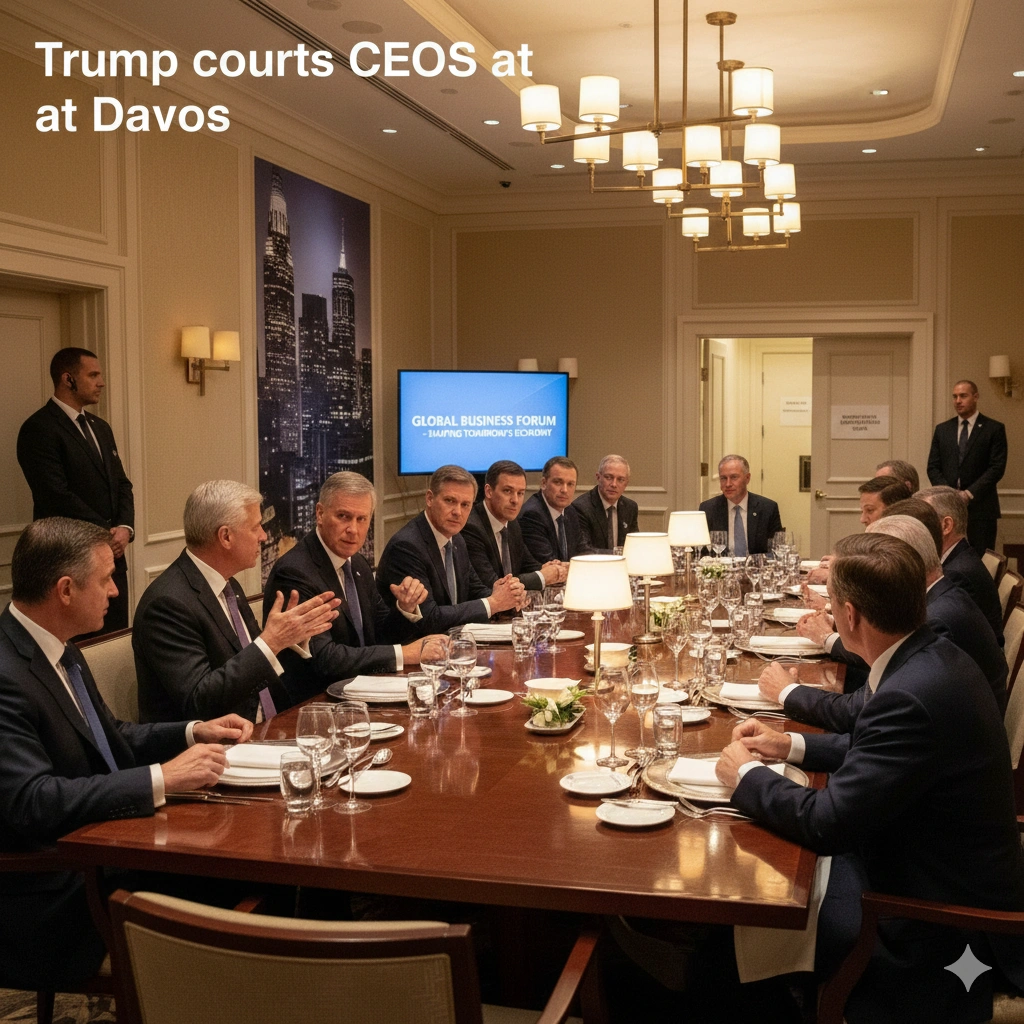
Davos Dinner Signals Business-Friendly Outreach
At the World Economic Forum in Davos, Trump convened dozens of top CEOs for a multi-hour dinner and networking session, creating a forum for dialogue on economic strategy and innovation. Executives reportedly described the session as energetic and pragmatic, with several noting that Trump’s approach encourages corporate growth and investment confidence.
According to Fortune, one executive remarked that “it feels like he wants us to win,” reflecting growing sentiment that the administration is focused on policies perceived as pro-business. The gathering also offered insight into how the U.S. administration engages directly with global corporate leaders to influence economic momentum.
AI Boom and GDP Growth Fuel Executive Optimism
The Trump pro-business CEO of America framing is bolstered by tangible economic metrics. The U.S. economy achieved 4.4% GDP growth in Q3 2025, outperforming expectations, while stock markets have seen sustained gains. Analysts and executives attribute part of this surge to AI-driven innovation, positioning the U.S. as a global leader in emerging technologies.
Fortune highlights that the administration’s “move-fast” style mirrors private-sector practices, emphasizing experimentation with tariffs, regulatory flexibility, and market-driven dealmaking. While some observers question the overlap between national interest and corporate benefit, executives continue to view the environment as favorable for business expansion.
Running the Country Like “USA Inc.”
Fortune’s column describes Trump’s governance as operating like a CEO of a corporation, where strategic experimentation and negotiation are central. This includes:
- Leveraging private-sector tactics in policymaking
- Exploring tariffs and trade deals for maximum leverage
- Encouraging corporate-led growth initiatives
This analogy frames Trump as pro-business, though it raises questions about the balance between public service and profit-driven approaches. Analysts note that such a style resonates with CEOs who favor efficiency and results-driven governance.
Impact on U.S. Business Sentiment
Executives’ perceptions of Trump as pro-business CEO of America are translating into renewed confidence in investment and market stability. Corporate leaders are reportedly reassessing U.S. policy predictability in sectors like AI, manufacturing, and tech innovation.
Fortune’s reporting connects this optimism to broader discussions at Davos, including insights from tech leaders like Demis Hassabis of Google AI and updates on the World’s Most Admired Companies, emphasizing how leadership style and market growth are intertwined in shaping sentiment.
AI Innovation Driving Confidence in Trump’s Business Approach
The perception of Trump pro-business CEO of America is reinforced by the U.S. AI boom, which executives view as a major driver of economic growth. Companies across technology, finance, and manufacturing are investing heavily in AI solutions, spurring productivity gains and fueling optimism in corporate boardrooms.
Fortune notes that Trump’s administration has signaled support for AI-friendly policies, including tax incentives for R&D and regulatory flexibility. This approach aligns with the private-sector mentality of fast experimentation and results-driven strategy, making executives feel the government is fostering a climate where innovation can thrive.
Trade Tactics and Market Reactions
Another key dimension of Trump pro-business CEO of America is his distinctive approach to trade and tariffs. By leveraging targeted trade measures, the administration aims to protect domestic industries while encouraging competitive global engagement. Executives at Davos expressed cautious approval, noting that such tactics often mirror corporate negotiation strategies.
At the same time, analysts emphasize the need to monitor potential market volatility from these moves. While some worry about short-term disruptions, the prevailing sentiment among CEOs is that a deal-focused, business-oriented government enhances predictability and opens opportunities for long-term investment, particularly in sectors tied to AI and advanced manufacturing.
Conclusion
By framing Trump as a pro-business CEO of America, Fortune captures a growing narrative among executives that policy decisions, trade tactics, and AI-led growth signal a favorable environment for business innovation and expansion.
While questions remain about the limits of corporate-style governance in public policy, the combination of Davos engagement, AI growth, and strong GDP performance positions the U.S. as a market of opportunity under Trump’s leadership.
For more details & sources visit: Fortune
For the latest updates from the United States, our U.S. news page.