
Tinubu’s RHINSE Initiative Transforming National Sports Economy is currently the talk of the African sports industry as 2026 marks a pivotal shift for Nigeria. Basketball promoter and visionary Igoche Mark has stepped forward to publicly praise the administration’s bold new direction, labeling the current reforms as a necessary “breath of fresh air” for a sector long starved of structured investment. This endorsement comes at a time when the federal government is pivoting toward treating sports not just as a recreation, but as a viable commercial engine capable of driving GDP growth and youth employment.
The Renewed Hope Initiative for Nigeria’s Sports Economy, commonly referred to as RHINSE, is designed to overhaul the foundational pillars of the industry. By focusing on infrastructure rehabilitation and grassroots development, the initiative seeks to ensure that talented youngsters from every corner of the federation have access to world-class facilities. Igoche Mark’s commendation highlights how these systematic changes are finally aligning Nigeria with global best practices in sports administration and commercialization.
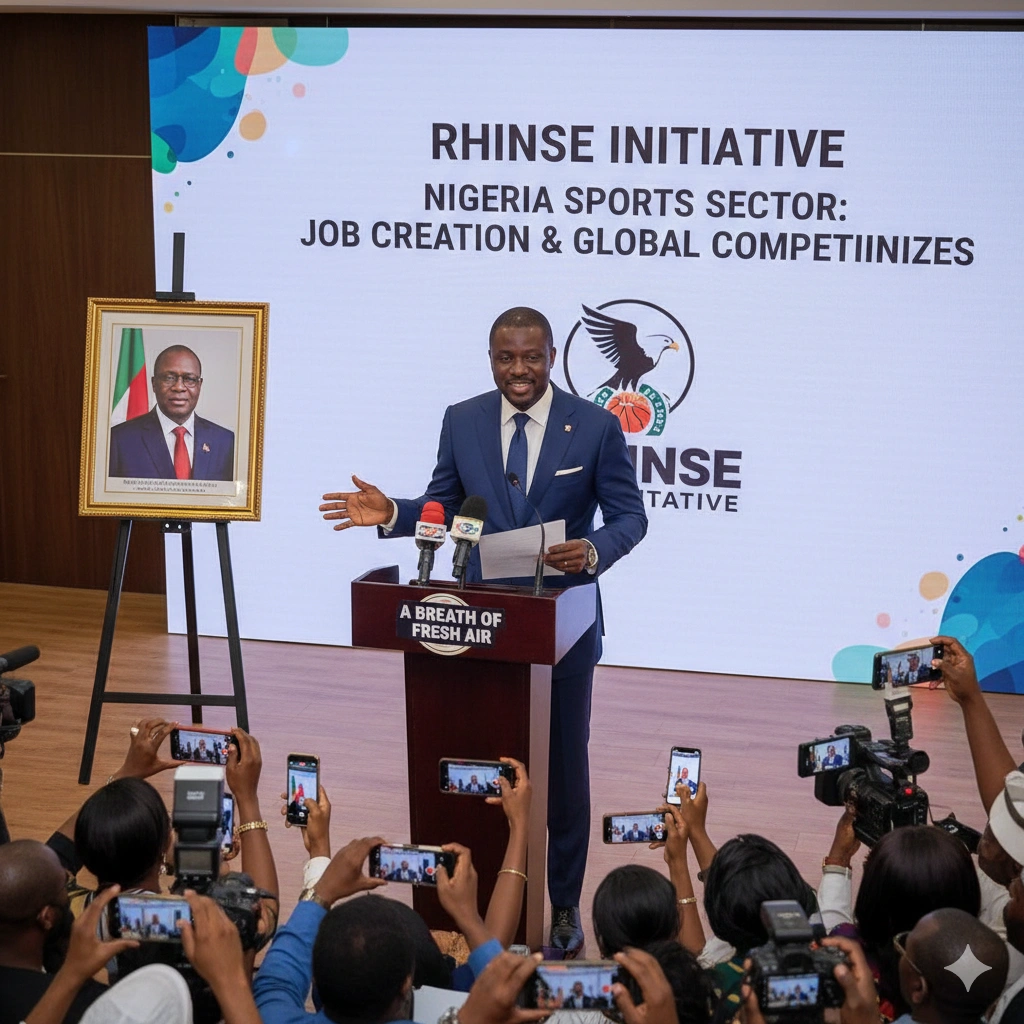
The Strategic Framework of the RHINSE Program
The core of the Tinubu’s RHINSE Initiative Transforming National Sports Economy lies in its multifaceted approach to sector management. Unlike previous ad-hoc interventions, this program is integrated into the National Sports Commission’s long-term strategy, ensuring that funding is tied to specific deliverables such as facility upgrades and elite athlete training. The initiative emphasizes the importance of the “sports-as-business” model, which encourages private-sector participation to reduce the total reliance on the federal treasury.
President Tinubu’s recent social media engagement has further solidified the government’s stance, acknowledging that sports play a critical role in the broader national economy. By promising higher budget allocations and, more importantly, the timely release of these funds, the administration is removing the bureaucratic bottlenecks that previously hindered athlete preparation for international competitions. This transparency is a key reason why stakeholders like Igoche Mark are optimistic about the future of Nigerian basketball and football.
Infrastructure Rehabilitation and Grassroots Growth
A primary goal of the Tinubu’s RHINSE Initiative Transforming National Sports Economy is the restoration of decaying sports monuments across the country. From the National Stadium in Lagos to smaller regional arenas, the rehabilitation project aims to provide safe and modern spaces for training. Igoche Mark, the founder of the Mark D’Ball Basketball Championship, understands better than most that without functional courts and pitches, the discovery of the next generation of global stars becomes an impossible task.
Grassroots development is also receiving a significant boost under the new framework. The RHINSE initiative mandates the creation of local talent identification programs that feed directly into the national teams. This bottom-up approach ensures that the Super Eagles, D’Tigers, and other national brands have a steady pipeline of elite talent. By investing in the youth today, the government is effectively securing the commercial viability of Nigerian sports for the next two decades.
Elite Athlete Programs and Global Competitiveness
For Nigeria to maintain its status as a continental powerhouse, the Tinubu’s RHINSE Initiative Transforming National Sports Economy focuses heavily on elite athlete welfare. High-performance centers are being envisioned to provide scientific training, nutritional support, and psychological coaching to representatives of the green and white. Igoche Mark noted that these programs are essential for ensuring that Nigerian athletes do not just participate in global events but consistently reach the podium.
Global competitiveness is also about branding and perception. The initiative seeks to package Nigerian sports as a premium product for international broadcasters and sponsors. When the National Sports Commission successfully manages its elite programs, it increases the market value of the athletes, which in turn attracts foreign direct investment. This cycle of success is what the RHINSE program intends to institutionalize across all sporting federations, from athletics to cricket and basketball.
Tinubu’s RHINSE Initiative Transforming National Sports Economy
The ongoing success of the Tinubu’s RHINSE Initiative Transforming National Sports Economy is largely attributed to the political will emanating from the presidency. Igoche Mark’s personal letter to President Tinubu on February 10 served as both a thank-you note and a call for sustained momentum. In the letter, Mark emphasized that the sports community has noticed the shift in tone and the increased frequency of fund releases, which has historically been the “Achilles’ heel” of Nigerian sports administration.
Furthermore, the initiative is designed to be a catalyst for job creation. Beyond the athletes, the sports economy encompasses coaches, physiotherapists, stadium managers, marketers, and media professionals. By professionalizing the league structures and improving the quality of the “product,” the RHINSE initiative is creating a value chain that can absorb thousands of unemployed graduates. This alignment with the broader “Renewed Hope” agenda makes the sports sector a critical pillar of national development in 2026.
The Role of Corporate Sponsorship and Branding
A major component of the Tinubu’s RHINSE Initiative Transforming National Sports Economy is the call for corporate Nigeria to step up. Igoche Mark has been vocal in urging big brands to move beyond occasional donations and enter into long-term strategic partnerships with national teams. Brands like the Super Falcons and the national cricket teams offer massive visibility, and the RHINSE framework provides the legal and commercial protections necessary to give sponsors confidence in their return on investment.
- Corporate backing reduces the pressure on the federal budget for team travels.
- Sponsorship deals allow for the hiring of top-tier foreign and local technical staff.
- Brand associations with successful teams improve the “Made in Nigeria” global image.
- Private funds can be directed toward specific community-based sports projects.
Enhancing Revenue Generation and Sustainability
The financial sustainability of Nigerian sports is the ultimate litmus test for the Tinubu’s RHINSE Initiative Transforming National Sports Economy. The government’s goal is to move toward a self-sustaining model where domestic leagues generate enough revenue through ticket sales, merchandising, and TV rights to fund their own operations. This transition would free up government resources to focus exclusively on developmental programs and school sports, where the commercial return is less immediate but the social impact is high.
Igoche Mark’s advocacy for this model stems from his experience with the Mark D’Ball championships, which demonstrated that well-organized events can attract significant audiences and brand interest. By scaling this success to the national level, the RHINSE initiative aims to create a “sports market” rather than a “sports department.” This shift in mindset is what Mark describes as the true revolution currently unfolding in the federal capital and across the 36 states.
Impact on National Unity and Social Cohesion
Beyond the economic metrics, the Tinubu’s RHINSE Initiative Transforming National Sports Economy plays a vital role in national integration. In a diverse nation like Nigeria, sports remain one of the few platforms that bridge ethnic and religious divides. President Tinubu’s focus on the sector acknowledges that a winning national team boosts the collective morale of the citizenry. The “Renewed Hope” in sports is therefore also a renewed hope in the strength of the Nigerian union.
The initiative encourages the hosting of national multi-sport events that bring together youths from different backgrounds. These interactions foster a sense of belonging and shared purpose. Igoche Mark highlighted that when the government invests in a basketball court in a rural community, they are not just building a facility; they are providing a sanctuary for discipline, teamwork, and peace. This social engineering aspect of RHINSE is arguably as important as the economic benefits.
Strategic Leadership in the National Sports Commission
The effectiveness of the Tinubu’s RHINSE Initiative Transforming National Sports Economy is heavily dependent on the leadership within the National Sports Commission. The shift back to a Commission-led structure has allowed for more technical expertise to take the lead in policy implementation. This move has been lauded by Igoche Mark as it ensures that “sports people” are the ones making decisions about the future of the industry, rather than purely political appointees without a background in the field.
This leadership is currently working on a digital database of Nigerian athletes worldwide to track performance and ensure that the best talents are always available for national service. By leveraging technology, the RHINSE initiative is modernizing how talent is scouted and managed. This data-driven approach reduces the risk of age cheating and ensures that investment is directed toward athletes with the highest potential for international success.
Improving the Quality of Domestic Leagues
One of the measurable outcomes of the Tinubu’s RHINSE Initiative Transforming National Sports Economy is the rising quality of domestic sports leagues. Whether it is the Nigeria Premier Football League or the domestic basketball circuits, the emphasis on better officiating, security at venues, and improved pitch quality is attracting fans back to the stadiums. Igoche Mark pointed out that the “breath of fresh air” is most visible when local fans start choosing domestic games over foreign broadcasts.
Better leagues lead to better national teams. When the home-based players are challenged in a professional environment, they transition more easily to the international stage. The RHINSE initiative’s focus on league professionalization also includes mandatory insurance for athletes and minimum wage standards, making sports a more attractive and secure career path for the Nigerian youth.
The Global Perception of Nigerian Sports
The international community is taking note of the changes brought about by the Tinubu’s RHINSE Initiative Transforming National Sports Economy. Nigeria is increasingly being seen as a reliable partner for hosting international events and a fertile ground for sports tech startups. The administration’s commitment to transparency and infrastructure has encouraged international federations to consider Nigeria for continental championships in the near future.
Igoche Mark believes that the next three years will see a surge in the export of Nigerian sports services, including coaching and management expertise. As the domestic sector matures under the RHINSE framework, Nigeria will not only be known for its raw athletic talent but also for its administrative excellence. This holistic growth is what will define the legacy of the current administration in the annals of African sports history.
Accountability and Transparency in Funding
A critical pillar that Igoche Mark praised regarding the Tinubu’s RHINSE Initiative Transforming National Sports Economy is the new regime of accountability. The National Sports Commission has introduced stricter auditing processes for how funds are utilized by various federations. This ensures that the increased budget allocations mentioned by President Tinubu actually reach the intended recipients—the athletes and the facilities—rather than being lost to administrative overheads.
Transparency in fund releases has allowed for better planning. In the past, teams often traveled late or lacked proper kits due to delayed approvals. Under the RHINSE initiative, the timeline for fund requests and releases has been streamlined. This operational efficiency is a quiet but powerful transformation that gives athletes the peace of mind to focus entirely on their performance during competitions.
Strengthening School Sports and Education
The Tinubu’s RHINSE Initiative Transforming National Sports Economy recognizes that the journey of a champion begins in the classroom. New policies are being introduced to re-integrate robust physical education and inter-school competitions into the national curriculum. By partnering with the Ministry of Education, the National Sports Commission is ensuring that schools become the primary centers for talent identification.
This synergy ensures that young athletes do not have to choose between their education and their sporting dreams. Scholarships and “student-athlete” programs are being expanded under the RHINSE framework, allowing gifted youngsters to pursue their studies while training at an elite level. This balanced approach creates well-rounded individuals who can contribute to society even after their active sporting years are over.
The Future of Basketball Under the RHINSE Framework
As a basketball promoter, Igoche Mark is particularly excited about the prospects for the hoops game within the Tinubu’s RHINSE Initiative Transforming National Sports Economy. The “D’Tigers” and “D’Tigress” have already shown that Nigeria can compete at the highest global levels. With the new infrastructure projects targeting indoor sports halls, the domestic basketball league is poised for a major comeback, potentially becoming the most popular spectator sport after football.
The RHINSE initiative’s focus on private sector engagement is a perfect fit for basketball, which has a strong urban following and high lifestyle appeal. Mark’s vision for the game aligns with the government’s goals: professionalized clubs, standardized courts in every major city, and a thriving commercial ecosystem that rewards players and investors alike. The 2026 outlook for Nigerian basketball is brighter than it has been in over a decade.
Challenges and the Road Ahead for RHINSE
While the Tinubu’s RHINSE Initiative Transforming National Sports Economy has made significant strides, challenges remain. The vastness of the country means that reaching every rural area with new infrastructure is a long-term project. Maintenance culture has also been a historical issue in Nigeria, and the RHINSE initiative must ensure that “rehabilitated” facilities do not fall back into disrepair within a few years.
Igoche Mark has urged the government to remain steadfast and not allow the current momentum to fizzle out. Consistency is the key to institutionalizing these changes. The road ahead involves deepening the legal frameworks that protect sports investments and ensuring that the National Sports Commission remains insulated from political fluctuations. If the “breath of fresh air” continues to blow, the Nigerian sports economy will soon become an envy of the continent.
Conclusion: A New Era for Nigerian Sports
The endorsement of the Tinubu’s RHINSE Initiative Transforming National Sports Economy by stakeholders like Igoche Mark underscores the transformative potential of the current reforms. By treating sports as a business, focusing on the youth, and demanding transparency, the administration is setting the stage for an unprecedented era of growth. The Nigerian sports sector is no longer just about the 90 minutes on the pitch; it is about the thousands of jobs and the billions of naira in economic activity generated off the field.
As we move through 2026, the success of the RHINSE initiative will be measured by the medals won, the stadiums filled, and the number of young Nigerians who find meaningful employment through sports. With leaders like Igoche Mark providing both support and constructive oversight, the dream of a self-sustaining and globally competitive Nigerian sports economy is finally within reach. The “Renewed Hope” for sports is not just a slogan; it is a reality unfolding across the nation.
For more details & sources visit: ThisDay Live
Read more on Nigeria news: 360 News Orbit – Nigeria.