
Mexico and Taiwan Strengthen Strategic Partnership through a sophisticated industrial alliance that is reshaping the high-tech manufacturing landscape in North America. By leveraging the unique benefits of the USMCA framework, these two economic powerhouses have integrated their semiconductor and electronics supply chains to unprecedented levels. This evolution from basic assembly to high value-added manufacturing is driving a new era of prosperity, as bilateral trade between the nations surpassed 18 billion dollars. Northern Mexico has now become a primary hub for Taiwanese firms looking to establish resilient nearshoring operations that serve the massive demand of the United States market.
The collaboration is not merely about physical trade but represents a deep integration of technological expertise and industrial capacity. As Mexico and Taiwan Strengthen Strategic Partnership, the flow of advanced components like integrated circuits and AI server parts has become essential for regional export competitiveness. This synergy allows Mexico to position itself as a global leader in the production of complex electronics, moving beyond its traditional role in the automotive and aerospace sectors. The partnership serves as a blueprint for how cross-continental cooperation can mitigate global supply chain risks while fostering local economic development and innovation.
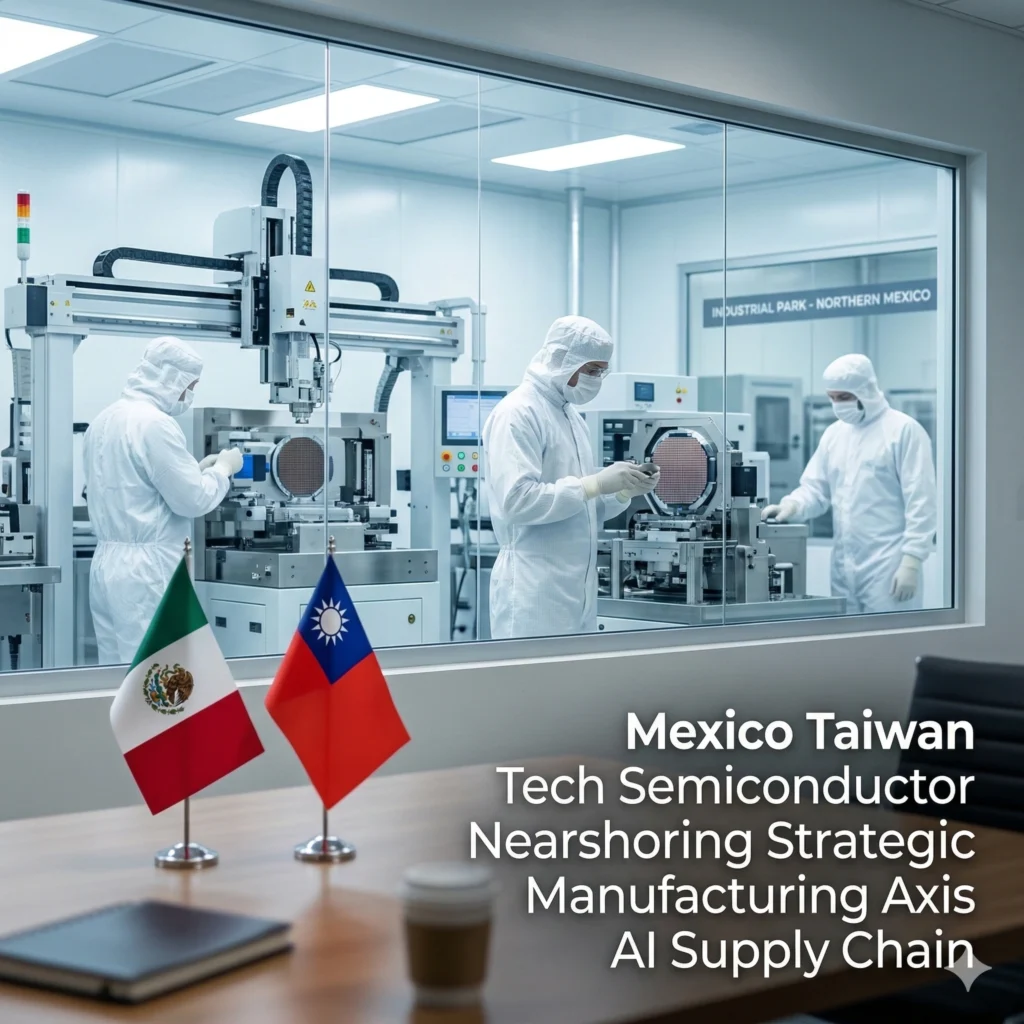
Mexico and Taiwan Strengthen Strategic Partnership
The data from the previous fiscal year confirms that Taiwan has become a cornerstone of the Mexican economy, ranking as its seventh-largest global trading partner. Mexico and Taiwan Strengthen Strategic Partnership to ensure that nearly seven percent of all Mexican imports consist of high-tech Taiwanese inputs. These components are the “brain” of modern machinery, powering everything from consumer electronics to the advanced servers used in data centers. This statistical milestone highlights the critical nature of the relationship, as the Mexican manufacturing sector now relies heavily on the steady supply of Taiwanese innovation to meet international standards.
Strategic investments from industry giants have provided the physical infrastructure needed to sustain this growth. While Mexico and Taiwan Strengthen Strategic Partnership, companies like Foxconn and Quanta Computer have aggressively expanded their footprints in various Mexican states. These expansions are not just about adding floor space but about installing the latest in Industry 4.0 technology. This ensures that the Mexican workforce is operating at the cutting edge of global manufacturing, creating a cycle of continuous improvement and high-value job creation that benefits both the domestic economy and international stakeholders.
Foxconn’s Massive Investment in AI Infrastructure
One of the most significant indicators of this deepening bond is the recent 168 million dollar investment by Foxconn into its Mexican subsidiary. Mexico and Taiwan Strengthen Strategic Partnership through the creation of advanced facilities dedicated to the production of high-end AI servers. This move aligns with the global surge in demand for artificial intelligence processing power, positioning Mexico as a key player in the global digital infrastructure. Foxconn’s decision to prioritize its Mexican operations over other global sites underscores the confidence that Taiwanese investors have in the local business climate and labor force.
- Foxconn now operates fourteen manufacturing plants across nine different Mexican cities.
- The company provides high-tech employment for over 35,000 local workers and engineers.
- New production lines are focused on high-complexity assembly for global cloud providers.
- Investment includes the implementation of automated robotics and smart logistics systems.
The Rise of Northern Mexico as a Tech Hub
The geographic proximity to the United States has made northern Mexico the preferred destination for Taiwanese high-tech clusters. Mexico and Taiwan Strengthen Strategic Partnership by concentrating specialized manufacturing in states like Chihuahua, Nuevo León, and Baja California. These regions offer the logistics infrastructure and talent pools necessary for rapid industrial scaling. The concentration of these firms creates a “Silicon Border” effect, where suppliers and manufacturers are located in close proximity, reducing lead times and transportation costs for the final products destined for North American consumers.
This regional focus has also led to the development of specialized industrial parks that cater specifically to the needs of electronics firms. As Mexico and Taiwan Strengthen Strategic Partnership, local governments have provided incentives and infrastructure upgrades to support these high-tech tenants. This includes the provision of high-capacity fiber optics and reliable energy grids capable of supporting 24/7 manufacturing cycles. The result is a highly efficient ecosystem that can quickly adapt to changing market demands, ensuring that Mexico remains a competitive choice for future Taiwanese investments in the semiconductor and server industries.
Automotive Sector Innovation in Coahuila
The partnership extends deep into the automotive sector, where Taiwanese precision engineering is helping Mexico maintain its dominance. Mexico and Taiwan Strengthen Strategic Partnership as evidenced by the opening of a new 16 million dollar facility by HCMF in the state of Coahuila. This plant is dedicated to the production of high-tech sunroofs and sliding roofs for the next generation of electric and luxury vehicles. By integrating Taiwanese components into Mexican-made cars, the automotive industry can offer more advanced features while meeting the strict regional content requirements of the USMCA.
The Coahuila plant is a prime example of how Taiwanese firms are diversifying their product offerings within Mexico. While Mexico and Taiwan Strengthen Strategic Partnership, the focus is shifting toward “smart” automotive components that include sensors and integrated electronic controls. This move reflects the broader trend of vehicles becoming computers on wheels, requiring the exact type of expertise that Taiwan excels in. The facility is expected to be a major supplier for both traditional American car manufacturers and the new wave of electric vehicle startups entering the North American market.
Semiconductor Supply Chain Integration
A critical component of this alliance is the integration of the semiconductor supply chain into the North American landscape. Mexico and Taiwan Strengthen Strategic Partnership to address the global chip shortage and build a more localized supply of essential electronic components. While the most advanced silicon wafers are still produced in Taiwan, the testing, packaging, and assembly phases are increasingly moving to Mexico. This “back-end” semiconductor manufacturing is a vital link in the chain, providing Mexico with a foothold in one of the world’s most valuable and strategic industries.
- Collaboration includes the establishment of clean-room facilities for sensitive electronic assembly.
- Joint ventures are exploring the development of local testing laboratories for IC quality control.
- Efforts are underway to align Mexican technical standards with Taiwan’s semiconductor industry norms.
- Integration helps reduce the “time-to-market” for AI-enabled hardware in the United States.
Workforce Development and Industry 4.0
To sustain this high-tech growth, both nations have invested heavily in the training and development of the Mexican workforce. Mexico and Taiwan Strengthen Strategic Partnership by launching specialized educational programs that bridge the gap between traditional engineering and Industry 4.0 skills. These programs involve exchange initiatives where Mexican engineers receive hands-on training at Taiwanese research centers and factories. This knowledge transfer is essential for ensuring that the local talent pool can manage and maintain the sophisticated machinery used in modern electronics manufacturing.
The curriculum of these programs is designed in collaboration with industry leaders to ensure relevance to current market needs. As Mexico and Taiwan Strengthen Strategic Partnership, the focus is on automation, data analytics, and the Internet of Things (IoT) in a manufacturing context. This ensures that the Mexican workforce is not just performing labor but is actively involved in the optimization and design of production processes. By fostering a culture of innovation and technical excellence, the partnership is creating a sustainable foundation for long-term industrial leadership in the electronics sector.
Transitioning to High Value-Added Design
Mexico is currently undergoing a significant transition from a “maquiladora” assembly model to a more sophisticated design and engineering role. Mexico and Taiwan Strengthen Strategic Partnership to facilitate this shift, as Taiwanese firms increasingly locate their research and development centers within Mexico. This allows for “co-design” processes where Mexican engineers work alongside Taiwanese counterparts to develop products specifically tailored for the North American market. This evolution increases the value of Mexican exports and helps the country capture a larger share of the global technology value chain.
The move toward design services is particularly evident in the AI and telecommunications sectors. When Mexico and Taiwan Strengthen Strategic Partnership, the focus is on creating hardware that is optimized for local software environments and regulatory standards. This proximity to the end-user allows for faster iteration and more responsive product development cycles. By moving up the value chain, Mexico is securing its economic future, ensuring that its industrial sector remains relevant in an age of rapid technological change and increasing global competition.
USMCA Framework as a Growth Catalyst
The United States-Mexico-Canada Agreement (USMCA) provides the legal and economic framework that makes this partnership so attractive to Taiwanese investors. Mexico and Taiwan Strengthen Strategic Partnership to take advantage of the tariff-free access and strict “rules of origin” that the treaty provides. For Taiwanese firms, manufacturing in Mexico is the most effective way to ensure their products qualify for preferential treatment within the North American trade bloc. This has created a powerful incentive for firms to move their production bases from Asia to the North American continent.
- The agreement provides legal certainty and intellectual property protection for high-tech firms.
- Rules of origin encourage the use of regional components, boosting local supply chains.
- Labor and environmental standards within the USMCA align with global corporate responsibility goals.
- The treaty facilitates the seamless movement of technical personnel and executives between the nations.
Projecting 1 Growth Record for 2026
Industry experts are optimistic about the future, projecting that Mexican exports linked to Taiwanese technology will grow by more than six percent in 2026. Mexico and Taiwan Strengthen Strategic Partnership as a response to the increasing demand for high-performance computing and automotive electronics. This projected growth would represent 1 growth record for the bilateral relationship, cementing the status of the two nations as an “unbeatable axis” in the global electronics market. The steady increase in trade volume is a clear indicator that the strategic alignment is delivering tangible economic results for both parties.
The growth is also expected to be driven by the continued rollout of 5G infrastructure and the expansion of the “green” economy. While Mexico and Taiwan Strengthen Strategic Partnership, the two nations are exploring new opportunities in renewable energy components and smart city technologies. This forward-looking approach ensures that the partnership is not just reacting to current trends but is actively shaping the future of global industry. The momentum generated over the past few years has created a virtuous cycle of investment and innovation that shows no signs of slowing down.
Challenges and Risk Mitigation Strategies
Despite the overwhelming success of the partnership, both nations remain vigilant about potential risks, ranging from logistical bottlenecks to geopolitical shifts. Mexico and Taiwan Strengthen Strategic Partnership by developing robust risk mitigation strategies that prioritize supply chain diversification and digital security. This includes investing in redundant logistics routes and implementing advanced cybersecurity protocols to protect intellectual property. By proactively addressing these challenges, the two nations are ensuring the long-term resilience of their shared industrial ecosystem.
Effective communication between the private sector and government agencies is a key component of this risk management strategy. When Mexico and Taiwan Strengthen Strategic Partnership, regular high-level dialogues are held to identify and resolve trade barriers or infrastructure deficits. This collaborative approach allows for the rapid resolution of issues that could otherwise hinder growth. The commitment to transparency and cooperation has built a high degree of trust between the two nations, which is the ultimate safeguard against the uncertainties of the global market.
The Role of Small and Medium Enterprises (SMEs)
While the headlines are often dominated by giants like Foxconn, the partnership also provides significant opportunities for small and medium-sized enterprises (SMEs) in both countries. Mexico and Taiwan Strengthen Strategic Partnership by fostering “supplier development programs” that help local Mexican SMEs integrate into the Taiwanese supply chain. This might involve providing technical assistance to help local firms meet the stringent quality standards required for electronic components. For Taiwanese SMEs, the Mexican market offers a gateway to North America and a chance to scale their operations in a dynamic environment.
- SMEs are increasingly involved in providing specialized logistics and maintenance services.
- Local firms are developing expertise in the recycling and recovery of electronic waste.
- Joint ventures between Mexican and Taiwanese SMEs are exploring the niche market of IoT devices.
- Software development firms in both nations are collaborating on applications for Industry 4.0.
Impact on Local Communities and Sustainability
The influx of high-tech investment has had a transformative impact on local communities across Mexico, providing high-quality jobs and improving local infrastructure. Mexico and Taiwan Strengthen Strategic Partnership with a focus on sustainable development, ensuring that new factories adhere to high environmental standards. Many Taiwanese firms are implementing “green building” designs and water-recycling systems in their Mexican plants, reflecting a global commitment to corporate sustainability. This responsible approach helps secure community support for long-term industrial projects.
Beyond the economic benefits, the partnership has also fostered cultural exchange and mutual understanding. As Mexico and Taiwan Strengthen Strategic Partnership, programs in schools and universities are introducing students to the languages and cultures of both nations. This “soft power” aspect of the relationship is vital for building a lasting friendship that goes beyond business transactions. By creating a shared vision of a high-tech, prosperous future, Mexico and Taiwan are building a partnership that is as much about people as it is about technology and trade.
Future Outlook: Semiconductors and Beyond
Looking to the end of the decade, the focus of the partnership is expected to shift even more toward advanced semiconductors and quantum computing. Mexico and Taiwan Strengthen Strategic Partnership to ensure they remain at the forefront of the next technological revolution. Plans are already being discussed for the establishment of more advanced research centers and “innovation incubators” in Mexico. These facilities will serve as the breeding ground for the technologies that will define the 2030s, from autonomous aerial vehicles to personalized AI-driven healthcare.
The success of the Mexico-Taiwan partnership serves as a model for other nations looking to build resilient and high-value industrial alliances. As Mexico and Taiwan Strengthen Strategic Partnership, they are demonstrating that geographic distance is no barrier to deep economic integration. The combination of Taiwan’s technological leadership and Mexico’s industrial capacity and strategic location has created a powerful synergy that is reshaping the global economy. As the partnership continues to evolve, its impact will be felt far beyond the borders of the two nations, contributing to a more connected and technologically advanced world.
Conclusion: A Partnership for the Modern Era
The strategic alliance between Mexico and Taiwan is more than just a trade agreement; it is a shared commitment to innovation, resilience, and economic growth. Mexico and Taiwan Strengthen Strategic Partnership to navigate the complexities of the 21st-century global market, proving that collaboration is the key to overcoming challenges and seizing new opportunities. From the massive Foxconn plants in Chihuahua to the precision automotive facilities in Coahuila, the physical evidence of this partnership is visible across the Mexican landscape.
As the two nations move forward, the focus will remain on deepening their integration and expanding the benefits of their cooperation to all sectors of society. When Mexico and Taiwan Strengthen Strategic Partnership, they are building a bridge between Asia and North America that will support the global economy for generations to come. The record-breaking trade figures and massive investments of 2026 are just the beginning of a story that is still being written—a story of two nations working together to lead the world into a high-tech future.
For more details & sources visit: Mexico Business News
Read more on Taiwan news: 360 News Orbit – Taiwan.