
The Syrian Olympic chief banned from attending the London 2012 Olympic Games has highlighted the intersection of sports and international politics. General Mowaffak Joumaa, president of the Syrian Olympic Committee and a figure closely linked to President Bashar al-Assad’s government, has been denied a UK visa due to his regime connections amid Syria’s ongoing civil conflict.
The UK decision underscores how governments may restrict access to international sporting events when officials are associated with human rights abuses or controversial regimes, even as athletes continue to compete.
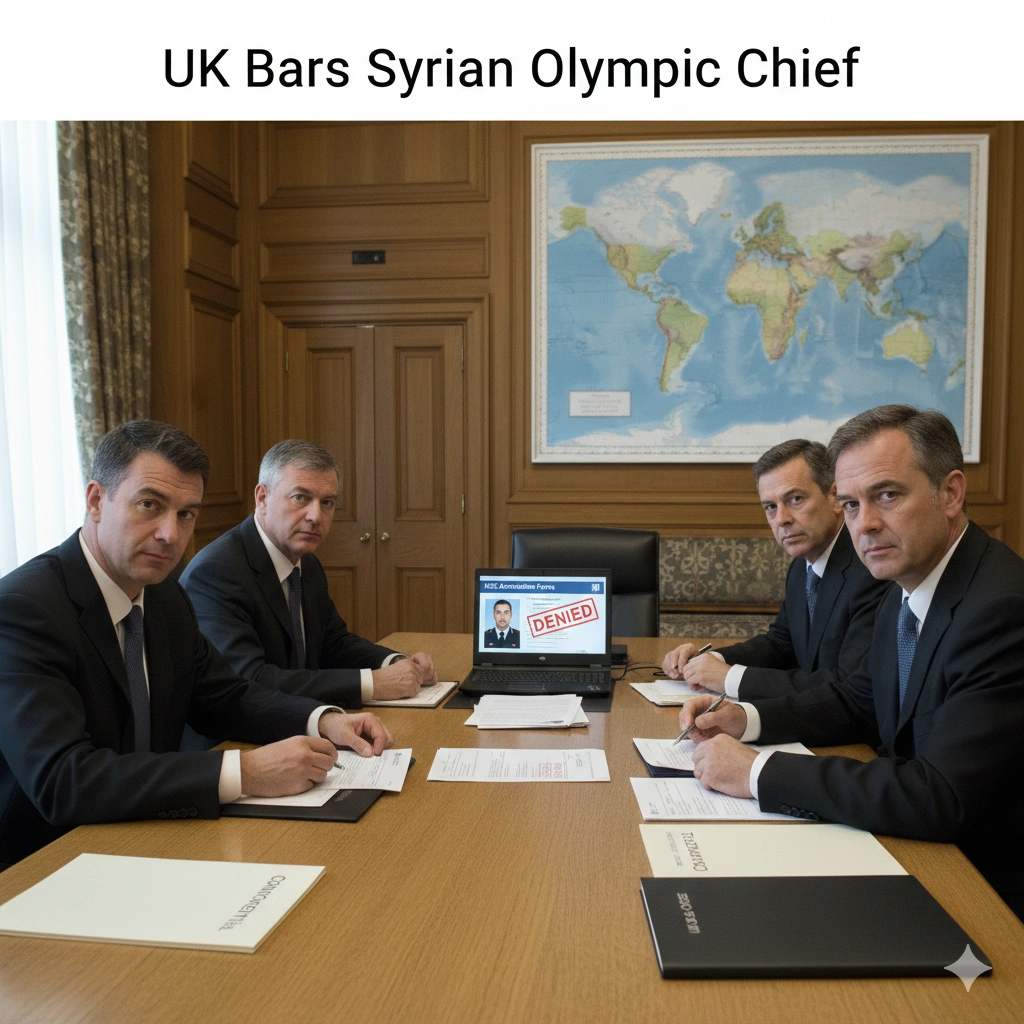
UK Government Action and IOC Accreditation
According to official sources, the decision to bar the Syrian Olympic chief followed consultations between the UK Home Office, Foreign Office, and the Department for Culture, Media and Sport. The Home Office routinely conducts background checks on International Olympic Committee (IOC) officials seeking accreditation and may withhold entry if an individual’s presence is “not conducive to the public good.”
Although UK officials declined to comment specifically on Joumaa’s case, the decision aligns with broader policy to exclude regime-linked figures from official participation while allowing athletes to compete independently.
An IOC spokesperson emphasized that no formal notification had yet been received and described discussions about individual accreditation as premature, highlighting the complexity of balancing political concerns with Olympic neutrality.
Background: Syria’s Civil War and Human Rights Concerns
The Syrian Olympic chief banned decision occurs within the context of the Syrian civil war, which began in March 2011 and has since claimed over 15,000 lives. International condemnation of the Assad regime’s actions has been widespread, with the UK government leading vocal criticism.
Former Foreign Secretary William Hague likened massacres in Syria to atrocities committed in Bosnia during the 1990s, while then-Prime Minister David Cameron described them as “brutal and sickening.” These statements reflect the UK’s ongoing position that officials with documented links to human rights abuses cannot receive the privileges typically granted to Olympic delegates.
As part of this approach, Britain had previously expelled Syria’s charge d’affaires in London, signaling a broader policy to isolate regime-linked officials from official international representation while maintaining support for athletes.
UK Political Leaders Support the Ban
Deputy Prime Minister Nick Clegg publicly affirmed that individuals implicated in human rights violations would face exclusion. In Joumaa’s case, the Syrian Olympic chief banned action aligns with these principles, reinforcing the message that international sports should not provide legitimacy to controversial political figures.
Despite the ban, Joumaa had previously stated that Syria would participate in the London Games regardless of his own status. The UK government clarified that athletes themselves would not be penalized, highlighting a distinction between individual officials and competitors in the Olympic movement.
Implications for International Sports and Governance
The Syrian Olympic chief banned case illustrates the challenges faced by sporting institutions like the IOC when navigating political controversies. While the Olympic Charter emphasizes neutrality, national governments retain the authority to control visas and enforce sanctions on individuals with regime ties.
This incident also raises questions about the broader relationship between human rights and sports governance. Governments may increasingly use access to major events as leverage to express condemnation of abuses or to exert diplomatic pressure on authoritarian regimes.
Syria’s Olympic Participation Amid Political Tensions
Despite Joumaa’s exclusion, Syrian athletes were expected to compete in London under their national flag. The UK’s approach signals that the country sought to balance moral and ethical considerations with the principles of fair play, ensuring athletes are not penalized for actions of officials or government leaders.
The move sets a precedent for future international sporting events, demonstrating that officials linked to regimes with serious human rights concerns may face restrictions even as athletes are welcomed. It also reinforces the message that political accountability extends into arenas beyond traditional diplomacy, including sports.
Conclusion
The Syrian Olympic chief banned from London 2012 reflects the intersection of politics, human rights, and international sports. By denying entry to General Mowaffak Joumaa, the UK emphasized its commitment to condemning abuses while maintaining the integrity of Olympic competition. This high-profile case demonstrates how global sporting events increasingly serve as a platform for moral and diplomatic statements, beyond purely athletic achievement.
For more news, visit 360 News Orbit