
Sundance Midnight film Leviticus made a striking debut at the 2026 Sundance Film Festival, delivering a chilling blend of queer horror, psychological trauma, and supernatural terror. Directed by Adrian Chiarella, the film uses genre storytelling to confront the damaging legacy of conversion therapy and anti-LGBTQ+ repression, positioning fear not within queerness itself, but within the systems that attempt to erase it.
Premiering in Sundance’s Midnight section, known for provocative and boundary-pushing cinema, the film immediately drew attention for its unsettling atmosphere and emotionally charged narrative.
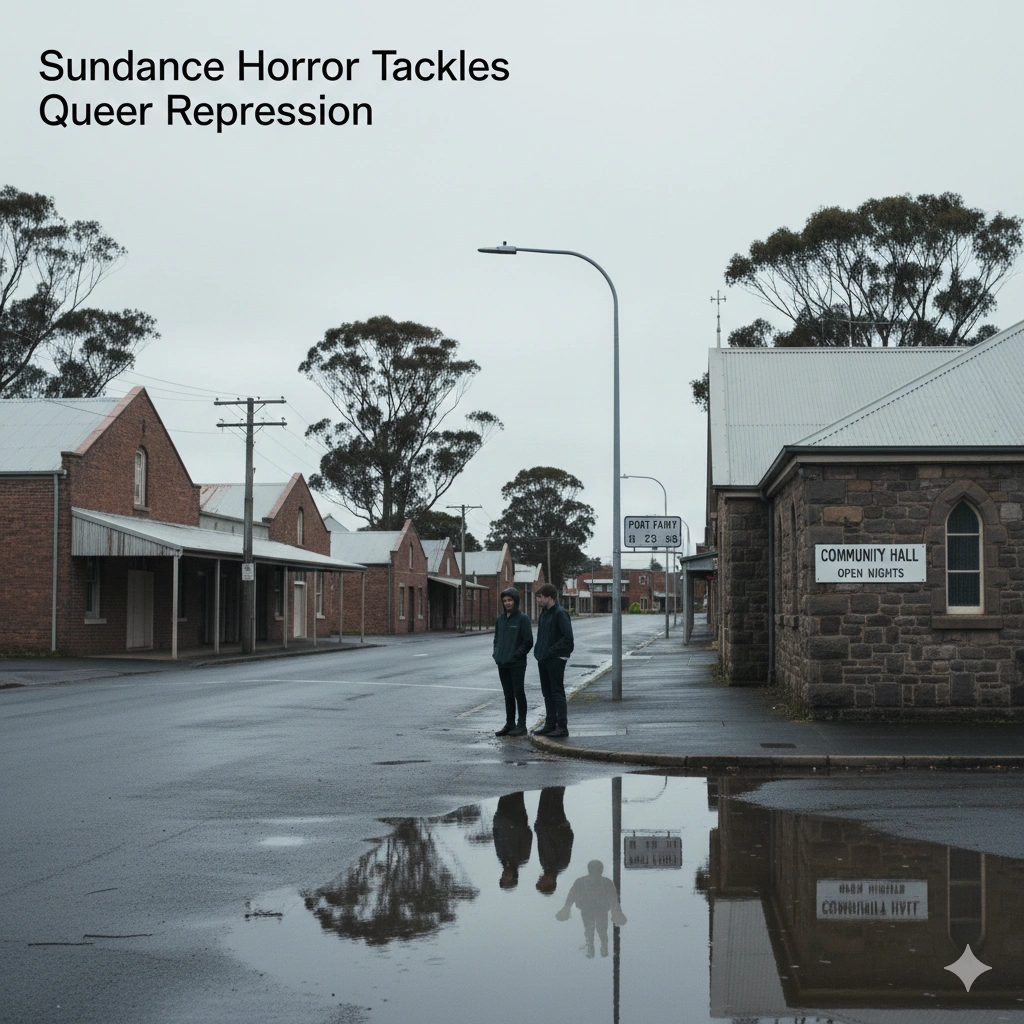
A Grim Small-Town Setting in Australia
Set in Victoria, Australia, Leviticus unfolds in a small, religiously conservative town where social pressure and moral panic quietly shape daily life. The story follows Niam, played by Joe Bird, who relocates with his mother after a personal upheaval. His mother is portrayed by Mia Wasikowska, whose presence adds emotional weight to the film’s exploration of parental influence and silence.
At school, Niam forms a connection with Ryan (played by Stacy Clausen), a bond that slowly deepens into a tender teenage romance. What begins as a fragile first love soon becomes a source of fear as the surrounding community’s intolerance begins to close in.
Supernatural Horror as a Metaphor for Repression
Rather than relying on traditional jump scares, Sundance Midnight film Leviticus builds horror through psychological dread and symbolic terror. As described by The Hollywood Reporter, the film introduces a violent supernatural presence that takes the form of the person the boys desire most — each other.
This disturbing concept transforms intimacy into danger, reflecting how external pressure and religious coercion can twist love into suspicion, shame, and fear. The horror does not come from identity, but from the forced repression of identity.
Drawing From Real-World Conversion Trauma
Director Adrian Chiarella told The Hollywood Reporter that the film draws inspiration from real accounts of exorcisms and conversion therapy practices. These experiences informed the supernatural framework of the story, allowing the film to address deeply painful realities without exploiting them.
Crucially, Chiarella avoids framing queerness as the threat. Instead, the film positions institutional repression, fear-driven ideology, and coercive control as the true sources of horror.
This approach has resonated strongly with critics, who note that the film’s most unsettling moments stem from emotional despair rather than graphic violence.
Performances That Ground the Horror
Joe Bird’s portrayal of Niam anchors the film with vulnerability and quiet intensity, capturing the confusion of adolescence under constant scrutiny. Stacy Clausen brings warmth and uncertainty to Ryan, making the relationship feel authentic and fragile.
Mia Wasikowska’s role as Niam’s mother adds a layer of emotional complexity, reflecting the tension between protection, denial, and complicity that often surrounds young people facing repression.
Together, the cast grounds the film’s supernatural elements in human emotion, preventing the metaphor from feeling abstract.
Why Sundance’s Midnight Section Matters
The Sundance Midnight lineup is reserved for films that challenge audiences and push genre boundaries, and Leviticus fits squarely within that tradition. By combining horror with social commentary, Sundance Midnight film Leviticus joins a growing movement of genre cinema that uses fear to explore identity, trauma, and systemic harm.
The Sundance program description emphasizes that the true danger lies not in desire, but in the violent transformation of love into something forbidden.
Critical Response and Cultural Impact
The Hollywood Reporter argues that the film’s most haunting element is the psychological collapse of first love under external pressure. Rather than sensationalizing trauma, the film invites viewers to sit with discomfort, grief, and loss.
As debates around LGBTQ+ rights and conversion practices continue globally, the film arrives at a moment when stories like this feel both urgent and necessary.
A Horror Film With a Purpose
At its core, Leviticus is not just a horror movie — it is a social critique wrapped in supernatural storytelling. By refusing to villainize queerness and instead exposing the violence of repression, Sundance Midnight film Leviticus stands out as one of the festival’s most emotionally resonant and politically conscious entries.
For more details & sources visit: The Hollywood Reporter
For more Australia-related updates, visit our Australia News page.