
The Sudan humanitarian crisis has escalated into the world’s largest emergency, with nearly three years of civil war pushing millions toward famine, disease, and displacement. For the third consecutive year, the International Rescue Committee (IRC) has ranked Sudan at the top of its Emergency Watchlist, warning that without urgent global intervention, conditions will continue to deteriorate at a catastrophic pace.
Since fighting erupted in April 2023 between the Sudanese Armed Forces and the Rapid Support Forces, more than 1,000 days of conflict have shattered communities, overwhelmed infrastructure, and created what aid groups describe as an unprecedented humanitarian collapse.
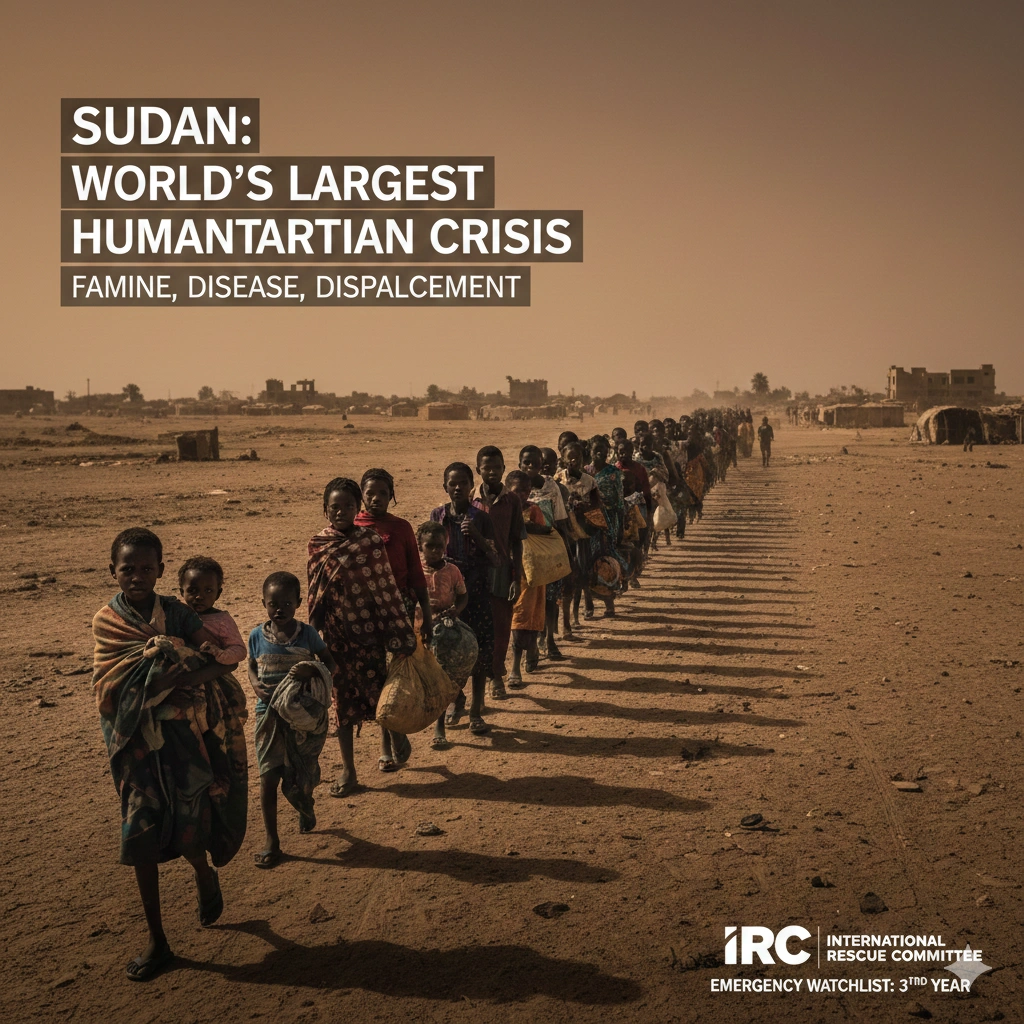
Sudan Humanitarian Crisis by the Numbers
The scale of the Sudan humanitarian crisis is staggering. Over 12 million people have been displaced, marking the largest displacement crisis on record. An estimated 33.7 million people, roughly two-thirds of the population, now require humanitarian assistance.
The conflict has resulted in:
- More than 150,000 deaths
- Destruction of over 70% of hospitals
- Widespread sexual violence and recruitment of child soldiers
- Indiscriminate attacks on civilians and health facilities
Sudan is now experiencing not only the largest humanitarian emergency globally but also the fastest-growing famine crisis.
Famine Conditions and Food Insecurity Worsen
Conflict-driven sieges, collapsing markets, and restricted humanitarian access have pushed over 21 million people into high levels of acute food insecurity. At least 635,000 individuals are already living in famine conditions — more than in the rest of the world combined.
Food prices have soared beyond the reach of ordinary families, while humanitarian convoys struggle to access besieged regions. Aid agencies warn that without expanded safe corridors and funding, famine conditions will spread rapidly across additional provinces.
The Sudan humanitarian crisis is increasingly defined by hunger as much as violence.
Health System Collapse and Disease Outbreaks
The war has devastated Sudan’s healthcare infrastructure. With more than 70% of hospitals damaged or destroyed, access to medical care has become dangerously limited.
A cholera outbreak has infected at least 120,000 people and claimed more than 3,000 lives, exacerbated by collapsing water and sanitation systems. Preventable diseases are spreading as immunization campaigns and routine healthcare services remain suspended in many conflict zones.
Aid organizations are operating mobile clinics and emergency health programs wherever security permits, but the reach remains severely constrained.
Darfur: Civilians Trapped in Extreme Danger
In Darfur, the humanitarian situation is particularly dire. Civilians fleeing El Fasher toward Tawila face deadly escape routes. IRC teams report encountering wounded and deceased civilians along roads, highlighting the extreme risks facing those attempting to reach safety.
More than 170 unaccompanied children have arrived in Tawila alone, raising concerns that many families are trapped, detained, or killed before they can escape.
The Sudan humanitarian crisis is increasingly characterized by the vulnerability of children and women, who face disproportionate risks of violence, exploitation, and malnutrition.
Regional Spillover and Refugee Strain
Neighboring countries including Chad and South Sudan are hosting over 4 million Sudanese refugees. However, these countries lack sufficient resources, particularly amid global aid budget cuts.
Dozens of humanitarian agencies have been forced to scale back life-saving services in refugee camps and host communities. Food distributions, healthcare access, and education programs are under severe strain.
The regional impact of the Sudan humanitarian crisis is compounding instability across already fragile areas.
Urgent Call for Funding and Diplomatic Action
The International Rescue Committee and its partners are urging immediate, large-scale funding commitments and renewed diplomatic pressure on Sudan’s warring parties. Aid groups emphasize three urgent priorities:
- Secure and protected humanitarian corridors
- Increased international funding for food, health, and shelter programs
- Diplomatic efforts to protect civilians and pursue ceasefire negotiations
Without swift global engagement, humanitarian leaders warn that even more communities will slide into famine and preventable death.
As the Sudan humanitarian crisis enters its third year, it stands as a stark reminder of the devastating human cost of prolonged conflict — and the urgent need for coordinated international action.
For more details & sources visit: International Rescue Committee (IRC)
Read more on Sudan news: 360 News Orbit – Sudan.