
Spain’s latest migrant amnesty initiative, set for April to June 2026, targets around 500,000 undocumented migrants, offering them one-year residence and work permits if they’ve resided in the country for at least five months without criminal records. This bold policy bucks broader European anti-immigration sentiments, arriving amid Spain’s robust 2.8% GDP growth in 2025 and a historic low unemployment rate of 9.93%. Unlike fears of overwhelming the job market, historical precedent from the 2005 amnesty suggests this move could integrate workers formally, boosting tax revenues without displacing native employment.
Lessons from the 2005 Regularization
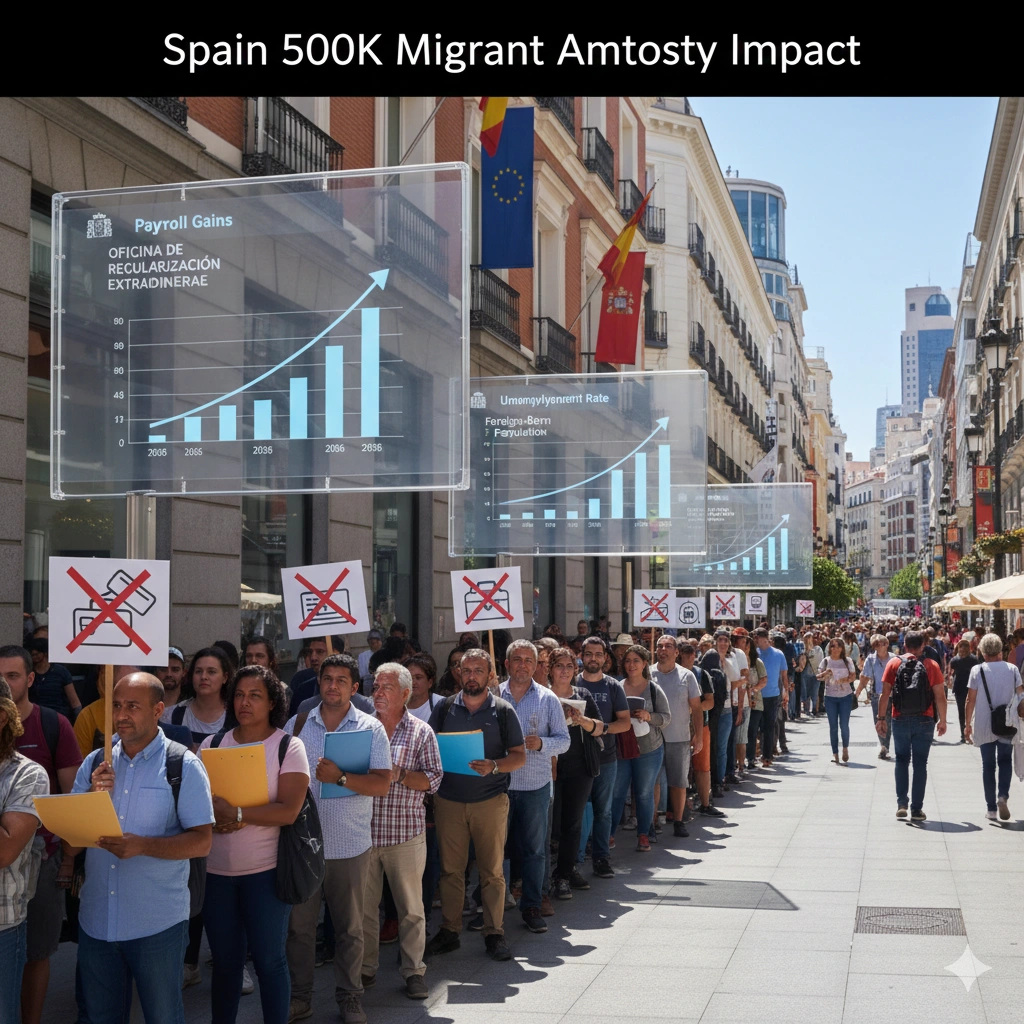
In 2005, Spain successfully regularized approximately 600,000 undocumented migrants, a process that unfolded alongside stricter border controls and crackdowns on informal employment. Far from sparking a “magnet effect” that might draw more illegal entries, the amnesty absorbed these individuals into the formal economy without spikes in healthcare or education demands—undocumented migrants already accessed emergency services, and older Spaniards dominate healthcare usage. Payroll taxes surged by about €4,000 per legalized migrant annually, contributing significantly to public coffers, while income taxes saw minimal change due to many earning minimum wage.
Crucially, no widespread job competition emerged for native workers. The formal labor market expanded to accommodate newcomers, even shrinking the informal sector for locals through enforcement measures. Migrants demonstrated upward mobility, transitioning between roles over time, though they still earned roughly 29% less than natives due to barriers in high-paying sectors. This integration supported economic stability without the predicted native job losses or service strains.
Current Economic Context Supports Integration
Spain’s economy in early 2026 remains resilient, with over 600,000 new jobs created in 2025, particularly in labor-intensive sectors like hospitality, agriculture, construction, and caregiving—precisely where migrants fill gaps. Unemployment’s dip below 10% for the first time since the 2008 crisis underscores ample capacity to absorb 500,000 additional formal workers from an estimated pool of 800,000 undocumented residents. Many hail from Latin America, sharing language and cultural ties that ease integration and reduce friction in diverse urban areas.
This amnesty aligns with long-term demographic needs. Projections indicate Spain’s population reaching 54.6 million by 2074, sustained by immigration as the foreign-born share rises to 18-39%. Without such inflows, an aging workforce would strain pensions and services, especially amid housing shortages and tourism pressures in cities.
Addressing Criticisms and Potential Challenges
Opposition voices, including parties like Vox, decry the policy as bypassing parliament and risking native displacement or vote-seeking nationalization down the line. Yet, 2005 data counters these concerns: no migrant influx materialized, and native wages held steady. Urban services face pressures from tourism and housing woes, but the amnesty’s focus on existing residents—those present before December 31, 2025—mitigates “pull factor” risks through paired enforcement.
Experts note that while pay gaps persist, formal status unlocks better opportunities, mobility, and contributions. Spain’s left-wing government frames this as a human rights-based model compatible with growth and cohesion, as articulated by Minister Elma Saiz.
Migrant Amnesty and Labor Market Dynamics
Spain’s 2026 Migrant Amnesty could significantly influence labor market flexibility, particularly in sectors experiencing chronic shortages. Industries such as agriculture, hospitality, and healthcare often rely on temporary or informal migrant labor, and formalizing these workers may increase productivity, reduce wage underreporting, and enhance workplace protections. Employers could benefit from a more stable, accountable workforce, while migrants gain social security access and employment rights.
Economists suggest that this integration may also help reduce informal labor practices, creating a more transparent labor market overall. By channeling undocumented workers into formal employment, Spain strengthens compliance with labor laws and ensures fairer competition, supporting long-term economic efficiency without crowding out native workers.
Migrant Amnesty and Social Integration
Beyond economics, the Migrant Amnesty has social integration implications, particularly in urban centers with high migrant populations. Legal recognition allows migrants to participate more fully in community life, access education for children, and engage with social services without fear of deportation. This formal inclusion can improve social cohesion and reduce marginalization, addressing challenges like informal housing and underemployment.
Moreover, the policy may influence cultural and civic engagement, with migrants contributing more actively to local economies and public programs. Successful integration depends on complementary measures such as language training, skills recognition, and housing support, ensuring that the Migrant Amnesty not only grants legal status but also facilitates meaningful participation in Spanish society.
Future Implications for Spain and Europe
Looking ahead, this migrant amnesty could reshape EU migration debates, contrasting with deportation trends elsewhere. By formalizing labor, Spain taps into needed workforce expansion, potentially inspiring similar pragmatic approaches. Success hinges on continued border management and sector-specific integration support to maximize benefits.
For more details & sources visit: The Conversation
For more updates, visit 360 News Orbit.