
The Sednit Resurfaces cyber-espionage campaign marks a significant shift in the global threat landscape. Security researchers from ESET have recently identified that the Russian-linked threat actor, historically known as APT28 or Fancy Bear, has returned to its roots of high-level custom development. This evolution is particularly concerning for international defense agencies because the group is now utilizing sophisticated implants named BeardShell and Covenant to compromise high-value targets. By leveraging legitimate cloud infrastructure, the attackers are successfully bypassing traditional network monitoring systems that typically flag suspicious outbound traffic to unknown domains.
The group is currently focusing its efforts on Ukrainian military personnel by employing social engineering tactics that are increasingly difficult to detect. These operations represent a departure from the simpler phishing tools the group favored around 2019, signaling a renewed investment in complex engineering. As the conflict in Eastern Europe continues to drive cyber activity, the Sednit Resurfaces narrative highlights the persistent nature of state-sponsored threats. Understanding the mechanics of these new toolkits is essential for network defenders who must now account for malware that hides within the encrypted traffic of popular consumer cloud services.
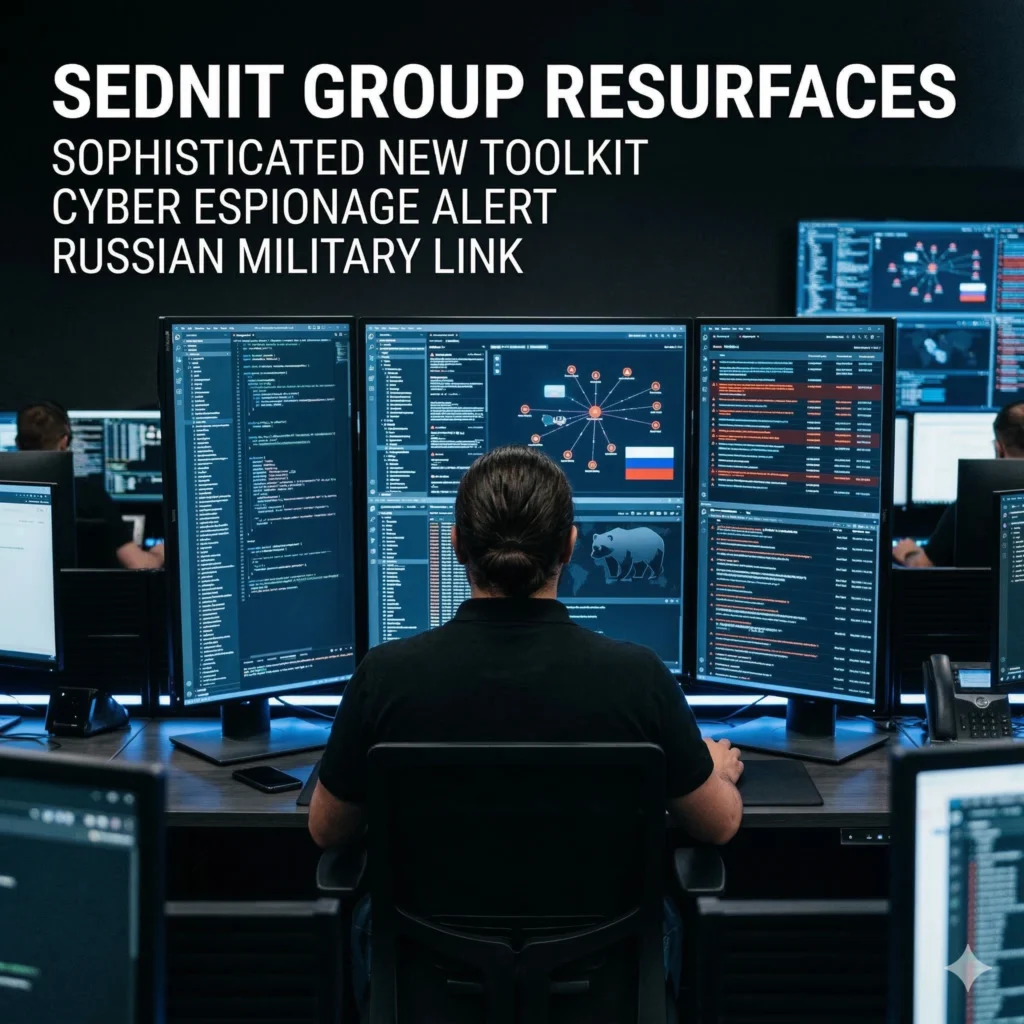
Understanding the New Sednit Resurfaces Malware Toolkit
The technical analysis of the recent breaches reveals a strategic return to custom-coded implants designed for long-term persistence and stealth. ESET researchers began their investigation after detecting a 2024 breach in Ukraine that featured a keylogger derived from decade-old code, proving the group’s consistency. This discovery led to the identification of BeardShell, a new custom implant that allows operators to execute PowerShell commands with surgical precision. Unlike older versions of malware, this tool is specifically built to communicate through the Icedrive cloud service, which provides a layer of plausible deniability.
Because Icedrive lacks a public API for command-and-control functions, the developers behind the Sednit Resurfaces movement reportedly reverse-engineered the service’s legitimate client. This high level of effort demonstrates the resourcefulness of the GRU-affiliated actors, as they are willing to perform deep engineering to maintain access. Furthermore, the toolkit includes Covenant, a heavily modified version of an open-source framework that has been weaponized for advanced espionage. With over 90 distinct functions, Covenant provides the group with a comprehensive platform for data exfiltration and lateral movement across compromised enterprise environments.
Strategic Use of Cloud Infrastructure in Sednit Resurfaces
One of the most tactical elements of the current campaign is the reliance on legitimate cloud providers to mask malicious activity from security analysts. By using services like Icedrive, the attackers ensure that their traffic blends in with normal office productivity data, making automated blocking nearly impossible. This strategy complicates the work of SOC teams who cannot simply block access to major cloud domains without disrupting essential business or military operations. Consequently, the Sednit Resurfaces operation remains effective even against modern endpoint detection and response systems that prioritize domain reputation.
The BeardShell implant acts as a sophisticated communication bridge, allowing the attackers to maintain a presence even if their primary tools are discovered. It often functions as a “redropper” or a secondary backup, ensuring that the threat actor can regain access to a network if the initial Covenant infection is purged. This redundancy is a hallmark of state-sponsored activity where the mission objective outweighs the risk of individual tool exposure. Researchers note that this cat-and-mouse game has forced defenders to look deeper into behavioral patterns rather than relying on static indicators of compromise.
Social Engineering Tactics Driving Sednit Resurfaces
The initial stage of the compromise typically begins with highly targeted social engineering campaigns conducted over messaging platforms like Signal and WhatsApp Desktop. Attackers spend considerable time researching their targets to craft persuasive messages that encourage the opening of Trojanized documents or malicious links. In some documented cases, the threat actors have even initiated voice calls to build a false sense of rapport and urgency with the victim. This human-centric approach ensures a higher success rate for the Sednit Resurfaces campaign compared to bulk email phishing.
- Threat actors use Signal Desktop to bypass traditional email gateways and security filters.
- Trojanized documents are frequently disguised as official military reports or policy updates.
- Voice calls are used to confirm the identity of the target and pressure them into clicking links.
- Persistence is achieved by installing the Covenant framework immediately after the initial document execution.
Once a target is successfully social engineered, the loading chains are frequently updated to stay ahead of antivirus signatures and heuristic scanners. This constant mutation of the delivery mechanism is part of what makes the Sednit Resurfaces activity so resilient against automated defense measures. By the time a specific loader is identified, the group has usually transitioned to a new variant with a different file structure.
Sednit Resurfaces
The return to custom malware development marks a pivotal moment for the group, which is widely recognized as an arm of the Russian military intelligence. Following a period where they utilized simpler, off-the-shelf tools, the current toolkit represents a sophisticated investment in the Sednit Resurfaces framework. This shift suggests that the group’s objectives have become more complex, requiring deeper levels of access and stealthier exfiltration methods than phishing can provide. The custom implants are tailored to the specific security environments of their high-value targets in the Ukrainian military sector.
Security professionals are warned that the current iteration of these tools is designed specifically for long-term monitoring and strategic data gathering. Covenant’s modular nature allows the group to add new capabilities on the fly, depending on the specific defenses encountered within a victim’s network. As part of the Sednit Resurfaces strategy, the malware can perform lateral movement to identify domain controllers or sensitive databases. This capability ensures that the espionage mission can continue even if the initial entry point is secured by IT administrators later on.
Detection Challenges and Defensive Recommendations
Defending against the Sednit Resurfaces threat requires a multi-layered approach that moves beyond simple perimeter security and enters the realm of behavioral analysis. Since the malware utilizes legitimate cloud services, defenders should monitor for unusual patterns of data transfer to these platforms, particularly from non-standard processes. While Icedrive is a legitimate tool, its presence in a military environment where it is not officially sanctioned should be treated as a high-severity alert. Organizations must also prioritize the security of messaging applications on desktop environments to prevent initial access.
- Implement strict application whitelisting to prevent unauthorized PowerShell execution by unknown implants.
- Monitor for unauthorized use of cloud storage applications like Icedrive across the entire corporate network.
- Conduct regular social engineering simulations that include lures delivered via instant messaging platforms.
- Deploy advanced memory scanning tools to detect the Covenant framework even when it resides only in RAM.
Furthermore, the Sednit Resurfaces campaign emphasizes the need for robust endpoint visibility to track the execution of secondary backup tools like BeardShell. If a primary infection is detected, incident responders must perform a comprehensive sweep to ensure no redroppers remain dormant. Failure to remove these secondary implants allows the threat actor to maintain a persistent foothold regardless of password resets or initial cleanup efforts.
Global Impact of the Sednit Resurfaces Campaign
The implications of this renewed activity extend far beyond the borders of Ukraine, as the techniques perfected here are likely to be deployed elsewhere. The Sednit Resurfaces trend shows that state-sponsored actors are successfully adapting to the move toward cloud-based work environments by weaponizing the very tools meant for productivity. As international tensions remain high, other government and defense sectors must evaluate their exposure to similar sophisticated custom malware. The Icedrive communication method provides a blueprint for other threat actors looking to hide in plain sight.
History has shown that Sednit is a patient and persistent adversary, often waiting months or years to activate a compromised account for a high-priority mission. The Sednit Resurfaces activity in 2026 is a reminder that cyber-espionage is a marathon, not a sprint, requiring constant vigilance from the global security community. By sharing intelligence on tools like BeardShell and Covenant, researchers hope to create a collective defense that can eventually outpace the group’s development cycle. The transparency provided by organizations like ESET is critical for building resilience against such well-funded military intelligence operations.
Evolution of Custom Implants in Sednit Resurfaces
The technical sophistication of BeardShell is particularly noteworthy because it bypasses the need for a traditional Command and Control (C2) server. In the Sednit Resurfaces model, the malware interacts with a cloud folder, which the attacker also accesses, creating a “dead drop” style of communication. This method is incredibly difficult to attribute or block without taking down the entire cloud service provider’s IP range. The use of PowerShell commands through this bridge allows the attacker to execute any number of tasks without ever downloading a traditional .exe file to the disk.
This fileless approach is a key component of the Sednit Resurfaces strategy, as it leaves a much smaller forensic footprint for investigators to follow. When Covenant is deployed alongside BeardShell, the group gains a redundant and highly capable platform for virtually any type of cyber-espionage. The modularity of these tools means that as new vulnerabilities are discovered in 2026, the Sednit actors can quickly integrate exploits into their existing toolkit. This adaptability is why the group remains one of the most dangerous threats in the digital domain today.
Historical Context of the Sednit Resurfaces Group
To understand why the current campaign is so effective, one must look at the long history of APT28 and their previous successes in high-profile breaches. The Sednit Resurfaces narrative is just the latest chapter for a group that has been active for nearly two decades, consistently targeting political and military organizations. Their ability to iterate on their codebase, as seen with the decade-old keylogger found in recent Ukrainian breaches, shows a level of institutional knowledge rarely seen in the cybercrime world. This longevity allows them to refine their tactics based on years of trial and error against the world’s best defenses.
The 2019 shift to simpler tools was likely a tactical choice to lower the cost of operations, but the return to custom malware seen in Sednit Resurfaces indicates a new phase of high-stakes intelligence gathering. When state-sponsored groups invest in custom development, it usually precedes a major geopolitical event or a shift in military strategy. Consequently, the cybersecurity community must view the current BeardShell and Covenant deployments as precursors to more significant actions. The focus on Ukraine currently acts as a testing ground for these new technologies before they are potentially used in broader global campaigns.
Technical Breakdown of the Covenant Framework
The Covenant framework, while originally an open-source tool for red teaming, has been meticulously altered to suit the needs of the Sednit Resurfaces operation. These modifications include custom obfuscation layers that hide the malware’s true intent from static analysis tools and sandbox environments. By incorporating over 90 functions, the modified Covenant allows for complex tasking, such as taking screenshots, harvesting browser credentials, and even recording audio. This level of total control over a target’s machine is the ultimate goal of the Sednit Resurfaces campaign.
- Custom obfuscation prevents the detection of Covenant signatures by standard Windows Defender protocols.
- Credential harvesting modules are specifically designed to target modern browser encrypted storage.
- The framework supports asynchronous communication to further evade real-time traffic monitoring.
- Lateral movement modules allow for the rapid spread of the malware through Windows-based networks.
As the Sednit Resurfaces movement continues to gain momentum, the group is expected to integrate even more advanced features into their modified Covenant toolkit. The ability to pivot from a single compromised workstation to an entire network is what makes this group a Tier-1 threat. Network administrators are encouraged to look for the specific “BeardShell” behavior of unusual PowerShell activity linked to cloud storage synchronization processes.
Conclusion and Future Outlook on Sednit Resurfaces
The re-emergence of APT28 with custom toolsets serves as a stark warning to the international defense community that the era of simple phishing is being supplemented by complex engineering. The Sednit Resurfaces campaign proves that even with advanced global monitoring, highly motivated state actors can still find gaps in the armor by using legitimate services. As we look toward the remainder of 2026, the cat-and-mouse game between ESET researchers and Sednit developers will undoubtedly intensify. The primary lesson for all organizations is that trust in “legitimate” traffic must be verified through deep behavioral analytics.
Maintaining a strong defensive posture against the Sednit Resurfaces threat requires a combination of technical controls and employee awareness. While the malware is sophisticated, it still relies on a human being making the initial mistake of trusting a message on a platform like Signal. By hardening the human element and implementing rigorous monitoring of cloud-based communications, organizations can significantly reduce their risk of becoming the next victim. The battle against APT28 is ongoing, but with continued collaboration and intelligence sharing, the security community can effectively counter the Sednit Resurfaces threat.
For more details & sources visit: Dark Reading
For more regional updates and industry insights, visit our Russia News Page.