
The Saudi airstrikes Yemen in 2025 have escalated tensions in southern Yemen as Riyadh targeted Southern Transitional Council (STC) military positions in Hadramout. The strikes followed Saudi Arabia’s call for STC troop withdrawals from southern provinces, which the kingdom described as an “unjustified escalation.”
Although no casualties or major damage were reported, eyewitnesses observed smoke and explosions across several locations. Analysts view the strikes as both a tactical measure and a diplomatic signal, reinforcing Saudi Arabia’s influence in southern Yemen while pressuring the STC to comply with coalition directives.
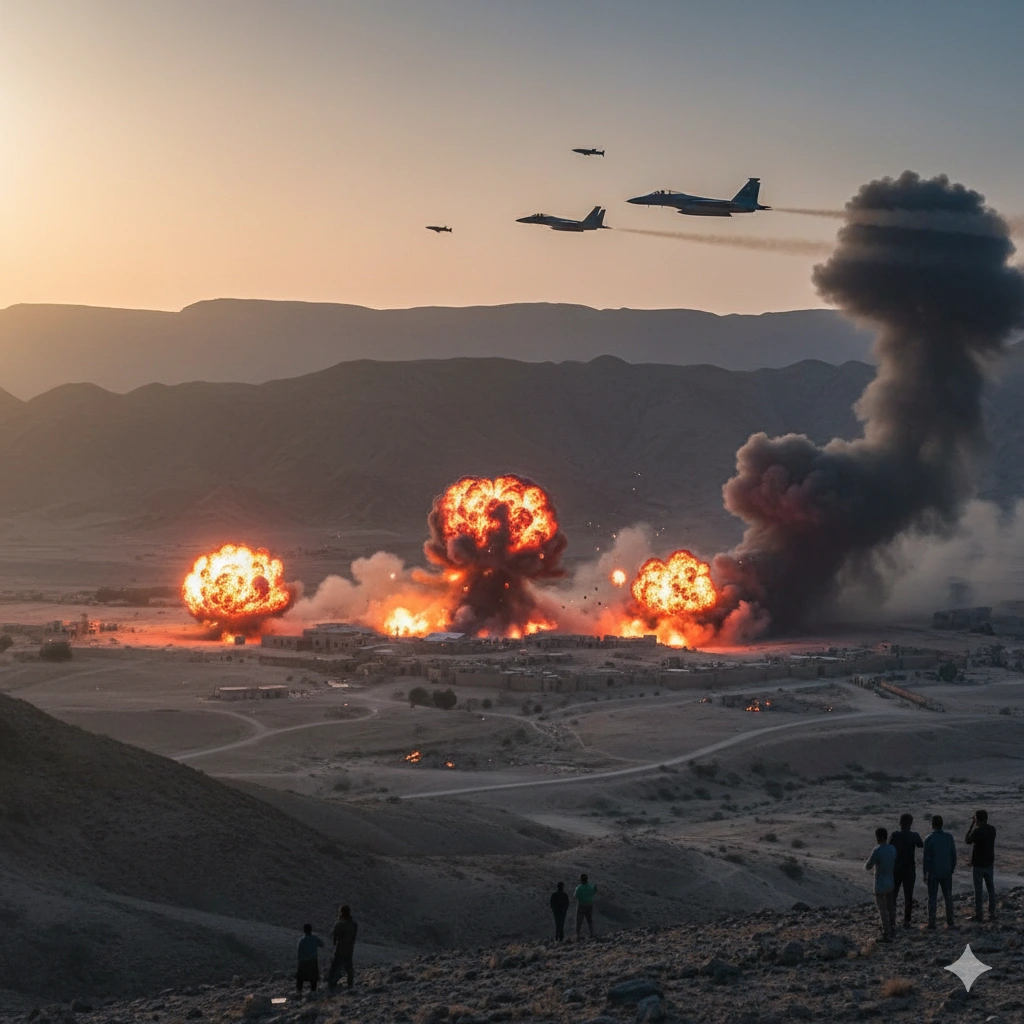
Details of the Saudi Airstrikes Yemen
The Saudi airstrikes Yemen specifically targeted Elite Hadrami security units aligned with the STC. Videos from the region showed plumes of smoke rising over strategic locations, although local authorities confirmed that infrastructure remained intact.
Military experts emphasize that the operation tested both the coalition’s precision strike capabilities and its ability to coordinate with allied forces in southern Yemen. Beyond testing military coordination, the strikes also demonstrated Riyadh’s strategic planning and ability to rapidly deploy airpower to sensitive areas. Analysts highlight that these operations serve as both a tactical response and a political signal, showing the STC and regional observers that Saudi Arabia remains capable of enforcing its directives while maintaining a measured approach to minimize civilian disruption.
STC Influence and Southern Yemen Control
The Southern Transitional Council has gradually expanded its territorial control in Hadramout and Al-Mahrah, posing challenges to the authority of Yemen’s internationally recognized government. The Saudi airstrikes Yemen 2025 targeted these positions to prevent the STC from consolidating power independently and to maintain coalition influence in the south.
Experts further note that the STC’s expanding control over southern provinces allows it to dominate key economic corridors, including ports and trade routes that are critical for humanitarian supplies and government revenue. The coalition’s strikes therefore aim not only to assert military authority but also to stabilize economic and logistical networks in the region, ensuring that local populations remain under coordinated governance and reducing the likelihood of unilateral actions that could trigger wider instability.
Saudi-Emirati Coordination Efforts
In coordination with the airstrikes, Riyadh dispatched a joint Saudi-Emirati military delegation to oversee the withdrawal of STC troops and the transfer of camps to government-aligned forces. These efforts highlight the coalition’s commitment to maintaining stability while minimizing civilian risk.
This joint operation also reflects a broader strategic objective: reinforcing multilateral cooperation in managing sensitive regions. By coordinating troop movements and overseeing handovers, the Saudi-Emirati delegation ensures that local forces do not exploit transitional periods, which could otherwise result in clashes or security gaps. The collaboration signals to regional and international observers that the coalition can enforce agreements effectively while reducing potential friction between competing actors in southern Yemen.
Implications for Yemen’s Conflict
The Saudi airstrikes Yemen 2025 underscore the complexity of Yemen’s multi-faceted conflict, which has involved the internationally recognized government, the STC, Houthi forces, and external actors including Saudi Arabia and the UAE.
While these strikes caused no casualties, analysts warn that repeated military operations could heighten tensions and destabilize southern Yemen. They also stress that such measures are intended to reinforce authority and prevent unilateral escalation by local forces.
Regional and Geopolitical Significance
Saudi Arabia’s actions in Yemen reflect broader geopolitical considerations. By targeting STC-aligned positions, Riyadh signals its intent to maintain influence and stability in southern Yemen. The Saudi airstrikes Yemen demonstrate the kingdom’s ability to enforce agreements while reducing the risk of unintended escalation.
Regional experts suggest that these operations also send a clear message to international observers: Riyadh is committed to stabilizing Yemen in cooperation with allied forces, particularly in strategically important provinces like Hadramout.
Final Thoughts
The Saudi airstrikes Yemen 2025 highlight the ongoing struggle for control in southern Yemen. Although no immediate casualties or damage were reported, the strikes clearly communicate Riyadh’s determination to maintain authority and influence over local actors.
As Yemen continues to navigate political, military, and regional complexities, the strikes underscore the importance of coordinated coalition action, diplomacy, and careful management of tensions in strategically vital areas.