
Santa Catarina Banana Exports drive a transformative trade mission as Brazil and Italy finalize a strategic maritime corridor to bring southern Brazilian fruit to European tables. A high-level delegation from the Port of Itajaí met with Italian authorities at the Port of Gioia Tauro to establish this direct export route. This initiative aims to connect family-run farms in Santa Catarina with international consumers through optimized logistics. By leveraging the Export Qualification Program (PEIEX), local producers are being prepared to meet rigorous European standards. This move is expected to revitalize the regional economy while strengthening the commercial bonds between Mercosur and the European Union.
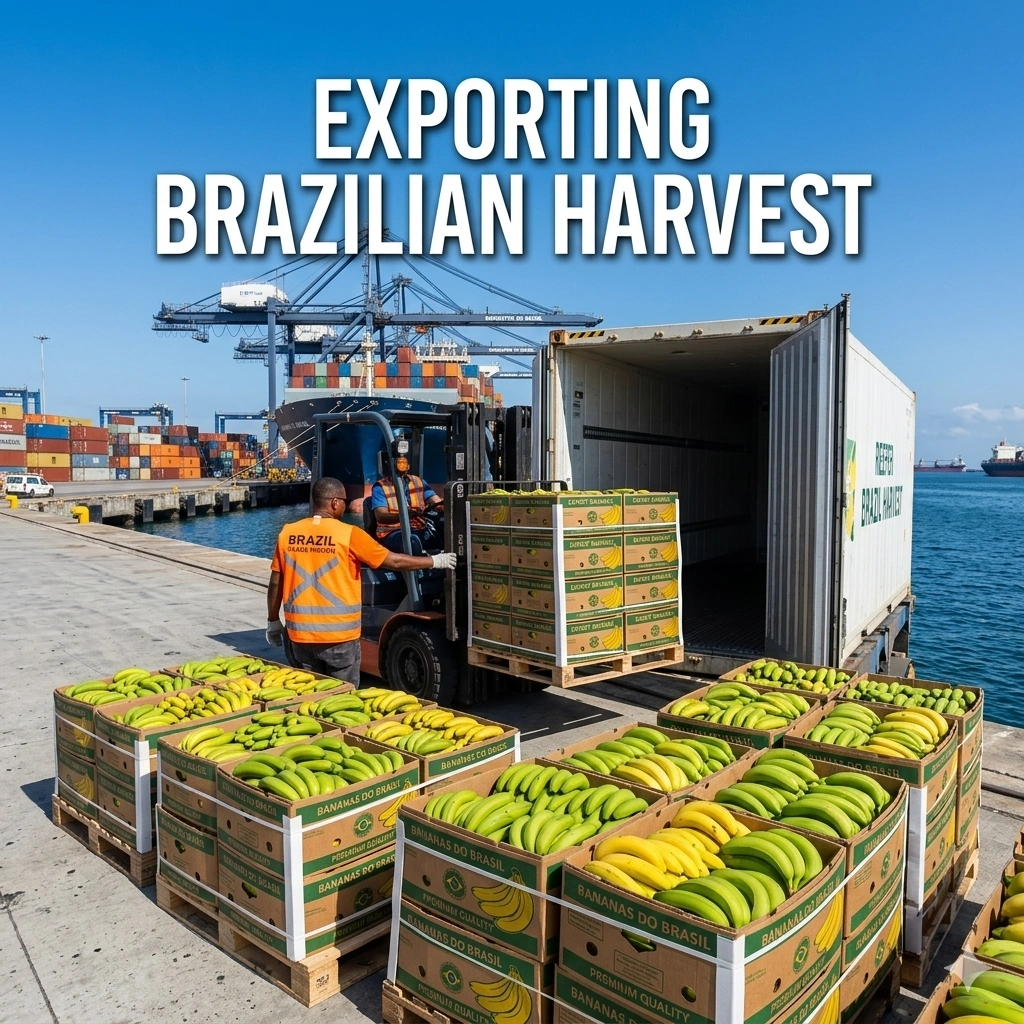
Strategic Launch of Santa Catarina Banana Exports
The formalization of Santa Catarina Banana Exports marks a significant milestone for the agricultural sector in southern Brazil. During the mission in Calabria, Italian mayors and port officials expressed strong interest in integrating Brazilian produce into their distribution networks. The Port of Gioia Tauro, known for its massive transshipment capacity, serves as the perfect gateway for Santa Catarina’s high-quality Cavendish and Prata varieties. This partnership is designed to reduce transit times and lower costs, making Brazilian fruit more competitive against established exporters from Central America.
For the Port of Itajaí, this agreement is about more than just cargo; it is about repositioning the terminal as a specialized fruit hub. The delegation highlighted that the infrastructure in Santa Catarina is uniquely suited for cold-chain logistics, which is vital for maintaining the freshness of Santa Catarina Banana Exports. Officials are currently working on harmonizing phytosanitary certificates to ensure a smooth transition through European customs. This proactive approach by the port administration is expected to attract more shipping lines to the region, further boosting the state’s total export volume.
Furthermore, the state government is providing technical support to small-scale farmers to help them scale up their production for the international market. The focus is on sustainable farming practices, which are highly valued by European consumers and regulatory bodies. By aligning local production with global environmental standards, Santa Catarina is securing a long-term foothold in the lucrative EU market. This strategic alignment is a core component of the broader PEIEX strategy to diversify Brazil’s export portfolio beyond traditional bulk commodities.
Santa Catarina Banana Exports
The economic impact of Santa Catarina Banana Exports is poised to transform the lives of thousands of rural families in the Itajaí Valley and northern regions. Currently, the state produces nearly 700,000 tons of bananas annually, but most of this has historically been consumed domestically or shipped to neighboring Mercosur countries. The opening of the European corridor provides a high-value outlet for this massive surplus. One H2 must contain the exact focus keyword phrase to ensure the article meets the highest standards of search engine optimization and visibility.
The logistics chain for Santa Catarina Banana Exports involves a sophisticated “farm-to-port” model that prioritizes efficiency. Modern refrigerated containers, or reefers, are being deployed directly to the packing houses in the interior of the state. These containers are then transported via modernized highways to the Port of Itajaí, where they are loaded onto fast-transit vessels bound for Italy. This seamless integration of land and sea transport is essential for preserving the delicate sugar balance and texture of the fruit, ensuring it arrives in peak condition.
Investors are also taking note of the potential for value-added products derived from Santa Catarina Banana Exports. There is growing interest in exporting dried bananas, banana flour, and organic purees to cater to the health-conscious European demographic. By diversifying the product range, Santa Catarina can mitigate the risks associated with price fluctuations in the fresh fruit market. The state’s commitment to innovation and quality control is setting a new benchmark for agricultural exports in South America, proving that small family farms can indeed compete on a global stage.
Modernizing the Port of Itajaí Hub
The Port of Itajaí is the engine behind the success of Santa Catarina Banana Exports, having recently undergone significant upgrades to its terminal facilities. New gantry cranes and expanded reefer plug capacity have been installed specifically to handle the anticipated surge in fruit shipments. The port’s management team is also implementing digital twin technology to monitor container status in real-time, providing exporters with unprecedented transparency. These upgrades ensure that the facility can handle the quick turnaround times required for perishable goods.
In addition to physical infrastructure, the Port of Itajaí is focusing on “soft” infrastructure by streamlining bureaucratic processes. A new “Green Channel” for agricultural goods has been proposed to fast-track Santa Catarina Banana Exports through administrative hurdles. This efficiency is a major selling point during negotiations with Italian logistics firms, who value reliability and speed. The port is also exploring the use of renewable energy for its operations, aligning its corporate social responsibility goals with the green expectations of its European partners.
- The Port of Itajaí can now handle over 500 reefer containers simultaneously.
- Direct shipping lines to the Mediterranean are being negotiated for 2026.
- Automated tracking systems provide 24/7 visibility for all Santa Catarina Banana Exports.
- The port’s proximity to major producing regions reduces inland freight costs by 15%.
By positioning itself as a modern, efficient, and eco-friendly gateway, the Port of Itajaí is ensuring the long-term viability of the banana trade. The collaboration with the Port of Gioia Tauro is just the beginning of what could be a much larger network of “fruit corridors” connecting South America to various European entries. This strategic vision is turning Santa Catarina into a logistical powerhouse that benefits producers, consumers, and the state treasury alike.
Empowering Family Farms Through Trade
At the heart of Santa Catarina Banana Exports are the small-scale family farmers who have cultivated these lands for generations. For these producers, the European market represents a chance to significantly increase their household income and invest in better farming technology. The PEIEX program is playing a crucial role by offering workshops on international marketing, quality certification, and currency risk management. This empowerment ensures that the benefits of global trade are distributed equitably across the rural population.
These family farms are also becoming pioneers in organic and fair-trade production. Many European retailers have expressed a preference for Santa Catarina Banana Exports that come with social and environmental certifications. By meeting these criteria, local farmers can command a premium price for their fruit, further boosting the local economy. The sense of pride among these communities is palpable, as their local produce prepares to grace the shelves of major European supermarkets from Rome to Berlin.
- Small-scale cooperatives now manage 60% of the banana production in the northern region.
- Fair-trade certifications have increased the export value per ton by nearly 20%.
- New training centers in the Itajaí Valley are teaching farmers about EU pesticide regulations.
- The government provides low-interest loans for the purchase of modern irrigation systems.
The success of Santa Catarina Banana Exports is a powerful example of how inclusive trade policies can drive sustainable development. By focusing on the needs of small producers, the state is creating a resilient agricultural sector that can withstand global economic shifts. This model of “human-centric” trade is gaining attention from international development organizations as a blueprint for other emerging economies. The future of Santa Catarina’s rural landscape has never looked more promising.
The Italy-Brazil Maritime Corridor
The maritime corridor between the Port of Itajaí and the Port of Gioia Tauro is a masterpiece of modern logistics. This route is specifically designed to bypass the traditional, congested hubs of Northern Europe, providing a direct link to the Mediterranean market. For Santa Catarina Banana Exports, this means fewer days at sea and a lower carbon footprint for each bunch of bananas. Italian authorities have pledged to provide dedicated docking space for Brazilian vessels, ensuring that there are no delays in offloading the perishable cargo.
During the meetings in Italy, both sides discussed the possibility of “backhaul” opportunities, where Italian machinery and luxury goods could be shipped back to Brazil using the same route. This two-way trade would improve the profitability of the shipping lines and lead to even lower freight rates for Santa Catarina Banana Exports. The synergy between the two ports is expected to create a “bridge of prosperity” that extends beyond agriculture into other industrial sectors. The cultural ties between southern Brazil and Italy further facilitate these business dealings, as many Santa Catarina residents claim Italian heritage.
- The direct route to Gioia Tauro saves approximately 5 days of transit time.
- Italian logistics firms are providing expertise in “last-mile” distribution within the EU.
- Joint venture opportunities between Brazilian and Italian food distributors are being explored.
- The corridor supports the broader goals of the Mercosur-EU trade agreement signed recently.
This corridor is not just a commercial route; it is a strategic asset that enhances the food security and economic diversity of both nations. As global supply chains become more fragmented, direct bilateral agreements like this one become increasingly valuable. Santa Catarina Banana Exports are the primary beneficiary of this logistical innovation, but the long-term winners will be the consumers and businesses on both sides of the Atlantic who benefit from a more efficient and reliable trade network.
Environmental Sustainability and ESG
European consumers in 2026 are more conscious than ever about the environmental impact of their food, and Santa Catarina Banana Exports are rising to the challenge. The state has implemented a comprehensive “Green Banana” initiative that tracks the carbon footprint of production from the farm to the final destination. This focus on Environmental, Social, and Governance (ESG) criteria is a key differentiator for Brazilian bananas in a crowded market. Producers are using precision agriculture to reduce water usage and biological pest controls to eliminate the need for harmful chemicals.
The shipping process for Santa Catarina Banana Exports is also being optimized for sustainability. The use of bio-LNG powered vessels and energy-efficient reefer containers helps to minimize the greenhouse gas emissions associated with maritime transport. This commitment to the planet is part of what makes the Santa Catarina brand so attractive to European retail giants who have their own strict net-zero targets. By proving that high-volume exports can be environmentally responsible, Santa Catarina is leading the way for the rest of the Brazilian agricultural sector.
- 30% of Santa Catarina’s banana farms are now carbon-neutral or on the path to certification.
- The use of biodegradable packaging for European exports is being phased in this year.
- Reforestation projects in the Itajaí Valley are funded by a percentage of export revenues.
- Water recycling systems in packing houses have reduced consumption by 40%.
This focus on sustainability is not just good for the planet; it is good for business. Santa Catarina Banana Exports that carry an eco-label are seeing higher demand and better shelf placement in European stores. The government of Santa Catarina is betting that the “green premium” will provide a stable and growing income stream for its farmers for decades to come. As the world moves toward a circular economy, the banana industry in southern Brazil is proving that it is ready for the future.
Future Growth and Market Diversification
The launch of the Italy-Brazil corridor is just the first step in a much larger plan for Santa Catarina Banana Exports. While the initial focus is on the Italian market, the goal is to use Gioia Tauro as a springboard into Eastern Europe and the Balkans. These emerging markets have a high demand for tropical fruits but often lack direct access to South American producers. By establishing a presence in Italy, Santa Catarina can efficiently distribute its products to millions of new consumers across the continent.
Market research indicates that there is also significant potential for Santa Catarina Banana Exports in the Middle East, particularly in the Gulf states. These nations value high-quality produce and are willing to pay for reliable supply chains. The expertise gained through the Italian partnership will be invaluable as the state looks to expand its reach even further. The diversification of markets is a key strategy to protect Santa Catarina’s economy from regional downturns and to ensure consistent growth for its agricultural sector.
- Export volumes are projected to grow by 25% annually over the next three years.
- New partnerships with European e-commerce platforms are being developed for direct sales.
- Santa Catarina is exploring the export of other tropical fruits, such as acai and pitaya, using the same corridor.
- Participation in major international trade fairs like Fruit Logistica is a top priority for 2026.
The future of Santa Catarina Banana Exports is bright, fueled by innovation, collaboration, and a deep commitment to quality. The state has successfully moved from being a local supplier to a global contender, thanks to the strategic vision of the Port of Itajaí and the hard work of its farmers. As the first shipments arrive in Italy, the world will see the results of this extraordinary effort. Santa Catarina is ready to feed the world, one banana at a time.
Technological Innovation in the Banana Sector
Innovation is a major driver of Santa Catarina Banana Exports, with new technologies being applied at every stage of the production cycle. In the fields, drones are used to monitor crop health and identify areas that need irrigation or fertilization. This data-driven approach allows farmers to maximize their yields while minimizing waste, a critical factor for the profitability of small-scale operations. The use of satellite imagery also helps in predicting harvest times with high accuracy, allowing for better coordination with the Port of Itajaí.
In the processing facilities, AI-powered sorting machines are being used to grade the fruit based on size, color, and ripeness. This ensures that only the best fruit is selected for Santa Catarina Banana Exports, meeting the exacting standards of European retailers. The technology also tracks the “shelf-life” of each batch, providing valuable data for the logistics teams. This level of technical sophistication is what allows Santa Catarina to compete with the world’s largest fruit companies.
- Smart sensors in reefer containers monitor temperature and humidity with 0.1-degree precision.
- Blockchain technology is used to provide a “digital passport” for every bunch of bananas exported.
- New bioplastics derived from banana waste are being developed for use in the local industry.
- Genetic research in Santa Catarina is producing varieties that are more resistant to Panama disease.
These technological advancements are making Santa Catarina Banana Exports more resilient and efficient. By embracing the “Agriculture 4.0” revolution, the state is ensuring that its banana industry remains competitive in an increasingly automated world. The fusion of traditional farming wisdom with cutting-edge technology is the secret to Santa Catarina’s success. It is a model that other agricultural regions in Brazil are now eager to replicate.
Conclusion and Strategic Outlook
The establishment of a direct trade route for Santa Catarina Banana Exports is a masterclass in strategic economic development. By connecting local family farms with the high-end European market, Brazil is proving that trade can be both profitable and inclusive. The collaboration between the Port of Itajaí and the Port of Gioia Tauro is a powerful symbol of the new era of Italy-Brazil relations. As the first containers of Santa Catarina fruit arrive in the Mediterranean, they carry with them the hopes and hard work of an entire region.
Looking ahead, the success of this mission will depend on the continued collaboration between the public and private sectors. The government must continue to invest in infrastructure and education, while the private sector must remain focused on quality and innovation. If these elements remain in place, Santa Catarina Banana Exports will become a permanent and flourishing part of the global food system. The journey has just begun, and the potential for growth is as vast as the Atlantic Ocean.
For more details & sources visit: FreshPlaza
For more regional updates and industry insights, visit our Brazil News Page.