
Russia Winter Olympics 2026 sees Russia and Belarus barred from competing under their national flags at the upcoming Milan Cortina Winter Olympics. However, eligible athletes from both countries may still participate as Individual Neutral Athletes (AIN) if they meet strict eligibility criteria set by the IOC. This decision has reignited global debate over fairness, political influence, and the ongoing Ukraine conflict.
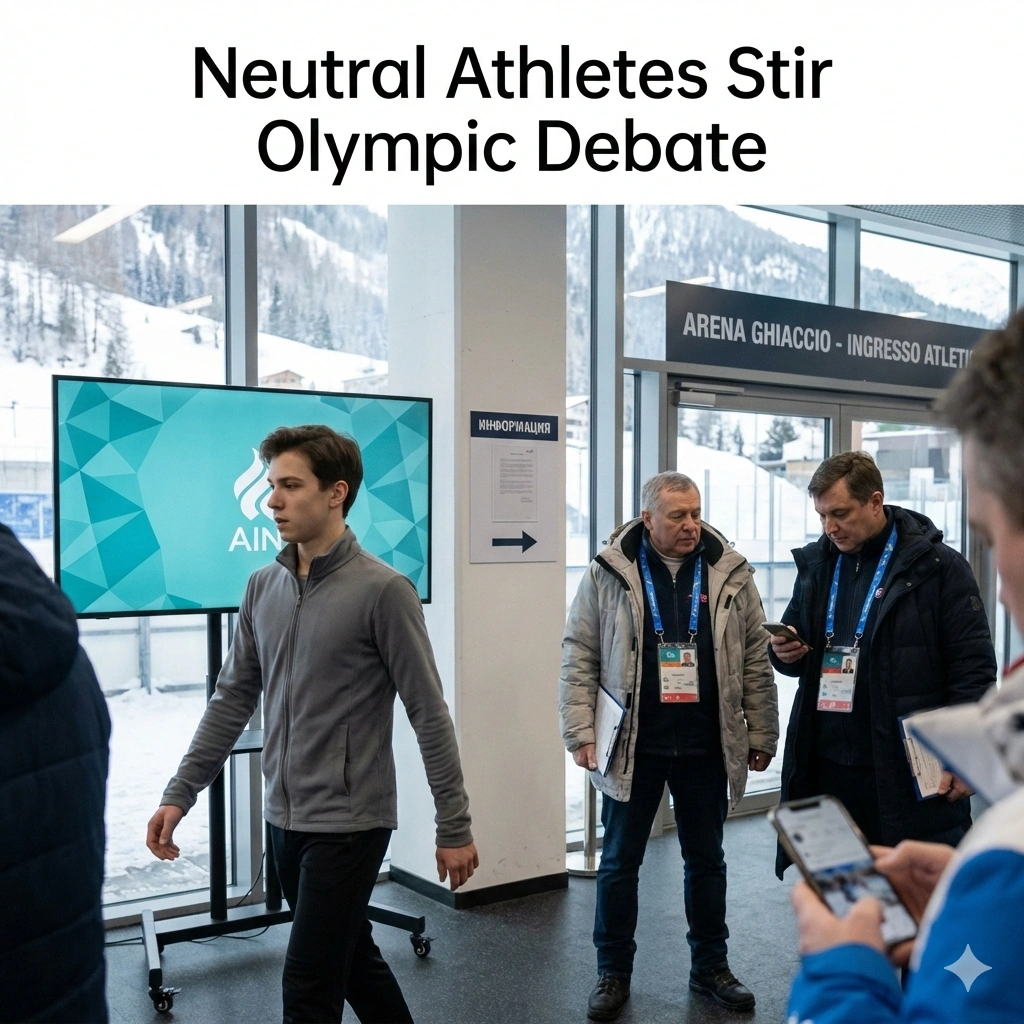
What the Neutral Athlete Policy Means
According to USA TODAY, the IOC is allowing a limited number of competitors to enter under the neutral banner at the Russia Winter Olympics 2026, but only after passing a rigorous federation approval process. Athletes must undergo a screening linked to the IOC that examines:
- Any public support for the Ukraine war
- Ties to military or security organizations in Russia or Belarus
Currently, 20 athletes are listed as eligible, including 13 Russians and 7 Belarusians. Importantly, team sports are excluded from the neutral pathway, meaning only individual athletes can compete.
If a neutral athlete wins gold at the Russia Winter Olympics 2026, the medal ceremony will omit national symbols, using a wordless anthem commissioned by the IOC instead of a national anthem. Additionally, AIN athletes will not participate in the Opening Ceremony parade-of-nations, keeping them visually separate from other delegations.
Rising Tensions and Enforcement Challenges
The policy has sparked controversy among athletes, national federations, and international observers. The Associated Press reports that the International Luge Federation recently withdrew eligibility for three Russian athletes after “new evidence” questioned their neutrality. Meanwhile, some Russian athletes continue to compete in qualification events, highlighting inconsistencies in enforcement.
Different sports organizations have taken varied approaches:
- Some maintain full bans on Russian and Belarusian athletes
- Others permit limited neutral participation
This discrepancy has intensified scrutiny of the IOC’s neutral framework, with Ukrainian officials arguing that Russians cannot be truly apolitical given the ongoing conflict.
Why the Decision Matters
The IOC’s decision is significant because it reflects the intersection of sports and geopolitics. While the neutral pathway allows athletes to continue their careers, it raises questions about fairness and accountability. Critics argue that allowing any participation by Russian athletes risks normalizing behavior linked to the Ukraine war, whereas supporters claim it preserves the integrity of the Olympic spirit by separating individuals from national politics.
The upcoming Milan Cortina 2026 Winter Games will test this policy, as all eyes will be on how neutral athletes perform and whether enforcement remains consistent across sports.
Impact on Athlete Preparation and Performance
For athletes eligible under the neutral pathway, the Russia Winter Olympics 2026 rules have significantly influenced training and preparation. Without the support of national teams and official delegations, these athletes must manage logistics, coaching, and funding independently, which could affect their overall performance. Experts note that the mental strain of competing without a national identity may also impact focus and morale during high-stakes events.
Additionally, the IOC’s screening process has created uncertainty for athletes leading up to the Games. Last-minute eligibility changes, such as withdrawals or appeals, could disrupt training schedules and qualification plans. Despite these challenges, many AIN athletes remain committed to representing themselves on the world stage, demonstrating resilience and determination that may inspire viewers and fellow competitors alike.
Conclusion
As Milan Cortina 2026 approaches, the neutral athlete policy continues to stir debate in the global sports community. With only 20 athletes eligible, strict screening procedures, and limited ceremonial recognition, the IOC is attempting to balance athlete rights and international responsibility. However, the controversy is far from resolved, and the Winter Olympics may become a stage for both sporting excellence and political tension.
For more details & sources visit: Associated Press (preferred)
For the latest updates from the Italy, visit our Italy news page.